
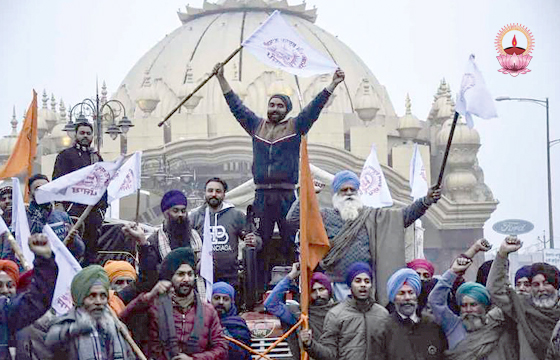
The Supreme Court of India has ordered Prime Minister Narendra Modi’s government to suspend three controversial farm laws that stirred up nationwide protests by farmers.
The top court on Jan. 12 ordered the formation of a committee of experts to hold talks with the federal government and farmers to end the stalemate as the main protest on New Delhi’s outskirts entered its 48th day.
“The Supreme Court order gives some hope to the farmers who are protesting in very adverse conditions,” said Bishop Alex Vadakumthala, chairman of the Indian bishops’ office of labour.
“The government should find an amicable solution and end the protest as it is not good for any country to let their farmers struggle in the open for their genuine demands,” the prelate told.
Thousands of farmers from Punjab and Haryana states marched to New Delhi on Nov. 29 demanding the government repeal laws that they say work against their interests. When authorities blocked their entry to the capital, they sat on the highways to block major entry and exit points to New Delhi.
They want the Modi government to withdraw three laws passed last September — the Farmers’ Produce Trade and Commerce (Promotion and Facilitation) Act, 2020, the Farmers (Empowerment and Protection) Agreement of Price Assurance and Farm Services Act, 2020, and the Essential Commodities (Amendment) Act, 2020. The government, led by the pro-Hindu Bharatiya Janata Party (BJP), disregarded opposition to pass the bills, saying they are necessary to reform the farm sector and help farmers have the freedom to sell their products in an open competitive market and gain maximum profit.
Farmers’ unions say the laws take away the minimum support price (MSP) or the government guarantee for their products besides giving private businesses unrestricted opportunities to purchase and store produce.
Critics say the laws were designed to help multinational companies and would lead to the collapse of government-controlled markets and leave farmers at the mercy of big business houses. Government lawyers told the court that the new laws were drafted and implemented based on two decades of studies and disagreed with the farmers’ demand for their repeal.
All posts by Light of Truth
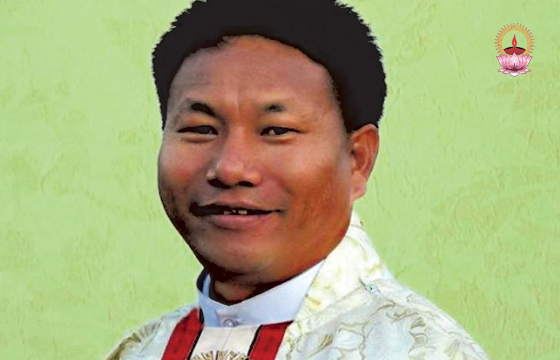
Jesuits get first priest from Rongmei tribe
When Archbishop Dominic Lumon of Imphal ordains Father Gangmei Pheigathuaipou Daniel on December 30, the Jesuits will get their first priest from Rongmei, a major Naga tribe in the northeastern India. Archbishop Lumon will ordain Father Daniel in St Ignatius Church Bishnupur, a Jesuit parish in Manipur State. Father Daniel is the first priest from the Bishnupur parish that was established by the Jesuits 35 years ago.
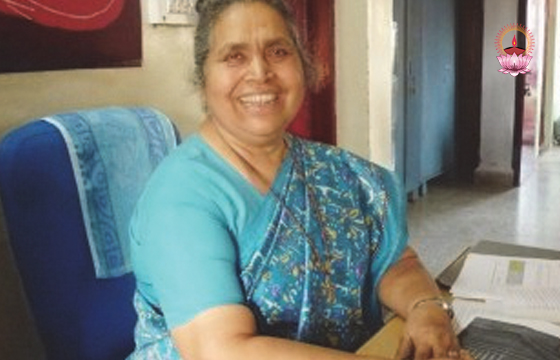
Indian nun listed 12 among world’s 100 most inspiring people
An Austrian magazine has listed a Catholic nun from India among 100 people, who influenced the world the most during the crises-ridden 2020.
The “OOOM” has placed Sister Lucy Kurien, founder director of the Pune-based Maher, 12th in the list, just above the Dalai Lama and Pope Francis.
The magazine says 2020 was a year no one ever expected. “The world today is different than it was 12 months ago. Which people have inspired, motivated and excited us most in this 2020 crisis? To whom do we owe leadership on the way to a better future? For the fifth time, OOOM presents the large ranking “OOOM 100: The World’s Most Inspiring People.”
“The OOOM editors and a prominent jury – including star designer Stefan Sagmeister, London’s Serpentine Galleries director Hans Ulrich Obrist, world-class geneticist Josef Penninger, gallery owner Thaddaeus Ropac and wallpaper manager Gilles Massé – contributed to the ranking. Every ranking is subjective. But it shows which people actually impressed us over the past year.”
The list is topped by Ugur Sahin, a German scientist and developer of the Covid-19 vaccine co-founder and CEO of BioNTech, who gave the world a new hope. His vaccine is a key component in the battle against a virus that has already claimed 1.7 million lives. The research he conducted with his wife Özlem Tureci has led to the most important medical development of our time. The second in the list is Kamala Harris, future Vice President of the United States, followed by Joe Biden, 46th President of the United States.
She said the Covid-19 lock-down was a challenging time for her organization. She said approximately 40 women, some with children, arrived at Maher seeking asylum as the lockdown began in India on March 25.
“We have to take care of four walls in this period — physical strength, emotional strength, mental strength and spiritual strength — to counter any exter-nal threat to our well-being,” the member of the Sisters of the Cross of Chavanod told.

Indian state criminalizes conversion for marriage
Madhya Pradesh State in central India has replaced its more than 50-year-old anti-conversion law with a new and more stringent one that can criminalize even conversion for marriage.
The law notified on Jan. 9 says any attempt to convert a person from one religion to another through misrepresentation, allurement, use of threat or force, undue influence, coercion or by marriage is a punishable offense.
Violators can be jailed for up to 10 years under the new law called the Madhya Pradesh Freedom of Religion Ordinance 2020. Those abetting or conspi-ring such conversions can also be punished.
The new law replaces the Madhya Pradesh Freedom of Religion act of 1968. However, it allows the reconversion of a person to one’s parental religion without violating the law’s provision.
Leaders of the state government-run by the pro-Hindu Bharatiya Janata Party (BJP) hold that Hinduism is the parental religion of religious minorities in the country such as Christians and Muslims.
In effect, the law allows Hindu groups to convert Christians and Muslims to Hinduism. But those Hindus who convert to Islam or Christianity for marriage can be punished along with their spouses, who can be accused of abetting and conspiring the con-version.
“This law is one-sided and against fundamental rights guaranteed in the Indian constitution,” said Father Maria Stephan, public relations officer of the Catholic Church in Madhya Pradesh.
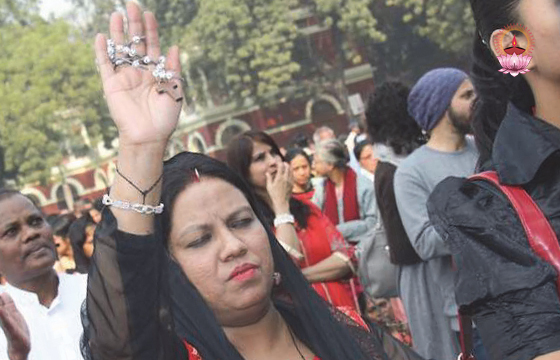
Police on alert after conversion claim in Indian state
Police in an Indian state have directed officers to keep a watch on prayer gatherings after five Christians were arrested on a charge of religious con-version. Vishwa Hindu Parishad (VHP), a hard-line Hindu group, handed the five Christians to police in Shahjahanpur district of Uttar Pradesh State, which is run by the pro-Hindu Bharatiya Janata Party (BJP).
“It is just an allegation from the fanatic groups and if they are sure about it, let them prove it. People are free to express their views in a democratic country,” Father Harold D’ Cunha, vicar general of Bareilly Diocese, told.
“As far as the Catholic Church is concerned, it does not promote or propagate religious conversion in the diocese as well as in the country.
“Occasionally, these groups blame us for conversions, but until now there is no record of any religious conversion where the Church is involved.”
He said the Church is engaged in many charitable works that can be construed as allurement to conversions, “but it is not true.”
S. Anand, superintendent of Shahjahanpur police, told the Press Trust of India that after the alleged religious conversion activities, officers have been asked to keep a watch on religious gatherings.
“We have directed concerned police officials to take strict action if anyone is found guilty of religious conversion activities,” he said.
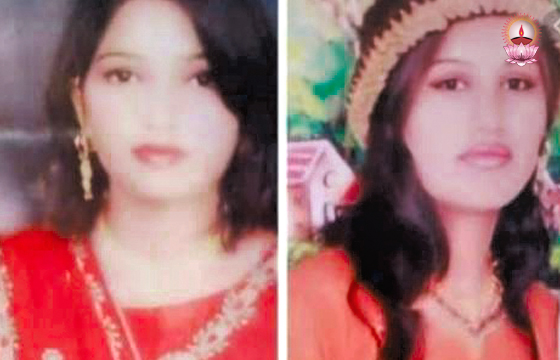
Murder of two young Christians, killed for not wanting to give up their faith according to the pastor of their Protestant community
“The merciless murder of Abida and Sajida is a tragedy that shows how the lives of religious minorities in Pakistan are held by a thread or is worthless. Rape, kidnappings, forced conversions and even murders of young Christian girls are worrying phenomena. The government must not deny this and has the duty to stop the violence against Christians.” This is what Nasir Saeed, Director of the NGO CLAAS (Centre for Legal Aid Assistance & Settlement) said in a note sent to Agenzia Fides, commenting on the case in recent days which has provoked outrage and the protest of the community of the faithful in Pakistan.
Two young Christian sisters, Abida, 26, and Sajida, 28, residing in the Christian neighbourhood of Makhan, near Lahore, were murdered last December after stubbor-nly refusing to convert to Islam. Police arrested two Muslims, Mumtaz Khan and Muhammad Naeem, suspected of killing the women. As Fides learned, Mushtaq Masih, Sajida’s husband, reported that the two sisters worked in a medicine factory and that they disappeared on Nov. 26, 2020. The family filed a formal complaint following their disappearance, reporting to the police his fears of kidnapping, as the two sisters had indicated that they had been often sexually harassed and had received from two work colleagues, Muhammad Naeem and Mumtaz Khan, the request, always rejected, to convert to Islam. Pakistani Prime Minister Imran Khan has pledged to ensure minorities are safe and happy in Pakistan. When we see cases of false accusations of blasphemy, kidnappings, forced conversions and murder of Christian girls, it must be emphasized that, in practice, this is not true and that the condition of Christians in society is getting worse” (PA). Nearly 1,000 girls from religious minorities who are forced to convert to Islam in Pakistan each year, largely to pave the way for marriages that are under the legal age and non-consensual.

China’s Threat to the Bible
The Bible is America’s best-selling book, annually outpacing the top 20 best sellers combined. Yet a single Chinese company has a near monopoly on Bible printing, meaning that any rupture in the supply chain—say, from U.S. or Chinese government poli-cies—would lead to a Bible shortage in America. This poses a serious threat both to American Christians’ fundamental religious liberty rights and to national security.
More than 20 million Protestant and Catholic Bibles are printed annually by America’s largest Bible publishing compa-nies. But few are aware that most of these Bibles are printed in China, by Amity Printing Company. (Bible publishers that don’t print in China include InterVarsity Press [IVP], St Ignatius Press, St Benedict Press, Cambridge University Press, R.L. Allan & Son, and Schuyler Bibles). Thanks to American publishing decisions, American Christians rely on a state that represses Christianity for their Bibles. While China intensifies religious persecution at home and is considered by U.S. Intelligence to be “the greatest threat to America today,” this Bible supply chain is increasingly precarious. Yet the Bible publishers have no plans to use alternative printing presses.
The supply chain was tested in 2019, when the Trump administration proposed broad trade tariffs to better balance U.S.-China trade relations. As the plan included tariffs against Bibles, America’s Bible publishers found themselves alongside Beijing vociferously lobbying Washington against the measure. Harper Collins Christian Publishing (HCCP), now the world’s largest Bible publisher (having acquired Zondervan and Thomas Nelson), uses Amity to print most of its Bibles, as does Tyndale House, America’s largest privately-owned Christian publisher. HCCP CEO Mark Schoen-wald denounced the proposed tariff before the U.S. Trade Commission last year. He called it a “Bible tax,” and argued that it would force his company to reduce sales and discontinue some Bible editions. The Trump administration quickly exempted Bibles from the China tariffs.
Christian ministry publishers lobbied as well, arguing that the tariffs would curb First Amendment rights. Stan Jantz, president of the Evangelical Christian Publishers Association, declared that the tariffs would do “significant damage to Bible accessibility.” He stated before the Trade Commission that “some believe such a tariff would place a practical limitation on religious freedom.”
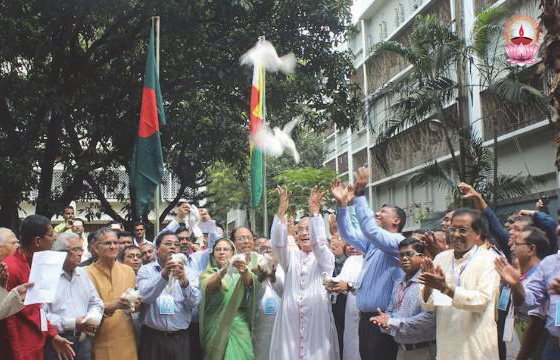
Bangladeshi minorities seek scripture readings in state programs
Bangladeshi religious minority groups have urged the government to introduce the reading of scriptures of all four major religions at the beginning of parliamentary sessions and state ceremonies.
Bangladesh Hindu Buddhist Christian Unity Council (BHB-CUC), the country’s largest minority group, made the call during a virtual conference this week.
Parliamentary sessions and state programs in Muslim-majority Bangladesh now begin with a recitation from the Quran.
BHBCUC leaders say intro-ducing readings from the holy books of the four major religions would be a significant symbolic gesture to behold pluralism in Bangladesh on the eve of the country’s golden jubilee of independence from Pakistan this year.
Advocate Rana Dasgupta, a Supreme Court lawyer and BHBCUC secretary, said that such a move is important as it recognizes the equal dignity and rights of minorities.
“Our constitution has given equal rights for all religions but only a recitation from Quran is done in the parliament and in various state functions. We hope that by introducing the reading of all scriptures we can fill a void that the spirit of the constitution has enshrined,” Das told UCA News on Jan. 8.
Das said the group will hold a press conference and submit a memorandum to the parliament speaker to press the government over their demand. Holy Cross Father Liton H. Gomes, secretary of the Catholic bishops’ Justice and Peace Commission, support-ed the move.
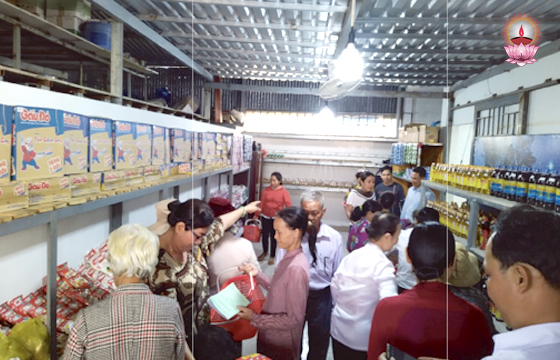
The Diocese of Can Tho opens two ‘free supermarkets’ for the poor
The Diocese of Can Tho opened two supermarkets at the start of the month where the poor affected by the coronavirus pan-demic can get basic necessities for free. One is in Sông Ñc pari-sh, the other in Cái Tac parish.
Vietnam is one of the coun-tries that seems to have better managed the COVID-19 crisis. So far it has reported just over 1,500 cases, with 1,360 hospitalisations and 35 deaths. Despite this, many Vietnamese are facing hardships.
Volunteers run the two supermarkets, also known as “solidarity shops,” the most popular form of charity in Vietnam. The Diocese helps families in difficulty, orphans and people with disabilities.
The beneficiaries have a booklet where the products they receive each month are registered, mostly salt, sugar, rice, fish soup and cooking oil. In Cái Tac more than a hundred families get supplies from one supermarket; each booklet gives the right to get 100,000 dong (US$ 4.3) worth in goods per month.
Bishop Stêphanô Tri Bíu Thiên of Can Tho said that many Catholics face serious economic conditions, and this required some action. “After talking with local priests, we decided to help those who need it most,” the prelate explained, based on Pope Francis’s teachings about the “culture of care as a path to peace.”
–AsiaNews
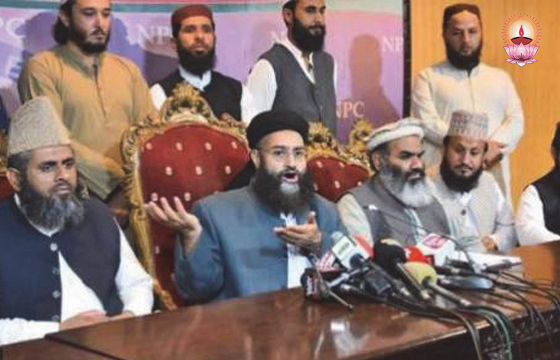
Christians welcome the new government initiative to protect religious minorities
“We appreciate the government’s renewed commitment to the protection of religious minorities in Pakistan, especially for the protection of those falsely accused and for the protection of innocent underage girls trapped in forced conversions and marriages. The initiative of the Government Office for Interreligious Harmony will certainly strengthen peace and harmony between people of different religions and help ensure that members of religious minorities do not to live in fear.”