

In January, two Vatican cardinals wanted to summon the president of the German bishops’ conference to Rome and correct him about a media interview in which he expressed his dissent from Church teaching in a number of areas. Such a meeting, which some believe should have been used to give the Vatican’s formal opposition to the Synodal Path, never happened and now the German bishops are blazing ahead unfettered, drawing grave concerns of possible schism.
Jesuit Cardinal Luis Ladaria, prefect of the Congregation for the Doctrine of the Faith, and Cardinal Kurt Koch, the Swiss president of the Pontifical Council for Promoting Christian Unity, were concerned about comments Bishop Georg Bätzing made in a lengthy interview with the German publication Herder Korrespondenz published at the end of December.
In the largely overlooked interview, headlined “I Want Change” and published over the New Year, Bishop Bätzing of Limburg began by describing himself as a “good conservative because I love this Church and gladly give my life and energy to it. But I want it to change.” He then went on to directly challenge the Church’s teaching and tradition regarding women’s ordination to the priesthood, the blessing of same-sex unions, priestly celibacy and Holy Communion for Protestants. Limiting ordination to men seemed to him “less and less convincing,” he said, adding that “there are well-developed theological arguments in favor of opening the sacramental ministry to women as well.”
All posts by Light of Truth
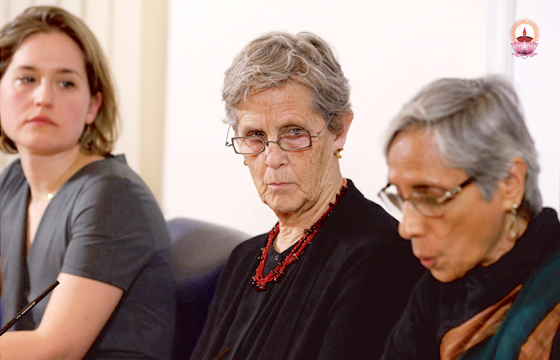
Catholic Church ‘has no future’ without women
Women of faith celebrated International Women’s day with discussions on women’s future in the Catholic Church and by exploring if women have been written out of scripture.
“We are talking about the survival of the Church,” said Joanna Moorhead, The Tablet’s Arts editor, who has written widely on the subject of women in the Church for publications including The Guardian, The Observer and The Times.
She told more than 200 participants in The Tablet’s webinar, Do Women have a future in the Catholic Church? that the issue was no longer a women’s issue but an issue for everyone. The question is – does the Church have a future without women?
“Of course it doesn’t. The church has no future without us,” she stated. She also noted the implications of younger catholic women falling away as the Church needs a membership to survive.
During The Tablet’s webinar, Zuzanna Flisowska-Caridi of Voices of Faith recounted her experience of the German Church’s synodal path of reform.
The process has brought together lay people, religious and bishops to discuss four major topics: the way power is exercised in the Church; sexual morality; the priesthood; and the role of women in ministries and offices in the Church.
Zuzanna Flisowska-Caridi, who is part of the commission working on women’s issues, described her experience in Germany as “quite extra-ordinary.”
She said: “Obviously, the process has its limits. But for me, it’s been a really wonderful experience in which lay people, theologians, male and, and female, religious sisters, are all sitting together at the one table, and they’re really trying not to have this hierarchical view. Everyone has his or her voice.
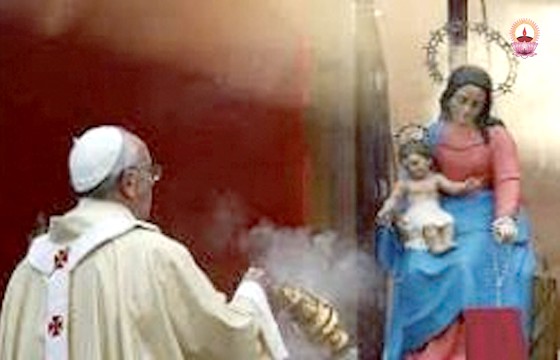
MARY IS NOT A CO-REDEMPTRIX SAYS POPE FRANCIS
“You are truly blessed! The Lord is with you,” Gabriel the Archangel tells Mary, in a greeting traditionally called the Annunciation, which is remembered today, March 25, in many churches that follow a church calendar.
This week Pope Francis has reminded Catholics that Mary is honoured as the mother of Jesus but “not as co-redeemer”.
“Speaking at his general audience on March 24, the Pope said that while Christians had always given Mary beautiful titles, it was important to remember that Christ is the only redeemer,” the Catholic News Agency reported.
“He was addressing a theological debate about whether the Church should issue a dogmatic definition declaring Mary ‘Co-Redemptrix,’ in honour of her role in humanity’s salvation.”
Pope Francis has previously called that idea ”foolishness.”
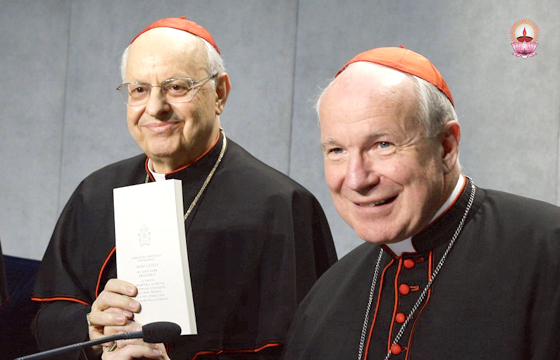
Cardinal Schönborn: Same-sex blessings “will not be denied”
A senior Churchman in Vienna and member of the Vatican’s doctrinal watchdog, Cardinal Christoph Schönborn, says he is “not happy with this statement from the Congregation of the Doctrine of the Faith” – the watchdog’s official name – regarding the Church’s power to bless same-sex unions.
The Church has no such power, the CDF said on Monday of last week – and explained why in a detailed letter that secular media outlets and Catholic punditry have frequently either cherry-picked or largely ignored.
Cardinal Schönborn, Abp of Vienna, distinguished blessings given to persons from those given to couples or their unions, saying that the Church – like a mother – can and should bless persons who seek her blessing whenever possible.
“The Church, as is traditionally said, is Mater et Magistra, mother and teacher,” Cardinal Schönborn offered. “She has to teach, but she is a mother first,” he added, “and many people living and feeling same-sex [attraction] are particularly sensitive to this question: ‘Is the Church a mother to us?’ And they remain children of God,” he went on to say. “They, too, want to see the Church as a mother – and that is why this declaration hit many so parti-cularly painfully: because they feel that they are being rejected by the Church.”
The distinction of individual blessings from those given to unions, however, was one the CDF letter explanatory was also at some pains to make.

Iranian Convert Couple Face Prison Summons
An Iranian Christian convert couple faces summons for their prison sentences any day. Homayoun Zhaveh, age 62, and his wife Sara Ahmadi, age 42, were sentenced in November 2020 as members of a house church on national security charges.
Homayoun, who also suffers from advanced stages of Parkinson’s disease, was sentenced to two years, while Sara was originally given 11 years. In December 2020, their appeals reduced Sara’s prison sentence to eight years. All other aspects of their sentencing were upheld including bans on foreign travel and membership of social or political groups.
Intelligence agents originally arrested the couple along in June 2019 while they were on vacation with a few friends. Agents questioned everyone, but only Homayoun and Sara were detained. They released Homayoun after one month, while Sara spent 67 days in prison, 33 of those in solitary confinement, and faced intense psychological torture.
On March 14, the couple was notified that the enforcing agents would soon summon them to serve their prison time. With their appeal process completed, the couple waits anxiously and nervously for their summons.
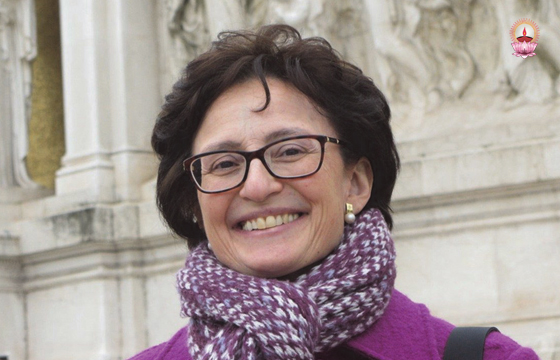
First woman secretary of Vatican Biblical Commission
On March 9, Pope Francis appointed Spanish biblical scholar, Sister Nuria Calduch-Benages, as secretary of the Pontifical Biblical Commission. She expressed her surprise and gratitude in this interview with Vatican News.
Sister Nuria has dedicated her life passionately to the study of the Bible. She teaches Old Testament at the Pontifical Gregorian University and is a renowned ex-pert on Sacred Scripture. Hailing from Barcelona, Spain, Sr Nuria is a member of the Congregation of Missionary Daughters of the Holy Family of Nazareth. She has also taken part in the work of the Study Commission on the Diaconate of Women (2016-2019). She has been a member of the Pontifical Biblical Commission since 2014. Her new term will last until 2025.
Among other positions, she is a guest professor at the Pontifical Biblical Institute in Rome, an assiduous collaborator of the Catholic Biblical Federation, a prominent member of specialized journals, serving on the scientific committee of the journal History of Women (University of Flo-rence) and collaborating on the series “Tesis y Monografías” pu-blished by Verbo Divino (Estella). In 2008 she participated as an expert in the General Assembly of the Synod of Bishops focusing on “The Word of God in the Life and Mission of the Church.”
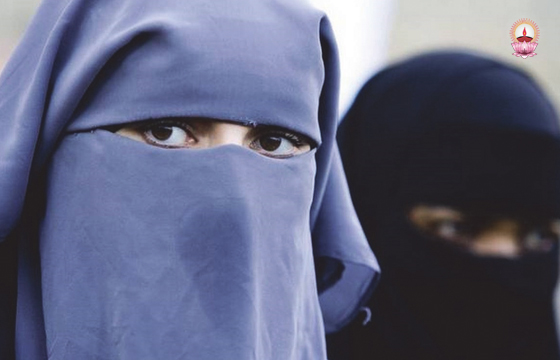
Sri Lanka announces burqa ban, to shut 1,000 madrasas
Sri Lanka will soon ban the burqa or face veil, a Cabinet Minister said on Saturday, as he announced the Rajapaksa administra-tion’s latest policy decision impacting the minority Muslim community.
Public Security Minister Sarath Weerasekara said authorities would henceforth use the controversial Prevention of Terrorism (PTA) law — that human rights defenders have termed ‘draconian’— to deal with religious extremism, with wide-ranging powers to detain suspects for up to two years, to ‘deradicalise’ them.
At a media conference, Mr. Weerasekara said: “The burqa is something that directly affects our national security…this [dress] came into Sri Lanka only recently. It is a symbol of their religious extremism.”

One in 8 Russians plan to observe Lent this year
Almost one in eight Russians intend to observe Lent this year, and the proportion among Orthodox Christians reaches 17%, according to the findings of a VCIOM poll obtained by Interfax.
Asked whether they had heard about Lent, 51% of respondents said they had heard something, but did not know exactly on which dates it falls this year. Among those who are religious, such respondents accounted for 45%. Sixteen percent said Lent starts after pancake week, and 14%, or one in seven, said March 15. Nearly one-fifth of Orthodox Russians, or 19%, know the correct start date this year. Meanwhile, 22% are undecided as to whether to observe Lent. Among religious Russians, the proportion is 30%, the pollster said.

Pakistani courts reconsider blasphemy penalty cases
Christian human rights groups in Pakistan are urging local courts to reject Sharia punishments for the blasphemy accused in the Muslim majority country.
Last week, a Peshawar High Court bench issued notices to the attorney general for Pakistan and provincial advocate general over a petition seeking orders for the government to remove the option of punishment other than the death penalty for blasphemy from the Pakistan Penal Code.
The petitioner claimed the issue of an alternative punishment of life imprisonment had already been decided by the Federal Shariat Court, but it had not been implemented by federal and provincial governments. The option of life imprisonment was made defunct after a Federal Shariat Court judgement in 1991.
The Centre for Legal Aid Assistance and Settlement (CLAAS) UK, a Christian charity dedicated to helping persecuted Christians in Pakistan, rejected the death penalty for blasphemy in a March 25 press release.
“It’s time to stop the misuse of the blasphemy law. We see every day how this law is being misused by individuals and religious groups to achieve their goals and settle their personal grudges, especially against religious minorities,” said Nasir Saeed, director of CLAAS.
“Several governments have pledged to stop its misuse, and even recommended 10 years imprisonment for a false accusation, but nothing has changed. Instead, voices against the misuse of the blasphemy law have been forced into silence.”
Kashif Aslam, Deputy Director of the Advocacy and Program National Commission for Justice and Peace (NCJP), the Church’s human rights body, in Pakistan agreed.
“Clearly the judges are prejudiced. We are experiencing such attitudes from the beginning,” he said. “Instead of being driven by emotions, they should go by the book. We demand overall reforms in judicial system,” he told.
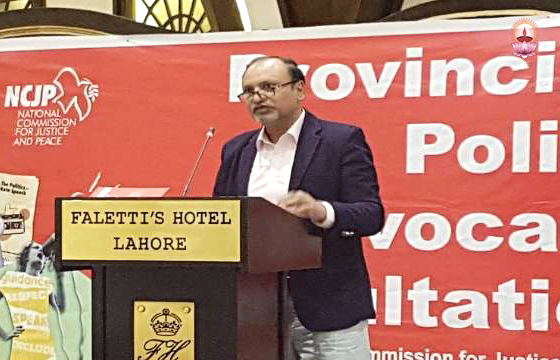
Hate speech the norm in Pakistan, church study claims
A new study published by a bishops’ commission highlights the psychological impact of hate speech on religious and sectarian minorities in Pakistan’s Punjab province.
“Hate speech in Pakistan is accepted as a norm. One of its immediate effects is that people experience a loss of self-esteem. There is a constant fear among minority community members regarding their security and survival. A Hindu student reported losing her interest in studies, claims the study titled “The cost of hate speech.”
It was based on 12 focus group discussions, held between February 2020 and February 2021, with about 200 individuals including Christians, Hindus, Sikhs, Shia and Ahmadi in both educational institutes and public places around Punjab. Similar sessions will be conducted in urban and rural areas of the three other provinces.
The National Commission for Justice and Peace (NCJP), the Church’s human rights body in Pakistan, launched its policy brief for Punjab in Lahore on March 17.
The commission made several recommendations including monitoring and regulating religious sermons and seminary curriculum, reforming the education system, a government policy on non-discrimination, a media campaign to pro-mote equality as well as federal and provincial committees to monitor hate speech.
According to Aila Gill, program coordinator of NCJP, this is the first time such data has been collected in the country.
“We have identified more than 50 hateful terms. A lexicon has been prepared with suggestive terminologies preferred by the different minority communities,” she told.
“Religious minorities generally don’t know derogatory hate speech experienced in daily life and have become immune to this common phenomenon. Most of them hide their religious identities and never report such incidents for fear of retaliation. They demand support from the majority community to register complaints against hate speech.”