
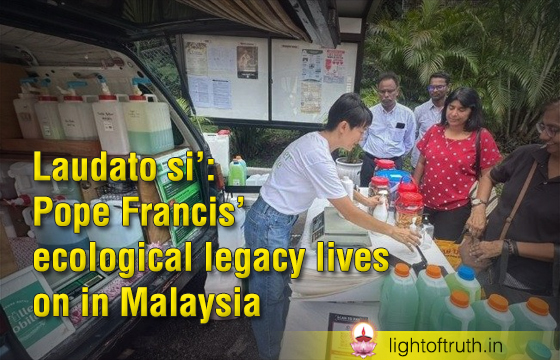
Pope Francis’ call for ecolo-gical conversion has transformed hearts and communities world-wide. In Malaysia, the late Pope’s call for climate responsibility has flourished, with churches leading the movement for environmental stewardship. Inspired by the late Pope Francis’ encyclical Laudato si’, which came out ten years ago, the Catholic Church in Malaysia is converting used cooking oil into biofuels, planting trees, cutting single-use plastics, recycling candles, and pledging to live out a “deep ecological spirituality.”
In 2023, the country’s bishops signed an Ecological Diocese Pledge, committing parishes to live out “deep ecological spiritua-lity” and advance environmental justice across the country.
All nine bishops in Malaysia initially signed the pledge, before encouraging all the country’s parish priests to do so as well. The document includes ecological protocols, self-monitoring forms, and other documents designed to assist each diocese and parish in their ecological transition, with a focus on reducing carbon foot-prints and fostering community resilience.
The text of the pledge reads, “The Roman Catholic Parish of (name), Malaysia, hereby decla-res its pledge to be an Ecological Diocese in perpetuity, living out a deep ecological spirituality and advancing ecological justice and resilience for all creation, by pursuing decarbonised pathways and the building of community and Earth resilience, according to the Ecological Diocese Protocols appended to this pledge, to the best of its ability and creativity within local circumstances.”
The Archbishop of Kuala Lumpur, Julian Leow Beng Kim, told Vatican News that Pope Francis “truly highlighted the existential problem of climate change with the encyclical Laudato si’ and the more recent and urgent call to action of Laudate Deum.”
“The world is indeed in crisis, and the whole of humanity must respond and have an integral conversion now before it is too late,” Archbishop Julian said. He added that he is encouraging all parishes in the Archdiocese to undergo an ecological conversion, saying that “although much has been done, much more is needed locally and globally to tackle this climate crisis.”

In the Philippines, empty chapels spark call for Eucharistic renewal
As the National Eucharistic Revival comes to an end in the United States this year, many believe there is a need for a global Eucharistic revival in other parts of the world — including the Philippines. Empty adoration chapels in the majority-Catholic country and lack of belief in the Real Presence are leading more parishes to implement a simple initiative called the “Holy Hour Pledge” and call for more catechesis.
Filipino-American priest Father James Cervantes of the Marians of the Immaculate Conce-ption (MIC) lamented the phenomenon throughout different parishes across the Philippines, despite its renown as the largest Catholic nation in Asia and the third largest in the world.
“I came here to Manila just a year and a half ago. I noticed there are a lot of adoration chapels where Jesus is exposed, but they’re empty and abandoned. I was puzzled. I thought, ‘OK, maybe this is just one.’ But then I visited another church and another, across different cities – and again, Jesus was exposed, but they were all empty. In the U.S. and in Poland, this wouldn’t even be allowed. All I could think was, ‘Oh Lord, no one is in here, I’m so sorry Lord.’” Cervantes recounted a tragic situation in one of the Manila parishes whereby the monstrance – with the consecrated host – was stolen by thieves inside an empty adoration chapel.
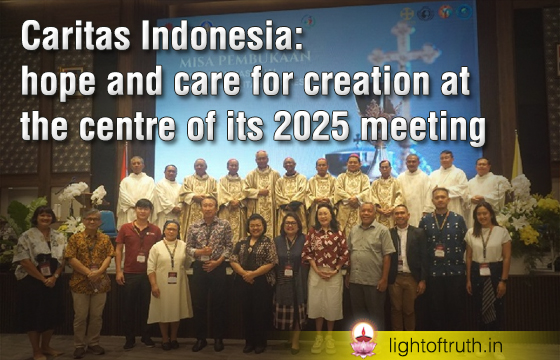
Caritas Indonesia: hope and care for creation at the centre of its 2025 meeting
Caritas Indonesia’s 2025 National Network Meeting was held from 21 to 24 May at the headquarters of the Catholic Bishops’ Confe-rence of Indonesia (KWI), in central Jakarta. The biennial meeting brought together the main actors of the Catholic Church’s huma-nitarian network to renew their commitment to cooperation, environmental justice and inclusive development across Indonesia. The theme echoed the Jubilee motto with hope at its centre.
The event fostered spiritual and strategic reflection, with participants urged to deepen their shared mission of mercy and solidarity. “The National Meeting is a vital opportunity to nurture synergy and strengthen the spirit of fraternal cooperation among diocesan Caritas offices nationwide,” said Emeritus Bishop Aloysius Sudarso SCJ, Chairman of the Karina Foundation’s Governing Board. “This spirit must guide our efforts in disaster response and long-term humanitarian programmes,” he added.
Now in the third year of the 2023-2027 Strategic Plan, Caritas Indonesia’s commit-ment is more on green initiatives. During the event, the dioceses presented their best pra-ctices for the care of Creation, in line with Pope Francis’s encyclical Laudato Si’. “These ecological programmes reflect our commit-ment to care for our common home,” Bishop Sudarso said, expressing hope that the meeting would generate follow-up actions to scale up environmental work across the country.
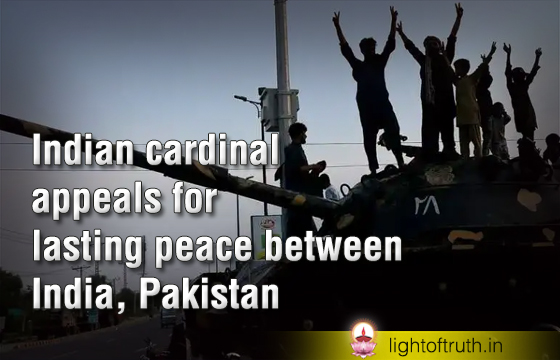
Indian cardinal appeals for lasting peace between India, Pakistan
A leading Indian churchman has called for a full and definitive agreement between India and Pakistan for lasting peace following the latest clashed involving the two nations, says a report. “It is time to put an end to ancient resentments,” Cardinal Oswald Gracias told the Vatican’s Fides news agency. “Ours is a heartfelt appeal for peace in Kashmir. We hope for a full and definitive agreement, which would be important not only for India and Pakistan but for peace in the world,” said the retired archbishop of Bombay (Mumbai), capital of Maharashtra state in western India. India and Pakistan agreed a ceasefire on May 10 following four days of retaliatory attacks. The conflict was triggered by a terrorist attack in the disputed Kashmir region on April 22 that left 26 civilians dead, mostly Indian tourists. New Delhi blamed Islamabad for harboring terrorist groups and orchestrating the attack, which Pakistan denied. The resulting conflict between the nuclear-armed rivals left about 70 people dead. Muslim-majority Kashmir became part of India following an agreement between its Hindu maharaja and the Indian government after the British partition of India and Pakistan in 1947. Both India and Pakistan claim the territory in full and have fought two wars over the region. It is now divided into Indian-administered and Pakistani-administered territories separated by what is known as the Line of Control. Pope Leo XIV welcomed the ceasefire on May 11 and hoped that “a lasting accord may soon be reached.” Cardinal Gracias echoed the call and said that “it is time for peace.”
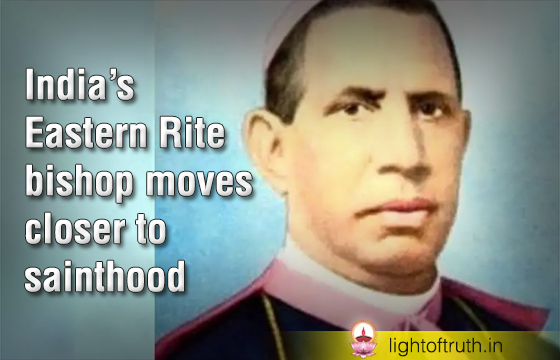
India’s Eastern Rite bishop moves closer to sainthood
The Vatican has declared Eastern Rite Indian Bishop Matthew Makil a venerable, bringing him one step closer to canonization. Bishop Makil (1851–1914), the first vicar apostolic of Kottayam vicariate in south-ern India, led the Syro-Malabar Church almost a decade before the Vatican established the Church’s hierarchy in 1923. Pope Leo XIV, on May 22, signed the decree declaring him venerable along with two other Servants of God – Sister Inés Arango Velá-squez and Bishop Alejandro La-baka Ugarte, reported the Vatican News. Makil, born in Manjoor village in Kerala state, is also the founder of the Sisters of the Visitation of the Blessed Virgin Mary. The launch of the women’s congregation signifies his social commitment, as he founded it in 1892 for the education of girls, just three years after becoming the Vicar General of Kottayam in 1889. His vibrant pastoral ministry led him to become the Apostolic Vicar of Changana-cherry in 1896. The Syro-Malabar Church was experiencing histo-rically turbulent times as his leadership role emerged a few years after Pope Leo XIII sepa-rated the Syro-Malabar Church from the Portuguese-led Latin hierarchy in the area in 1887. Although Pope Leo XIII esta-blished the Apostolic Vicariates of Trissur and Kottayam for Syro-Malabar Catholics, French Jesuit Bishop Charles Lavigne was appointed as the head of the Kottayam vicariate.
In 1889, Bishop Lavigne appointed Makil as the vicar general for the Knanaya Christian community, which had been clamouring for a separate identity and diocese. Makil steered clear of controversies and sought ways to resolve the conflicts arising from the differences between the two factions of Syro-Malabar Catholics – the “northerners,” who traced their faith to Saint Thomas the Apostle, and the “southerners” Knanaya commu-nity, which considered themselves the successors of migrant Meso-potamian traders. Makil visited Pope Pius X at the Vatican and submitted a joint memorandum signed by the three other apostolic vicars to establish the Apostolic Vicariate of Kottayam dedicated exclusively for the southerners.
In 1911, when a new Vicariate Apostolic of Kottayam was constituted exclusively for the southerners – the Knanaya Catholics who practice endogamy – Makil was transferred to Kottayam as its first Vicar Apostolic.
The status of a venerable is the step prior to beatification, the last one before canonization, which declares a Catholic’s life as worthy for other Catholics to emulate in practicing their faith.
The Church, by declaring Makil a “venerable,” officially acknowledges that he lived a life of heroic virtue and is worthy to be considered for beatification.
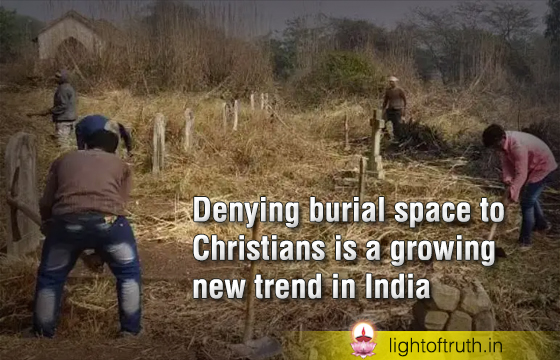
Denying burial space to Christians is a growing new trend in India
Refusing burial space to Christians has become a new trend in villages in central and eastern India to pressure Chris-tians into abandoning their faith and to discourage others from associating with missionaries, say Christian leaders. “Christians, irrespective of any denomination, are aware of repeated cases of denial of burial space to tribal Christians in their own villages. It has become a trend now and a serious concern,” Archbishop Victor Thakur of Raipur told UCA News on May 22. The latest reported case was that of Ankalu Ram Potai, who died on May 13 in the village of Havechur, in Chhattisgarh state’s Kanker district. Reports said villagers opposed his burial in the local graveyard because he was a Christian. Potai, who was 55 years old, had converted to Christianity a few decades ago, which upset the Hindu villagers. They kept watch outside the dead man’s home throughout the night on May 13 to prevent his relatives from burying him in the darkness, local media reported. In the last two years, Chhattisgarh and Odisha states alone have reported at least 25 cases of Hindu villagers refusing to bury Christians because of their faith, Christian leaders say. According to Christian activist Arun Pannalal, Chhattisgarh has reported at least 15 such cases since 2023. “It is aimed at forcing people to abandon their Christian faith,” he told. Odisha reported at least 10 cases in the past year, according to rights activist Father Ajay Singh of Cuttack-Bhubaneshwar archdiocese.
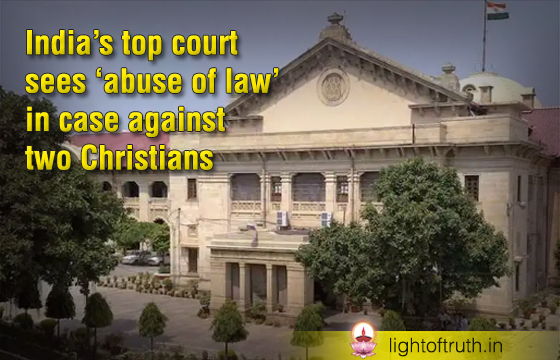
India’s top court sees ‘abuse of law’ in case against two Christians
India’s Supreme Court has quashed two criminal cases against a top Christian educator and his friend in northern Uttar Pradesh state, declaring the cases an “abuse of the process of law.” The May 24 order of the top court in the country said the lower courts need to exercise their powers to examine if “the criminal proceedings are being misused as instruments of oppression or harassment.” The order quashed two police complaints and the resultant criminal trial proceedings against Vinod Bihari Lal, the director of Sam Higginbottom University of Agriculture Technology and Science, based in Prayagraj, formerly Allahabad. The cases were registered against Lal and his friend, David Dutta, another Christian residing in Allahabad, in 2018, accusing them of violating a state law banning gangster activities. The charges included economic offences, as well as engaging in activities that threatened “law and order” in society. The complaint states that Lal and Dutta comprise “an organized gang… proficient in the commission of economic crimes through fraud and deceit” and other criminal activities, according to court documents. The complaint said that through criminal activities, they both “accumulate wealth” and, due to the “fear and terror” surrounding them, “no one comes forward” to report their crimes or “muster courage to testify in court.” The Allahabad High Court, the state’s top court, on May 19, 2023, rejected Lal’s plea for relief and allowed the district court to proceed with the criminal trial. It forced Lal to appeal to the Supreme Court to clear his name of the allegations.
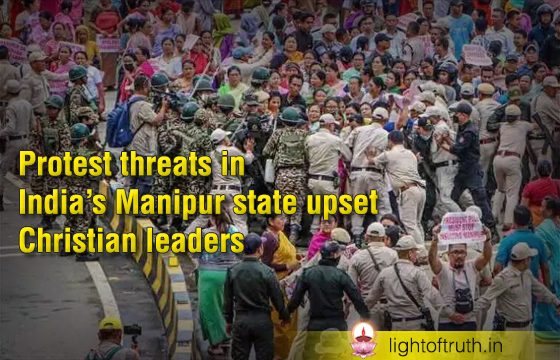
Protest threats in India’s Manipur state upset Christian leaders
An influential Hindu orga-nization in India’s conflict-ridden Manipur state has called for an escalation in protests against the state administration, which Chri-stian leaders warn could jeo-pardize ongoing peace initia-tives in the region. The Coordinating Committee on Manipur Integrity (COCOMI), the top body of the majority Hindu Meiteis, ended a 48-hour protest on May 24. The protest demanded an apology from the state governor, Ajay Kumar Bhalla, for what they called an “insult to the identity of the state” to appease their rival, the Kuki-Zo tribal people. “The Meiteis are targeting the governor, practically challenging federal rule. They want to restore a popular government under their leadership,” a local Church leader told on condition of anonymity because he feared for his safety, on May 27. In the latest protest, Meiteis held Bhalla responsible for insulting the state by concealing the state name – Manipur – written on the Manipur State Transport bus that carried media persons to cover a local flower festival – the Shirui Lily festival – in Ukhrul district, a tribal dominated area. They also decided to escalate their protest and called for a “civil disobedience campaign” against federal rule under Bhalla.
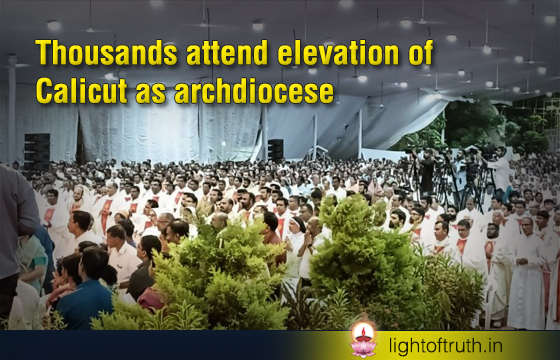
Thousands attend elevation of Calicut as archdiocese
More than 10,000 people braved heavy rains to attend a ceremony to elevate Calicut diocese as a metropolitan arch-diocese and its bishop as its first metro-politan archbishop. Apostolic Nuncio to India and Nepal Archbishop Leopoldo Girelli led the May 25 ceremonies at St. Joseph’s Church, in Kozhikode (formerly Calicut). In his homily during the inaugural Mass, Cardinal Baselios Cleemis, head of the Syro-Malankara Catholic Church and president of the Kerala Catholic Bishops’ Council, stressed the deep spiritual signi-ficance of occasion. He commended the faith and leadership of the faithful of the newly erected archdiocese. The cardinal paid tribute to St. Francis Xavier, whose missionary zeal in the Malabar region laid the foundation for the Syro-Malabar and Syro-Malankara Churches. He noted that Calicut’s new archdiocesan status stands as a testament to this enduring spiritual legacy, rooted in centuries of evangeliza-tion and community witness.
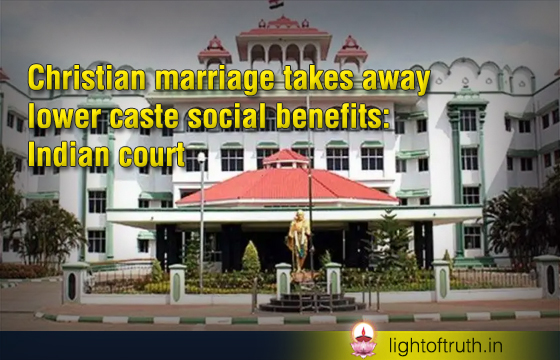
Christian marriage takes away lower caste social benefits: Indian court
The top court in southern Indian Tamil Nadu state has ruled that persons marrying under the Christian personal law should be considered to have converted to Christianity and abandoned their eligibility for caste-based social benefits. The ruling came in a case seeking the court’s order to disqualify the “illegal” election victory of a lower caste woman to a local body seat that is reserved for lower caste people, officially referred to as Scheduled Castes. In October 2022, Prime Mini-ster Narendra Modi appointed a three-member panel to exa-mine the implications of exten-ding benefits to Christians of lower caste origin, following the court’s request for the go-vernment’s view on the issue. The hearing is halted again due to the panel’s failure to submit its report to the government. Out of India’s 1.4 billion people, 201 million belong to the Dalit community, and nearly 60 percent of India’s 25 million Christians trace their origin to Dalit and tribal communities.