
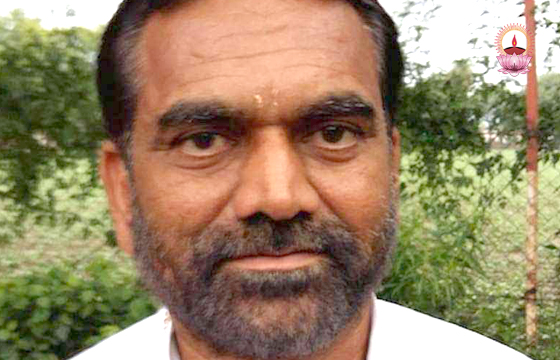
A Catholic bishop in central India’s Madhya Pradesh state died of a heart attack on May 6 after being treated for Covid-19.
The body of Divine Word Bishop Basil Bhuriya of Jhabua was buried on May 7 in the cemetery of his religious society in Indore town. He was 65.
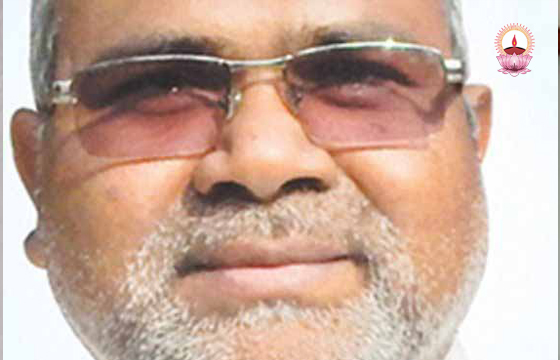
Vincentian provincial dies of Covid-19
Father Prakash Tirkey, Northern Indian provincial of the Congregation of the Mission (Vincentians), died of Covid-19 on May 7. He was 57. The death occurred at1:45 pm at St Joseph’s Hospital in Visakhapatnam, a port town in Andhra Pradesh, Vincentian Father Pravas Joseph told Matters India. His body will be brought from Visakhapatnam to Gopalpur on May 8 and Bishop Sarat Chandra Nayak of Berhampur will lead the funeral at 10:30 am under strict Covid-19 protocols.
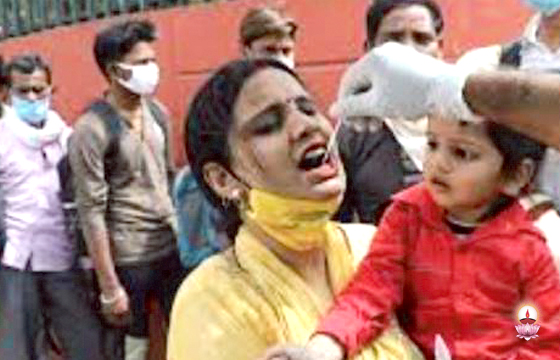
The Indian Bishops: closeness to the population affected by the pandemic; the government is clearly responsible
Deep concern and anguish for the second wave of Covid-19 that seriously affects the nation and full closeness and solidarity with the entire Indian population. With these sentiments, the Indian bishops intervene in the crisis phase the nation is going through, severely tested by the pandemic wave. The Catholic Church notes with extreme concern that India is reporting a record number of coronavirus cases and deaths, while there is an alarming shortage of medicines, vaccines and even oxygen supplies and hospital beds. The health system, observers say, is on the verge of collapse. Archbishop Prakash Mallavarapu, President of the Health Commission of the Indian Bishops’ Conference (CBCI), explains to Fides: “It can be said that the main cause of this tragic situation is the complacency of the government and the lack of conscience public. Negligence is putting a strain on everyone while the country struggles with a record rise in infections”. In fact, India has exported its more than 60 million Covid vaccines to 84 countries, while the country’s vaccination centers suffer from vaccine shortages. “Certainly there has been a great error of evaluation by the government and the general public: little attention has been paid to the rules on social distancing, while the state machine has ignored the application of the rules”, said Archbishop Mallavarapu.
“Most of the people in India are poor and the government must take this into account. Initially, we limited ourselves to establishing indefinite confinement, like the European nations, for example. However, prolonged isolation led to misery for the poorest. So later the rules had to be relaxed so that people could earn their bread. We are now in the midst of a tragic national emergency”, says the Archbishop, indicating the lack of political and strategic foresight to face the pandemic. Even Bishop Chacko Thottumarickal, of the diocese of Indore, in Madhya Pradesh state, (central India), says he is shocked by the current health crisis: “Many are dying. I know an entire Christian family that was infected and died. Even one of our young Bishops is hospitalized with Covid. Media reports here regularly discuss the government’s death figures, and some networks give much higher actual figures on deaths and infections”, says Bishop Thottumarickal, former president of the Communications Office of the Federation of Asian Bishops’ Conferences.
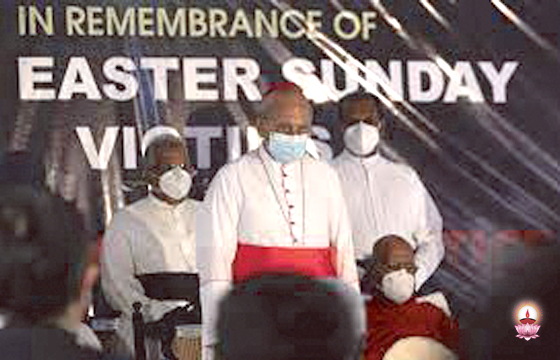
Sri Lankan archbishop asks Muslims to reject extremism
A Sri Lankan Catholic cardinal appealed to the country’s Muslims on April 21 to reject extremism and join Catholics in determining the truth behind Easter Sunday suicide bombings in 2019 that killed 269 people.
Archbishop of Colombo Cardinal Malcolm Ranjith made the appeal during a commemoration of the second anniversary of the attacks.
Catholic, Buddhist, Hindu and Muslim leaders joined the commemoration at St. Anthony’s Shrine in Colombo, where the first bomb exploded during its Easter service. They offered prayers and observed a two-minute silence to remember the dead.
Two local Muslim groups that had pledged allegiance to the Islamic State group have been blamed for the six near-simultaneous blasts at two Roman Catholic churches, a Protestant church and three tourist hotels.
Ranjith said players in global geopolitics and their local agents find religious extremism a useful instrument in achieving their goals.

“Situation in India is beyond heartbreaking”: WHO chief on Covid crisis
The World Health Organi-zation chief voiced alarm April 26 at India’s record-breaking wave of Covid-19 cases and deaths, saying the organization was rushing to help address the crisis.
“The situation in India is beyond heartbreaking,” Ted-ros Adhanom Ghebreyesus told reporters.
His comments came as India battles a catastrophic corona virus wave that has overwhelmed hospitals and crematoriums working at full capacity.
A surge in recent days has seen patients’ families taking to social media to beg for oxygen supplies and locations of available hospital beds, and has forced the capital New Delhi to extend a week-long lockdown.
“WHO is doing everything we can, providing critical equipment and supplies,” Tedros said.
He said the UN health agency was among other things sending “thousands of oxygen concentrators, prefabricated mobile field hospitals and laboratory supplies.”
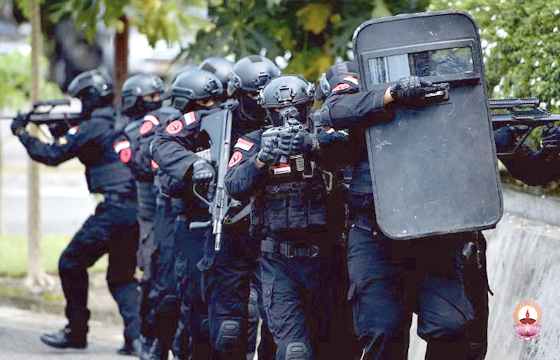
Indonesian police kill suspect linked to cathedral attack
Indonesian police have shot dead a suspected terrorist they believe was connected to a suicide bombing at a Catholic cathedral in Makassar in South Sulawesi province on Palm Sunday.
The police anti-terror squad Densus 88 shot dead the 42-year-old man, who was not named, during a raid on his home in Makassar, the provincial capital, on April 15.
The shooting followed the arrests in several cities over the past two weeks of 31 other suspects linked to the attack. Among them was the alleged bomb maker.
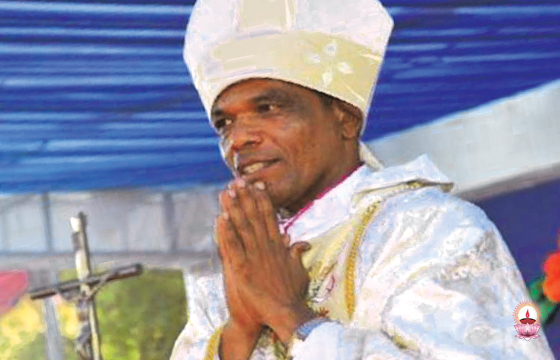
Indian bishop appeals for cremation of Covid-19 victims
A Catholic diocese in the western Indian state of Gujarat has appealed to priests and followers to cremate people who die from Covid-19.
Bishop Athanasius Rethna Swamy of Ahmedabad in a pastoral letter dated April 12 said that the “present situation poses a challenge to the Church in administering the last rites to the departed ones in a dignified manner. There are also issues of the dwindling space in our cemeteries.”
“In circumstances when cremation is chosen because of sanitary, economic or social considerations, this choice must never violate the explicitly stated or the reasonably inferable wishes of the deceased faithful,” Bishop Swamy’s letter said.
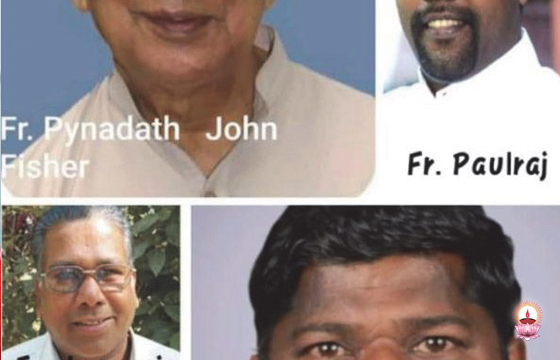
Covid-19 claims five priests in Gujarat one day
The Catholic Church in Gujarat has lost five priests in 24 hours as the second wave of the Covid-19 pande-mic continues to create havoc in India.
“It is a particularly sad time for us in the Church of Gujarat that we have lost five priests in less than a day,” bemoans Jesuit Father Cedric Prakash, an acitivist of human rights, reconciliation and peace and a writer based in Ahmedabad, Gujarat’s commercial capital.
Two of the deceased priests were from Father Prakash’s congregation while others were a diocesan, a Carmelite of Mary Immaculate and a Divine Word Society.
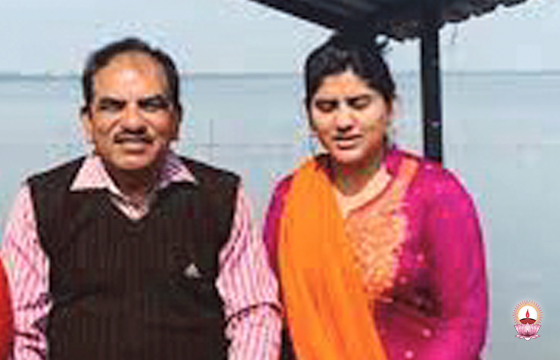
Christian arrested in India after saying Christ predicted in Hindu scriptures
An employee for the Archdiocese of Bhopal’s commission for education has been released on bail after his arrest for the “intentional insult” of the Hindu religion.
Rajendra Dwivedi was arrested on Easter Sunday after he published articles on his blog claiming the salvation of Jesus had been revealed in the Vedas and Upanishads, religious texts in Hinduism. Although he works for a Catholic archdiocese, Dwivedi is a Protestant pastor and a convert to Christianity.
Bhopal is the capital of the Indian state of Madhya Pradesh, which recently passed a Religious Freedom Bill, which despite its name is an “anti-conversion” law aimed at keeping Hindus from joining other religions.
“It is again a sign of religious intolerance … where the constitution values like freedom of expression and the right to propagate my own religion,” said Father Maria Stephen, the public relations officer for the Archdiocese of Bhopal.
“More similar arrests have taken place after the latest anti conversion bill. The fundamentals take the maximum advantages of the bill,” he told Crux.
“It is the fight between truth and lies, justice and injustice, light and darkness. The lies appear that they are fast in the race, but the truth endures forever. It is what the Risen Lord taught us. Be not afraid,” Stephen said.
Hindu nationalists often accuse Christians of using force and surreptitious tactics in pursuing conversions, often storming into villages and leading “reconversion” ceremonies in which Christians are compelled to perform Hindu rituals.
These pressures on Christians, which also affect Muslims and other religious minorities, are part of what observers describe as a broad program for the “saffronization” of India under Prime Minister Narendra Modi, meaning an attempt to impose Hindu values and identity while squeezing out rival faiths.
Modi is a member of the Bharatiya Janata Party (BJP), which has ruled India since 2014. The BJP is linked with the the Rashtriya Swayamsevak Sangh (RSS), a Hindu nationalist group.
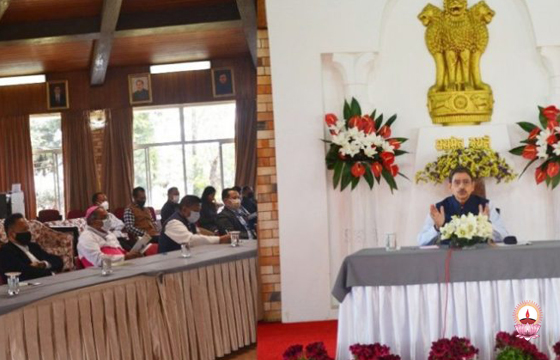
Nagaland governor seeks Church help to tackle Covid-19
Amid surging Covid-19 infections in the Christian majority Nagaland, Governor R N Ravi has requested Church leaders to influence people to follow corona virus protocols.
The governor held a meeting on April 19 with leaders of various Christian denominations in Nagaland at Dr Imkongliba Hal inside Raj Bhavan, his residence, in Kohima, capital of the northeastern Indian state.
The governor discussed the Covid-19 situation in the country as well as in Nagaland. He told the Church leader to use their moral and spiritual authority to save people from the pandemic.
On April 19, Nagaland reported 13 positive cases, taking the state’s caseload to 12,568. On the same day, India reported nearly 260,000 cases.