
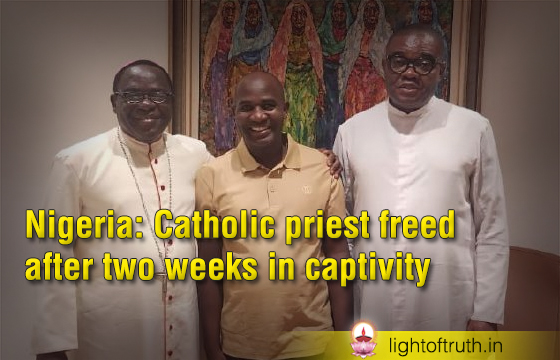
Nigerian priest Mikah Suleiman was released on Sunday night, July 7, after more than two weeks in captivity. The parish priest of St Raymond’s Catholic Church, in Damba, Zamfara State, had been abducted from his presbytery in Sokoto Diocese, north-west Nigeria, in the early hours of Saturday, 22nd June. In the days that followed, fears for his safety grew, especially after a video was released, in which the captive priest warned of threats to kill him. Announcing his release, Bishop Matthew Kukah of Sokoto thanked Catholic charity Aid to the Church in Need (ACN) for praying for Father Suleiman’s safety: “Thank you so much [to] the entire ACN family. Your love and support mean so much.” Speaking in a video message shared on Facebook yesterday, Father Suleiman stated he was in good health adding: “I want to thank you for your prayers and your support towards my rescue. “By the grace of God, I am out of the hands of the bandits. Thank you very much.” Sokoto Diocese communications director Father Pascal Salifu said: “We extend our heartfelt gratitude to God for his protection and to everyone who offered prayers and support during this challenging time.” He added: “Our thanks also go to the authorities and all involved in securing Father Mikah’s release.” About 10 days ago, a video message was released in which Father Suleiman stated: “[The bandits] told me that killing a person is not difficult for them.” He added: “Please save my life in the name of God. Look at my head, look at my legs. I was tied to a [rope] and I am the only one in this place. Normally, if they kidnap somebody, they don’t waste time.”
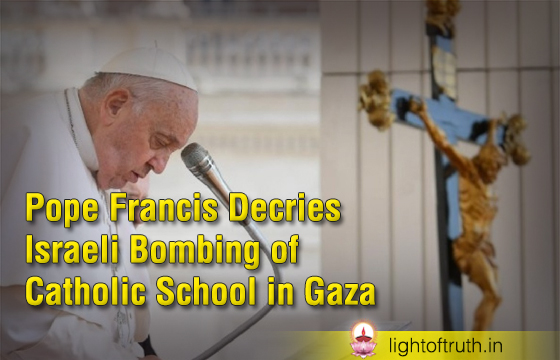
Pope Francis Decries Israeli Bombing of Catholic School in Gaza
In a press release issued by the Holy See Press Office, Pope Francis expressed his pain over the recent bombings by Israel and Russia against innocent people. Israel attacked a Catholic school in Gaza and Russia attacked two medical centres in Kiev, one of them a children’s hospital. “With great sorrow the Holy Father has learnt the news of the attacks against two medical centres in Kiev, among them, the largest children’s hospital in Ukraine, as well as against a school in Gaza,” stated the press release, adding that “The Pope expresses his profound shock over the escalation of violence. At the same time, he expresses his closeness to the victims and the innocent wounded; he hopes and prays that soon concrete ways will be identified to put an end to the conflicts underway.” The Israeli attack against the Catholic school in Gaza, where previously the same Army killed innocents, occurred on Sunday, July 7, leaving four people dead. The Israeli Army attacked two classrooms on the ground floor, places where entire families are sheltered. The Israeli Government said the building was being used as a hiding place and housed a weapons manufacturing plant, something yet unproven. Up to now, the number of killings committed by the Israeli Government surpasses 35,000.
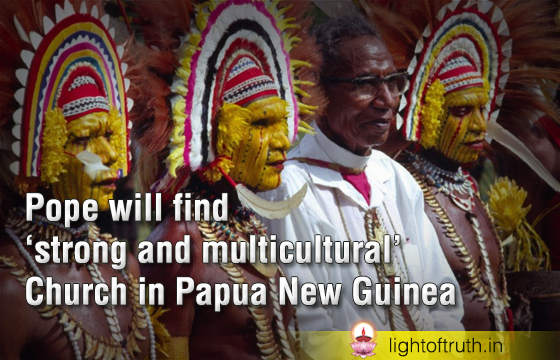
Pope will find ‘strong and multicultural’ Church in Papua New Guinea
“Pope Francis will find a Church with a strong practice of faith, but in the style of Papua New Guinea. These are very ancient peoples with very ancient traditions. For them, the Pope’s presence is a confirmation of their journey as a Church, as the people of God.” Fr. Mario Abzalón Alvarado Tovar, Superior General of the Missionaries of the Sacred Heart (MSC), offered that assessment in an interview with Vatican News ahead of the Pope’s Apostolic Journey to Asia and Oceania, which will include a stop in PNG on September 6-9.
The Guatemalan-born missionary describes Papua New Guinea as a multicultural world and the Church there as multi-coloured, multilingual, and multi-ethnic in every sense. “There is a saying that describes Papua New Guinea,” Father Alvarado said, “as ‘the land of the unexpected’.” It is a country with a very ancient cultural tradition but with a way of life very different from the Western world. “Pope Francis will find a Church with a strong practice of faith, but in the style of Papua New Guinea, of the islands of New Guinea, of the mainland, of the highlands, and of the coastal areas,” he said. “These are very ancient peoples with very ancient traditions. We need to change the SIM card in our heads when we arrive in Papua New Guinea.”
Referring to the ecclesial reality that Pope Francis will encounter in Papua New Guinea, Father Alvarado indicated that it is a Church with many rituals and dances, born from a rural world of jungle, rivers, fishing, and hunting.
“We missionaries have a province with more than 115 missionaries, all natives, and there are several congregations in the Church of Papua New Guinea. It is a very simple people in that sense, but very multicultural, multilingual, multi-coloured. It is difficult to describe in words, but there is a rhythm of time where what we say in the missions becomes evident: the people have the time, and we have the clocks. For them, time is always present. That is the great people of New Guinea.”
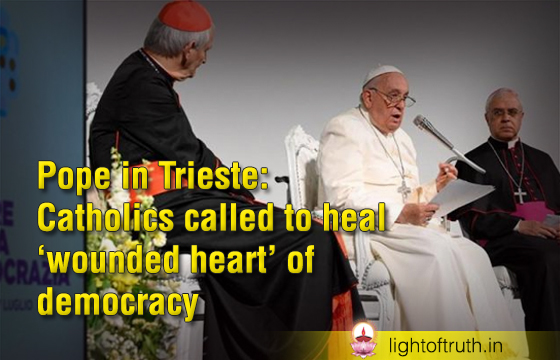
Pope in Trieste: Catholics called to heal ‘wounded heart’ of democracy
On the final day of the annual Italian Catholic Social Week, Pope Francis traveled to the northern Italian city of Trieste on July 7 to share his thoughts on the crisis of democracy. Speaking to over 900 delegates from dioceses and associations across Italy, the Pope appealed for a democratic process that engages personal and community involvement.
In his address, Pope Francis offered an image of the crisis of democracy as “a wounded heart,” in which corruption and social exclusion can abound and power becomes self-referential and incapable of serving its constituents.
“The very word ‘democracy’ does not simply coincide with the vote of the people but requires creating the conditions for everyone to express themselves and participate,” he said.
Democratic participation, he added, must be instilled at a young age, so that citizens embrace a critical sense “regarding ideological and populist temptations.” The Pope called on Christians to promote a fruitful dialogue between religion and society, while upholding the dignity of the person.
“The principles of solidarity and subsidiarity,” he said, help build the bonds of democracy, since they encourage participation and overcome indifference, which he said is “a cancer of democracy.”
The Pope went on to uphold the goal of democratic participation with the image of a “healed heart.” “If we look around,” he said, “we see many signs of the Holy Spirit’s action in the lives of families and communities, even in the fields of economics, technology, politics, and society.” Fraternity, added Pope Francis, “makes social relationships flourish,” and engenders a spirit of collective aspiration. “A democracy with a healed heart,” he said, “continues to cultivate dreams for the future, engages, and calls for personal and community involvement.”
Catholics, said the Pope, must look beyond quick fixes for democracy’s ills and never retreat into a “marginal or private faith.”
“This means not so much demanding to be heard,” he said, “but above all having the courage to make proposals on behalf of justice and peace in the public debate.” Christian engagement in politics must take on the aspects of “political love” or “political charity,” which allows politics to “rise to its responsibilities and move beyond polarizations”. “Let us train ourselves in this love to circulate it in a world short of civil passion,” concluded Pope Francis. “Let us learn to better walk together as God’s people, to be leaven of participation among the people to which we belong.”
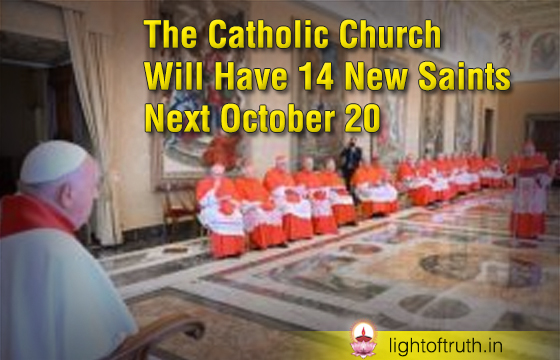
The Catholic Church Will Have 14 New Saints Next October 20
On July 1, in the Hall of the Consistory of the Vatican’s Apostolic Palace, Pope Francis presided over the celebration of the Canonical Hour of Terce of the Divine Office and the Ordinary Public Consistory for the Canonization of Blesseds. Manuel Ruiz López and Seven Companions of the Order of Friars Minor, and Francis Mooti and Raphael Massabki, lay faithful, martyrs.
Joseph Allamano, priest, Founder of the Institutes of Men Missionaries of the Consolata and Women Missionaries of the Consolata. Marie Léonie Paradis (born Virginia Alodie), Foundress of the Congregation of the Little Sisters of the Holy Family. Elena Guerra, Foundress of the Congregation of the Oblates of the Holy Spirit, known as the “Sisters of Saint Zita.” Carlo Acutis, lay faithful. In the course of the Consistory, the Holy Father decreed that Blessed Manuel Ruiz López and Seven Companions, and Blesseds Francis Mooti and Raphael Massabki, Blessed Joseph Allamano, Blessed Marie Léonie Paradis and Blessed Elena Guerra be inscribed in the Catalogue of Saints on Sunday, October 20, 2024, whereas Blessed Carlo Acutis will be inscribed in the Catalogue of Saints at a date yet to be determined.
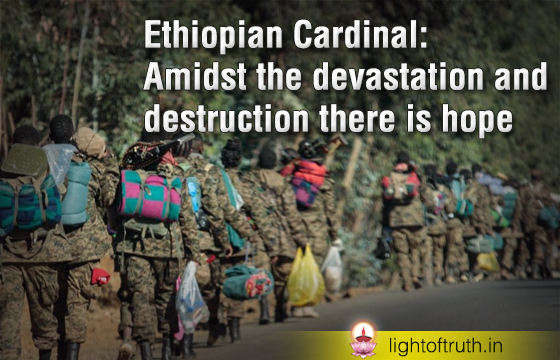
Ethiopian Cardinal: Amidst the devastation and destruction there is hope
Card. Berhaneyesus Demerew Souraphiel, Metropolitan Archbishop of Addis Ababa, has always been involved in addressing the humanitarian crises that have risen in Ethiopia as a result of past and ongoing conflicts. In a recent interview with Fides News Agency, he stated that “there are various conflicts in Ethiopia, but we must never lose hope.”
Discussing the internal conflicts in the country, Cardinal Souraphiel spoke of the suffering caused to the population. He noted that the Tigray war has ended, with the signing of a peace treaty in Pretoria, but that even so, humanitarian needs are desperate. Likewise, humanitarian needs in Oromia are severe, affecting both the displaced and those who remain amidst the war. Similar situations are unfolding in the Amhara region, where recent conflicts between the federal government and the Fano militia have exacerbated the crisis.
Cardinal Souraphiel emphasised the Church’s efforts, through Caritas Internationalis, to provide aid to as many affected individuals as possible. He stated, “The Catholic Church is a small reality in Ethiopia, but it seeks to reach the largest number of displaced persons and those living in war zones to offer them aid.”
Addressing the psychological and spiritual “wounds” caused by the wars, Cardinal Souraphiel underscored the extremely vast and varied impact on the population, especially on women, children, the elderly, and those who have been forced to fight. “Every war leaves many people affected not only in the body but also in the soul and spirit,” he noted. The Church aims to offer assistance in social, psychological, and spiritual fields, with a particular focus on trauma care. The cardinal said special attention is given to children and their mothers, many of whom cannot attend school, and to women who have been victims of rape.
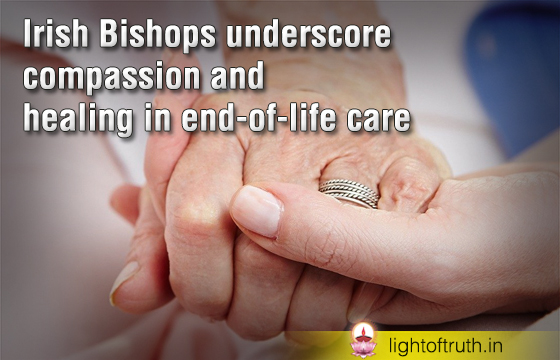
Irish Bishops underscore compassion and healing in end-of-life care
The Irish Catholic Bishops’ Conference has published a pastoral statement entitled “Freedom to Live Fully, Until Death Comes” to inform people of faith and goodwill who wish to protect and support human life with dignity and compassion, especially in the last weeks of terminal illness.
The pastoral letter came out at the end of June 2024, in view of national discussions following the Irish parliament’s “Final Report of the Joint Committee on Assisted Dying” published in March, in which the government introduces legislation allowing for assisted dying in certain circumstances.
The pastoral statement consists of a text, but also a 35-minute video that explains and illustrates the Church’s teachings on end-of-life care, and especially its focus on the compassionate care needs of the whole person. Bishop Kevin Doran of Elphin Diocese and Chair of the Irish Bishops’ Council for Life spoke to Vatican News, and said the aim of the video was to better convey the human reality of these issues.
The video is entitled “Through the Valley” and features a collection of reflections and conversations with the terminally ill, family members of people who have died with terminal illness, and healthcare professionals. Bishop Doran believes, “this medium of film helps to capture…a human story which is so important in getting across the message that it is actually possible to live fully and richly, even in terminal illness and even in palliative care.”
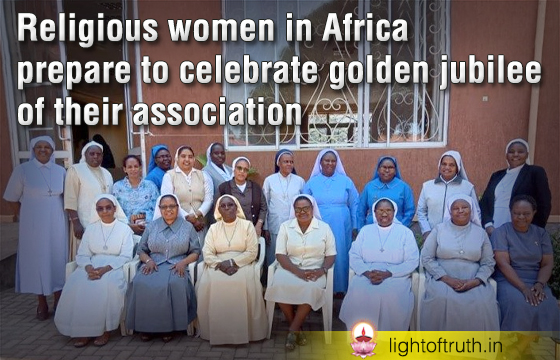
Religious women in Africa prepare to celebrate golden jubilee of their association
Malawi’s religious women will host golden celebrations of the Association of Consecrated Women in Eastern and Central Africa (ACWECA) from 19 August to 24 August 2024 in Lilongwe, Malawi. It will also be the 19th Plenary Assembly of the Association. ACWECA is the umbrella body of Catholic consecrated religious sisters in countries of the Eastern and Central Africa. The ACWECA region comprises 10 countries: Sudan, South Sudan, Malawi, Tanzania, Kenya, Uganda, Ethiopia, Eretria, and Zambia. Zimbabwe is an affiliate member.
ACWECA Secretary General, Sr. Bridgita Samba Mwawasi, says all is set for Malawi to host the long-awaited 19th Plenary Assembly at the Golden Peacock Hotel in Lilongwe. She said preparations for the two-tier celebrations are now at an advanced stage. Malawi will host at least 200 delegates during the Plenary. These include the ACWECA executive board, staff, and the council of delegates, which has voting rights.
A team of observers comprising representatives of the International Union of Superiors Generals (UISG), religious women from outside the ACWECA region, and donor partners are also expected at the Assembly.
“After a colourful official opening Mass on 19 August at Lilongwe’s CIVO Stadium, the major part of the Plenary Assembly shall be the discussions of the theme: ‘Transformative holistic formation for authentic living towards a deeper evangelization in the ACWECA region and beyond.’ Then, we will also celebrate the Golden Jubilee,” Sr. Mwawasi said.
Some of the topics to be discussed during the Plenary Assembly include revitalising consecrated life and religious identity today and holistic religious formation in view of living the congregations’ charism and gospel values. Other topics include mental health and self-care in religious congregations.
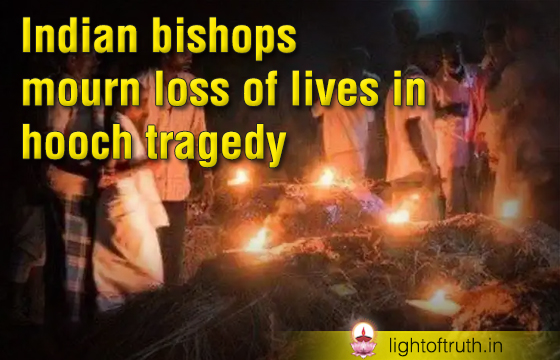
Indian bishops mourn loss of lives in hooch tragedy
Consumption of spurious liquor led to the death of 57 people, most of them daily wage laborers, and left 150 others battling for life in a hospital in a southern Indian state. The Catholic Bishops’ Conference of India (CBCI) expressed its “profound sorrow and condolences to the families of those who tragically lost their lives after consuming methanol-mixed liquor in Tamil Nadu [state].” Many of those who died were Dalits or formerly untouchables from Kallakuruchi town and its nearby villages who worked as daily labourers. “Our thoughts and prayers are with the victims and their families during this heartbreaking time,” the CBCI said in a June 21 statement. The Catholic bishops also sought action against those involved in the illicit liquor trade that led to the tragedy. The state police’s crime investigation department has arrested seven suspects so far since the tragedy on June 19. The victims, among them two women and a transgender person, consumed the spurious liquor in the evening after a hard day’s work. “Among the dead are a few Protestant Christians,” said a Catholic priest in the Arch-diocese of Pondicherry-Cuddalore which covers the Kallakuruchi town and its surrounding area. However, the exact number of Christians who died or are in serious condition could not be ascertained due to the highly tense situation, he said. “It is still ex-plosive despite heightened security,” the priest who wished to be anonymous told.
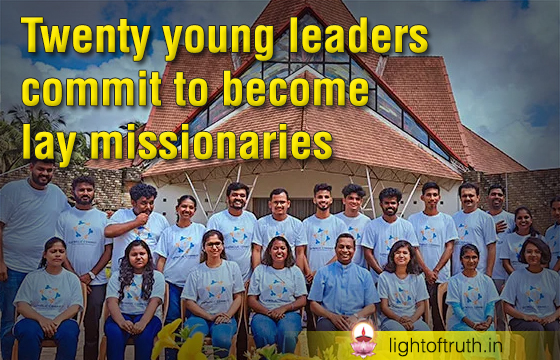
Twenty young leaders commit to become lay missionaries
As many as 20 young people from seven Indian states have committed to becoming lay missionaries through the Communio missionary training programme. The commitment ceremony took place on June 23 at St. Francis Assisi Church at Tallur, Udupi diocese, Karnataka. The second batch of the missionary training programme organized by Communio in collaboration with the Youth Commission of the Conference of Catholic Bishops of India was inaugurated by Father Stephen Alathara, Deputy Secretary General, CCBI, and the Director of Communio. Earlier in March 2024, the Youth Commission trained 30 youth for their missionary journey. The Communio Missionary Training Programme that began on June 22 will conclude on June 27 when the trainees take the missionary pledge before Bishop Gerald Isaac Lobo of Udupi. The selected volunteers, chosen for their diverse linguistic, cultural, and environmental backgrounds, are being immersed in the local culture by staying with twenty families from St. Francis Assisi parish.