
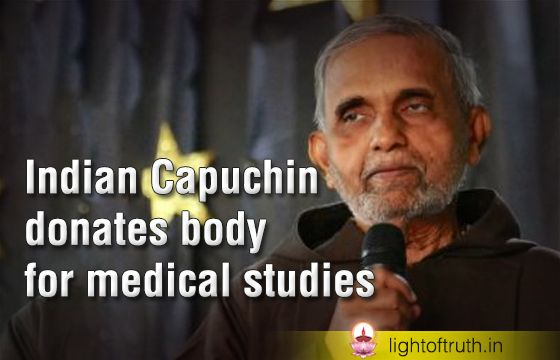
The Capuchin Catholic religious order in India has donated the body of a member priest for medical research and studies, following the rare wish of the dead priest. Capuchin Father Xavier Vadakkekara, a former editor of the Catholic newsweekly Indian Currents, died in New Delhi at 72 on March 16. His body was handed over to New Delhi’s government-run All Indian Institute of Medical Sciences on March 18 “as per his last wish,” said Father Suresh Mathew, a confrere of the diseased priest. The last wish of Vadakkekara “reflects in his final act of generosity and lifelong commitment to serving humanity,” Mathew told UCA News March 19. Vadakkekara, who has been under treatment for partial blindness and had a complicated medical history for more than two decades, died at Holy Family Hospital in New Delhi while undergoing “treatment for acute respiratory insufficiency,” said an official statement from Capuchin order. Mathew, also a former editor of Indian Currents, remembered Vadakkekara as “a veteran journalist and editor known for his objectivity and great acumen for news.” He credited his senior confrere for mentoring and encouraging many journalists to work in various Indian media. “He left an indelible mark on the Catholic media landscape in India,” Mathew added.
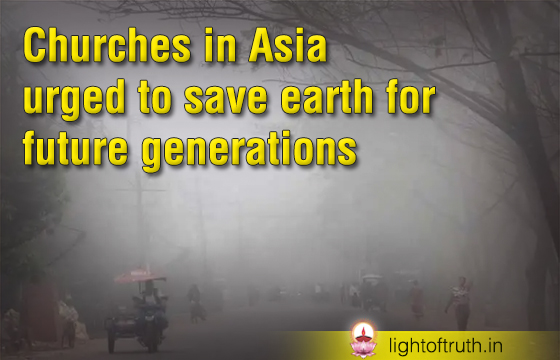
Churches in Asia urged to save earth for future generations
The president of the Asian bishops’ body has urged churches in the continent to safeguard the earth for future generations, stressing the need to “rise to the moment with courage and determination.” “Across Asia, we see creation groaning under the weight of human indifference, abuse, and exploitation,” said Cardinal Filipe Neri Ferrao, president of the Federation of Asian Bishops’ Conferences (FABC). In his March 15 pastoral letter titled “To the Local Churches in Asia on the Care of Creation: A Call to Ecological Conversion,” Ferrao, who is the archbishop of Goa and Daman, said, “the consequences are already visible and scientifically attested.” He noted the devastation of rainforests in Indonesia, Papua New Guinea, Malaysia, Myanmar, and the Philippines and the displacement of indigenous communities. “These forests, vital for the survival of the planet, are under immense pressure from illegal logging, agricultural expansion, and mining,” he said. Ferrao also cited biodiversity loss, rising sea levels, coastal displacement, water security, air pollution, stronger and frequent extreme weather events, agricultural crises, and food security. “Warming in the Pacific Ocean has intensified typhoons, flooding, and rising sea levels, which threaten the existence of entire villages in countries like the Philippines, Bangladesh, and Vietnam,” the prelate said. He further said the melting of glaciers in the Himalayas and drying rivers in South and Central Asia are endangering the water supply for millions.
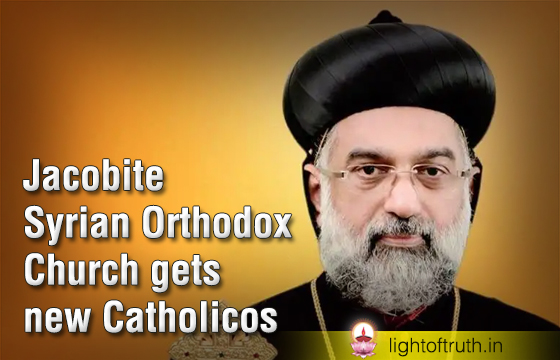
Jacobite Syrian Orthodox Church gets new Catholicos
The Supreme head of the Syriac Orthodox Church anointed the new leader of their Church in India during a solemn ceremony in Beirut, the capital of Lebanon, on Mar. 25. Mor Ignatius Aphrem II, the Patriarch of Syriac Orthodox Church, led the special ceremony in St Mary’s Syrian Orthodox Cathedral to anoint Joseph Mor Gregorios as Catho-licos, the head of the Malankara Jacobite Syrian Orthodox Church in India. Catholicos is the second-highest title in the Church after Patriarch. Gregorios has now assumed the title of Catholicos Aboon Mor Baselios Joseph I. His elevation follows the death of Aboon Mor Baselios Thomas I, who was known for strong leadership and connection with people from all walks of life. Dignitaries, including ministers from the federal and provincial governments of Kerala state in southern India, the home state of the Catholicos, attended the special ceremony in Lebanon. Indian Prime Minister Narendra Modi was among the dignitaries who expressed their happiness over Gregorios’ elevation. In a mess-age sent through an emissary, Modi said, “In various fields of the Church, the Catholicos has shown remarkable excellence.” He wished “the Jacobite Syrian Church continued progress under his leadership.” In his congratu-latory message, Major Abp Raphael Thattil, the head of India-based Eastern rite Syro-Malabar Church, said that the “Catholi-cos’ spiritual leadership will be a blessing for the Jacobite Church and society at large.” Thattil also expressed the hope that the Catholicos will work towards the progress and welfare of the Christian community globally.”
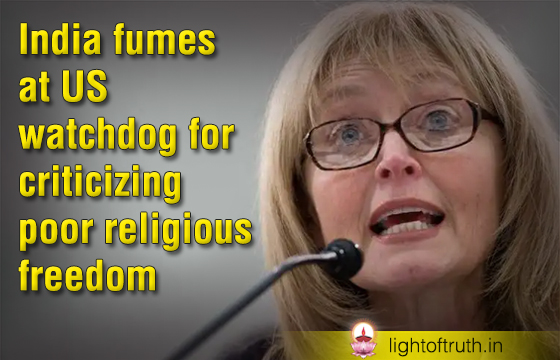
India fumes at US watchdog for criticizing poor religious freedom
The Indian government has slammed the US government’s religious freedom watchdog after its latest report said faith freedom is seriously shrinking in India. The United States Commission on International Religious Freedom (USCIRF) should be called “an entity of concern” because of its “efforts to undermine India’s standing as a beacon of democracy,” a federal government official told media on March 26 in New Delhi. Randhir Jaiswal, spokesperson for the Federal Ministry of External Affairs, made this statement the day after the US watchdog released its report. The report urged the US government to designate India as a “country of particular concern” due to its engagement in and tolerance of systematic, ongoing, and egregious violations of religious freedom, as defined by the International Religious Freedom Act. The report also urged the US to impose “targeted sanctions” on entities such as India’s foreign intelligence agency, the Research and Analysis Wing (RAW), for “their culpability in serious violations of religious freedom.” India dismissed the report as “biased and politically motivated” and said USCIRF was misrepresenting “isolated incidents and cast aspersions on India’s vibrant multicultural society.” The US report said India “increasingly enforced sectarian policies seeking to establish India as an overtly Hindu state, in contrast with the secular principles of the constitution” during the past 10 years. Prime Minister Narendra Modi came to power more than 10 years ago in 2014 and won the next two elections in 2019 and 2024, leading his Bharatiya Janata Party (BJP) on the promise of prioritizing Hindu interests. The report accused top BJP leaders of engaging in “hateful rhetoric and disinformation against Muslims and other religious minorities to gather political support” ahead of the general elections in 2024. “Such rhetoric fueled attacks on religious minorities that continued after the election, including vigilante violence, targeted and arbitrary killings, and demolition of property and places of worship”, it said.
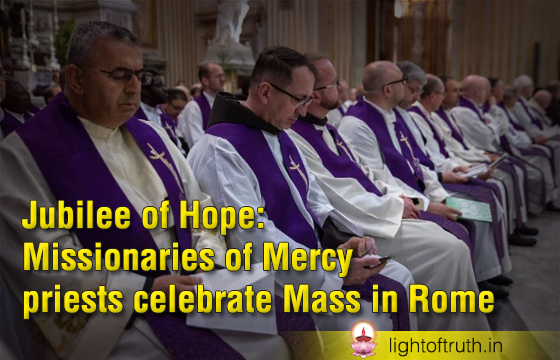
Jubilee of Hope: Missionaries of Mercy priests celebrate Mass in Rome
The Holy Mass for the Jubilee of Priests instituted as Missionaries of Mercy was celebrated on March 30 at the Basilica of Sant’Andrea della Valle in Rome. Hundreds of “Missionaries of Mercy” – priests with the authority to “pardon sins reserved to the Holy See” (Misericordiae Vultus, 18) – gathered in Rome’s basilica dedicated to St. Andrew the Apostle to concelebrate Mass with Archbishop Rino Fisichella, pro-prefect of the Vatican’s Dicastery for Evangelization.
In his homily, Fisichella reminded missionaries of mercy priests that they are “special instruments of reconciliation” who offer God’s great love to those who come to the sacrament of confession in search of forgiveness for their sins. Fisichella encouraged the priests to be confessors who open their hearts and minds to “welcome those who approach us” but to also go out in search of those who are still far from the Church.
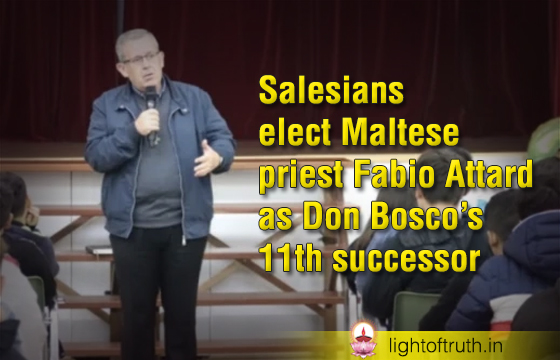
Salesians elect Maltese priest Fabio Attard as Don Bosco’s 11th successor
Maltese priest Fabio Attard was elected as the new rector major of the Salesian congregation during its general chapter in Turin, Italy, becoming the 11th successor of St. John Bosco. The new superior general of the order founded in 1859 succeeds Spanish Cardinal Ángel Fernández Artime, who became prefect of the Dicastery for Institutes of Consecrated Life and Societies of Apostolic Life in January.
According to the Salesians, the new rector major did not participate in the Salesian chapter meeting, so he was informed of his election by telephone, at which point he was asked for his required acceptance. “His words were heard in the hall and, moved to tears, he thanked the brothers for their trust and especially for their trust in God in taking on this new task,” the Salesians said in a statement.
This is the first time that the new rector major is not among the members of the general chapter, “so the profession of faith upon accepting the office and the greeting from the chapter members and the mother general of the Salesians Daughters of Mary Help of Christians will take place throughout the day, when the new rector major can make it to Turin.” Attard will now have six years to lead the Salesian family, which will begin with the work remaining at the general chapter, which will last until April 12.
The priest’s election came two days after his 66th birthday. Born in Gozo, Malta, he made his profession as a Salesian in September 1980 in Dublin, Ireland, where he completed his novitiate.
Both his diaconal and priestly ordinations took place in Rome in 1986 and 1987, respectively.
After leading several Salesian apostolates in Malta, he founded the Institute for Pastoral Formation of the Archdiocese of Malta in 2005.
With a licentiate in moral theology from the Alphonsianum in Rome, Attard participated in the general chapter held in 2008 as delegate for the Irish province and was entrusted with youth ministry until April 2020, when Artime asked him to create a continuing formation project for Salesians in Europe.
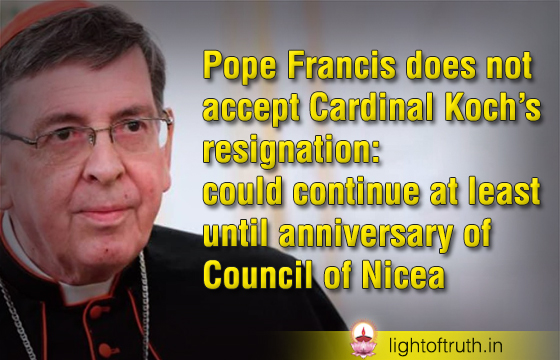
Pope Francis does not accept Cardinal Koch’s resignation: could continue at least until anniversary of Council of Nicea
At 75, the customary age for resignation under canon law, Swiss Cardinal Kurt Koch offered his resignation to Pope Francis. The Pope, however, declined the request–at least for now. In a recent interview with Vatican News, Koch revealed that Francis had responded with a standard phrase meaning that he would remain in office until further notice. “The Holy Father will decide in due time,” Koch said. Koch has served as the head of the Dicastery for the Promotion of Christian Unity since 2010, overseeing the Vatican’s efforts to foster dialogue and collaboration among Christian denominations. His extended tenure suggests that Francis values continuity in the Church’s ecumenical work at a time when unity is both a theological and practical challenge. Koch’s office engages with diverse Christian communities, navi-gating theological and cultural differences that shape ecumenical dialogue. As he explains, discussions vary greatly depending on the group involved. “We share a deep theological heritage with the Eastern Churches but are shaped by different cultural traditions,” Koch observed.
“With Protestant communities, we have more cultural similarities but fewer theological commonalities.”
This contrast highlights the complex nature of Christian unity—sometimes bound by shared beliefs, sometimes by shared history, but often hindered by both. Despite these challenges, Koch remains hopeful that more believers will recognize the importance of unity, citing Jesus’ own prayer for his followers to be one.
Observers speculate that Koch will continue in his role at least through May 2025, when Christian leaders will mark the anniversary of the First Council of Nicea in Iznik, Turkey. The historic council, convened in 325 AD, produced the Nicene Creed—a foundational statement of Christian belief still used by many denominations today. Koch sees the event as an opportunity for churches to commemorate their shared history. “It is a wonderful occasion for all Christian communities to reflect together on this ancient confession of faith,” he said. The symbolic significance of gathering in Nicea is undeniable, even if little remains of the original council site. Pope Francis has expressed interest in attending the event, but his participation remains uncertain due to health concerns. The Vatican has not confirmed any travel plans, and at a recent press conference, medical officials offered a cautious response: “The trip is not confirmed.” Koch, however, remains optimistic. “I hope it will be possible,” he said. “It would be a powerful gesture to celebrate together in Nicea.”
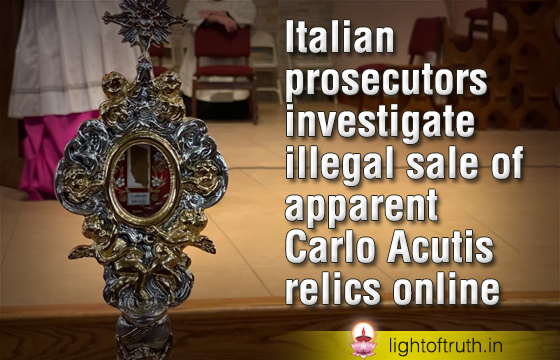
Italian prosecutors investigate illegal sale of apparent Carlo Acutis relics online
Italian prosecutors are in-vestigating the illegal online sale of alleged relics of Blessed Carlo Acutis, who will be declared the first millennial saint next month. The investigation by the Perugia Public Prosecutor’s Office was prompted by a complaint by the bishop of Assisi, the city where Acutis’ tomb is located for public veneration.
“On the internet, there is a marketplace for relics concerning various saints, such as our St. Francis, complete with a price list. Something impossible to accept,” Bishop Domenico Sorrentino of Assisi-Nocera Umbra-Gualdo Tadino said in a statement on March 26. Sorrentino filed a formal complaint with Italian authorities after learning of an internet auction of an alleged first-class relic of Acutis’ hair, which sold online for 2,000 euros by an anonymous user.
“We do not know whether the relics are real or fake,” the bishop said. “But if it were also all fabricated, if there was deception, we would be not only in the midst of a fraud but also of an insult to religious belief.” According to canon law of the Catholic Church, the sale of first- and second-class relics is strictly forbidden. Relics can only be given away by their owners, and some very significant relics, such as a heart, arm, etc., cannot be given away without the permission of the Vatican. Acutis’ canonization Mass is scheduled to take place in St. Peter’s Square on April 27 during the Church’s Jubilee of Teenagers.
Pew study shows people not sticking with faith they were raised in
New research shows a widespread trend of people either leaving the religion they were raised in or completely dropping religion, with Christianity taking a particularly big hit. At least one-fifth of all adults in many countries around the world are no longer a part of the religion they were raised in, a new report from Pew Research Center shows. Christianity and Buddhism have seen the highest rates of disaffiliation, the survey results show.
This trend varies substantially among countries. Half of people in South Korea, for example, are no longer the religion they were raised in, whereas in Poland, for example, that’s only the case for 5% of people. In parts of Europe, the difference between the number of people who have left Christianity – whether or not they adopted another religious tradition – compared to those who have joined Christianity’s numbers is stark. Pew said that Christianity was the religion in most countries that had the highest ratios of people who are leaving the religion compared to those joining. In Italy, for example, 28.4 people have left the religion for every person who has joined.
People are also leaving religion altogether. In 21 of the 36 countries Pew looked at, more people have joined the group of people considered religiously unaffiliated than left that group. In Italy, for example, 28.7 people became religiously unaffiliated for every one person who left that category. In the U.S., that ratio was 5.9 to 1. Hungary was an outlier. For every one person who became religiously unaffiliated, 1.9 people left that category, Pew’s research showed.
Pew said that the trends it found didn’t differ or didn’t differ much among age, education level or gender for most of the countries it surveyed. And the biggest trend among age groups in most instances is people moving from affiliating with one religion to disaffiliating with religion overall, which has been more of a trend among younger people, Pew said.
“These age patterns might be signs of secularization, indicating that countries like Spain, Canada, Italy and the U.S. are gradually becoming less religious,” Pew said in its report. But age differences in religious affiliation it found could also be “from people becoming more religious as they grow older.”
Only a few countries are seeing more people join Christianity than drop it, including the Philippines, Ghana, Hungary, Sri Lanka and Singapore, the study showed. In looking at net losses for Christianity, Spain stands out among 27 countries analyzed: Pew said the country has seen the highest net losses of Christians — in proportion to its population.
The survey found, however, that more broadly, most adults who grew up Christian still affiliate with that tradition. The number of people considered religiously unaffiliated has grown on a net basis but when people who were raised unaffiliated leave that group, they’re largely switching to Christianity, according to Pew.
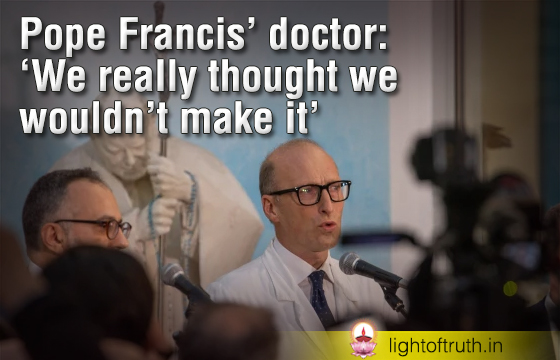
Pope Francis’ doctor: ‘We really thought we wouldn’t make it’
The head of the medical team that treated Pope Francis during the 38 days he spent at Rome’s Gemelli Polyclinic Hospital, Dr. Sergio Alfieri, revealed that one of the most critical moments of his hospitalization was when they had to choose between continuing the therapy or letting the pope die. “We had to choose whether to stop and let him go, or push it and try every drug and therapy possible, running the extremely high risk of damaging other organs,” he said in an interview with the Italian newspaper Il Corriere della Sera.
In the interview, Alfieri described in detail the doctors’ response to the respiratory crisis suffered by the pope on Feb. 28. According to the medical report published that day, Pope Francis suffered an isolated attack of bron-chospasm, a severe coughing fit that suddenly worsened his clinical condition, after days of moderate optimism at the Vatican.
Although the pope never lost consciousness and cooperated with the specialists’ therapeutic manoeuvres, the alarms went off, and doctors opted to place him on a non-invasive mechanical ventilation mask to help him breathe. “For the first time, I saw tears in the eyes of some people who were close to him. People who, I’ve come to understand during this period of hospitalization, truly love him, like a father.
We were all aware that the situation had worsened further and there was a risk that he might not make it,” Alfieri explained.
However, despite the risk of causing irreversible kidney and bone marrow damage due to the medical treatment he underwent, they decided to act. “We really thought we wouldn’t make it,” he said. It was a difficult decision, as Alfieri recounted, ultimately supported by the decision of the pope himself, who, through his personal health assistant, Massimiliano Strappetti, his personal nurse at the Vatican, gave a clear order: “‘Try everything, let’s not give up.’ And no one gave up.” In the end, Pope Francis responded to the treatment. However, after his recovery, there was another moment of intense concern.
While eating, the pope suffered an episode of vomiting, and the gastric juices ended up entering his lungs. “We were just coming out of the toughest period, and while eating, Pope Francis vomited and inhaled it. That was the second truly critical moment because, in these cases, if you don’t act quickly, there’s a risk of sudden death, in addition to complications in the lungs, which were already the most compromised organs,” Alfieri related.
The doctor explained that, despite the seriousness of the situation, Pope Francis was always fully aware, “even when his condition worsened.” “He was aware, like us, that he might not survive the night,” the doctor stated.
He added: “We saw the man who was suffering. However, from the first day he asked us to tell him the truth and wanted us to tell the truth about his condition.” In this regard, the director of the medical-surgical department at Gemelli Polyclinic Hospital expressed the desire for transparency that prompted the Vatican to report on Pope Francis’ health. “We communicated the medical information to the secretaries, and they added other information that the pope later approved. Nothing has ever been modified or omitted,” he noted.
In the interview, Alfieri also highlighted the pope’s incredible strength, both physical and mental: “In the past, when we spoke, I would ask him how he managed to keep up this pace, and he always replied, ‘I have a method and rules.’ Beyond a very strong heart, he has incredible resources.” In addition to the pope’s stamina, the Gemelli medical coordinator added that the prayers offered by faithful around the world in recent days also contributed to his recovery. “There is a scientific publication that says prayer strengthens the sick. In this case, the whole world began to pray. I can say that twice the situation was lost, and then it happened like a miracle. Of course, he was a very cooperative patient. He underwent all the therapies without ever complaining,” he stated.