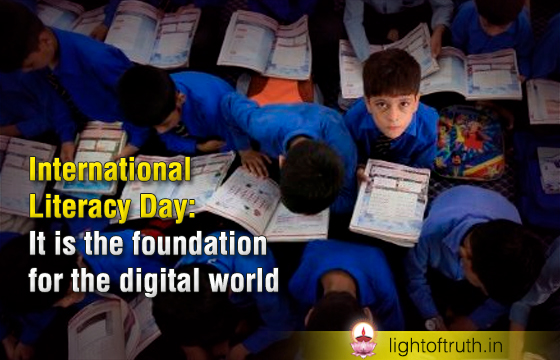
As 8 September marks International Literacy Day, UNESCO releases data and information showcasing that being literate enables people to think critically and navigate the “information-rich society and economy in a safe, effective and responsible manner.”
8 September marks International Literacy Day (ILD). Started in 1967, the day serves as a reminder to world leaders, policy-makers, and the public of the “critical importance of literacy for creating more literate, just, peaceful, and sustainable society.” As a fundamental right for everyone, literacy is a gateway that enables people to enjoy other human rights, more freedoms, and global citizenship.
This year’s theme is “Promoting literacy in the digital era”, which is focused on keeping literacy as a crucial part of the technological landscape. UNESCO releases a fact sheet for the 2025 Literacy Day, highlighting that the importance of literacy reaches beyond traditional paper-based writing and reading. Rather, “it now serves as a foundation for digital skills, safe and critical engagement with digital texts and tools, and an inclusive digital transition.”
Between 2015 and 2024, literacy rates among adults (people aged 15+) rose slightly from 86% to 88%. Central and Southern Asia are the two regions with the fastest progress, where adult literacy grew from 72% to 77%. Sub-Saharan Africa also saw an increase from 65% to 69%.
In 2024, the global youth (people aged 15-24) reached 93% — which showed a growth in basic education. Yet, UNESCO reports that progress “remains inadequate and uneven” as 739 million adults still lacked basic literacy skills in 2024.
A census taken from 2015-2024 reveals more than half of the world’s illiterate adults – 441 million people – is found in just 10 countries around the world. UNESCO argues the consistent gaps in literacy rates limit the opportunities and “reinforce social and economic inequalities, especially for women, older adults and marginalized people.”
In this technologically-driven world, literacy remains an essential part of life. It gives everyone a chance to fully participate in the digital world. More than giving people access to the internet, being literate enables users to think critically and navigate the “information-rich society and economy in a safe, effective and responsible manner.”