
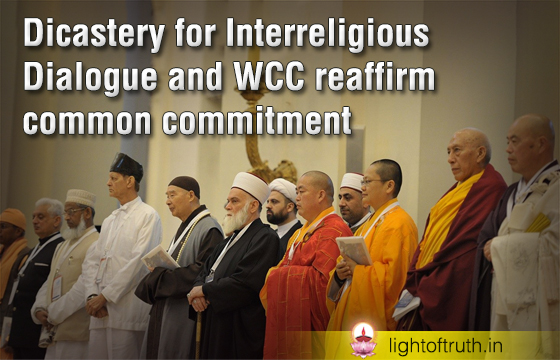
The Dicastery for Interreligious Dialogue (DID) and the Office of Interreligious Dia-logue and Cooperation (IRDC) of the World Council of Churches (WCC) concluded their annual meeting in Rome, held from 17 to 20 February 2025. The gathering, which took place at the Dicastery’s office, provided an opportunity to assess past initiatives, review ongoing interreligious activities, and explore future collaborations. A key focus was preparing for the 50th anniversary of cooperation between the two institutions, which will be marked in 2027.
Since 1977, the DID and WCC have worked together to promote interreligious dialogue within an ecumenical framework. Their collaboration has produced significant documents, including Interreligious Prayer (1994), Reflection on Interreligious Marriage (1997), Christian Witness in a Multi-Religious World: Recommenda-tions for Conduct (2011), Education for Peace in a Multi-Religious World: A Christian Perspective (2019), and Serving a Wounded World in Interreligious Solidarity: A Christian Call to Reflection and Action During COVID-19 (2020).
In their discussions, both delegations reaffirmed their dedication to strengthening interreligious dialogue.
Daily Archives: February 28, 2025
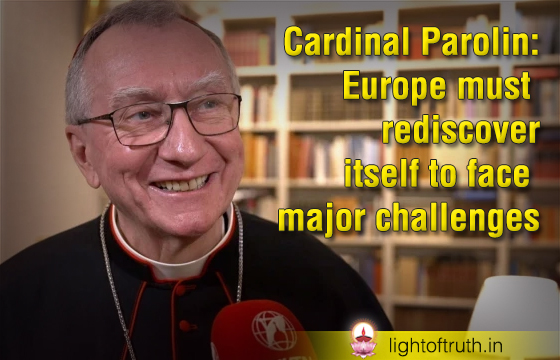
Cardinal Parolin: Europe must rediscover itself to face major challenges
Cardinal Pietro Parolin, the Vatican secretary of state, said that Europe must “rediscover itself” in order to be able to face the “major challenges” of culture, commerce, and migration. In a Feb. 15 interview with the daily Eco di Bergamo, the Vatican offi-cial recalled the “warning of St. John Paul II,” which Pope Francis has also taken up: “Europe, re-discover yourself, be yourself.”
The cardinal stressed that the Old Continent is suffering from a “crisis of ideas” that prevents it from facing the future: “Europe currently has good antibodies to hold up under crises and challen-ges. But the most serious problem is the lack of ideas for the future that allow it to respond with deter-mination to international compe-titors,” he said. Parolin specified that this weakness is due to the relationship that Europe has with its own history, the result of “a deep, and partly justified, fear of its past.” However, he emphasiz-ed that along with the dark episodes of its history, “there are many bright moments.”
In this regard, he referred to the debates on the European Constitution, in which an explicit reference to the continent’s Judeo-Christian roots was avoided, advocating for a generic mention of its “cultural, humanist, and religious heritage.” According to the cardinal, this weakened the continent’s awareness and the sense of European identity: “In-stead of building Europe on its deep foundations and roots, a changing consensus of values has been preferred. But the future can only be built on the past,” he pointed out.
Although Parolin said there were reasons to be concerned, especially in the face of “practi-cal atheism, populism, and reli-gious illiteracy,” he praised other “encouraging phenomena” such as the increase in requests for baptism by young French people.

Ecumenical initiative calls for unity to celebrate Easter together
The First Ecumenical Council, the meeting of Christian bishops that was held in 325 in Nicaea (today Ýznik, Turkey), laid the groundwork for reaching consensus within the Church through an assembly representing all of Christendom. This event marked a key moment in the history of Christianity, 17 centuries ago this year, in which, among other decisions, the way of calculating the date of Easter was established. However, over the centuries, changes to the calendar resulted in discrepancies between the Catholic, Protestant, and Orthodox churches, differences that still persist. While Latin-rite Catholics follow the Gregorian calendar, in the East the tradition of calculating liturgical dates according to the Julian calendar has been maintained.
“The process of changing the calendar, which began in 1582 with Pope Gregory and was completed to a certain extent in 1923 with the adoption of the new calendar by some Orthodox churches, was not without difficulties,” Kostas Mygdalis, consultant to the Orthodox Interparliamentary Assembly (IOA), explained in an interview with ACI Prensa, CNA’s Spanish-language news partner. “It provoked controversies among the faithful and between the churches and state authorities, consolidating polarizing divisions” that still persist, he added.
Mygdalis is also one of the key figures of the interfaith working group Pasqua (Easter) Together 2025, which seeks to promote the common celebration of Easter between Orthodox and Catholics. Last September, Pope Francis received the members of this ecumenical initiative and expressed his desire to agree on a common date for the celebration of Easter between Catholics and Orthodox. Interestingly, this year both Easters — Catholic and Orthodox — fall on the same date, April 20, due to the alignment of the Julian (used by the Orthodox) and Gregorian (followed by Catholics and other Christian denominations) calendars.
For Mygdalis, the joint celebration of Easter in 2025 should not be seen as just a calendar agreement but as an opportunity to place Christ at the centre of the Christian faith. “The time has come to make a strong appeal to the churches to unify the date of Easter,” he said. He also emphasized that the central message must be the need for unity in the world: “The world needs unity. A common date for Easter is a step toward this unity.”
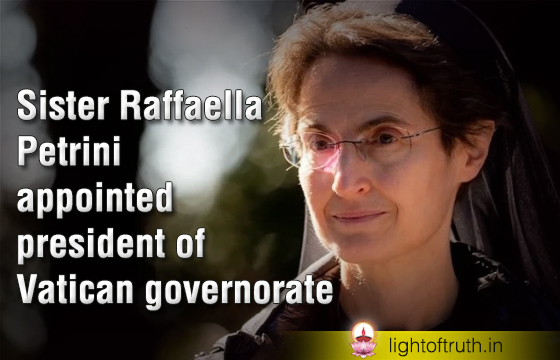
Sister Raffaella Petrini appointed president of Vatican governorate
Pope Francis has appointed Sister Raffaella Petrini, FSE, as president of the Pontifical Commission for Vatican City State and president of the Governorate of Vatican City State, the Vatican announced Saturday. According to the Feb. 15 bulletin from the Holy See Press Office, Petrini will assume her new roles on March 1. She succeeds Cardinal Fernando Vérgez in both positions. Petrini, who has served as secretary-general of the same governorate since November 2021, brings significant academic and administrative experience to her new role. Born in Rome on Jan. 15, 1969, she holds a degree in political science from the Libera Università Internazionale degli Studi Guido Carli and a doctorate from the Pontifical University of St. Thomas Aquinas, where she currently serves as a professor. Before her appointment to the governorate, Petrini worked at the Congregation for the Evangeli-zation of Peoples from 2005 to 2021.
This appointment follows Pope Francis‘ recent selection of Sister Simona Brambilla as prefect of the Dicastery for Institutes of Consecrated Life and Societies of Apostolic Life, marking a continuing trend of women being appointed to senior Vatican leadership positions. During a recent television interview, the pope had previously indicated his intention to promote Petrini.
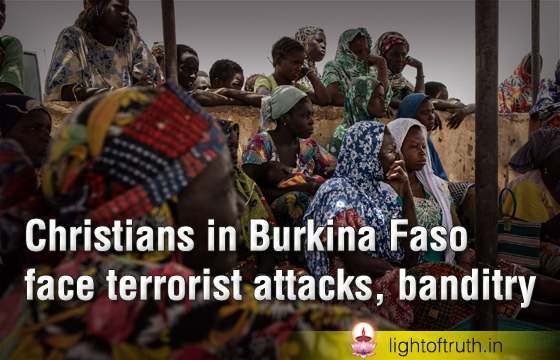
Christians in Burkina Faso face terrorist attacks, banditry
More than 200 terrorists attacked three villages in western Burkina Faso at the end of January, leaving at least 26 people dead, including at least six Christians. Houses were set ablaze by the attackers, forcing residents to flee. Less than a week later, further attacks led to more deaths. News of the terrorist assaults was relayed to Catholic aid organization “Aid to the Church in Need” by Fr. Jean-Pierre Keita, an ACN project partner, who lost his father and several other family members in the attacks. The attacks took place in the parish of Tansila, a regional centre in Banwa province in western Burkina Faso. The parish includes 37 villages, about a third of whose population is Christian.
On the same day as the first attack in Tansila, two catechists from the nearby Diocese of Dédougou in the western Burkina Faso province of Mouhoun were killed by bandits while returning from catechist training sessions. Aid to the Church in Need reported that sources told them four catechists from Ouakara parish were traveling together on two motorcycles when the group was attacked. The catechists on the first vehicle were able to escape into the forest, but their two companions were later found murdered.
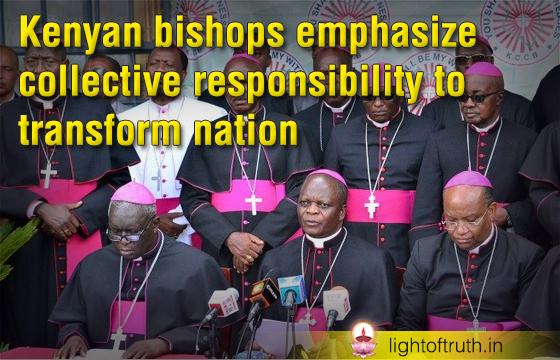
Kenyan bishops emphasize collective responsibility to transform nation
Ahead of the 2025 Lenten season starting on March 5, Catholic Bishops in the East African nation have reminded Christians to journey together, bear one another’s burdens and be instruments that ignite transformation in society. The Church in Kenya has themed the 40-day journey of reflection: “The Kenya we desire.” “As we reflect on The Kenya We Desire, we are called to consider not only what we want for ourselves but also what we want for others. We are called to desire the good of all people, regardless of their background or status,” said the statement signed by Bishop Simon Peter Kamomoe, Chairman for the Catholic Justice and Peace Department (CJPD) at the Kenya Conference of Catholic Bishops (KCCB).
As Christians, the Bishop added, “we cannot be content with mere individual blessings while others suffer. The collective good is our responsibility, and we must desire a society that fosters equa-lity, justice, and compassion.”
Christ’s call to transforming the world requires each individual to uphold moral values, and advocate for the dignity of all people, which requires courage to stand against corruption, injustice, and inequality while actively working for positive change in families, communities, and workplaces. “The challenge is not just about a spiritual desire for transformation but a practical commitment to action,” said the bishops.
The bishops invited Kenyan Catholics to spend the five-week Lenten season with a focus on five key areas for reflection: family unity and its role in building a peaceful society; corruption and the need for accountability; the youth and their potential as the untapped resource of our nation; holistic education; and, caring for our common home.
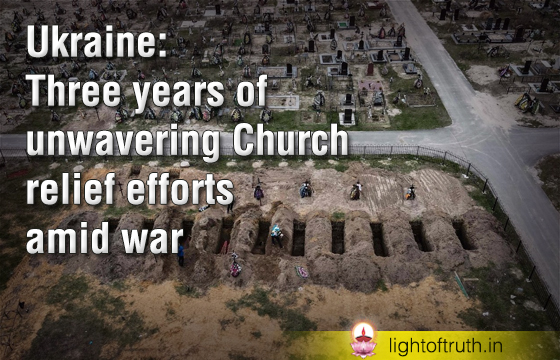
Ukraine: Three years of unwavering Church relief efforts amid war
Three years of war in Ukraine have left the country in a tragic humanitarian situation. Every day, millions of Ukrainian children, women, and men face immense difficulties in surviving: over 12.7 million people are in urgent need of assistance, while 6.8 million Ukrainian refugees have fled to neighbouring countries in search of a safe haven. Within Ukraine’s borders, more than 3.6 million people have been displaced, forced to abandon their homes and previous lives. One of the greatest challenges exacerbating this humanitarian disaster is the harsh winter, with temperatures plummeting below -20°C, while the loss of more than 60% of the national energy supply has left entire communities without heat-ing, electricity, and access to clean drinking water. Against this bleak backdrop the non-stop shelling and bombing from Russia have made it extremely difficult and dangerous for humanitarian organizations to reach out to those lacking basic needs such as food, clothes, shelter and health care.
Despite dangers and logistic difficulties, Church aid organiza-tions, alongside the Holy See and humanitarian organizations, have continued to provide a lifeline to those in greatest need and giving hope for a better future in Ukraine. Among them is Caritas, the global confederation of national Catholic relief and development agencies. Since the beginning of the Russian full-scale invasion of Ukraine on February 24 2022, the Ukrainian branches of Caritas (Caritas Spes and Caritas Ukraine) and its partner members have been at the fore-front, offering medical, psycho-logical, and social assistance, with a special focus on protecting the most vulnerable people, including children, disabled, elderly and women.
Also, on the frontline is the Catholic charity Aid to the Church in Need (ACN). According to a statement released this week, over the past three years Pontifical foundation has allocated over € 25 million to various humanitarian and pastoral projects sustaining both the Greek Catholic and Latin Catholic Churches in the country. Since the full-scale invasion of Ukraine on 24th Feb. 2022, ACN has approved and funded nearly one thousand initiatives. A significant portion of this aid–approximately € 3.5 million–has been used to support priests through Mass stipends, ensuring their ability to continue their pastoral work in times of extreme difficulty.
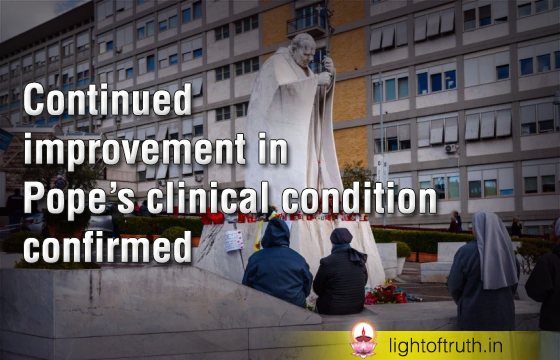
Continued improvement in Pope’s clinical condition confirmed
A Holy See Press Office communiqué on Thursday Feb. 27 evening confirms that Pope Francis’ clinical condition continues to show improvement. Additional days of clinical stability are needed before the prognosis can be lifted. “The Holy Father’s clinical condition is confirmed to be improving again today. He alternated high-flow oxygen therapy with a Ventimask. Due to the complexity of the clinical picture, further days of clinical stability are needed to clarify the prognosis. In the morning, the Holy Father underwent respiratory physiotherapy, alternating it with rest. In the afternoon, after an additional physiotherapy session, he spent time in prayer in the chapel of his private apartment on the 10th floor, where he received the Eucharist. He then engaged in work activities.” This statement, provided by the Holy See Press Office on Feb. 27 evening, came as the Pope continues to be treated for bilateral pneumonia in Rome’s Gemelli Hospital. He was admitted on Friday, 14 February, following a bout of bronchitis. According to reports, the Pope has passed the most critical phase, but his condition remains complex. For this reason, the prognosis remains guarded. The commu-niqué to journalists on Thursday morning noted that the Pope had slept well, got out of bed, and continued treatment in his armchair. It said he remains in good spirits. In another statement on Thursday, the Press Office said the Jubilee Audience for Saturday, 1 March, has been cancelled.