
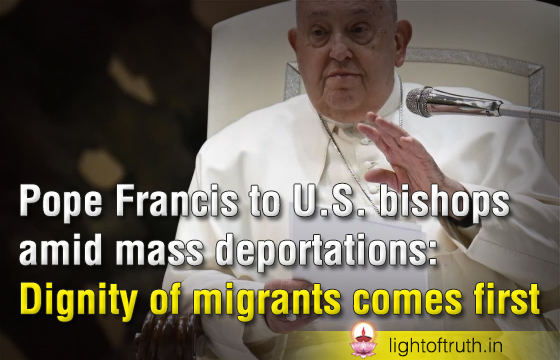
Pope Francis addressed the bishops of the United States on Feb. 11 about the country’s ongoing mass deportation of unauthorized immigrants, urging Catholics to consider the justness of laws and policies in light of the dignity and rights of people.
In a letter published Feb. 11, the pope – while supporting a nation’s right to defend itself from people who have committed violent or serious crimes – said a “rightly formed conscience” would disagree with associating the illegal status of some migrants with cri-minality. “The act of deporting people who in many cases have left their own land for reasons of extreme poverty, insecurity, exploi-tation, persecution, or serious deterioration of the environment damages the dignity of many men and women, and of entire families, and places them in a state of particular vulnerability and defenselessness,” he said. “All the Christian faithful and people of goodwill,” the pontiff continued, “are called upon to consider the legitimacy of norms and public policies in the light of the dignity of the person and his or her fundamental rights, not vice versa.”
Francis emphasized that immigration laws and policies should be subordinated to the dignified treatment of people, especially the most vulnerable. “This is not a minor issue: An authentic rule of law is verified precisely in the dignified treatment that all people deserve, especially the poorest and most marginalized,” he underlined. “The true common good is promoted when society and government, with creativity and strict respect for the rights of all – as I have affirmed on numerous occasions – welcomes, protects, promotes, and integrates the most fragile, unprotected, and vulnerable.”
He said the just treatment of immigrants does not impede the development of policies to regulate orderly and legal migration, but “what is built on the basis of force and not on the truth about the equal dignity of every human being begins badly and will end badly.”
Daily Archives: February 15, 2025
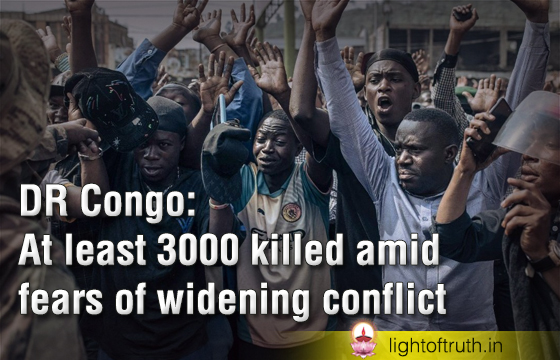
DR Congo: At least 3000 killed amid fears of widening conflict
Rwanda-backed M23 rebels who captured Goma, a major city in eastern Congo’s North Kivu province, are seeking to reassure its over 2 million residents, hold-ing a rally and promising safety and stability under their admini-stration. The rally on February 06 in Goma’s city stadium was part of the efforts by the rebel group to shore up public support amid growing international pre-ssure after reports have emerg-ed that almost 3,000 people were killed in clashes between the rebels and Congolese forces.
And despite the announcement of a unilateral ceasefire on humanitarian grounds after the capture of Goma last week, the rebels also took control of the mining town of Nyabibwe, not far from the capital of South Kivu, Bukavu.
The fighting has caused a severe humanitarian crisis which has also drawn the attention of the International Criminal Court. Apart from bodies reportedly left on the streets, the hospitals are overwhelmed and running out of supplies, while fears of the spread of diseases are fuelled by lack of electricity, clean water and ongo-ing outbreaks of mpox and cholera. Congolese authorities have announced they will present a motion to the UN Human Rights Council seeking an investigation into what they call “mass viola-tions” of rights in the city of Goma, which is also a hub for tens of thousands of people displaced by decades of unrest and violence in the region.
Concerned and horrified by the increasing levels of violence, local peace initiatives are multi-plying including one by the Catho-lic and Protestant churches in DRC who met with President Tshisekedi and presented a “crisis exit plan.” The General Secretary of the World Council of Churches also called for dialogue and said the WCC stands ready with its member churches to support all efforts to resume dialogue at a political level.
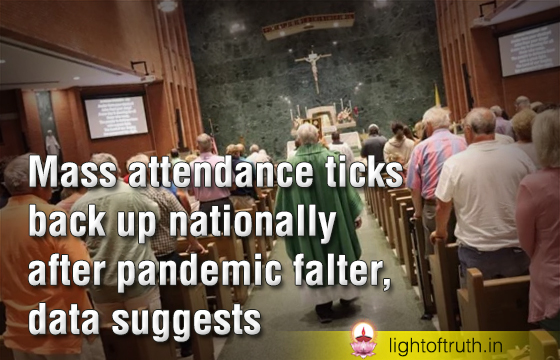
Mass attendance ticks back up nationa-lly after pandemic falter, data suggests
After years of uncertainty over whether in-person Mass attenda-nce numbers would ever rebound after plummeting during the COVID-era lockdowns, new data suggests that Mass attendance levels have quietly returned to 2019 levels nearly six years later. Despite the apparent uptick, however, a return to 2019 levels still means only a quarter of U.S. Catholics attend Mass weekly – despite weekly attendance being an obligatory part of Catholic life. The Center for Applied Research in the Apostolate (CARA) at Georgetown University, a premi-er Catholic research organization, recently used national surveys it conducted combined with Google Trends search volumes for Mass attendance-related terms to estimate weekly attendance across the United States.
In a Feb. 5 blog post, CARA explained that prior to the pandemic in 2019, weekly Mass attendance in the U.S. averaged 24.4%. Between May 2023 and the first week of 2025, meanwhile, attendance has averaged 24%, CARA estimated, representing an overall return to pre-pandemic levels. In addition, CARA said Mass attendance numbers for Easter and Ash Wednesday – the latter being one of the best-attended Mass days of the year, despite not being a holy day of obligation – actually returned to pre-pandemic levels in 2023. Christmas attendance numbers, meanwhile, finally rebounded to pre-pandemic levels in 2024.
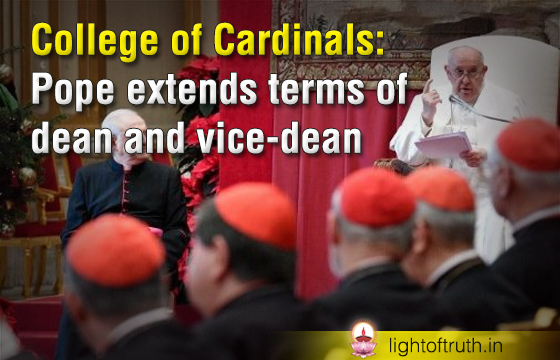
College of Cardinals: Pope extends terms of dean and vice-dean
Cardinals Giovanni Battista Re and Leonardo Sandri have had their appointments extended as Dean and Vice-Dean of the College of Cardinals, respectively. The decision was announced on February 6, by the Vatican Press Office in a statement noting that on January 7, the Pope had decided to defer the approval of the election of Cardinal Re, and that of Cardinal Sandri the following week, on January 14. Also Pope Francis determined that Cardinal Robert Francis Prevost, O.S.A., Prefect of the Dicastery for Bishops, will become a member of the Order of Bishops within the College of Cardinals. The Pope assigned the Cardinal the title of the Suburbicarian Church of Albano.
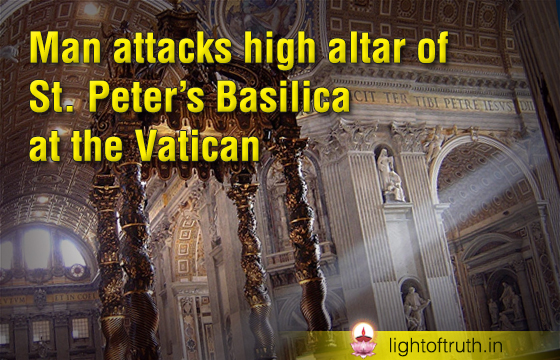
Man attacks high altar of St. Peter’s Basilica at the Vatican
A man desecrated the main altar of St. Peter’s Basilica in the Vatican on February 07 by climbing on top of it and throwing six candelabras that were on the altar to the ground, according to the Italian news agen-cy ANSA. After throwing the candelabras, the man began to remove the altar cloth, as can be seen in a video posted on social media. The subject was then quickly detained by security agents.
According to ANSA, the suspect, of Romanian origin, was detained by the Vatican Police, after which he was identified and charged by agents of the Vatican Inspecto-rate. “This is an episode of a person with a serious mental disability, who has been detained by the Vatican Police and then placed at the disposal of the Italian authorities,” the director of the Holy See Press Office, Matteo Bruni, told ANSA.
According to the Spanish newspaper ABC, the man was arrested because the basilica’s alarm was activated when he stood on the altar. In 2023 a similar incident was recorded when a man climbed the high altar and undressed, after which he was also arrested. The Code of Canon Law, the law that regulates the Catholic Church, establishes in canon 1210 that “in a sacred place” such as St. Peter’s Basilica, “only those things which serve the exercise or promotion of worship, piety, or religion are permitted in a sacred place; anything not consonant with the holiness of the place is forbidden.”
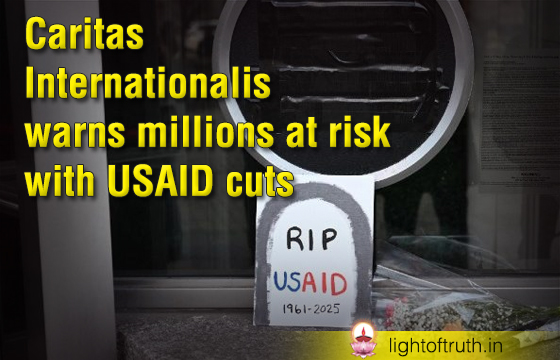
Caritas Internationalis warns millions at risk with USAID cuts
Caritas Internationalis’ Secretary General, Alistair Dutton, has warned against the decision to close USAID-funded programmes and offices around the world, saying the sudden shutdown “will kill millions of people and condemn hundreds of millions more to lives of dehumanising poverty.” With an annual budget of over 40 billion dollars, USAID has funded humanitarian and development aid in some 120 countries, especially the world’s poorest.
In a statement issued on Monday 10 February, Alistair Dutton said the decision marks a grave threat “to people’s God-given human dignity” and “will cause immense suffering.” He also noted the result “presents massive challenges for all of us in the global humanitarian community, who will have to completely reassess whom we can continue to serve and how.” He further warns “the resulting harm to people, particularly the poorest, will be catastrophic, threatening the lives and dignity of millions.”
Contacted by telephone while in Burkina Faso, Alistair Dutton deplored the very real consequences of this suspension of aid that is causing “complete uncertainty for the humanitarian system worldwide.” He explained how “ships are arriving in ports with cargo, but we can’t pay to unload them, store their contents or transport them to the people who need them.”
In West Africa, for example, over six million people will not receive their medi-cines. The same applies to the 750,000 people facing starvation in Sudan or refugees in camps in Syria, where essential supplies of water are provided, without which “critical health problems immediately arise, which can kill millions of people…the people who need help are going to suffer enormously, if they don’t simply die.”
USAID has been an “essential partner” of Catholic relief efforts for over 60 years. Faced with this financial but also human deficit in meeting the massive humanitarian needs worldwide, Caritas Internationalis has appealed for a reconsideration of the cuts and for governments, international agencies, and stakeholders to work together to concretely reaffirm the “commitment to compassion and peace by supporting the most vulnerable people around the world.” Immediate efforts are underway to reduce the impact of the freeze and ensure continued support for as many vulnerable people as possible since, as Alistair Dutton says, ”the lives and dignity of millions hang in the balance.”

Pope: Indigenous peoples have right to preserve cultural identity
“Land, water, and food are not mere commodities but the very foundation of life and the bond of [indigenous] peoples with nature.” Pope Francis offered that remin-der in a message sent to the 7th Indigenous Peoples’ Forum orga-nized by the UN’s International Fund for Agricultural Develop-ment (IFAD). The forum takes place in Rome on February 10-11 under the theme: “Indigenous Peoples’ right to self-determina-tion: a pathway for food security and sovereignty.”
In his message, the Pope said indigenous peoples have the right to preserve their identity but noted that this right is severely threatened by the increasing sei-zures of farmland by multinational corporations and states. These seizures cause much harm to indigenous peoples and put at risk communities’ right to a dignified life, he lamented.
“The defense of the right to preserve one’s culture and identity requires the recognition of the value of their contribution to so-ciety, as well as the safeguarding of their existence and the natural resources essential for their livelihood,” he said.
Pope Francis added that de-fense of indigenous peoples’ rights is a matter of justice, as well as a way to guarantee a sustainable future for all humanity. “Driven by our sense of belonging to the human family,” he said, “we can ensure that future generations enjoy a world in harmony with the beauty and goodness that guided God’s hands in creation.” The Pope praised the heritage of indigenous peoples, saying their ancestral traditions reveal a “horizon of hope in our present time, marked by intense and complex challenges and numerous tensions.”
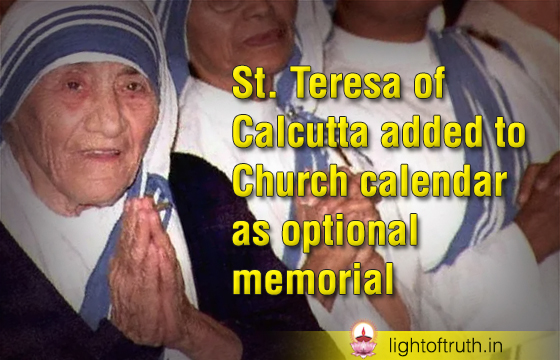
St. Teresa of Calcutta added to Church calendar as optional memorial
Pope Francis added the Sept. 5 feast of St. Teresa of Calcutta to the Catholic Church’s liturgical calendar as an optional memorial. The decree issued Feb. 11 by the Vatican noted the influence of St. Teresa’s spirituality around the world and said her name “continues to shine out as a source of hope for many men and women who seek consolation amid tribulations of body and spirit.”
The General Roman Calendar is the liturgical calendar of the Catholic Church, which denotes the dates of holy days and the feast days of saints commemorated annually. The Sept. 5 memorial of St. Teresa of Calcutta will now appear in the Church’s calendars and liturgical texts with specific prayers and readings to be used at Mass and the Liturgy of the Hours. Memorials rank third in the classification of feast days on the Catholic Church’s liturgical calendar. The memorial of St. Teresa of Calcutta will be an optional memorial, which means it is voluntary whether to observe it.
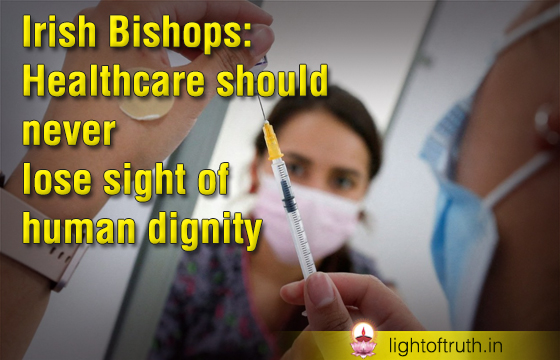
Irish Bishops: Healthcare should never lose sight of human dignity
As the Church marks the 33rd World Day of the Sick, on Feb-ruary 11, the Chair of the Irish Bishops’ Conference Council for Healthcare has reiterated that human dignity must remain at the core of healthcare practices. “Upholding the dignity and rights of each person is essential in healthcare,” remarked Bishop Michael Router, in a statement in which he expresses concern over the gradual erosion of this principle in Ireland.
Welcoming Pope Francis’ recent message for the observance of the Day, the Auxiliary Bishop of Armagh highlights the Jubilee theme of hope as a sustaining force in times of suffering. Pope Francis – he explains – calls for a renewed perspective on illness: not as an isolated struggle “but as an opportunity to encounter God, to receive His gifts, and to share His love with others.” The presence of caregivers, medical professionals, family members, or friends, says Bishop Router, is a tangible expression of that love showing that “suffering is not an isolated journey but one that unites us in faith, love, and solidarity.”
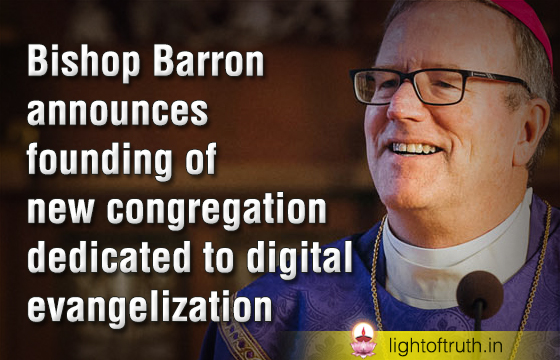
Bishop Barron announces founding of new congregation dedicated to digital evangelization
In an era where the digital world has become the new public square, Bishop Robert Barron is taking a bold step to ensure the Catholic Church not only has a voice in the conversation but leads it. On January 15, Word on Fire, Barron’s influential media apostolate, announced an ambitious new initiative: the founding of a religious order dedicated entirely to evangelizing through digital platforms.
This development is not just another expansion of Word on Fire–it represents a new model of priestly life, one that places digital mission work at its core. The move signals a recognition that the internet is not simply a tool for spreading the Gospel but a mission field in itself, one that demands a dedicated response from the Church.
Barron’s journey as a digital priest began modestly in the late 1990s with a series of Sunday Gospel reflections aired on a Chicago radio station at an inconvenient early morning hour. Realizing the limitations of radio, a friend suggested he post his homilies online. What began as a simple website soon evolved into Word on Fire, an international multimedia ministry that has reached millions.