
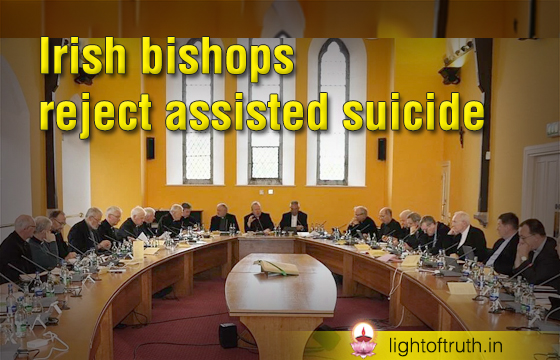
The Irish Catholic Bishops’ Conference said that it “totally rejects” a recommendation the incoming government should legalise assisted suicide in restricted circumstances.
Speaking before Ireland’s general election on Friday, 29 November, the bishops said in a statement: “Over recent years, we have witnessed a diminution in the respect for human life in our political discourse.” “The value of people’s lives seems to be calculated as if it were simply part of a cost-benefit analysis. Where is the hope in this?” they challenged.
They suggested that as well as questioning candidates about their stance on assisted suicide, voters should also question them about their position on abor-tion. Since the introduction of what they termed “a very liberal abortion law” in 2018, 40,000 abortions have been carried out in Ireland.
The bishops noted that some politicians want to liberalise the abortion law, while efforts are made to make legislative provision for assisted dying. “We totally reject that recommendation because a fundamental principle of civilised society is that no person can lawfully take the life of another,” they said.
Daily Archives: November 28, 2024
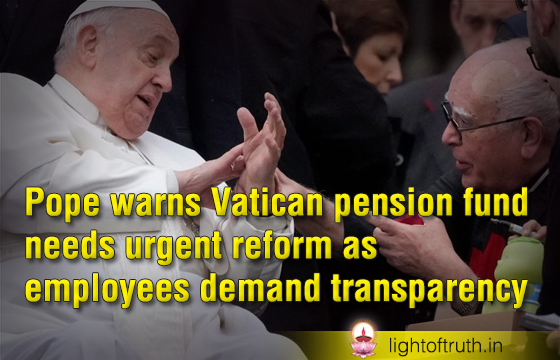
Pope warns Vatican pension fund needs urgent reform as employees demand transparency
Pope Francis, who has imposed a series of cost-cutting measures across the cash-strapped Vatican, warned Nov. 21 that the city state’s troubled pension fund needs urgent reform to guarantee future obligations.Vatican employees responded by expressing concern that their compensation might be targeted in any further cost-cutting to shore up the pension system, and asked for the fund’s finances to be made public.
In a letter to Vatican department heads and cardinals, Francis said he had named a top economic adviser, Cardinal Kevin Farrell, as a special administrator for the fund, suggesting that decisive, immediate action was necessary. The letter was the latest evidence of the Vatican’s precarious financial situation, after years of mismanagement, financial scandals and budget deficits – all worsened by COVID-19 and the monthslong closures of a key source of revenue, the Vatican Museums.
Already, Francis has cut cardinals’ salaries by 10%, suspended some seniority bonuses, trimmed special stipends for Rome-based cardinals and begun charging some market-rate rents for their apartments. The pension fund has long been the source of particular concern, and in the new letter Francis acknowledged that the current analysis “indicates a serious prospective imbalance in the fund, the size of which tends to expand over time in the absence of intervention.” “In concrete terms, this means that the current system is unable to guarantee in the medium term the fulfillment of the pension obligation for future generations,” he wrote.
The Association of Lay Vatican Employees, the closest thing the Vatican has to a labour union, voiced alarm at Francis’ warning about their pensions, insisting that lay employees had already sacrificed enough in his cost-cutting initiatives and that the Vatican leadership should listen to workers’ concerns.
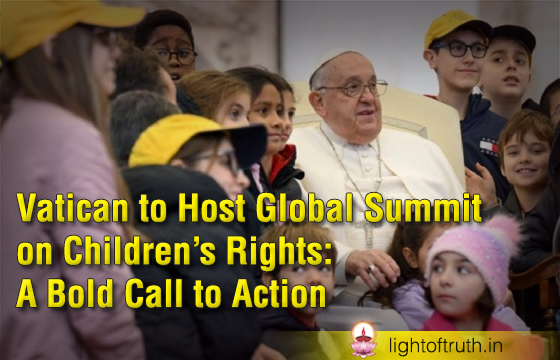
Vatican to Host Global Summit on Children’s Rights: A Bold Call to Action
On November 20, Pope Francis made a significant announcement during his weekly audience in St. Peter’s Square: the Vatican will host the “World Meeting on Children’s Rights”, titled “Love Them and Protect Them,” on February 3, 2024. Surrounded by a throng of children, the pontiff emphasized the urgent need to address the plight of millions of children worldwide who remain deprived of their basic rights.
The event will bring together experts and leaders from various nations to explore innovative strategies for safeguarding children who face exploitation, abuse, war, and extreme poverty. In a heartfelt gesture, Pope Francis highlighted the role children themselves will play in preparing for this historic day, symbolizing the essence of empowerment and inclusion.
“Millions of children live in precarious conditions, are exploited and mistreated, and suffer the devastating consequences of conflict,” Pope Francis stated, marking the occasion of the International Day of the Rights of the Child. “This meeting is an opportunity to identify new ways to help and protect them.” The announcement resonated deeply with those gathered, particularly the children present, who rushed to embrace the Holy Father. This visible connection underscored the Pope’s profound commitment to fostering a world where the youngest and most vulnerable are seen and valued.
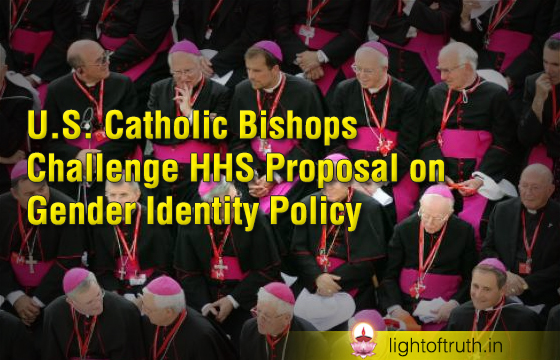
U.S. Catholic Bishops Challenge HHS Proposal on Gender Identity Policy
The United States Conference of Catholic Bishops (USCCB) is raising strong objections to a proposed regulation by the De-partment of Health and Human Services (HHS) that would impose strict anti-discrimination policies based on sexual orienta-tion and self-declared gender identity. The bishops argue the rule could force Catholic organi-zations to either compromise their religious beliefs or forfeit contra-cts with the federal agency.
The HHS draft rule mandates compliance with non-discrimina-tion policies for entities seeking federal contracts. It lacks specific definitions of what constitutes ‘discrimination’ and omits religious exemptions. Critics contend that this ambiguity could lead to mandates requiring Catholic entities to perform gender transition surgeries, provide hormone treatments, or deliver affirming counselling services–actions at odds with their religious convictions. The regulation would im-pact Catholic hospitals involved in Medicare and Medicaid, as well as organizations engaged in social services like adoption, foster care, and immigration assistance, areas where Catholic agencies have traditionally been significant contributors.
In a detailed public comment, the USCCB called on HHS to abandon the proposal, emphasizing the lack of clarity in its im-plementation and the potential conflict with constitutional protections for religious freedom.
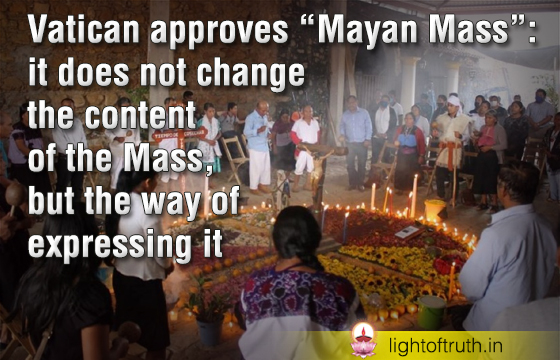
Vatican approves “Mayan Mass”: it does not change the content of the Mass, but the way of expressing it
In a historic move, the Vatican has given its formal approval to a series of liturgical adaptations designed specifically for the indigenous communities of Chiapas, Mexico. This decision, announced by Cardinal Felipe Arizmendi Esquivel, Emeritus Bishop of San Cristóbal de las Casas, signifies a groundbreaking shift in how the Church incorporates indigenous cultural expressions into its worship practices.
Rather than dismissing these traditions as mere folklore or customs, the Vatican’s recognitio elevates them to the status of “liturgical expressions,” fostering a deeper sense of inclusion and respect for the faith traditions of the Tseltal, Tsotsil, Ch’ol, Tojolabal, and Zoque peoples.
Key among the approved adaptations are ritual dances integrated into various parts of the Mass, such as the offertory and thanksgiving after communion. Cardinal Arizmendi emphasized that these are not decorative acts but meditative movements reflective of indigenous spirituality. Accompanied by traditional music, these dances serve as contemplative expressions aligned with the essence of the Roman rite but through a distinctly local cultural lens. Additionally, women from these communities will now take on the ministry of incensing during Mass. Using culturally significant sahumerios instead of traditional censers, they will incense the altar, sacred images, and the congregation. Cardinal Arizmendi clarified that this inclusion is not a statement of gender equality but a faithful reflection of indigenous customs, where women traditionally hold this role in community prayers.
Another notable change is the introduction of a greater role for lay leaders of moral standing. These individuals may now guide certain communal prayers, such as the opening prayer, intentions, and moments of thanksgiving, under the supervision and authorization of the priest. Cardinal Arizmendi stressed that these adaptations aim to deepen communal participation without diminishing the priest’s role as the celebrant.
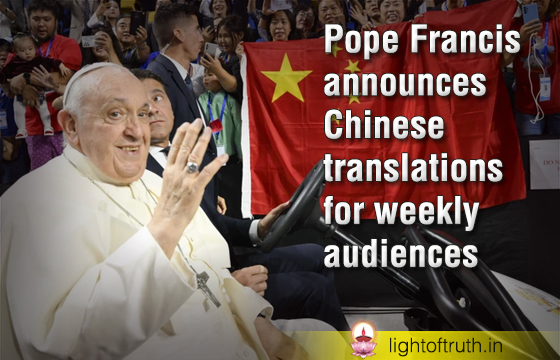
Pope Francis announces Chinese translations for weekly audiences
Starting next week, Chinese will be added as the ninth official language at papal general audiences, Pope Francis announced on Nov. 27. “Next week, with Advent, the Chinese translation will also begin here publicly,” the pope said on Nov. 27 during his general audience in St. Peter’s Square.
The addition marks a significant expansion of the languages used at the weekly papal events, where key portions — including Scripture readings, summaries of the pope’s address, and greetings — are delivered in eight languages: Italian, English, French, German, Spanish, Portuguese, Polish, and Arabic.
The translations make papal teachings accessible to pilgrims from around the world. They are traditionally delivered by staff members of the Vatican Secretariat of State or Vatican News. Mandarin Chinese is considered the world’s most spoken language, with nearly one billion speakers, ahead of Spanish and English.
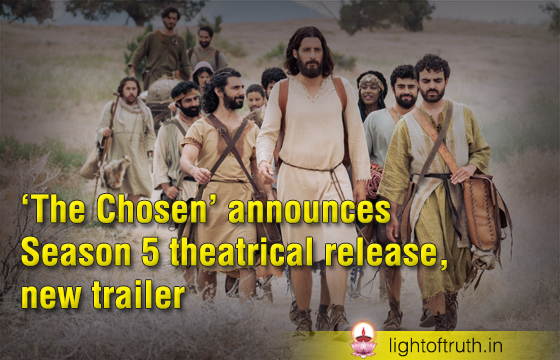
‘The Chosen’ announces Season 5 theatrical release, new trailer
The release of Season 5 of the hit series “The Chosen” was announced Nov. 25 by 5&2 Studios. “The Chosen: Last Supper” is coming to theaters during Lent, in the weeks leading up to Easter.
Season 5, which focuses on the events of Holy Week, will bring the most important week in history to viewers in a special theatrical release. During a four-week run in theaters, all episodes of Season 5 will be released in three parts starting with part one, episodes 1 and 2, to be released on March 27. Part two, episodes 3, 4, and 5, and part three, episodes 6, 7, and 8, will be released in the weeks following.
Beginning April 10, “The Chosen: Last Supper” will also be released in theaters globally in over 40 countries including Brazil, Mexico, Italy, Germany, Poland, Philippines, United Kingdom, and India.
After the full-season run in theaters concludes, the season will make its streaming debut. The newly released trailer begins with a glimpse of Jesus and the disciples during The Last Supper and teases other powerful moments including Jesus’ entry into Jerusalem, the cleansing of the temple, and Judas’ betrayal.
Dallas Jenkins, the show’s creator, director, and writer, told CNA that Season 5 is “sad at times; it’s actually heartbreaking at times because we know we’re getting closer and closer to the cross … We’re going to get to see some iconic moments from Scripture, but we’re also going to, I believe, be drawn closer to who Jesus was because of his suffering.”
Ryan Swanson, one of the writers of “The Chosen,” added that Season 5 is “truly going to feel like a different kind of series. After Season 4’s dread and doom and foreshadowing, this is when the wick is lit.”
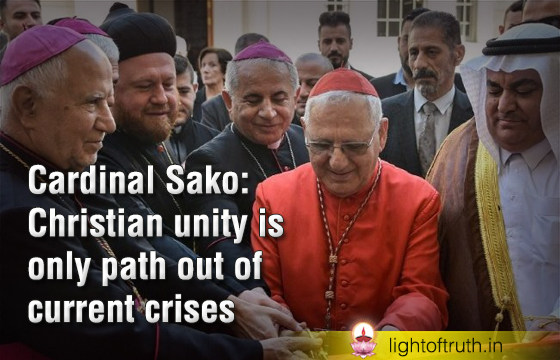
Cardinal Sako: Christian unity is only path out of current crises
Cardinal Louis Raphaël Sako, Patriarch of the Chaldean Catholic Church, has called for the four Churches that are rooted in the ancient Church of the East to work toward unity. These include the Chaldean Church, the Assyrian Church, the Ancient Church, and the Assyrian Evangelical Protestant Church.
As reported by the Vatican’s Fides News Agency, Cardinal Sako reflected on the divisions that have marked these Christian communities and likened the Churches to passengers navigating different waves but travelling together and “in the same boat.”
In a statement released by the Chaldean Patriarcate, the Cardinal stressed that unity is not only a necessity but “the only solution to the challenges of our time.” Cardinal Sako highlighted the enduring declaration of faith which is shared across these Christian Churches, which states: “I believe in One, Holy, Catholic, and Apostolic Church.”
Cardinal Sako noted that despite many centuries of division, the essence of the Church remains unified. He went on to describe schisms as being “against the will of Christ,” underscoring the profound harm caused by the fragmentation of the Church of the East into four distinct entities.
However, Cardinal Sako stressed that his call for unity is not a request to return to the past. He explained that “unity is not about returning to what we were but about focusing on what we should become”, adding that his aim is to heal the wounds of division and foster “full communion” between these historic Churches. In his appeal, Cardinal Sako outlined six practical proposals for a “new vision” of the Church of the East.
Vatican may add ‘spiritual abuse’ to crimes in Church law
The Vatican may make “spiritual abuse” a formalized crime in Church law, rather than merely an aggravating circumstance of other crimes.
The Dicastery for the Doctrine of the Faith (DDF) is forming a working group with the Dicastery for Legislative Texts with “the task of analysing this possibility and presenting concrete proposals” on the matter, according to a paper from the doctrine office dated Nov. 22 and posted online this week.
According to the note, which was signed by DDF Prefect Cardinal Víctor Manuel Fernández and approved by Pope Francis, the term “false mysticism” is an “overly broad and ambiguous expression” in need of refining in certain contexts in the Church.
The term appears in the DDF’s regulations related to “problems and behaviour connected with the discipline of the faith, such as cases of pseudo-mysticism, alleged apparitions, visions, and messages attributed to supernatural origin,” the note observes.
The expression “false mysticism” is also sometimes used by canon lawyers in the context of crimes of abuse, though it is currently not a delict, or crime, according to canon law, the document said. The DDF said that “false mysticism” also appears in the dicastery’s 2024 document Norms for Proceeding in the Discernment of Alleged Supernatural Phenomena, where it is specified that “the use of purported supernatural experiences or recognized mystical elements as a means of or a pretext for exerting control over people or carrying out abuses is to be considered of particular moral gravity.”

Pope: ‘Synod final document forms part of papal Magisterium’
Pope Francis has written a note to accompany the Final Document of the XVI Ordinary General Assembly of the Synod of Bishops, a text that captures the results of the two-year-long Synod of Bishops on Synodality which Pope Francis called for in October 2021 that concluded in October 2024.
In the text accompanying the Document, Pope Francis writes that from its very creation, the synodal path has been characterised by openness to the voice of the Holy Spirit. This spirit has guided the Church across continents, languages, and cultures. ”This journey,” Pope Francis writes, “has allowed the Church to read her own experiences and identify steps to live communion, realise participation, and promote the mission entrusted to her by Christ.”
He describes how this synodal journey actually began at the local level, moving then through national and continental phases. Now that the Assembly has concluded, Pope Francis entrusts the Final Document and its contents back to the local Churches, whom he invites to implement the contents of the Document with discernment, creativity, and respect for their unique contexts.
Pope Francis then goes on to describe the Document as part of the “ordinary Magisterium of the Successor of Peter” and asks that its authoritative nature be respected as such. “It represents a form of exercising the authentic teaching of the Bishop of Rome”, explains the Pope, adding that “it contains elements of novelty but aligns with what I clarified on October 17, 2015, when I stated that synodality is the proper interpretive framework for understanding hierarchical ministry”. However, he clarifies that the Document “is not strictly normative” but rather a call for reflection differently applied in each context.