
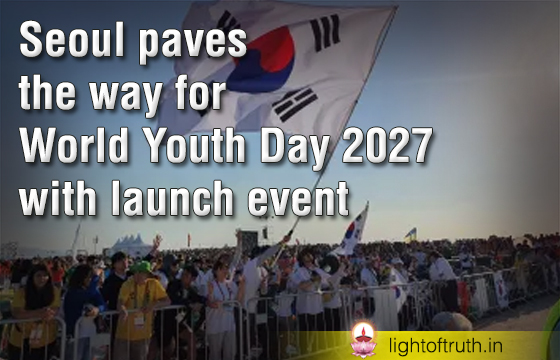
In celebration of the next World Youth Day (WYD), the Catholic Church in South Korea hosted a grand launch event at the Myeongdong Cathedral in Seoul on July 28.
The occasion, which drew more than 1,000 young attendees, consisted of various events intended to reflect the theme “Hope Ignites in Seoul. Success for WYD Seoul 2027.”
During the inauguration ceremony, a flag parade was held in which both young Koreans and international attendees carried colourful flags from 193 different countries into the cathedral.
Following the parade, a puzzle ceremony commenced in which the young participants pieced together the various flags to form the words “WYD SEOUL 2027.”
According to LiCAS News, the highlight of the ceremony was the kickoff declaration in which Archbishop Peter Chung Soon-taick shared that preparing for World Youth Day would be a good opportunity for young people to become “miracle-makers.”
Chung, who serves as the chair of the local organizing committee for WYD Seoul 2027, marked the official start of preparations with this declaration alongside two young Korean delegates.
Gleison De Paula Souza, secretary of the Vatican’s Dicastery for the Laity, the Family, and Life, also discussed Seoul’s rich cultural history and selection as the host city for WYD.
Additionally, a research team conducted by the KDI School of Public Policy and Management’s Professor Taejun Lee presented an analysis forecasting the economic impact of WYD Seoul 2027. Among the projections of trillions of dollars expected to be generated from the event, it is forecast that 24,725 jobs will also be created related to World Youth Day 2027, according to LiCAS News.
The ceremony’s concluding Mass, which included a universal prayer said in multiple languages, was celebrated by Chung alongside Cardinal Andrew Soo-jung Yeom, Bishop Paul Kyung-sang Lee, Bishop Titus Sang-Bum Seo, and Bishop Job Yo-bi Koo.
Daily Archives: August 12, 2024
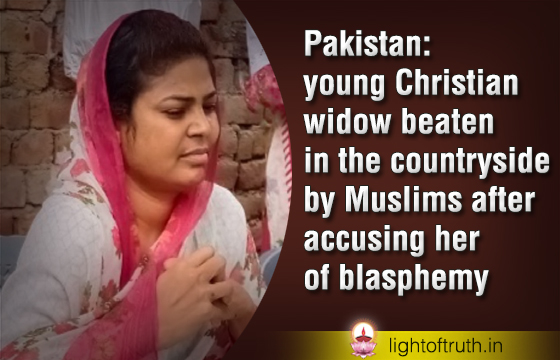
Pakistan: young Christian widow beaten in the countryside by Muslims after accusing her of blasphemy
A young Christian mother of two in Pakistan ran for her life after being accused of blasphemy before being cornered in a field and beaten by a mob. Saima Farhad Gill, a widow, living in a village, near Gojra, in the Punjab, was saved by police and placed in custody after being charged under Pakistan’s notorious blasphemy laws. Saima’s neighbours in Chak 304 Kator, claimed they had found in the bin documents bearing the name of her daughter, Emma, aged nine, which included ripped pages containing the Qur’an. The enraged mob blocked the roads. The police were able to reach Saima and she was taken into custody in Toba Tek Singh. Saima, who is about 33, on 7th August was charged under 295B of the Pakistan Penal Code in which the sentence for desecration of the Qur’an is life imprisonment.
Saima’s maternal uncle is now looking after Emma, and her brother, Saviour, aged seven. Speaking to Catholic charity Aid to the Church in Need (ACN), which supports persecuted and other suffering Christians, prominent Pakistan Catholic priest Father Bonnie Mendes said: “Saima has had a hard life after losing her husband in a road accident in September 2019. “She continued with courage, giving her children education in a private school, a few kilometres from her home.
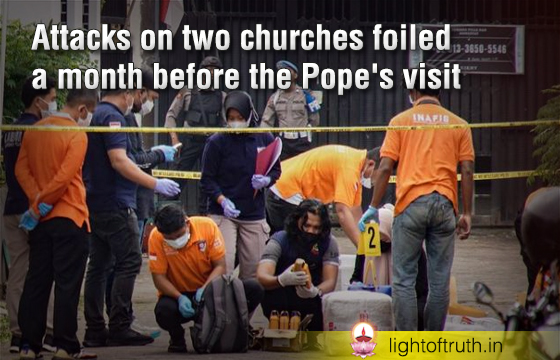
Attacks on two churches foiled a month before the Pope’s visit
A little more than a month before Pope Francis’s visit to Indonesia, two Catholic churches were in the crosshair of Islamic extremists. Densus-88 Polri, the counter-terrorism unit of Indonesia’s national police, foiled suicide attacks against the two places of worship in Malang, East Java.
This sends a warning signal ahead of the pontiff’s apostolic journey to Southeast Asia and Oceania from 2 to 13 September, raising questions about security and sectarian violence in Indonesia. Asked by local media about the affair, Brigadier General Trunoyudo Wisnu Andiko said that “two churches were targeted,” but he did not add further details about the operation and its timing. Indonesian police dismissed rumours that the terrorist operation was linked to the papal visit to the country, which has, for long time, sought to show the world a moderate version of Islam.
Speaking about the foiled attack at the heart of Catholicism in East Java, General Andiko explained that the three suspects arrested are politically linked to the extremist group called Daulah Islamiyah. At night, the Densus-88 Polri unit raided a rented house in Jeding, a village in Junrejo district, Batu regency, about 25 km from Malang. The city of more than 820,000 people is home to many Christian religious groups and congregations, as well as the famous Widya Sasana School of Philosophy and Theology, where hundreds of seminarians study.
One of the three suspected terrorists arrested is known as “Hok”, a high school student believed to be one of the would-be suicide attacker.Yesterday afternoon, he reportedly admitted under questioning that he wanted to blow himself up in one of the churches in Malang, after he was indoctrinated “for six or seven months” by Daulah Islamiyah.“The social media of the terror group seriously affected his mindset,” said Densus 88 police spokesman Senior Superintendent Aswin Siregar speaking to AsiaNews. The young man used some of the money he received from his family to buy bomb material.
The police detained Hok’s parents on board a train bound for the capital, Jakarta. However, since they found no dangerous material in their possession, the two were released. The counter-terror squad did confiscate materials – triacetone triperoxide (TATP) – to make a bomb better known as the “Mother of Satan” for the big blasts it generates. Police also found other items, including iron balls, which terrorists usually add to amplify the damage of the blast and cause more victims.
Indonesia, the world’s most populous Muslim nation, has in the past been the scene of several attacks on churches or acts of intolerance against minorities, including Christians, Ahmadi Muslims, and others.

Pope Francis offers message of hope for the Chinese people
In an interview with the Chinese Province of the Society of Jesus, Pope Francis says China is a “great people” that “must not waste its heritage”, and repeats his desire to make an apostolic journey to the country. The heart of the interview given by Pope Francis to Father Pedro Chia, director of the press office of the Chinese Province of the Society of Jesus, is “a message of hope” and a blessing for the entire Chinese people. It is an interview with a strong spiritual focus, punctuated by the Pope’s personal memories and his reflections on the future of the Church.
The Pope does not hide his desire to visit China, particularly the Shrine of Sheshan in the Songjiang District, dedicated to the Blessed Virgin Mary, Help of Christians. In the Asian country, he says, he would like to meet with local bishops and “the people of God who are so faithful”. “It is a faithful people”, he continues. “They have gone through many things and remained faithful”. To young Chinese Catholics, in particular, the Pope emphasizes the concept of hope, even though—he notes— “it seems tautological to me to give a message of hope to a people who are masters of hope” and “of patience in waiting”. And this, he highlights, “is a very beautiful thing”. The people of China are “a great people” who “must not waste their heritage”, Francis adds; on the contrary, “they must patiently carry forward their legacy”.

SIGNIS Secretary General calls for synodality and solutions journalism in AI-dominated future
The National Catholic Social Communications Convention 2024, held in Batangas, Philippines, brought together social communicators, media professionals, and Church leaders to discuss the use of artificial intelligence (AI) in their work. The keynote address by Dr. Peter Monthienvichienchai, Secretary General of SIGNIS – the World Catholic Association for Communication, underscored the need to assess if and how AI can enhance authentic human encounters in the missions of social communicators.
Dr. Monthienvichienchai posed a pivotal question: “In deciding when and how we use AI in our ministries, we must ask, will this take us closer or further away from our readers, from our parishes?” He emphasized that while AI offers speed and efficiency, for missions, the processes and taking the synodal journeys with those we are writing about and writing for are crucial. “In many cases, truly listening is not only the process, but also the solution,” he stated, echoing a previous speech by Sr. Nina Krapic from the Dicastery for Communication.
The concept of synodality, which involves walking together and truly listening to one another, was central to Dr. Monthienvichienchai’s message. He urged social communicators to ensure AI fosters community and solidarity, rather than creating distance. Dr. Monthienvichienchai also advocated for solutions journalism, which focuses on reporting potential solutions alongside problems. He suggested AI could aid in analyzing data and identifying trends, but stressed the need for keeping in mind the purpose of social communications.
He urged social communications professionals to not only tell the story of the final successful mission, but to also equally cover the challenges and failures that happened along the way.
This, he pointed out, will allow those who are not part of the mission and perhaps also those who are not Catholics, to fully appreciate what the Church is doing to support those on the fringe of society.
Workshops and panel discussions at the convention explored AI’s practical applications in social communications. Industry leaders shared best practices, noting AI’s potential to enhance storytelling and audience engagement. However, there was a consensus on the necessity of human oversight and ethical use of AI. The convention’s theme, “Authentic Influencers (AI) for an Empowered Church”, highlighted AI’s transformative potential in social communications.

Pope Francis: Reading literature can enrich the Christian life, aid in priestly formation
In a new letter, Pope Francis touts the benefits of reading literature for priests and all those seeking to enrich their lives as Christian believers. Though he said his letter was originally intended for men receiving priestly formation, he said all Christians — not just those involved in ministry — would benefit from incorporating poetry and literature into their personal times of study or leisure.
“Time spent reading may well open up new interior spaces that help us to avoid becoming trapped by a few obsessive thoughts that can stand in the way of our personal growth,” he writes in his letter, which is dated July 17 and comes at the height of the summer when many people are taking time off to rest and recreate.
The 87-year-old pontiff believes reading literature enables individual people to learn the art of reflective personal discernment, empathy with others, as well as entering a dialogue with the culture of our times, in a more profound way than modern audiovisual media.
“We are enriched by what we receive from the author and this allows us in turn to grow inwardly, so that each new work we read will renew and expand our worldview,” he writes. In his letter, the Holy Father praises seminaries that incorporated times dedicated to the reading of literature and poetry, countering the current “obsession with ‘screens’ and with toxic, superficial, and violent fake news.”
Reading, the pope insists, should not be approached with an arduous or rigid “sense of duty” but rather with a flexibility, openness, and “readiness to learn.” “Everyone will find books that speak to their own lives and become authentic companions for their journey. There is nothing more counterproductive than reading something out of a sense of duty, making considerable effort simply because others have said it is essential,” he shares.
Drawing upon the example of St. Paul, who “gathered the seeds of pagan poetry,” the pope said Christians who are knowledgeable of the literary works of their times can bring others closer to God through the person of Jesus Christ.
“We must always take care never to lose sight of the ‘flesh’ of Jesus Christ: that flesh made of passions, emotions, and feelings, words that challenge and console, hands that touch and heal, looks that liberate and encourage, flesh made of hospitality, forgiveness, indignation, courage, fearlessness; in a word, love,” Pope Francis writes.
Through “listening to the voice of others” and “seeing through the eyes of others,” Pope Francis believes there is a kind of wisdom and richness instilled in readers of the literary word that seeks truth, broadens perspectives, and enhances critical and cognitive thinking.
“It opens our human words to welcome the Word that is already present in human speech, not when it sees itself as knowledge that is already full, definitive and complete,” he observes, “but when it becomes a listening and expectation of the One who comes to make all things new (cf. Rv 21:5).
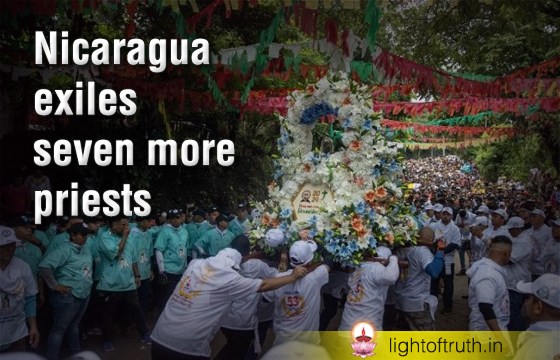
Nicaragua exiles seven more priests
Of the group of priests detained in Nicaragua, seven were exiled this Wednesday, 7 August, and sent to Rome, where they arrived Thursday afternoon. The priests are Víctor Godoy, Jairo Pravia, Silvio Romero, Edgar Sacasa, Harvin Torres, Ulises Vega, and Marlon Velázquez.
The information was confirmed the same day in the afternoon by Nicaragua’s government in a press release that stated, “Seven Nicaraguan priests have left Nicaragua for Rome, Italy”. The priests belong to the dioceses of Matagalpa and Estelí, and were being held at the Nuestra Señora de Fátima Seminary in Managua.
According to Nicaraguan media, the administrator of the Diocese of Estelí, Father Frutos Valle, who was detained on 26 July, was not among those expelled from the country.
This is the fifth time Nicaragua has exiled groups of priests: in October 2022 and February 2023 several priests were sent to the United States; in October 2023 and January 2024, two other groups of priests, along with two bishops – Rolando Álvarez and Isidoro Mora were sent to Rome.
Meanwhile, former Nicaraguan ambassador to the Organization of American States (OAS), Arturo McFields Yescas, confirmed on Wednesday that the government led by Daniel Ortega had ordered the expulsion of the Brazilian ambassador to Nicaragua, Breno de Souza Brasil Días da Costa, for not attending the celebration of the 45th anniversary of the Sandinista revolution on 19 July, to which he was invited. For its part, the Brazilian government decided this Thursday to expel the Nicaraguan ambassador, Fulvia Castro, in “reciprocity” to the step taken by the authorities in Managua.
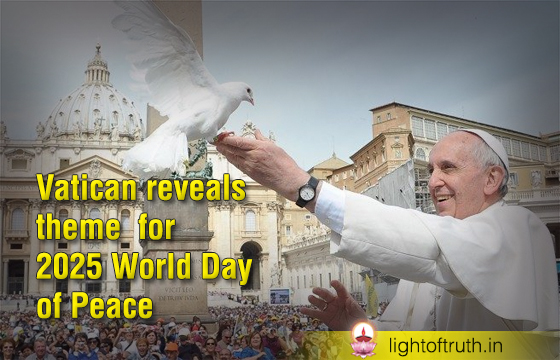
Vatican reveals theme for 2025 World Day of Peace
“Forgive us our trespasses: grant us your peace” is the theme chosen by Pope Francis for the next “World Day of Peace,” held on January 1, 2025. “Only from a genuine conversion on all levels – personal, local and international – will true peace be able to flourish,” says the Dicastery for Promoting Integral Human Development in its statement on the theme for the 2025 World Day of Peace.
In the statement, the Dicastery adds that peace comes not only from an end to conflicts, “but also in a new reality in which wounds are healed and each person’s dignity is recognized”.
The World Day of Peace is observed each year on January 1, the Solemnity of Mary, Mother of God. Since its establishment in 1967 by Pope St Paul VI, the Popes have taken the occasion to offer magisterial reflections in Messages for the day, dealing with topics such as the United Nations, human rights, diplomacy, and economic development. The theme chosen by the Holy Father for the World Day of Peace for 2025 is “Forgive us our trespasses: grant us your peace”, corresponding to “the biblical and ecclesial understanding of the Jubilee Year”.
In its statement, the Dicastery says the theme is inspired by Pope Francis’s encyclical letters Laudato sí and Fratelli tutti, “and above all by the concepts of Hope and Forgiveness, which are at the heart of the Jubilee, a time for conversion that calls us not to condemn, but instead to bring about reconciliation and peace”. The Dicastery goes on to note by “considering the reality of conflicts and social sins afflicting humanity today in light of the hope inherent in the Jubilee tradition of the forgiveness of sins and the cancellation of debts, together with the reflections of the Fathers of the Church in this regard, concrete principles emerge that can lead to a much needed spiritual, social, economic, ecological and cultural change”.
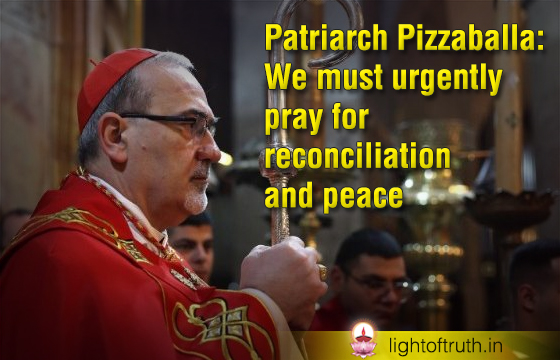
Patriarch Pizzaballa: We must urgently pray for reconciliation and peace
Cardinal Pierbattista Pizzaballa, the Latin Patriarch of Jerusalem, has addressed Christians in the Holy Land with a heartfelt message in view of the Solemnity of the Assumption of the Blessed Virgin Mary, celebrated on August 15. In his message, the Patriarch expresses his dismay over the “terrible war” that has caused immense suffering.
He laments that, despite months of war, the present situation is still filled with so much hatred, resentment, and violence, making it increasingly difficult to find solutions to the conflict raging in the Middle East. Patriarch Pizzaballa writes that it has become “increasingly difficult to envision a conclusion to this conflict, whose impact on the lives of our people is greater and more painful than ever before.”
He notes that it is “increasingly difficult to find people and institutions with whom a dialogue about the future and peaceful relations” can take place in the current situation, marked by “so much violence and, admittedly, anger.”
While the situation is desperate, the days ahead offer opportunities for turning the tide on the conflict, especially the Solemnity of the Assumption of the Blessed Virgin Mary into Heaven, Patriarch Pizzaballa points out.
He invites everyone to pray earnestly for reconciliation and peace, entrusting our prayers to the intercession of the Blessed Mother on the Feast of the Assumption, before or following the celebration of the Eucharist or any other suitable time.
Prayers for peace must accompany our efforts in helping and accompanying those suffering, Patriarch Pizzaballa notes.
In the face of the many words of hatred we hear spoken too often, he says, “we would like to offer our prayer, which consists of words of reconciliation and peace.”
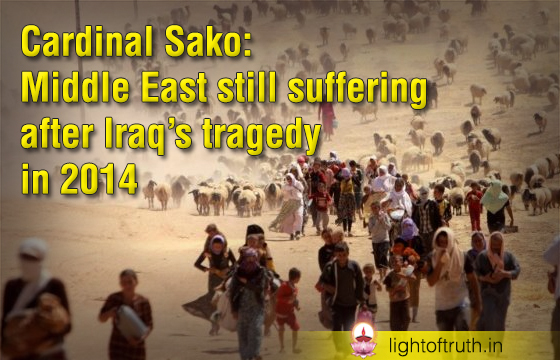
Cardinal Sako: Middle East still suffering after Iraq’s tragedy in 2014
As Iraq marks the 10th anniversary of the Yazidi genocide by the so-called Islamic State group, and of the subsequent tragic Christian exodus from Iraq, Cardinal Louis Raphael Sako the Chaldean Patriarch of Baghdad has urged Christian, Muslim, and Jewish leaders “to stand together” against those who continue to fuel “hatred and extremism” threatening to inflame the entire Middle East. They “must raise their voices loudly,” the Chaldean Patriarch said in a message for the occasion.
Early in August 2014, the self-proclaimed Islamic State of Iraq and Syria (ISIS) launched a campaign of mass atrocities to achieve the religious and ethnic cleansing of religious minority groups in the two countries. ISIS militants first rampaged through the Yazidi heartland of Sinjar, murdering men, abducting and enslaving women and children, and destroying homes and businesses, affecting tens of thousands of people.
More than 3,000 Yazidi men, women and children were killed, and at least 6,800 more — for the most part women and children — were abducted. Then, on the night of August 6, ISIS went after Iraqi Christians, forcing 120,000 to flee Mosul and the Nineveh Plains.
Ten years on, “people in the Middle East are still living in fear and despair,” Patriarch Sako noted, including in the Holy Land, where the “escalation of war has reached its peak.”
He warned that unless the international community does something to stop the conflict, which is claiming thousands of lives, destroying homes and infrastructure, the people in the region will continue to live “in catastrophic conditions”. According to the Chaldean Patriarch, “Today, more than ever, we need to learn lessons from the past so that we never allow tragedies to happen again,” because, as Pope Francis has repeatedly said, “war is never a solution” and, in fact, with war, “everyone loses.” “We must work to achieve peace and stability by overcoming evil with good; war with dialogue and understanding; exclusion with respect for the rights of people, self-determination and respect for international law!” he emphasized.
For their part Christian, Muslim and Jewish religious leaders should join their forces to fight those who incite hatred and extremism that fuels wars. Concluding his message, Patriarch Sako called upon all Churches in the Middle East to bear witness to hope ahead of the 2025 Jubilee, which will have hope as its overarching theme. He also invited Christian and Muslim religious leaders to organize special prayers for peace mosques and churches.