
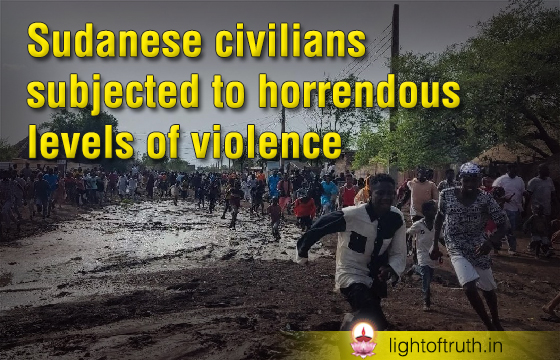
The political dispute between two Sudanese military generals who took to arms because they opposed being integrated, according to a transition plan to free elections following the ousting of long-ruling autocrat Omar al-Bahsir in 2019, has resulted in what is widely acknowledged as “the largest internal displacement crisis in the world.”
With agriculture in ruins and the country’s banks robbed and emptied, famine is a reality, with many vulnerable people already dead from starvation, including babies, while relief efforts remain blocked by fighting.
A report by the aid group Medecins Sans Frontiers, that accused the warring parties – the Sudanese Armed Forces and the paramilitary Rapid Support Forces – of “blatant disregard” for human life and international law, detailed the horrendous levels of violence suffered by Sudanese civilians since the beginning of the war in April 2023.
MSF teams that managed to reach thousands of war wounded in areas affected by bombing, shelling of residential homes and essential infrastructure, said the physical and mental wounds of violence have been exacerbated by the collapse of the health system and the lack of an international humanitarian response.
They said that across Sudan, people’s access to lifesaving care has been drastically affected due to shortages, widespread obstruction and looting of medical supplies, insecurity and attacks against patients and medical staff, as well as damage to healthcare infrastructure.
15 months into the widely ignored conflict, survivors reportedly tell of pervasive sexual, gender-based and ethnic violence, of stories of inhuman treatment perpetrated by armed groups on civilians, of forced evictions, looting and arson amid a total lack of protection services. All mediation efforts have failed to bring a halt to the hostilities.
Daily Archives: August 1, 2024
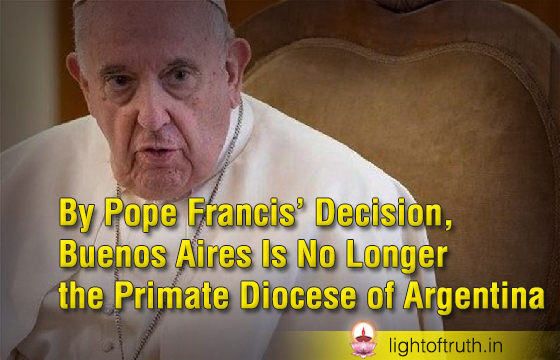
By Pope Francis’ Decision, Buenos Aires Is No Longer the Primate Diocese of Argentina
By Pope Francis’s decision, made public on Monday, July 22, from August 25, 2025, Buenos Aires, Argentina’s capital, will lose the title of the country’s Primate Archdiocese. Days later, from September 7, the Diocese of Santiago del Estero will begin to bear the title of Primate Archdiocese of Argentina. The Holy Father’s decision was communicated jointly by the Archbishop of Buenos Aires, Monsignor Jorge Ignacio García Cuerva, and the Bishop of Santiago del Estero, Monsignor Vicente Bokalic Iglic, in a letter to the faithful of their respective dioceses. A Primate Diocese is a diocese that has a pre-eminent position or leadership in the Catholic Church in a region or country. This special position is occupied by a Bishop who bears the title of “Primate.” The term and function of a Primate Diocese can vary according to the ecclesiastical tradition of each country.
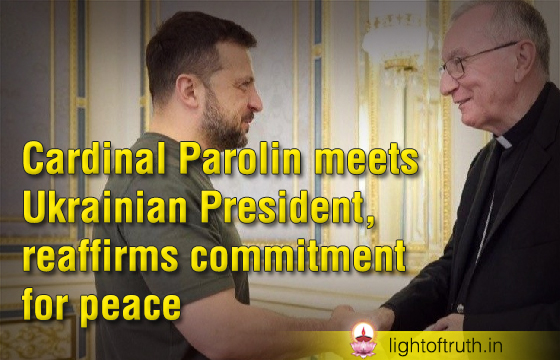
Cardinal Parolin meets Ukrainian President, reaffirms commitment for peace
The institutional meetings held by the Vatican Secretary of State Cardinal Pietro Parolin with Ukrainian leaders culminated on July 23 in Kyiv with the meeting between the Cardinal Secretary of State and President Volodymyr Zelenskyy.
Following the meeting, in a post on X, the Secretariat of State announced that the Cardinal reaffirmed “the Pope’s solidarity and the commitment to finding a just and lasting peace for war-torn Ukraine.”
Zelensky had already received a papal envoy in June last year. Pope Francis had asked the Cardinal of Bologna and head of the Italian bishops, Matteo Zuppi, to visit the war-torn nation and meet with the Ukrainian President.
Over the years, Zelensky has had several opportunities to speak with the Pope. The last occasion was on June 14, 2024, on the sidelines of the G7 meeting in southern Italy. Prior to that, on December 28, 2023, Zelensky reported on his X account about a phone conversation he had with Pope Francis for Christmas greetings. On that occasion, he wrote, the emphasis was on a “just peace for all of us” and the Vatican’s appreciation for the presidential peace plan.
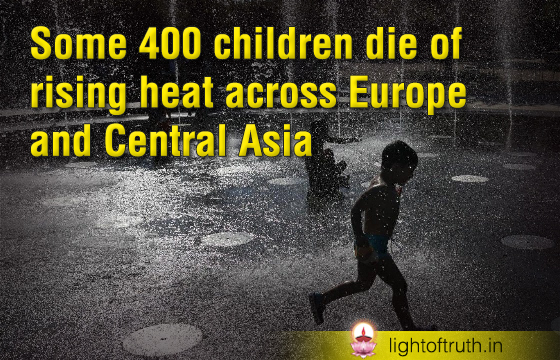
Some 400 children die of rising heat across Europe and Central Asia
An estimated 377 children were killed in 2021 by rising temperatures across Europe and Central Asia. This was the disturbing finding revealed on 24 July, by UNICEF in a new analysis of data from 23 countries.
In the report ‘Beat the heat: child health amid heatwaves in Europe and Central Asia,’ the UN Children’s Fund documents that half of these children died from heat-related illnesses in their first year of life. UNICEF’s Regional Director for Europe and Central Asia, Regina De Dominicis, cautions that “around half of children across Europe and Central Asia – or 92 million children – are already exposed to frequent heatwaves in a region where temperatures are rising at the fastest rate globally.” She warns that the increasingly high temperatures can have serious health complications for children, especially the youngest ones, even in a short space of time. “Without care,” she says, “these complications can be life-threatening.” According to UNICEF, heat exposure has acute effects on children, even before they are born, and can result in pre-term births, low birth weight, still-birth, and congenital anomalies.

Church in Canada continues to walk alongside Indigenous Peoples
Two years on from Pope Francis historic “penitential pilgrimage” to Canada, the nation’s bishops say they “remain committed to walking in solidarity and listening to the experiences of Indigenous Peoples to guide the path forward.”
In a Letter addressed to “The People of God,” the bishops say they continue to reflect “on the profound sorrow Pope Francis expressed for the devastating effects of the residential school system on Indigenous communities, and on the journey of reconciliation and healing we have embarked on together.”
The bishops go on to highlight some of the initiatives undertaken by the Church in Canada since the Pope’s visit. The first involves financial support for Indigenous priorities, with the Bishops pledging to raise thirty million Canadian dollars over the course of five years for projects aimed at supporting healing and reconciliation. Over half of that amount has already been raised, with funds going to initiatives identified by local Indigenous com-munities and overseen by the Indigenous reconciliation fund.
The bishops have also committed them-selves to “transparent access” to mission, sacramental, and burial records, as well as other documentation. “Pope Francis emphasized the significance of uncovering and recognizing truths about the historical injustices faced by residential school survivors and their families,” the bishops say, adding, “Truth must come before recon-ciliation.”
Finally, the bishops acknowledged “the many difficult conversations around the country regarding our painful legacy.” Recognizing that “this deep desire for truth and transparency resides first with Indigenous communities and residential school survivors,” the bishops encourage dioceses and all Catholics to support local indigenous communities as they delve into the painful history of the residential schools.

Pope appeals for Olympic Truce for war-torn nations
Pope Francis on 21 July expressed his hope that the Paris Olympic and Paralympic Games provide the opportunity for warring nations to respect an ancient Greek tradition and establish a truce for the duration of the Games. “According to ancient tradition, may the Olympics be an opportunity to establish a truce in wars, demonstrating a sincere will for peace,” he said.
Pope Francis was speaking after the recitation of the Angelus prayer in St Peter’s Square. He recalled that this week the Paris Olympic Games will begin, followed by the Paralympic Games, and noted that “Sport also has a great social power, capable of peacefully uniting people from different cultures.” “I hope that this event can be a sign of the inclusive world we want to build and that the athletes, with their sporting testimony, may be messengers of peace and valuable models for the young,” he said.
The tradition of the “Olympic Truce” originally aimed to allow safe participation in the ancient Olympic Games for all athletes and spectators from Greek city-states who were constantly engaged in conflict with each other. In the 1990s the International Olympic Committee decided to revive the concept of the Olympic Truce with a view to protecting the interests of the athletes and sport in general and to harness the power of sport to promote peace, dialogue and reconciliation more broadly.
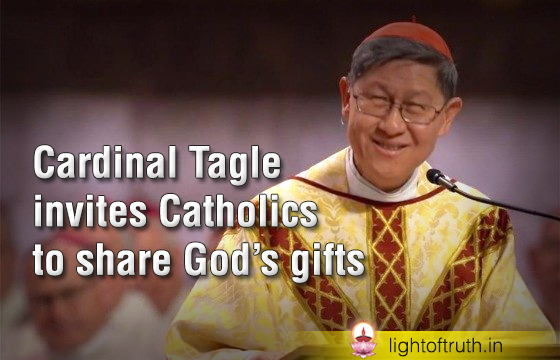
Cardinal Tagle invites Catholics to share God’s gifts
Reflecting on the theme of the National Eucharistic Congress, from the Gospel of John “Remain in Me,” Pope Francis’ special envoy to the event highlighted Jesus’ mission as a gift from the Father. “Jesus is sent to be given by the Father to others,” Cardinal Luis Antonio Tagle said during his homily, and he explained that the Eucharist encapsulates this gift, as Jesus offers His body and blood for the life of the world. The Cardinal, who is the Pro-Prefect for the Section of Evangelization of the Dicastery for Evangelization, celebrated Holy Mass at the National Eucharistic Con-gress in Indianapolis, Indiana, that concluded on Sunday, July 21.
He challenged the faithful to see their own lives and the world through the lens of gift rather than mere achievement.” Do we still look at ourselves, persons, objects, work, society, events, and creation within the horizon of gift?” he asked, warning that losing this perspective leads to self-absorption and a lack of missionary zeal.
Cardinal Tagle addressed the difficult reality of disciples who abandoned Jesus, as narrated in the Gospel of John, chapter 6, and he invited introspection on whether the Church’s actions some-times contribute to this departure.
“Is it possible that we disciples contribute to the departure of others from Jesus?” he asked, urging a deeper engagement with the Eucharist and its transformative power. He also highlighted the need to welcome those who feel marginalized, such as the poor, migrants, and the elderly, ensuring they feel part of the Church community. Cardinal Tagle said that those who choose to stay with Jesus must also be willing to be sent by Him. “We should not keep Jesus to ourselves. That is not discipleship. That is selfishness,” he stated, and he called on the faithful to share the love and compassion they have received from Jesus with the weary, the lost, and the divided.

Chaldean bishops insist on two-state solution in Holy Land
As the war in Gaza threatens to further expand igniting the entire Middle East, with the Houthi rebels in Yemen and the Israeli Defence Forces (IDF) engaging in missile-strike ex-changes, the Chaldean bishops of Iraq have joined in insisting on a two-State solution in which Israel and Palestine can both live “in peace and security.” In a statement issued at the closing of their recent annual Synod presided by Patriarch Cardinal Raphael Sako in Baghdad, the Iraqi bishops expressed deep concern for the many conflicts raging in the Middle East, “especially in the Holy Land.” While condemning “all forms of violence”, they urged the international community to always uphold peace and actively engage to put an immediate end to this devastating war.
According to the Chaldean bishops, the only viable solution to the decades-long Israeli-Palestinian conflict is to create two neighbouring states that live “in peace, security, stability and mutual trust.” This stance is strongly advocated, amongst many others, by the Holy See, but is firmly opposed by the current Israeli government, especially after Hamas’ terrorist attacks of 7th October.
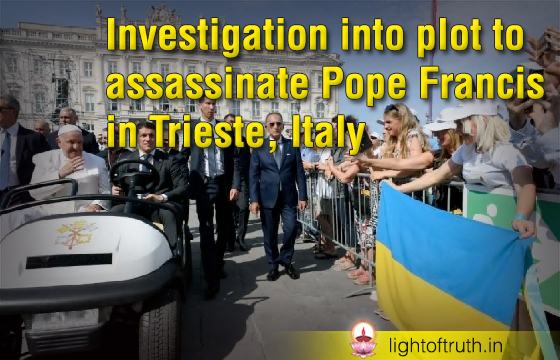
Investigation into plot to assassinate Pope Francis in Trieste, Italy
Italian authorities are investigating a potential assassination plot against Pope Francis following the discovery of a firearm in an abandoned suitcase at Trieste train station, just days before his scheduled visit on July 7. The incident unfolded when staff at a bar within the station noticed the suspicious luggage and alerted the authorities. Inside the suitcase, police found a Czech-made semi-automatic pistol, a magazine loaded with 14 bullets, and brand-new clothing of Turkish origin. The rapid response from Italian security agencies highlighted the seriousness of the threat. Despite the alarming discovery, Pope Francis adhered to his itinerary, attending the 50th Catholic Social Week in Trieste. He traveled through the city in an open electric vehicle and celebrated an outdoor mass in the main square, warmly greeted by the residents of Trieste. Monsignor Enrico Trevisi, the Bishop of Trieste, confirmed that the Pope was briefed on the situation but chose to proceed with his visit. “The people of Trieste welcomed the Pope with immense joy, and we didn’t want anything to mar this occasion,” Bishop Trevisi told the local newspaper Il Piccolo. Vatican spokesperson Matteo Bruni stated that the matter is under the jurisdiction of Italian authorities. He reassured the public that, despite the security scare, Pope Francis’s visit went ahead without any further issues, focusing on the promotion of Catholic social teachings.
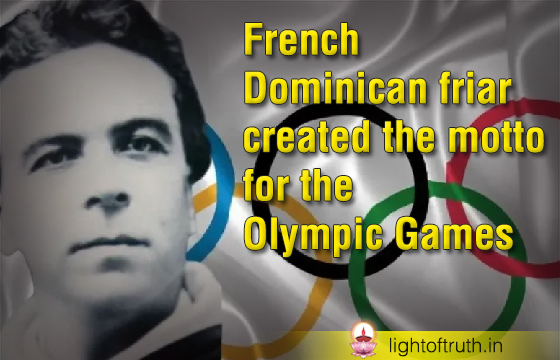
French Dominican friar created the motto for the Olympic Games
The motto of the modern Olympic Games, “Faster, Higher, Stronger,” was coined by French Dominican friar Louis Henri Didon, who became friends with the founder of the modern Olympic Games, Baron Pierre de Coubertin, five years before the 1896 Athens Games. The motto, originally formulated in Latin as “Citius, Altius, Fortius,” was used before the modern Olympic movement at St. Albert the Great School in Paris, where the Dominican friar was the principal.
Born in 1840, Didon entered the Rondeau Minor Seminary in Grenoble, France, begi-nning at the age of nine, and during his youth, he stood out for his ability as an athlete. After visiting the Carthusian monastery in Grenoble, he decided to follow a religious vocation and took the habit of the Order of Preachers (Dominicans) at the age of 16. Six years later, after a period of formation in Rome, he was ordained a priest at age 22.
Didon soon gained fame as a preacher. During the brief Franco-Prussian War, which broke out in July 1870, he was a military chaplain and for a time was held as a prisoner. When he fell ill, he ended up as a refugee in Geneva, Switzerland. From there he was sent to Marseille, where he resumed his sometimes controversial preaching activity, which led to his being sent to Corsica in 1880.
A decade later he was appointed principal of St. Albert the Great School in Paris where he established sports as part of the school’s educational program and promoted sports competition. This decision was the result of belief in the value of sports and the contact he had had with Pierre de Coubertin since 1891. In the first race they organized, the Dominican decided to embroider on the school flag the famous motto, which would become an Olympic motto in 1894, during the first Olympic Congress held in Paris in 1894.