
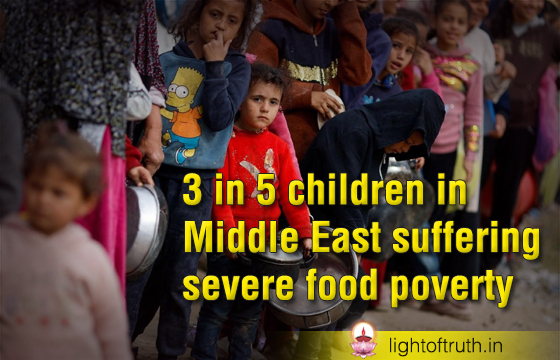
3 in 5 children in the Middle East and North Africa, 34 million in total, are living with severe food poverty. That’s according to a new report by UNICEF entitled Child Food Poverty: Nutrition Deprivation in Early Childhood, which analyses the consequences and causes of food deprivation among the world’s youngest children.
The report notes that around 181 million children worldwide under the age of 5 are experiencing severe child food poverty, making them up to 50 per cent more likely to experience a life-threatening form of malnutrition. The report also highlights the compounding effects of inequality, conflict and climate crises. It says that persistent protracted crises, ongoing conflicts and economic instability have a significant impact on children’s access to nutritious and diverse foods. It estimates that about half of the children in severe food poverty receive only starchy pro-ducts along with dairy or breast milk, reflecting a very poor diet.
Fewer than 10% of these children eat fruits and vegetables, according to UNICEF. Less than 5% of people eat nutrient-rich foods such as eggs, fish, poultry, or meat.
“Children living in severe food poverty,” said UNICEF Director-General Catherine Russell in a press release, “are children on the brink. Right now it is a reality for millions of young children and can have an irreversible negative impact on their survival, growth and brain development.” “Children who consume only two food groups a day, for example, rice and some milk, are up to 50 per cent more likely to experience some severe form of malnutrition.”
Daily Archives: June 13, 2024
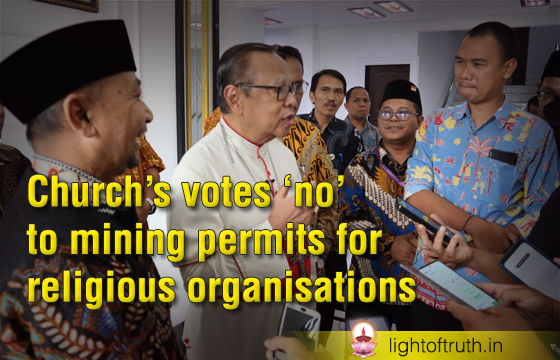
Church’s votes ‘no’ to mining permits for religious organisations
Indonesia’s Catholic Church has rejected President Joko Wido-do’s plan to allow religious organisations to manage mining deposits whose concessions have been withdrawn from companies. Last week Jokowi – as the president is known at home – signed a decree to make the proposal official, as a gesture of appreciation for the contribution made by religious groups to Indonesia’s struggle for independence, Investment Minister Bahlil Lahadalia said.
In 2022, the president, whose term will end in October, had announced that he would revoke a number of mining permits because the concessions were being developed too slowly. Bahlil said that religious organisations are given the opportunity to take over the concessions to improve the welfare of the community. But religious organisations do not have the capacity for exploration and exploitation, nor the funds to propose mining investments.
Criticism has come from the Church and various groups in society, including environmentalists. ‘I don’t know how or who others will respond to this issue presented by the president,’ Card. Ignatius Suharyo Hardjoatmod- jo, Archbishop of Jakarta, said yesterday.
‘But the Indonesia Bishops’ Conference and the Indonesian Catholic Church will never accept the offer to manage mining projects because it is not the domain of the Church.” ‘Our pastoral work in each archdiocese and within the Bishops’ Conference has always been very clear. And there has never been involvement in mining projects,’ the cardinal added, addressing the media as he left the Jakarta office of the Ministry of Religious Affairs.
There have often been conflicts with large companies that have appropriated land be-longing to local people. And some children have died after falling into abandoned mine shafts.
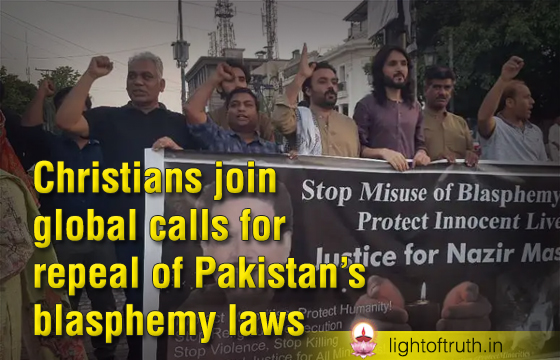
Christians join global calls for repeal of Pakistan’s blasphemy laws
Some 300 Christians marched on the legislature in Pakistan’s Punjab province, joining global calls for the repeal of the country’s draconian blasphemy laws days after a Christian lynching victim died in hospital. During the protest on June 8 in Lahore, the provincial capital, the protesters condemned the government for failing to stop recurrent Muslim mob attacks based on false alle-gations of blasphemy.
The demonstrators placed lit candles on a table around a pict-ure of Nazir Masih, the 74 year old Christian who died on June 3 days after a Muslim mob attacked and injured him in Punjab’s Sar-godha district. “The government should stop patronizing extremist religious outfits. Minorities are now afraid to sleep fearing some-one will drop blasphemous mat-erial in front of their house. The whole community is punished resultantly,” said Samson Sala-mat, chairman of Rawadari Teh-reek, a group promoting peaceful coexistence among all segments of society, at the rally.
Salamat referred to the case of Masih who was attacked after rumours spread that he burned pages of the Quran on May 25. “We demand new legislation against false and fabricated blasphemy allegations and an independent inquiry into all bla-sphemy incidents and mob attacks on the Christian community,” Salamat said. On June 3, UK-based global Christian group, Christian Solidarity Worldwide (CSW), issued a strongly worded statement demanding the end of Pakistan’s blasphemy law.
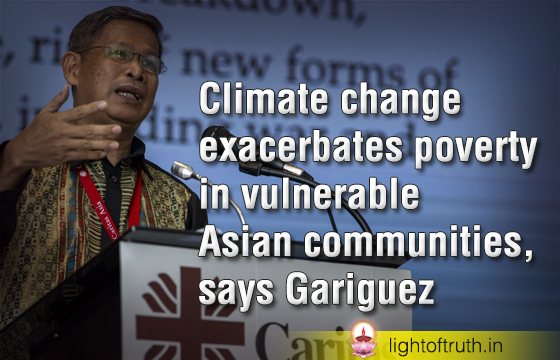
Climate change exacerbates poverty in vulnerable Asian communities, says Gariguez
“Climate change hits hardest at the poorest communities, fundamentally because they lack the resources to adapt,” said Fr. Edwin A. Gariguez, social action director of the Apo-stolic Vicariate of Calapan, south of Manila. Gariguez was the keynote speaker at the Caritas Asia Regional Conference, which took place in Bangkok, Thailand, on June 11, attended by approximately 100 representatives from 25 Caritas organizations across Asia. The priest said that small farmers, fishers, and indigenous peoples are on the front lines, grappling with the direct impacts of environ-mental changes that threaten their livelihoods and survival. Gariguez emphasized the need for effective policies that could provide immediate relief and long-term sustainability.
Discussing various extreme weather events, including the 2023 humid heatwave across South Asia and devastating typhoons in the Philippines, Gariguez explained that these phenomena “do not just disrupt daily lives–they obstruct long-term development.” Recent scientific data showed the increased frequency and intensity of extreme weather events, under-scoring the urgent need for regional adaptive strategies, according to Gariguez. “The correlation between escalating climate events and the surge in health issues is undeniable,” noted Gariguez, adding that climate change exacerbates health crises, particularly respira-tory and water-borne diseases. “Our faith implores us to see the environmental crisis not just as a physical challenge but as a moral imperative,” Fr. Gariguez remarked.
He said that different Asian communities integrate spiritual beliefs and cultural values into their environmental conservation efforts, showing how these practices can forge strong commitments to ecological stewardship. The priest praised organizations like Caritas Internationalis for their role in blending humanitarian aid with developmental strategies. “By integrating immediate disaster response with long-term development plans, we pave the way for sustainable resilience,” he said.
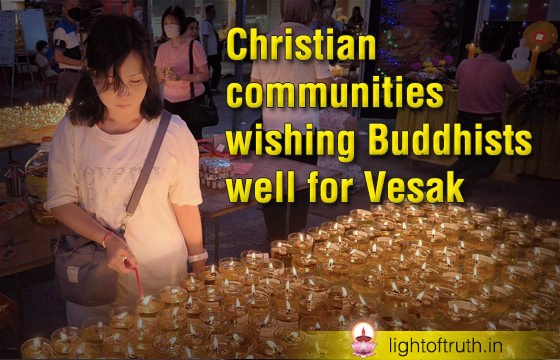
Christian communities wishing Buddhists well for Vesak
As Buddhists today mark the start of Vesak, their most important holy day, some Christian leaders in Southeast Asia have sent messages of good wishes as a way to promote interfaith dialogue. The Association of Churches of Sarawak (ACS) extended its best wishes to the Buddhist community in the Malaysian state and throughout the Southeast Asian country.
In view of many international crises, wars, and dissensions, as well as aggressions, divisions, and conflicts, the Buddha’s teachings and message of peace, compassion and devotion to humanity are something that must be heard more and more, this according to the Rt Rev Danald Jute, ACS president and Anglican Bishop of Kuching. “In a multi-cultural, multi-religious and multi-ethnic nation such as Malaysia, it is essential that we respect and celebrate our similarities as well as our differences,” the prelate said. “Let us affirm the good in each one of us. In this way, we can all help to build a more peaceful, respected, and prosperous nation.”
Cardinal William Goh, Catholic Archbishop of Singapore also issued a message for the city-state’s Buddhist community. “As you celebrate the birth, enlightenment, and final nirvana of Gautama Buddha, may your hearts be filled with peace and joy,” he said. “In today’s world, many pursue material wealth while relegating spiritual values and their sense of morality to the back seat. As Buddhists and Christians, our religious principles and moral responsibilities motivate us to help mankind in its search for truth and peace.” According to the cardinal, “Constant care and attention are needed to preserve trust among the different faith communities in Singapore. This is especially important when our world is experiencing increasing levels of geopolitical tension and ethnic and religious polarisation today.” With this in mind, “Let our communities continue to adopt a way of life that seeks truth over falsehood, compassion over hatred, and forgiveness over revenge to ensure lasting peace and prosperity,” he added.
Catholic Archbishop Julian Leow of Kuala Lumpur also issued a brief message to Malaysian Buddhists. “May this celebration inspire us to cultivate greater understanding, kindness, and harmony within our communities. May we also strengthen our commitment to work for reconciliation and resilience.”
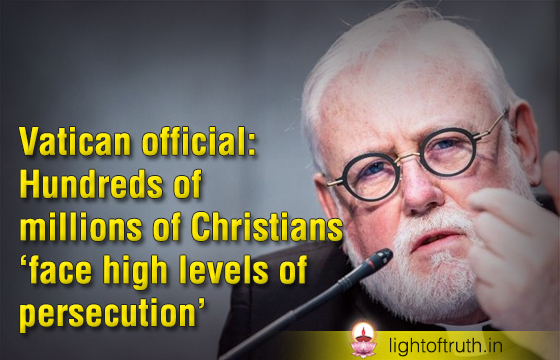
Vatican official: Hundreds of millions of Christians ‘face high levels of persecution’
“More than 365 million Christians, approximately 1 in 7, face high levels of persecution for their faith,” Archbishop Paul Richard Gallagher, Vatican secretary for Relations with States and International Organizations, said at a conference on religious freedom held in Rome.
The conference, titled “Religious Freedom and Integral Human Development: A New Global Platform,” was jointly organized by the Sovereign Order of Malta, the Atlantic Council, and several universities, including the Pontifical Urban University of Rome and the University of Notre Dame.
In his speech, Gallagher said attacks on churches and Christian properties “increased significantly in 2023, with more Christians than ever before reporting violent attacks.” The prelate went on to describe his concern that “according to some estimates, almost 4.9 billion people live in countries with serious or very serious violations of religious freedom.”
The Vatican diplomat underscored that religious freedom, “although not the only aspect of human rights, is probably the most fundamental,” adding that “the violation of the right to religious freedom has the effect of undermining not only one right but also the entire category of human rights,” he added.
“Religious freedom plays a decisive role in achieving integral human development,” Gallagher continued. For this reason, he added, “the state should exercise a detached neutrality and grant religious groups and all individuals an equal right to the public manifestation of their religious convictions.”
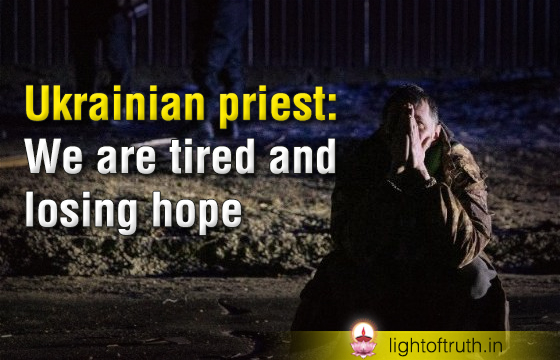
Ukrainian priest: We are tired and losing hope
“As long as a person is alive, there is always hope, a desire to see things change for the better and believe that we can make a difference.” Speaking to Vatican News, Father Roman Ostrovskyy, Vice-Rector of the Greek-Catholic seminary in Kyiv, shares his reflections on the Bull “Spes non confundit,” with which Pope Francis recently proclaimed the upcoming Jubilee Year.
Father Roman is a biblical scholar, having studied biblical theology at the Pontifical Gregorian University, and now teaches in seminary. “I read the text of the bull carefully,” he says, “and found many beautiful and interesting themes. For example, an important passage is where the Holy Father says that the Christian life is a journey, and the goal of this journey, and also of the Jubilee Year, is the encounter with the Lord Jesus. Catholics and all Christians in Ukraine feel this protective presence of Jesus.”
“However,” he says, “on the other hand, we all see a tremendous growth in discouragement. We are in the third year of war, and people feel it deeply: they are tired, losing hope that things here can change for the better, that our voices will be heard.”
The young priest recounts that when full-scale war broke out in his country, there was much fear and confusion about what was happening. “But,” he emphasizes, “there was hope because Ukraine was defending itself strongly; some-thing was happening.”
“It is really difficult for us to think about tomorrow,” Fr Roman says. “In Ukraine, it is not realistic to plan more than a week in advance. Air raid sirens sound, adults and children hide in shelters… Everyone is waiting for what will happen next, which piece of land will be taken away. And the worst part is that we are not able to oppose it alone. Sometimes, it feels like we are being watched like a computer game, where it is interesting to see what happens, but no one wants to fully participate and help the people in need of simple assistance, and fundamentally, just stop the aggressor.”
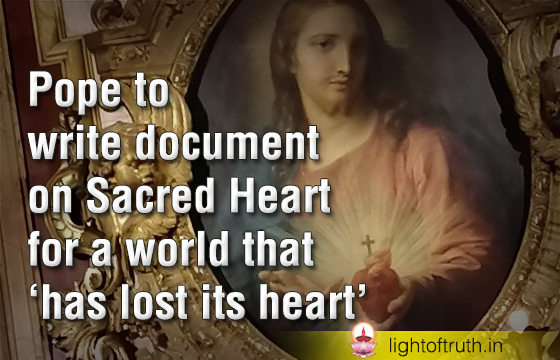
Pope to write document on Sacred Heart for a world that ‘has lost its heart’
Pope Francis has announced he is pre-paring to write a document dedicated to that devotion to “illuminate the path of ecclesial renewal, but also to say some-thing significant to a world that seems to have lost its heart.” Speaking during the weekly General Audience – his first in June, the month dedicated to the Sacred Heart – he recalled that last 27 December marked the 350th anniversary of the first of Saint Margaret Mary Alacoque’s visions of the Sacred Heart of Jesus.
He said that, on that date, celebrations for this devotion began in many countries across the world, and that they will conclude on 27 June next year. For this reason, the Pope said, he is preparing “a document that gathers the precious reflections of previous magisterial texts and a long history dating back to the Holy Scriptures, to reintroduce today, to the whole Church, this devotion full of spiritual beauty.”
“I believe it will be very beneficial for us to meditate on various aspects of the Lord’s love that can illuminate the path of ecclesial renewal; but also to say something significant to a world that seems to have lost its heart,” he said. Thus, Pope Francis asked believers to accompany him in prayer during this time of preparation, with the intention of making this document public next September.
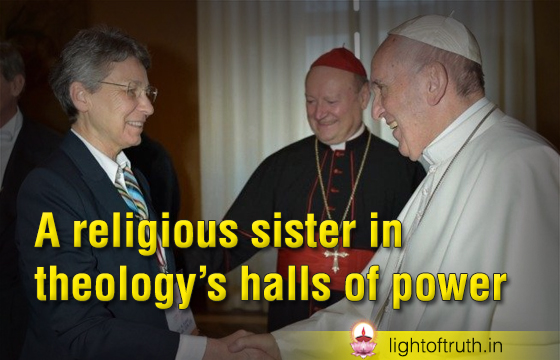
A religious sister in theology’s halls of power
“All of my predecessors were priests and bishops,” Sr M. Isa-bell explained with a smile. The Schoenstatt Sister of Mary was referring to her appointment as President of the Catholic Institute of Sydney, Australia, the count-ry’s only ecclesiastical faculty, which confers Pontifical degrees in Sacred Theology. The faculty was established in 1954 for Aus-tralia, New Zealand and Oceania. Sr M. Isabell Naumann, a Ger-man-born member of the Secular Institute of the Schoenstatt Sisters of Mary (ISSM), was appointed President of the Catholic Institute of Sydney in 2018 by Archbishop Anthony Fisher, OP.
Prior to her appointment, Sr M. Isabell worked for many years as professor at the Catholic Insti-tute of Sydney. Her appointment as president of the Institute still came as a surprise. In an inter-view with Vatican News, Sr M. Isabell said, “There are not too many women who lead ecclesia-stical faculties or universities. Ours goes back to the 1880s, and it became an ecclesiastical facu-lty in 1956. All of my predece-ssors were priests and bishops.” Three years after her appointment as President of the Catholic In-stitute of Sydney, in October 2021, Sr M. Isabell was called by Pope Francis to be a member of the In-ternational Theological Commi-ssion (ITC).
In her opinion, there should be a stronger presence of women in such commissions like the ITC. She finds this important, “so that you have more complementary thinking.”
“It is very important because we might deal with the same to-pic, but you have different ways of approaching the topic, and in my eyes that is a very important complement, and that needs to come together when you deal with anything in theology,” she ex-plained, expressing her hope that there will be more women on such commissions in future.
Pope Francis often stresses the importance of woman and their role within the Church.

Tech-savvy Catholics embrace Carlo Acutis: ‘Saintliness is possible in this modern era’
Pope Francis formally recognized a miracle attributed to the intercession of Blessed Carlo Acutis, paving the way for the young Italian, who died of leukemia at age 15, to become the first canonized saint from the millennial generation.
If you know anything about Carlo Acutis, you probably know that he loved going to Mass and helping the poor and downtrodden he encountered. A boy of strong faith despite not having grown up in a particularly religious household, Carlo was also known to spend hours adoring Christ in the Eucharist.
But you may have also seen him described as the Catholic Church’s first “tech-savvy” saint. And for good reason. Carlo was born in 1991 – the same year the World Wide Web came online in all its snail’s-pace, dial-up glory. And like so many of his generational peers, Carlo quickly embraced the internet’s possibilities, despite the technology still being relatively in its infancy; Google wasn’t even founded until Carlo was 7. But Carlo’s mother remembers the young whiz kid proudly describing himself as a “computer scientist” – well before he got his first computer as a gift around the year 2000.