

Pope Francis on August 27 made 20 prelates, including Indian Archbishops Filipe Neri Ferrão of Goa and Daman and Anthony Poola of Hyderabad, in a consistory held at St. Peter’s Basilica, Vatican City.
Cardinal Ferrao is the president of the Conference of Catholic Bishops of India (Latin Rite).
The ceremony was attended by thou-sands of faithful from around the world, including India.
Cardinals Oswald Gracias, Archbishop of Bombay, attended the ceremony along with Cardinals George Cardinal Alencherry, head of the Syro-Malabar Church, and Baselios Cleemis, head of the Syro-Malankara Church.
Other participants were Archbishop Peter Machado of Bangalore, Bishop Jaya Rao Polimera of Eluru, Joseph Raja Rao of Vijayawada, and Archbishop Emeritus Bernard Moras of Bangalore.
The 20 new cardinals represent the Church worldwide and reflect a wide variety of cultures, contexts and pastoral ministries, says a press note from CCBI deputy secretary general Father Stephen Alathara.
Seven of the new cardinals are from Europe, six from Asia, two from Africa, one from North America and four from Central and Latin America. Of the 20, 16 are cardinal electors under 80 years of age and thus eligible to participate in a conclave. The College of Cardinals currently consists of 229 cardinals, of which 131 are electors and 98 non-electors.
Cardinal Telesphore Toppo, Archbishop of Ranchi, and Cardinal Oswald Gracias, Archbishop of Bombay, were made cardinals during their tenure as presidents of the CCBI, in 2003 and 2007, respectively. Cardinal Ferrão is the third CCBI president to be elevated to the cardinalate, the press note says.
Cardinal Ferrão, born on January 20, 1953, in Aldona, Goa, was ordained priest October 28, 1979. He was appointed Auxiliary Bishop of the Archdiocese of Goa and Daman at the age of 40 by Pope John Paul II on December 20, 1993. His epis-copal ordination was April 10, 1994. On December 12, 2003, he was appointed the archbishop of Goa and Daman and patriarch of the East Indies and installed on March 21, 2004.
Daily Archives: September 2, 2022
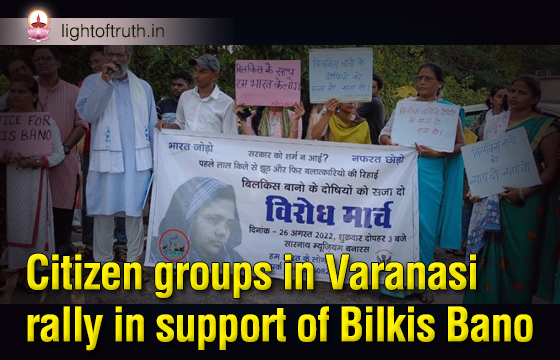
Citizen groups in Varanasi rally in support of Bilkis Bano
A powerful citizen’s movement in Varanasi has come to the streets demanding justice to Bilkis Bano, a rape survivor of the 2002 communal riots in the western Indian state of Gujarat.
The Sajha Sanskriti Manch (SSM, United Forum for Cultural Diversity), network of various social and human rights organization, has organized a series of public protests, rallies and signature campaign in various parts of the northern Indian holy city to demand repeal of the mercy given by the Gujarat High Court to the 11 rapists and murderers.
SSM, in collaboration with Joint Action Council, an organization of the Students of Ba-naras Hindu University and Dakhal (Initiative), a young women’s organization for the rights of women and transgenders through cultural and political interventions, organized its third public meeting August 26 at Sarnath, 10 km northeast of Varanasi.
SSM convenor Father Ana-nd Mathew of the Indian Missionary Society, while addressing the gathering said: “We are standing in front of the Sarnath museum where the Ashoka pillar, symbol of peace and dharma is preserved. The place is significant because it is here Buddha preached his first sermon, denoting the four noble truths of dharma. And from here we appeal to the judiciary not to perpetuate injustice.”
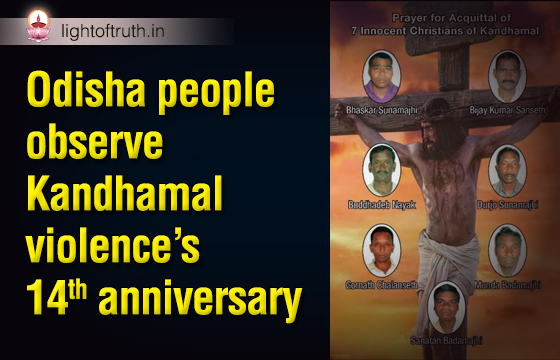
Odisha people observe Kandhamal violence’s 14th anniversary
A state-level peace and harmony convention was held in Odisha on the fourteenth anniversary of the Kandhamal communal massacre in the eastern Indian state.
More than 300 civil society groups, political leaders, journalists, lawyers, writers, students, and academicians, including priests, and nuns across the state joined the day-long peace and goodwill convention August 25 at Geet Govind Bhawan, Bhubaneswar, the state capital.
The chief speakers at the convention were Prakash Yash-want Ambedkar, a former Member of the Parliament, and Arfa Khanum Sherwani, a renowned journalist and the senior editor of the Wire online portal.
Sister Justine Geetanjali, a member of the Odisha unit of the Citizens for Communal Harmony Peace and Justice, in her introductory remark briefed about the current state of affairs in the country and about the Kandhamal riots.
Ambedkar, the grandson of the founder of the Constitution, Baba Saheb Ambedkar, who addressed the first session, raised questions on sensitive incidents such as the case of Bilkis Bano.