
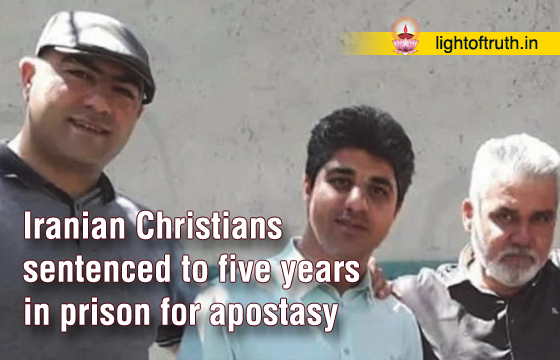
Three men in the town of Karaj were sentenced on 22 August to five years in prison for propaganda against the state after they converted to Christia-nity from Islam. The sentence was later reduced to three years on appeal. In the meantime, they were released on bail with obligation to report weekly to the intelligence branch of Iran’s police.
According to Article18, a London-based advocacy group dedicated to religious freedom in Iran, the three converts – Milad Goudarzi, Ameen Khaki and Ali-reza Nourmohammadi (pictured) – were convicted of “spreading propaganda” against the state and engaging in “deviant educational activities opposing Islam”, i.e., practicing a religion different from Islam.
The initial verdict in June also imposed a fine of almost US$ 1,500 on each man who were released on bail for nearly $ 9,000. They will have to report to the authorities at least once a week for the next six months.
In November 2020, security forces raided their homes and seized personal items, including computers, mobile phones and religious books.
Daily Archives: September 21, 2021
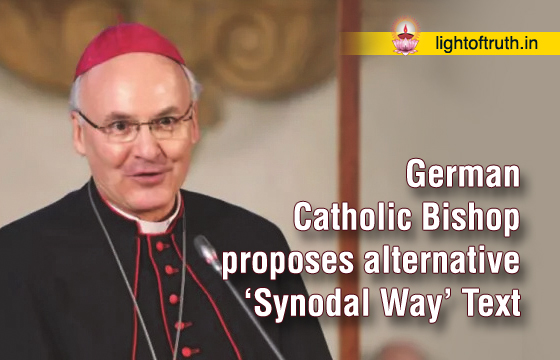
German Catholic bishop proposes alternative ‘Synodal Way’ text
Bp Rudolf Voderholzer of Regensburg, southern Ger-many, presented the text on a website launched on Sept. 3, reported CNA Deutsch, CNA’s German-language news partner. In an introduction to the website, the bishop wrote: “We are joining in the Synodal Way, but we are increasingly convinced that [this process] will not reach its goal if it continues along the path it has taken so far.”
“We are convinced that only a Synodal Way that is undertaken alongside and by the whole Church can be sound and achieve its goal. The whole Church is not only the worldwide Church, but also the early Church and the Church of the saints who have already arrived at their destination.” “Its foundation is the God-man Jesus Christ, who is truly present in the Eucharist and from it builds up the Church.” The Synodal Way is a multi-year process bringing together bishops and lay people to discuss four main topics: the way power is exercised in the Church; sexual morality; the priesthood; and the role of women.
The German bishops’ con-ference initially said that the process would end with a series of “binding” votes — raising concerns at the Vatican that the resolutions might challenge the Church’s teaching and discipline.
Bishops and theologians have expressed alarm at the process, which is expected to end in February 2022, but bishops’ conference chairman Bishop Georg Bätzing has defended it vigorously.
The new website appears as participants prepare to attend a plenary session of the Synodal Way in Frankfurt, southwestern Germany, on Sept. 30-Oct. 2. The event will be the second meeting of the Synodal Assembly, the supreme decision-making body of the Synodal Way.