
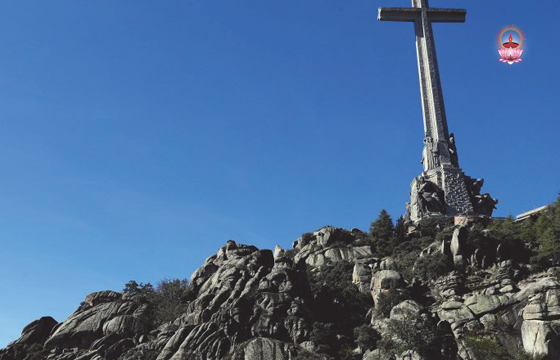
Spain’s Catholic bishops warned of growing division and tension in their country over government attempts to “deconstruct and dismantle the Christian worldview.”
“We are in a difficult moment, not only because of COVID-19, but because we are convulsed by a deep institutional crisis, with some groups seeking to open a new constitutional phase and replace a political framework that has given Spain great stability,” the bishops’ conference said.
“Legislative initiatives by the coalition government on education, euthanasia, abortion, democratic memory and the judiciary reflect a global deconstruction project, whose development puts freedom at risk and impedes essential unity.”
The warning was contained in a 95-page statement, published July 28, setting out pastoral guidelines for the Spanish church from now until 2025.
The bishops said an attempt was underway to “erase distinctions between truth and falsehood, reality and fiction, good and evil.”
“With its prophetic mission, the church is obliged to denounce these attacks on freedom and justice, to act as a channel of encounter and reconciliation,” the bishops said. They added that “Spaniards are no longer living in a culture inspired by the Christian faith. For many, Christian truths have become incomprehensible, as moral standards flowing from the Gospel also become unacceptable.”
The statement was released two days after Spain’s co-governing Socialist Party confirmed plans to review a series of 1979 accords with the Vatican and adopt a “statute of secularism,” enforcing “strict separation between politics and religion, law and morality, crime and sin.”
The bishops said society was full of distrust and confrontation, as digitization, artificial intelligence and surveillance technologies fuelled “spiritual impoverish-ment.” They warned of a type of capitalism that does not just regulate production and consumption, “but also imposes values and lifestyles.”
Daily Archives: August 17, 2021
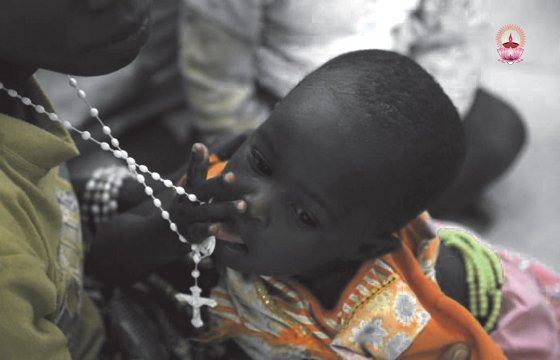
New report says anti-Christian violence in Nigeria highest level for years
At least 3,462 Christians, including ten priests or pastors, were murdered in Nigeria in the first 200 days of 2021. The number, just 68 deaths short to the estimated total for 2020, is aligned with the warnings from human rights organizations that focus on anti-Christian persecution regarding the rise of religious-motivated violence in Nigeria, and a nation where the Christian and Muslim populations are widely considered as more or less evenly split.
According to a recent report coming from Nigeria itself produced by the International Society for Civil Liberties and Rule of Law, the number of unarmed Christians who were murdered by members of the Islamic terrorist organization Boko Haram or other Jihadist groups between Jan. 1 to July 18, 2021, is barely lower to the one estimated by Open Door’s International for 2020.
Breaking it down, the number means that 17 Christians a day were murdered for reasons related to their faith the first half of 2020, the second highest daily average since 2014, when over 5,000 Christian deaths were recorded in the hands of Boko Haram and jihadist Fulani herdsmen.
In addition to the Christians who’ve been killed in the first 200 days of 2021, some 3,000 Christians, many of them young girls and women, have been kidnapped by Islamic terrorists and their whereabouts remains unknown. The people behind the report estimate, extrapolating from previous cases, that at least three out of every ten kidnapped Christians have been killed.
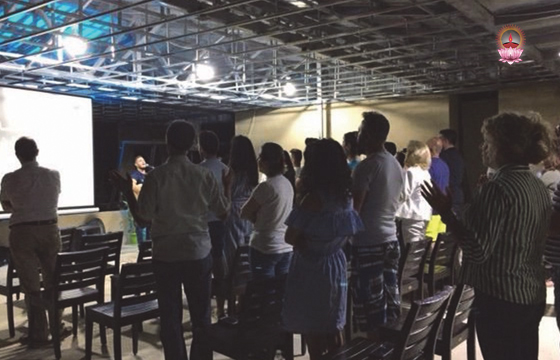
Christians in Lebanese border town say they’re having spiritual revival
Young adults and families say they are experiencing a spiritual revival in this town near the Syrian border even as Lebanon is pummeled by multiple crises: an economic meltdown, mass unemployment, a fresh wave of coronavirus infections, and shortages of fuel and electricity — all made worse by the ongoing political paralysis and an unresolved probe into the devastating Beirut blast.
“Every week we intercede for Lebanon. We know that God is going to speak life over this country, because many times Jesus showed us that this is in his hands,” a 31-year-old Lebanese Catholic named Nesrine told the Catholic News Service one balmy summer night.
“We feel that God is allowing what is happening in Lebanon. His heart is for salvation. Yes, many are now poor, others are battling coronavirus, but we see many Lebanese seeking the Lord, because he is the very last shelter they have,” said the petite, raven-haired woman who was a civil servant and owned her own successful media business before entering lay ministry.
Both Nesrine and her husband, Elie, once an atheist, have experienced dramatic spiritual conversions. And so, apparently, have many others among the 200-plus attendees at the prayer meeting at The Land.
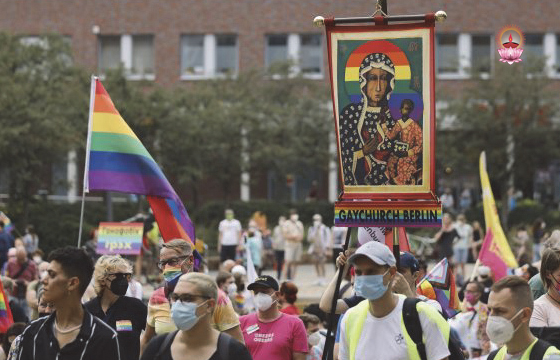
Berlin archbishop to name minister for gays, calls side-lining ‘painful’
Archbishop Heiner Koch said he would appoint a pastoral minister as a contact person for gays, the Berlin Archdiocese announced. The German Catholic news agency KNA reported Koch made the pledge when he met with representatives of the Lesbian and Gay Association of Berlin-Brandenburg, with the Archbishop saying this was important so that the marginalization and discrimination of the LBGTQ community could be addressed in the church without fear. Koch said he regarded the double marginalization of Catholic gays — within the Catholic community as well as in the LGBTQ community — as “problematic and painful.”
The reason behind the dis-cussion, which the Lesbian and Gay Association had requested, was to look at the contradictions within the Catholic Church and the simultaneous solidarity shown toward LGBTQ people in the wake of the Vatican’s renewed rejection last February of any church blessing for homosexual couples, KNA reported.
Ulrich Kessler, a member of the board of the Lesbian and Gay Association of Berlin-Branden-burg, said he had been surprised and thrilled “that the rainbow flags were also waving from Catholic Church spires, decorated internet pages and posts in the social media and that many church congregations had called out for blessing services.”

Britney declares she has become a Catholic
In a post on Instagram on Aug. 5 Britney Spears wrote: ”I just got back from mass… I’m Catholic now…let us pray.”
The 39-year-old pop star was raised in a strict Baptist household and is a regular churchgoer, but has had a troubled relationship with her family and her fame.
Her apparent swim across the Tiber is the latest chapter in a story that began with Britney bursting into the public gaze in a Catholic schoolgirl uniform in the music video for ‘Baby One More Time’.
Thrust into international celebrity as a teenager, and presented as a sex symbol, she suffered greatly from the prurience of the press and attempts from various figures in her life to control her life.
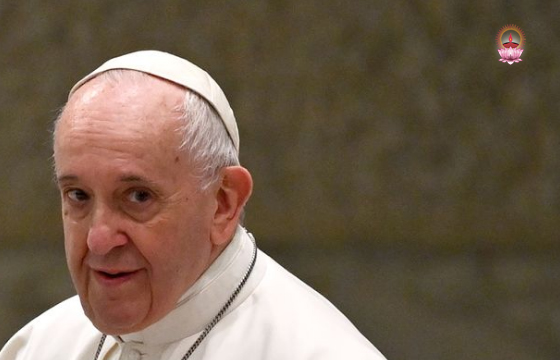
Envelope with bullets addressed to Pope Francis intercepted
An envelope containing three bullets addressed to Pope Francis was intercepted in Milan late on Aug. 8, according to Italian media reports. The piece of mail, which had no return address but carried a French stamp, was addressed to “The Pope, Vatican City, St. Peter’s Square in Rome,” the Italian newspaper Corriere della Sera reported. The newspaper said that the envelope contained three pieces of 9 millimetre ammunition, of the kind used in a Flobert gun, and a message referring to financial operations in the Vatican.
The manager of an Italian post office branch in the town of Peschiera Borromeo, southeast of Milan, alerted authorities when he found the suspicious piece of mail during sorting on Aug. 8. According to reports, local law enforcement have seized the note and are investigating its origins.
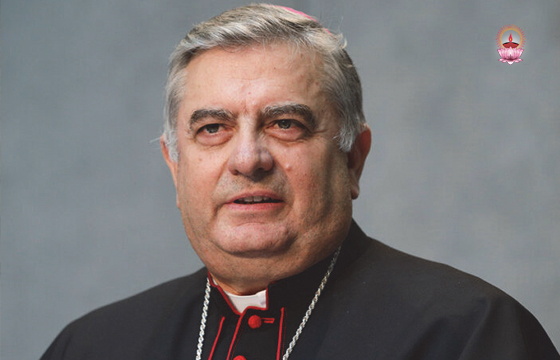
Spiritual abuse occurs more frequently than believed, Vatican official says
The Vatican is investigating about a dozen founders of congregations of consecrated or religious life, and the most common allegations involve abuse of power or conscience, financial corruption or problems associated with “affectivity,” said a top official.
Spanish Archbishop José Rodríguez Carballo, secretary of the Congregation for Institutes of Consecrated Life and Societies of Apostolic Life, spoke about his office’s work overseeing religious congregations in an interview July 30 with Vida Nueva, a Spanish weekly magazine on religion.
He said the church has very “clear and precise criteria” when it comes to discerning the authenticity of a religious charism when determining whether to approve a new congregation or religious order.
Among these criteria, he underlined: “Communion with the church; the presence of spiritual fruits; the social dimension of evangelization; high regard for other forms of consecrated life in the church; and the profession of the Catholic faith,” referring to the doctrinal congregation’s 2016 letter “Iuvenescit Ecclesia” to the world’s bishops regarding charismatic gifts in the life and the mission of the church.
“Sadly, it must be confessed that, at times, it is difficult to discover the authenticity and originality of a charism in some realities,” the archbishop said.
At the moment, the congregation is investigating about a dozen founders of institutes that come under his office’s authority, he said, without naming the founders or the communities involved.
“In most cases, these are associations whose canonical recognition is underway,” he said.
However, he said, in addition to that number there are some institutes who had already been canonically recognized and whose founders are being investigated, too, “so the number increases significantly.”
Rodríguez also said he was not counting communities or institutes of consecrated life that the congregation has already investigated and responded to, such as by appointing an outside delegate or, in some cases, suppressing the institute.
“It should also be noted that there have been some cases in which, after the necessary investigation, the female founder has left consecrated life or the male founder has been reduced to the lay state,” Rodríguez said.
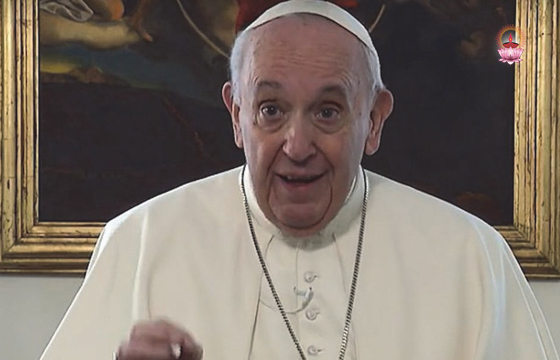
Crises are signs that church is still alive, pope says
Difficulties and crises within the Catholic Church are not signs of a church in decline but one that is alive and living through challenges, just like men and women today, Pope Francis said.
“Let us remember that the church always has difficulties, always is in crisis, because she’s alive. Living things go through crises. Only the dead don’t have crises,” he said.
In a video message released by the Pope’s Worldwide Prayer Network Aug. 3, the pope offered his prayer intention for the month of August, which is dedicated to the church’s mission of evangelization. At the start of each month, the network posts a short video of the pope offering his specific prayer intention.
The church’s call to evangelize and not proselytize, he said, is more than just a vocation; it is a part of the Catholic Church’s identity. “We can only renew the church by discerning God’s will in our daily life and embarking on a transformation guided by the Holy Spirit. Our own reform as persons is that transformation. Allowing the Holy Spirit, the gift of God, in our hearts reminds us what Jesus taught and helps us put it into practice,” the Pope said.
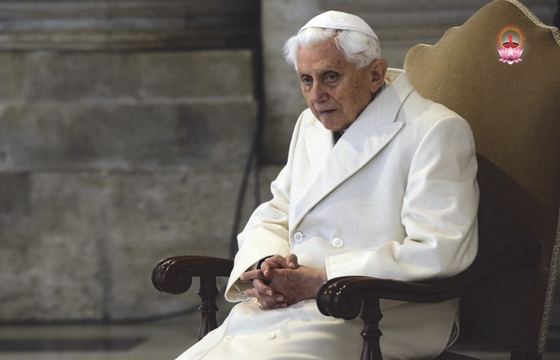
Benedict XVI laments lack of faith in German Catholic officialdom
In a rare lengthy interview with a German newspaper, retired pope Benedict XVI reflected on his 70 years as a priest and lamented what he said is an increasing institutionalization of the Catholic Church in Germany, making it a functional entity rather than the living body of Christ. In written responses to German magazine Herder Korrespondenz, published in their August edition on the 70th anniversary of his ordination to the priesthood, Benedict, 94, said his brief time as a young pastor before getting into academic work made it clear “that many of the functions relating to the structure and life in the church were performed by people who by no means shared the faith of the church.”
Because of this, the Church’s testimony “must appear questionable in many ways,” he said, noting that faith and disbelief “were mixed together in a strange way, and this had to come out at some point and cause a breakdown that would eventually bury the faith.”
Benedict said that in his view, “a divorce was necessary,” in this regard, and cautioned against the idea of thinking of the Church as a body of saints who have already reached perfection.
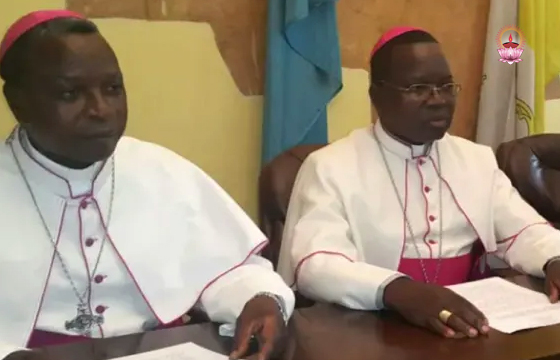
Congo’s bishops want an end to attacks on Catholic Church, its leaders
Catholic bishops in Congo called for an end to attacks on the church and its leaders, acts they believe are linked to the church’s persistent call for democracy and national cohesion. The bishops said the Archdiocese of Kinshasa has been targeted as well as places of worship — including parishes, Marian grottoes, altars and sanctuaries — in the Diocese of Mbujimayi.