
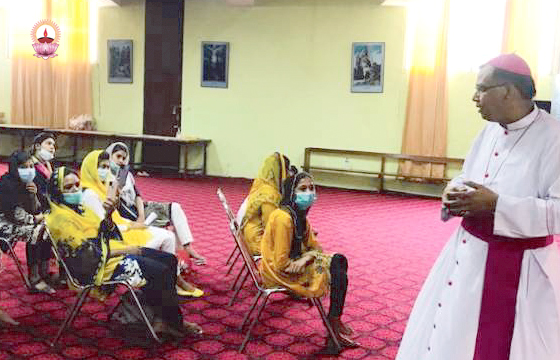
“There was a ministry for minorities in the past which was a good, successful experience. Currently, minority issues are handled by the Ministry of Religious Affairs and Interfaith Harmony, which is usually occupied dealing with other religious affairs and the promotion of interfaith harmony in Pakistan,” said the president of the Pakistan Catholic Bishops’ Conference.
“A lot has to be done for minorities so that they don’t feel insecure in Pakistan,” the prelate said, adding that forced marriages and forced conversions are alarming issues for religious minorities in Pakistan.
In November 2008, the federal Ministry for Minorities was established for the first time in Pakistan. Shahbaz Bhatti, the Catholic federal minister for minorities who was assassinated in March 2011, was appointed federal minister for minorities affairs.
In 2011, the federal Ministry for Minorities was replaced by the Ministry for National Harmony and Minorities Affairs. On returning to power in 2013, the Pakistan Muslim League merged the Ministry for National Harmony and Minorities Affairs into a larger ministry, the Ministry of Religious Affairs and Interfaith Harmony. The ruling Pakistan Tehreek-e-Insaf party appointed provincial ministers for minority affairs.
In May 2020, the government constituted a National Commission for Minorities (NCM) with Archbishop Sebastian Shaw of Lahore as one of its members. Rights groups, including the Centre for Social Justice (CSJ), criticized the formation of the commission through an executive order.
Peter Jacob, the Catholic director of the CSJ, described the federal Ministry for Minority Affairs an experiment of the past.
Daily Archives: July 2, 2021
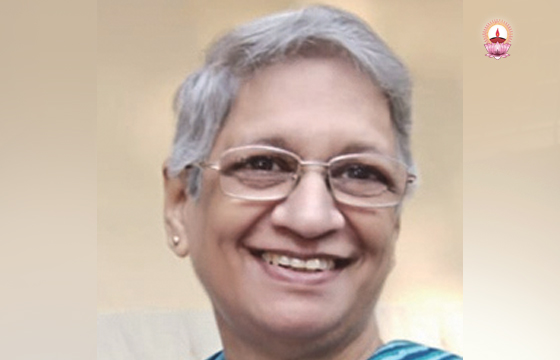
No Church possible without women religious
The women section of the Conference of Religious of India undertook a study after media reported about widespread exploitation of Catholic women religious in the Church.
The reports in L’Osservatore Romano and Matters India in 2018 spoke of nuns in menial occupations with little recognition from their “employers” in the Church.
“The articles were eye openers and instrumental in telling us that it’s time sisters in India wake up and take responsibility for their collective future,” says a statement from Sisters Hazel D’Lima and Noella de Souza, who conducted the CRI study during 2019-2020.
Sister D’Lima is a member of the Daughters of the Heart of Mary and de Souza belongs to the Missionaries of Christ Jesus. Besides exploring the truth in the media reports, the study looked at the working relations between women religious and the hierarchy.
The study was published mid-June as a book titled “It’s High Time, Women Religious speak up on Gender Justice in the Indian Church.” It is for private circulation, not for sale, de Souza clarifies.
“Our study proved to be path breaking as it is the first of its kind. Although nothing seemed new to me, many areas are striking. One is to do with matters concerning property, where through the various different instances stated, it is the same problematic that comes across constantly, this which reflects the power relations between men and women in the Church. Church authorities almost always take the moral high ground. This power over property is only one symptom of the power dynamics within the structure of the Church.”
“Without consecrat-ed women there would be no Church in India, let’s be clear about it. It is the women religious who reach far flung places where no clergy man would set up home and it is the women religious who undertake Mission work, which most clergymen would never think of doing.” “Even if the Church offers to ordain women tomorrow, I would not want to be ordained; I would lose my prophetic charism, as I would become part of the structure of the Church. Now, I am free to exercise my prophetic vocation in the Church.”

Forced conversion of Christian girl in Pakistan condemned
A human rights group working for Christians who are being persecuted because of their faith condemned the “forced conversion” of a 13-year-old girl who works as a household help in Pakistan.
“Perhaps Pakistan is the only country where such crimes are happening on a daily basis under the cover of Islam,” said Nasir Saeed, director of the Centre for Legal Aid, Assistance and Settlement (CLAAS). He said the forced conversion of the girl is “the most egregious example of modern slavery and religious abuse.”
“There is no room for such callous justification in modern society. Pakistan cannot continue in the dark ages of Islamic practices to enslave Christian and Hindu girls in Pakistan,” said Saeed.
CLAAS reported that a Muslim doctor “forcefully converted” Neha, a 13-year-old Christian girl, to Islam to allow her to work in their family kitchen.
Marian pilgrimage gets green light in Pakistan
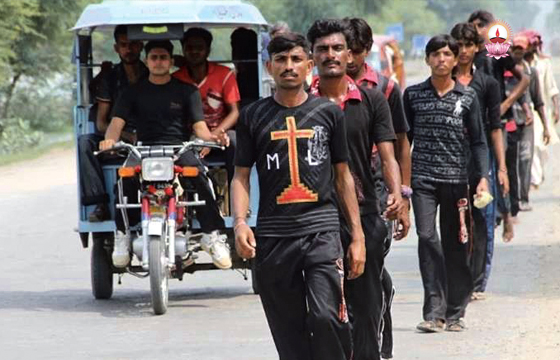
After a year on pause, Lahore Archdiocese has announced the annual pilgrimage to the National Marian Shrine in Mariamabad village will go ahead under strict safety guidelines.
The 72nd pilgrimage will be held from Sept. 10-12 under the title “Holy Mary Mother of Mercy.”
“Observe all SOPs [standard operating procedures] about the Covid pandemic and arrive after compulsory vaccination. All pilgrims are re-quested to especially pray for the end of the coronavirus,” states a poster released by the archdiocese’s central pilgrimage committee.
Every year more than 1.2 million pilgrims visit Mariama-bad in Punjab province from all over Pakistan. However, Punjab’s government ordered Lahore Archdiocese to cancel all pilgrimage plans last year.

Myanmar junta under fire for ‘brutal’ clampdown
Myanmar is on a watchlist of countries that have seen a recent and rapid decline in fundamental democratic freedoms.
More than four months since the Feb. 1 military coup, the assault on civic space has persisted with the arrest and detention of activists and protesters, use of excessive force and firearms against protesters and disruption to the internet.
The watchlist was released on June 23 by the CIVICUS Monitor, an online platform that tracks the latest developments to civic freedoms across 196 countries.
Since February, thousands have been arbitrarily arrested, detained and attacked including human rights defenders, trade unionists, journalists, political and student activists, poets, writers and monks. Many are facing baseless charges including treason, which is punishable by up to 20 years in prison, or incitement.
Patna Jesuits distribute Covid relief kits poor
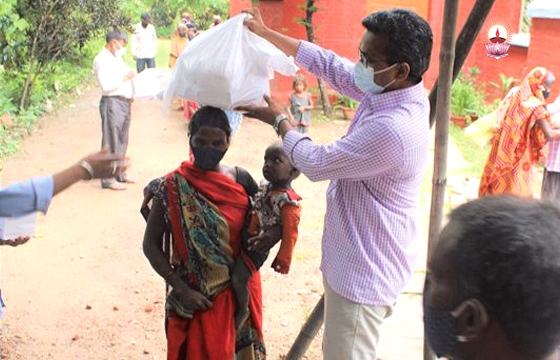
A voluntary organization of the Patna Jesuits on June 26 distributed Covid-19 relief kits to some 650 poor families in the capital city of Bihar. Jesuit Father Juno Sebastian, director of Manthan (Churning), said that this time they focused mostly the hamlets of Musahar, the Dalit community at the bottom of the former untouchables. Around 4,300 people in Danapur, Phulwarisharif and Bihta areas of Patna district received the kits containing rice, dal, wheat flour, edible oil, mask, soap and detergent powder. “This time Manthan made a special effort to reach out to the sick and those with no support,” Father Sebastian said. They also helped families of Manjhi, another low caste group. The Jesuit priest thanked Azim Premji Foundation for funding the project.
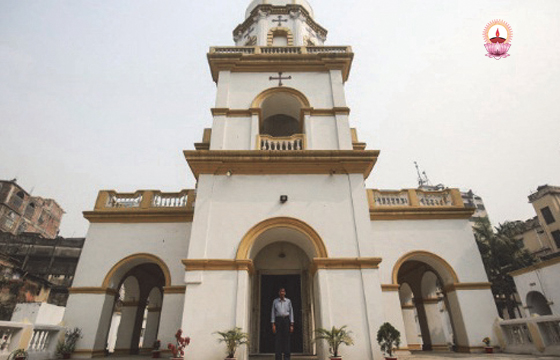
Bangladesh’s Armenian church has lone Hindu worshiper
With no priest to minister and no faithful to pray, Dhaka’s Armenian church has one last parishioner: a Hindu caretaker. Shankar Ghosh makes the sign of the cross before opening the entrance of the striking white and yellow edifice, built 240 years ago in the capital Dhaka.
Back then, the city was home to hundreds of Armenians, a diaspora that traced its roots in the Muslim-majority nation back to the 16th century and eventually rose to become prominent traders, lawyers and public officials.
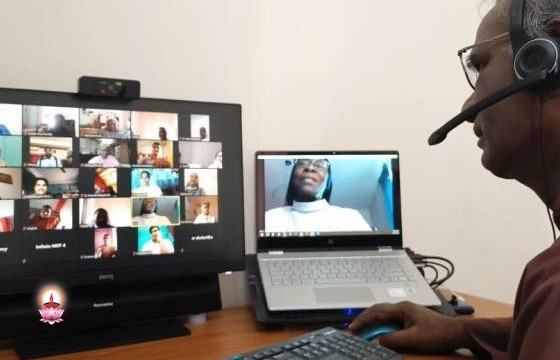
Capuchins help religious congregations reinvent in post-Covid era
A Capuchin holistic welfare centre in Tamil Nadu, southern India, plans to organize another round of online program to help reinvent religious leadership in the post-Covid era.
The June 28-30 webinar aims to help leaders of religious congregations and their collaborators, says “Thalir” (bud) director Capuchin Father Nithya Sagayam, who was earlier the executive secretary of Catholic Bishops’ Conference of India Commission for Justice, Peace and Development.
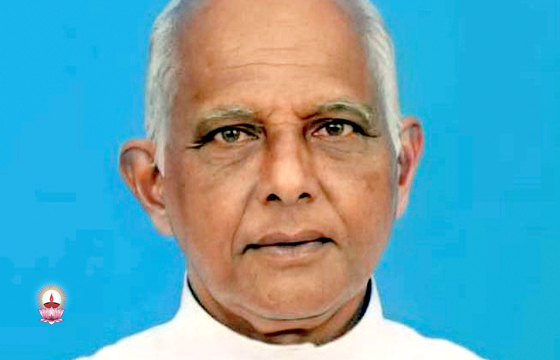
Priest’s “last will” inspires bishop, colleagues
A Catholic priest in Kerala, southern India, has inspired his bishop and other clerics through his “funeral will.” Father James Kumbukal has left a lasting mark through his funeral will, said Bishop Jose Porunnedom of Mananthavady mourning the death of his 78-year-old priest. “I wish to get a very simple burial,” read the will in Malayalam, the language of Kerala.
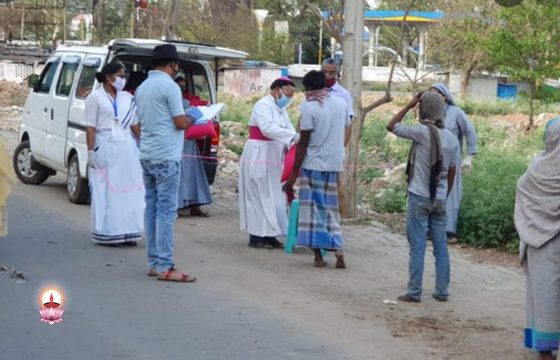
Covid aid restores society’s faith in Church
The Church’s vital role in providing emergency help for those hit by Covid-19 is rebuilding community relations in India where Christians have been demonised by far-right politicians. Archbishop Leo Cornelio of Bhopal told Aid to the Church in Need (ACN) that, despite polarising rhetoric by politicians trying to divide citizens along religious lines, the pandemic has prompted people from all parts of society working together.