

Cardinal George Alencherry has formed a commission to frame guidelines for interfaith marriages following a controversy over a retired bishop solemnizing such a marriage between a Christian bride and a Muslim groom in a church in India’s Kerala State.
Cardinal Alencherry, the head of the Eastern-rite Syro-Malabar Church based in southern India, “wants to clear the confusion among the faithful over interreligious marriages and constituted a commission of canon law experts to prepare the guidelines to be followed in interreligious marriages in churches,” said Father Alax Onampally, secretary of the church’s media commission. Card. Alencherry, the president of the Kerala Catholic Bishops’ Council, also sought a separate report from Archbishop Antony Kariyil of Ernakulam-Angamali Arch-diocese, where the controversial marriage was solemnized.
On Nov. 9, Bishop Mathew Vaniyakizhakkel of Satna in the central State of Madhya Pradesh, blessed the marriage between the Catholic bride and Muslim groom at Kadavanthra St Joseph Church in Ernakulam-Angamali Archdiocese. Archbishop Kariyil’s probe will investigate if the parish priest obtained permission from the local bishop to solemnize the marriage in church.
Daily Archives: November 29, 2020
Elderly Jesuit priest describes ‘joy’ of Indian prison life
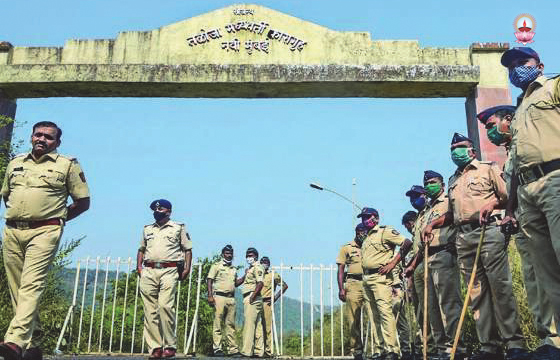
An elderly Jesuit priest struggling in an Indian jail with ill health says he still finds happiness in listening to the stories of other inmates and credits his congregation for the training that helped him cope with such a difficult situation. Father Stan Swamy, 84, has been in Taloja Central Jail in Mumbai, capital of Maharashtra in western India, since Oct. 9 following his arrest on charges of sedition and links with outlawed Maoist rebels.
The priest is suffering from Parkinson’s disease, a hernia and age-related ailments and is unable to eat and drink without help from other prisoners.
Inmates help him to bathe, wash his clothes and do other daily chores on account of his age and ill health. “Listening to the life narratives of the poor prisoners is my joy in Taloja prison. I see God in their pains and smiles,” Father Swamy told one of his priest colleagues in a telephone call. “Now, I am using a baby-sipper mug, which I purchased through the prison hospital. I have communicated this need to our lawyers. I am still awaiting to receive the sipper-tumbler,” Father Swamy said.
The priest maintains an attitude of contentment even in his struggle and gives credit to his Jesuit training and close to 50 years of working with under privileged indigenous and Dalit former untouchable people.
“My needs are limited. The adivasis [indigenous people] and the Society of Jesus have taught me to lead a simple life,” he said.
Driven out Indian Christians return, threat lingers
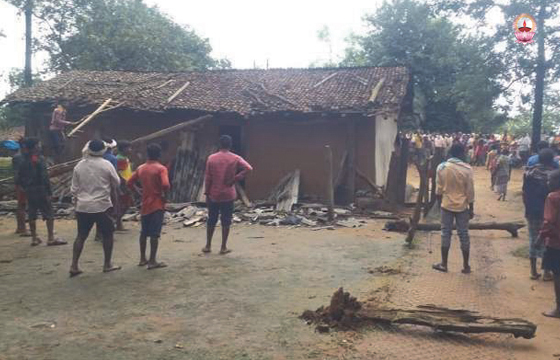
Some 100 Christians have returned to their villages in India’s Chhattisgarh State following a court order, almost two months after they were attacked and driven out of their homes.
The state High Court in Bilaspur ordered the Kondagaon district administration to facilitate the safe return of the displaced Christians from three villages and to ensure their protection.
“We have returned to our villages as the court has ordered our protection,” Shiv Ram, one of the petitioners to the court, told UCA News on Nov. 17.
Ram said all 66 Christians from 10 families driven out of his Kakrabeda village have returned to the village. Some 30 Christians from six families, who fled from two other villages, also have returned, he said.
A mob of suspected Hindu right-wing activists attacked 16 houses in three villages in the state’s Bastar region on Sept. 22 and 23. The attack came after Christians refused a demand to abandon their faith in Jesus Christ.
They also attacked Christians, including women and children, in front of the police, forcing them to escape to a nearby forest to save their lives.
Following the Nov. 8 court order, the administration has set up a police check post and posted 12 police officers to ensure the Christians’ safety.

Loyola College professor listed among world’s top scientists
A female professor at Loyola College (Autonomous) is listed in the world’s top 2 percent scien-tists. J. Judith Vijaya of the De-partment of Chemistry has been named in the world’s top scientist, in the field of “materials.”
The analysis was conducted by a team of scientists from Stanford University, USA, led by John P. A Ioannidis and published in PLOS Biology on October 2, Jesuit Father A Thomas, principal said in a statement.
The management of Loyola congratulates Vijaya for placing Loyola College on the global map of scientific research and bringing laurels to the institute, he added.
“Our youngest cousin Vijaya who is a professor at Loyola Chennai is listed in the world’s top 2% scientists. Proud of this brilliant sister of ours,” said Sister Cicily, a Handmaid of Mary nun, who is working in Odisha. Vijaya has been teaching at Loyola College since 2001.
Jesuit-run Loyola College was established in 1925. It offers several undergraduate and graduate degrees in Commerce, Sciences, Humanities, Social Sciences and liberal arts.
She did her undergraduate course in Chemistry at Stella Maris College, University of Madras, Masters in Chemistry and Ph.D. at Loyola College.
New television serial on Jesus set to begin next month
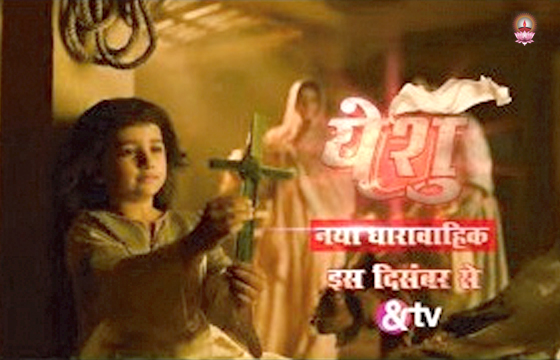
A new television serial on Jesus in Hindi is set to begin next month on TV. The story for the serial entitled “Yeshu” that deals with Jesus’ life story, is done by Utkarsh Naithani, an actor, flute player, and writer based on Divine Word missionary Father John Paul Herman’s research. “First of all, let me tell you that I the research scholar and resource person for this serial in Hindi “Yeshu,” Fr Herman, a media professional, told Matters India. He has been working on it since March 4 as the producer and director called him to Mumbai for the first meeting. “Lockdown was a great opportunity for me to sit down and work on it. Since then I am on it all the time,” said Father Herman, director of media commission, Catholic Diocese of Jaipur, Rajasthan (Western India). TV presents for the first time in Hindi General Entertainment Channels, the untold, unheard story of “Yeshu,” produced by Arvind Babbal Productions Pvt Ltd.
China criticizes pope over comment on Uighur Muslim minority
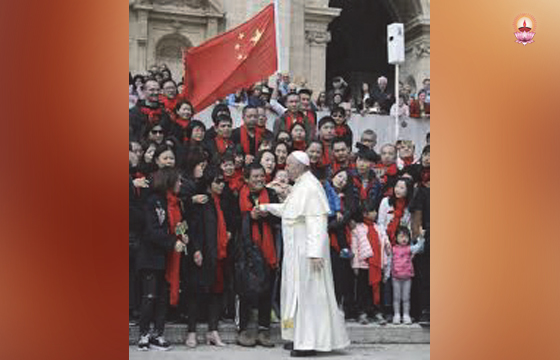
China criticized Pope Francis on November 24 over a passage in his new book in which he mentions suffering by China’s Uighur Muslim minority group.
Foreign ministry spokesperson Zhao Lijian said Francis’ remarks had “no factual basis at all.”
“People of all ethnic groups enjoy the full rights of survival, development, and freedom of religious belief,” Zhao said at a daily briefing.
Zhao made no mention of the camps in which more than 1 million Uighurs and members of other Chinese Muslim minority groups have been held. The U.S. and other governments, along with human rights groups, say the prison-like facilities are intended to divide Muslims from their religious and cultural heritage, forcing them to declare loyalty to China’s ruling Communist Party and its leader, Xi Jinping.
China, which initially denied the existence of the facilities, now says they are centers intended to provide job training and prevent terrorism and religious extremism on a voluntary basis.
In his new book Let Us Dream, due Dec. 1, Francis listed the “poor Uighurs” among examples of groups persecuted for their faith.
Francis wrote about the need to see the world from the peripheries and the margins of society, “to places of sin and misery, of exclusion and suffering, of illness and solitude.”
In such places of suffering, “I think often of persecuted peoples: the Rohingya, the poor Uighurs, the Yazidi — what ISIS did to them was truly cruel — or Christians in Egypt and Pakistan killed by bombs that went off while they prayed in church,” Francis wrote.
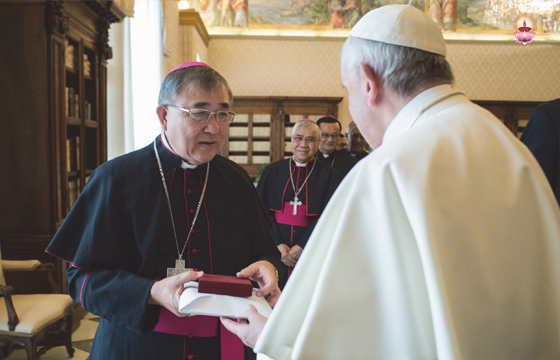
Card. Cornelius Sim: Ours is a ‘hidden’ Church, ‘not noisy’, small but alive
“A hidden Church,” “not noisy;” as small as “a Fiat 500,” but alive, which envisions its apostolate above all through schools and help for migrants. This is the image of the Church of Brunei, depicted by the new cardinal- designate Cornelius Sim speaking with AsiaNews via Zoom. Despite being among the smallest churches in Southeast Asia – indeed, perhaps precisely for this reason – Pope Francis wanted to reserve a Cardinal’s hat for Archbishop Sim during the next consistory on 28 November. Unfortunately, the new cardinal will not be able to be present at the ceremony in Rome, due to the Covid-19 lockdown.
“We are a minority Church and this makes us prudent. Not so much because we are discriminated against… Like in any family gathering, small children should be quiet to let the elders talk. So we are quiet. And we, being small, accept our role: if the dishes have to be washed, we do it; if the floor has to be swept, we do it; we do what is required of us.
As a Church we have three small parishes and a mission station. We also have some schools, linked to the parish. Most of our social apostolate takes place through the school, which was opened in the 1930s. School is where our presence started. And where the Church has been established. The Church was actually present here in the first half of the 1800s, thanks to a PIME father [Fr Antonio Riva, in the Barambang mission; Fr Ignazio Borgazzi in Labuan – ed] but after three or four years, those priests were called to Hong Kong and their attempt did not bear much fruit, until 1920, when the Mill Hill missionaries arrived from Sabah (in present-day Malaysia.) The missionaries started a small school. My grandfather was one of the first to be baptized and he was one of the first Catholics in the nation.
And so the Church has always been involved in school, in education, which is not a partisan education, but an open one: 70 percent and more of the students are non-Catholics. There are Muslims, Buddhists, people of different faiths, or people without any faith. Our schools are renowned for the quality of the education they offer. Our teachers are academically bright and prepared. The teachers are local, but also international: they come from Malaysia, Singapore, the Philippines, …
We are the smallest Church in ASEAN. Perhaps only Laos has a very small Church like ours.
We have about 16 thousand faithful. There were more, but due to the economic crisis, many people left the country. On Sundays, 3-4 thousand people arrive at every mass.”
–AsiaNews
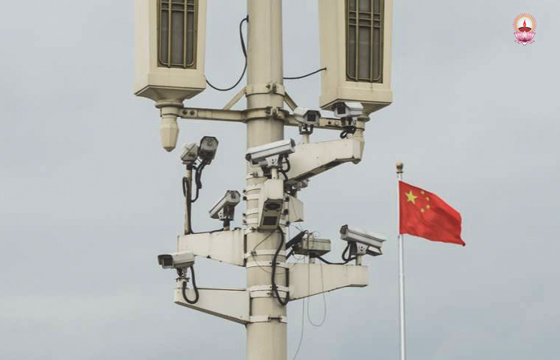
US religious liberty ambassador calls out China for using tech to suppress religion
The U.S. will be working against the use of technology to suppress religious minorities, the religious freedom ambassador announced.
“The United States announced that we will pursue the topic of misuse of technology to oppress religious minorities,” said Sam Brownback, Ambassador-at-Large for International Religious Free-dom, on a Nov. 17 press call about the 2020 Ministerial to Advance Freedom of Religion or Belief.
Brownback cited China’s abuses against Ughurs; it has created a “virtual police state” to track the movements of the population and to engage in predictive policing.
“We’re seeing this graphically done in Xinjiang, where high-tech observation systems using artificial intelligence and facial recognition are oppressing a dominantly Muslim majority from practicing its faith, this along with being locked up in detention facilities – over a million Muslim Uyghurs locked up in detention facilities,” Brownback said.
Poland hosted the third annual ministerial, held virtually on Nov. 16-17 due to the pandemic. The meeting featured leaders from more than 50 countries and international organizations. –CNA
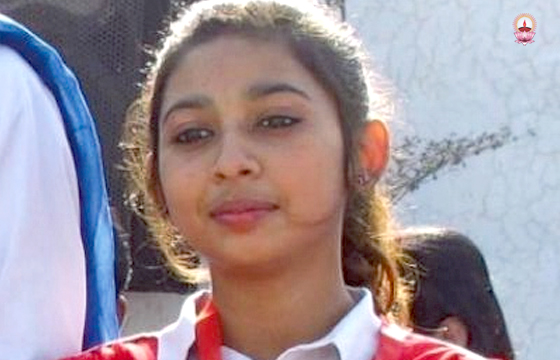
Britain urged to grant asylum to Pakistani girl
A U.K. based charity has called on British Prime Minister Boris Johnson to grant asylum to a 14-year-old Christian girl who was abducted at gunpoint during the Covid-19 lockdown and forcibly married and converted to Islam by a Muslim married man.
The Catholic charity Aid to Church in Need, which supports persecuted Christians around the world, is urging concerned Chri-stians to add their names to an online petition that will be sent to the Prime Minister on behalf of Catholic teenager Maira Shahbaz in Pakistan, who was abducted in April.
In August, Maira fled the home of her alleged husband, Mohamad Nakash, weeks after the Lahore High Court ordered her to return to her abductor and ruled that she was legally married to the Muslim man.
“Regardless of what the court eventually decides, Maira’s life will forever be in danger,” the charity said. “There is the threat of honour killing. Extremists in Pakistan consider her an apostate and will kill her at the first chance. Her lawyer said men have been looking for her, knocking on doors and asking for her whereabouts.”
–MATTERS INDIA
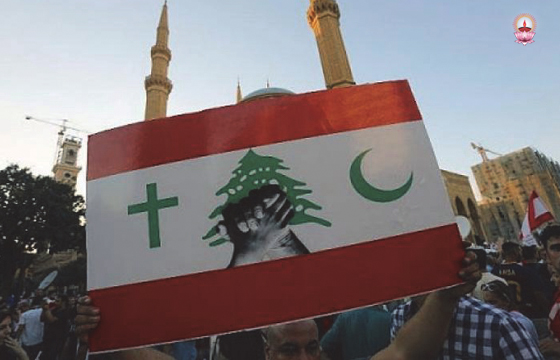
Lebanon’s is a model of coexistence
Lebanon’s “living together,” the historic vocation perceived and conferred by Pope John Paul II to Lebanon, and proposed by him – for our greatest honour and confusion – as “model for East and West,” is once again in the spotlight because of what is happening in a world where multi-religious societies are constantly growing, not without frictions, wars and sometimes horrible massacres.
In his homily on Sunday 15 November, in which he accused those who are delaying the formation of a government by Saad Hariri of trying to “overthrow of the State of Greater Lebanon” established by the Treaty of Versailles (1919), the head of the Maronite Church, Patriarch Bechara al-Rahi, sought to comfort the Armenians of Nagorno-Karabakh that Azerbaijan has just militarily conquered, by offering them as model Lebanon’s “living together,” encouraging them not to flee their homes and their shrines, but to agree to coexist in good harmony with the Muslims of Azerbaijan, in a multicultural and multi-religious state in which the believers of the two great Muslim and Christian religions stand together in an atmosphere of mutual acceptance. –AsiaNews