
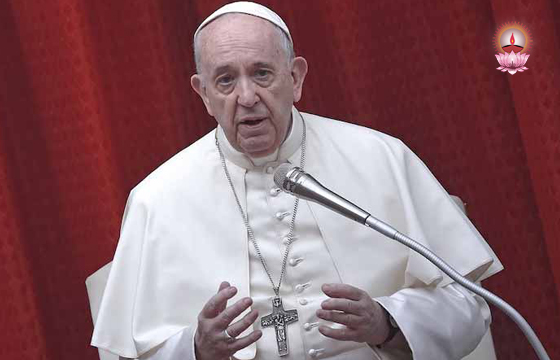
Pope Francis is urging world leaders not to go down the path of nationalism and isolation following the Covid-19 pandemic. In a speech to the United Nations, Pope Francis warned against ideologies which place power before people.
The 83-year-old Roman Pontiff told the UN general assembly that the Coronavirus pandemic was forcing the world to make a choice.
“One path leads to the consolidation of multilateralism as the expression of a renewed sense of global co-responsibility, a solidarity grounded in justice and the attainment of peace and unity within the human family, which is God’s plan for our world,” Francis explained in a televised address broadcast today.
“The other path emphasizes self-sufficiency, nationalism, protectionism, individualism and isolation; it excludes the poor, the vulnerable and those dwelling on the peripheries of life.”
He added: “That path would certainly be detrimental to the whole community, causing self-inflicted wounds on everyone. It must not prevail.”
The Pope called for a “change of direct-ion” as the UN marks its 75th anniversary, and faces huge pressures to the rules-based, international consensus which emerged following the Second World War.
Throughout his pontificate, Francis has become a counter-weight against the rise of nationalist populism sweeping across parts of Europe, arguing that it “is evil and ends badly, as we have seen in the past century.”
Daily Archives: October 3, 2020

Gay children are ‘children of God,’ Pope tells parents
Pope remarks came following the General Audience where he had a brief meeting with members for an Italian group Tenda di Gionata (Jonathan’s Tent), which supports the parents of LGBT children.
According to reports of the encounter, Francis said “God loves your children as they are.” He also said: “The Pope loves your children as they are, because they are children of God.”
Mara Grassi, the vice-president of the support group, relayed details of what the Pope said following the audience, and that she had presented Francis with a book Genitori Fortunati (Blessed Parents). A copy of the book will soon be available in English. Speaking to Avvenire, the news-paper owned by the Italian Bishops’ Conference, she said: “I explained [to the Pope] that we consider ourselves lucky because we have been forced to change the way we have always looked at our children.
She added: “What we now have is a new gaze that has allowed us to see the beauty and love of God in them. We want to create a bridge with the Church… so that the Church too can change its gaze towards our children, no longer excluding them but welcoming them fully.”
Francis’ remarks are consistent with what he said in 2018 to Juan Carlos Cruz, a survivor of clerical sexual abuse and who at that time had spent several days with the Pope. “He told me, ‘Juan Carlos, that you are gay does not matter. God made you like this and loves you like this and I don’t care. The Pope loves you like this. You have to be happy with who you are’,” Cruz recalled.
Since the beginning of his pontificate, Francis has sought to model an inclusive, pastoral approach to LGBT Catholics. It marks a shift away from the harsh and condemnatory language used by the Vatican in the past.

Catholic women criticize ‘mansplaining’ of pope’s masculine encyclical title
Prominent Catholic women across the globe are continuing to raise objections to the title of Pope Francis’ forthcoming new encyclical, “Fratelli tutti,” which uses the Italian masculine plural to address the world’s population.
Some are also baldly upset at the Vatican’s most recent explanations for not reconsidering or adapting the title, which appears to place the duty on women to see themselves as included. Francis’ encyclical, expected to focus on issues of solidarity and human friendship as the world continues to face the coronavirus pandemic, is set to be released on October 4. The title for the document is taken from one of St Francis of Assisi’s writings to the early members of his order, whom he addressed in Latin as his brothers.
Although the Italian translation “fratelli tutti” could sound to a modern Italian ear as “brothers and sisters all,” the exact one-to-one translation is “all brothers.”
Marie Dennis, who as the long-time co-president of Pax Christi International held one of the highest offices available to a woman in the Catholic Church, told NCR she was concerned the masculine construction of the title could distract from the importance of the rest of the Pope’s upcoming document.
“I understand that Pope Francis intends to be inclusive, but the tragedy of insisting on a title that excludes half the human family is immense,” said Dennis, who stepped down from the co-presidency role in 2019 after serving for 12 years.

How Lebanon’s First Female Militant Made Her Fight More Faithful
On July 31, Jocelyne Khoueiry passed away mercifully five days before seeing Beirut destroyed, again. A key player in the civil war that once tore the city apart, she spent the rest of her life trying to stitch it back together, and all of Lebanon with it.
The Beirut explosion on August 4 reminded many of the worst days of the 1975-1990 conflict. The Lebanese capital divided into a Christian east and a Muslim west, alternately shelled by militias and foreign armies vying for control. But though far smaller in scale than the blast at the port, the deaths caused by Jocelyne’s 1976 hand grenade also shook the nation.
Born as one of two daughters in a Maronite Christian family of ten, Jocelyne grew up across the street from the Beirut headquarters of the Phalange.
Originally a Christian youth movement dedicated to an independent Lebanon, the Phalange took great offense at the state-within-a-state formed by the 300,000 Palesti-nians who were fleeing war with Israel. The 1969 Cairo agreement gave the refugees sovereignty to organize their own communities and continue the armed struggle, with the blessing–though not involvement–of their host nation. The Khoueiry family provided some of the earliest fighters to the Phalange Christian militia formed in response, and a not yet 20-year-old Jocelyne enlisted with her brothers. In 1975, the civil war broke out in earnest, and several Lebanese Muslim militias sided with the Palestinians.
Jocelyne was not a practicing Christian; she preferred the Beirut nightlife. But on May 7, 1976, on a routine patrol on the roof of the Regent Hotel, she had a vision. She said the Virgin Mary appeared to her, and she saw herself kneeling in veneration. But she was also overcome with a sense of dread, and prayed that God would protect the six other female fighters stationed there with her. On the way down from the roof, she saw advancing Palestinian militants.
The Regent sat on a dividing line between mixed and wholly Christian neighbourhoods of Beirut, and Jocelyne’s squad was completely alone. While the Phalange militia’s men had anticipated defending a different hotel encampment, a 300-strong regiment of Palestinians attacked the female outpost instead.
The battle lasted six hours. Eventually, Jocelyne risked exposure by climbing back to the roof, and threw down a hand grenade that miraculously killed the Palestinian commander. The militia scattered, and the line was held. Jocelyne became a legend.
But in the years that followed, she contemplated becoming a nun. “Nothing was enough for me,” Jocelyne said in a 2012 interview with Zenit. “I wanted to belong to God, and to belong to him totally.”
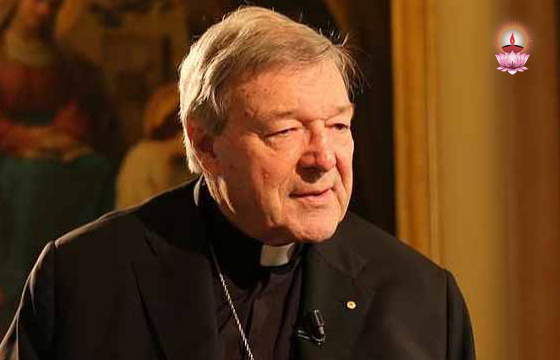
Church says Cardinal Pell returning to Vatican in crisis
Cardinal George Pell, Pope Francis’ former finance minister, will soon return to the Vatican during an extraordinary economic scandal for the first time since he was cleared of child abuse allegations in Australia five months ago, a church agency said on September 28.
Pell will fly back to Rome on Sept. 29, CathNews, an information agency of the Australian Catholic Bishops Conference said, citing “sources close to” Pell.
Pell’s return follows Francis firing one of the cardinal’s most powerful opponents, Cardinal Angelo Becciu, over a financial scandal.
Pell was regarded as the third highest-ranking Vatican official and was attempting to wrestle the Holy See’s opaque finances into order when he returned to his native Australia in 2017 to clear himself of decades-old allegations of child sex abuse. Becciu said he was fired after Francis told him that documents from the Italian financial police alleged the 72-year-old cardinal had embezzled 100,000 euros ($116,200). Becciu, the former No. 2 in the Vatican’s secretariat of state, denied wrongdoing.
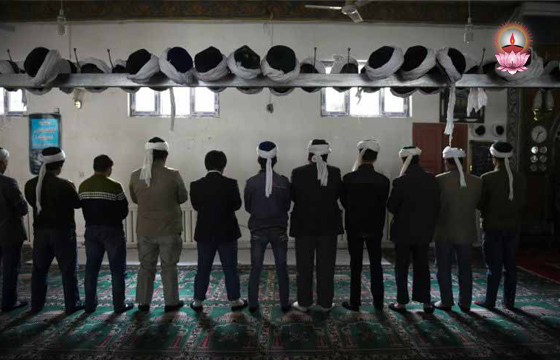
Thousands of mosques in Xinjiang demolished in recent years
Chinese authorities have demolished thousands of mosques in Xinjiang, an Australian think tank said on September 25, in the latest report of widespread human rights abuses in the restive region. Rights groups say more than one million Uighurs and other mostly Muslim Turkic-speaking people have been incarcerated in camps across the north-western territory, with residents pressured to give up traditional and religious activities.
Around 16,000 mosques had been destroyed or damaged, according to an Australian Strategic Policy Institute (ASPI) report based on satellite imagery documenting hundreds of sacred sites and statistical modeling.
By contrast, none of the Christian Churches and Buddhist Temples in Xinjiang that were studied by the think tank had been damaged or destroyed.
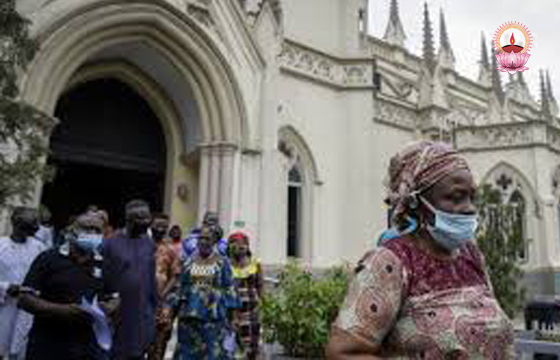
Nigerian Christians more resilient than terrorists, advocate says
Christianity won’t be driven from Nigeria by Boko Haram and Fulani militants, says one human rights advocate. Christians make up about half the population of Nigeria, but have faced harsh persecution in recent years on multiple fronts, primarily from Islamic terrorist group Boko Haram and Muslim Fulani herdsman, who have attacked Christian villages in search for grazing territory for their cattle. However, Johnson said the resilience of Nigeria’s Christian community is stronger than terrorism. “If Boko Haram is allowed to create a caliphate, they would kill all Christians whom they found,” Johnson told Crux. “This does not indicate, however, an end to Christianity in Nigeria. The Gospel spreads quicker in areas of high persecution than anywhere else.” he said.
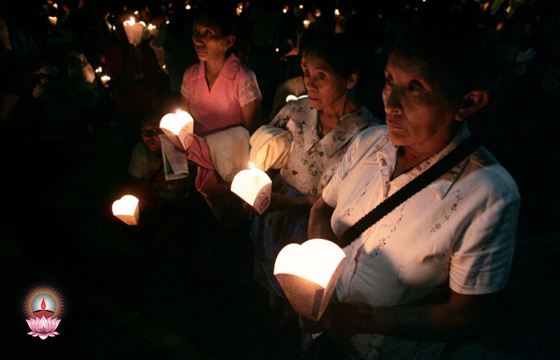
Salvadoran university welcomes conviction for ’89 Jesuit murders
The Jesuit-run Central American University in El Salvador welcomed the verdict of a Spanish court, which convicted a former Salvadoran colonel for the murder of five Jesuit priests in 1989. The verdict was “an extraordinary service to the truth” from a conflict in which many atrocities have gone unpunished, the university statement said. It expressed some sadness, however, that justice had not occurred in El Salvador, where the slayings occurred during the country’s civil war.
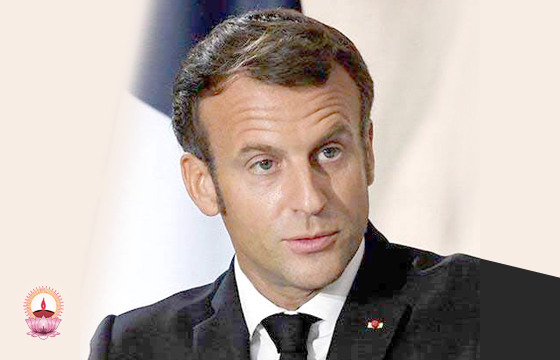
Macron defends blasphemy, decries ‘Islamic separatism’
French President Emmanuel Macron criticised on September 4 what he called “Islamic separatism” in his country and those who seek French citizen-ship without accepting France’s “right to commit blasphemy.”
Mr Macron defended satirical newspaper Charlie Hebdo, which published caricatures of the Prophet Muhammad that helped inspire two French-born Islamic extremists to mount a deadly January 2015 attack on the newspaper’s newsroom.
The weekly republished the images as the trial began of 14 people over the attacks on Charlie Hebdo and on a kosher super-market.
Speaking at a ceremony celebrating France’s democratic history and naturalising new citizens, the French President said, “You don’t choose one part of France. You choose France… The Republic will never allow any separatist adventure.”
Freedom in France, Mr Macron said, includes “the freedom to believe or not to believe. But this is inseparable from the freedom of expression up to the right to blasphemy.”
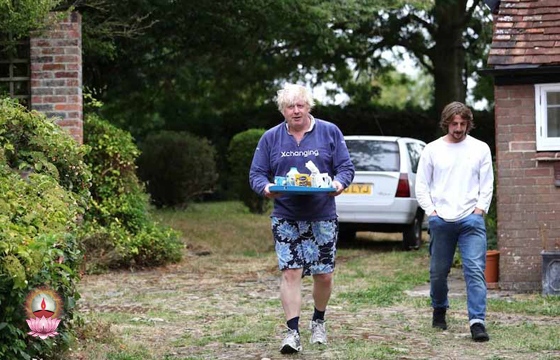
Boris Johnson’s son baptised Catholic
A statement from the Archdiocese of Westminster confirmed that the baptism of Wilfred Johnson took place.
“We can confirm that Wilfred Johnson was baptised in West-minster Cathedral on September 12, 2020, in a private ceremony, attended by both parents and a small number of guests, in keeping with current (Covid-19) guidelines,” said the diocese.
The government had revealed the baptism of the four-month-old boy to disprove claims in the media that the Prime Minister had taken time off work to make a social trip in Italy as the UK began to wrestle with a second wave of the coronavirus.
Johnson dismissed the allegations that he had been seen in Perugia that weekend as “completely untrue” with his spokesman inviting the media to “confirm with the priest” that he had attended his son’s baptism that day.
The priest who baptised Wilfred was Father Daniel Humphreys, the acting administrator of the cathedral, and he said performed the ceremony in the Lady Chapel. The identity of the godparents has not been revealed.