

The communist – approved Catholic Church in China is facing persecution despite official status. Officially registered churches are harassed regardless of belonging to the Chinese Patriotic Catholic Association (CPCA), a control arm of the Chinese Communist Party (CCP). This comes from a recent report by Bitter Winter, a magazine on human rights and religious liberty in China.
A CPCA deacon in Hebei province near Beijing explained his church joined the CPCA hoping the communists would allow them to worship in peace.
“But the situation has changed, and registered churches are sometimes harassed more than the unregistered ones,” he said. “They also have their crosses removed.”
In July, the CCP took down the cross from the deacon’s church and installed a surveillance camera at the entrance.
“The government is even more confident in controlling registered churches. Had we known this beforehand, we would not have joined the CPCA,” he lamented. Similar treatment has been reported from other locations throughout the country.
But the situation has changed, and registered churches are sometimes harassed more than the unregistered ones. Tweet Officials covered the sign reading “Catholic Church” with boards and removed crosses, benches and other religious symbols from a church in the Wangdangjia village. Soon thereafter, a nearby church was closed. The government in a prefecture-level city in Shandong province closed two CPCA churches in June, alleging “not many congregation members attend gatherings.”
Local officials in the town of Jinling removed a statue of the Blessed Virgin Mary and cross on the village church because “they were taller than the village committee building. In June, officials closed a CPCA church in Zhangmentun village. The closure occurred after they removed the 14 stations of the cross, the altar and a dove on the roof of the church.
Daily Archives: October 2, 2020

The Missionaries of Charity see the poor as benefactors, thanks to them they can serve Jesus
The Sisters of Mother Teresa came to Hong Kong in 1983. At present, they have two religious communities with 14 missionaries who run two centres on Kowloon Peninsula, an area with rundown sections and many homeless people. The nuns’ main work is to provide hot meals to the poor (a few hundred) and shelter to the homeless (a few dozen).
Mother Teresa visited Hong Kong on several occasions. The University of Hong Kong awarded her with an honorary degree. In the 1980s and 1990s, talks were held about opening new homes in mainland China, but Beijing eventually refused the necessary permits and the plan fell through.
What follows is a message from the Missionaries of Charity published in the Sunday Examiner, Hong Kong’s Catholic weekly.
We are privileged to be part of the vibrant Church in Hong Kong and to be able to-serve the poorest of the poor here through simple and humble works of love.
In our temporary shelters for the homeless, we try to bring the light of Christ to hapless men and women, to dispel the darkness in their lives and to give them Divine Hope. The experience of the joy of prodigal sons and daughters returning to the tender and merciful embrace of our Heavenly Father gives us strength and encouragement to continue our service of patience, understanding and love for the poor. Over the years, we have witnessed with joy the love of God touching their hearts.
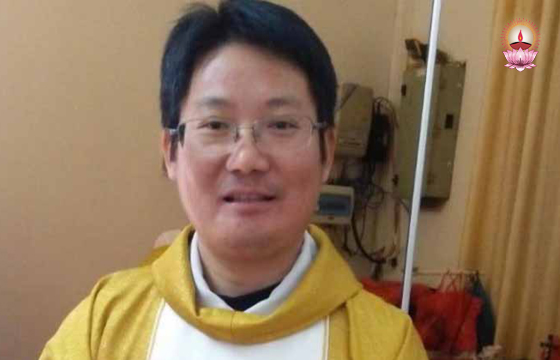
Mindong, Fr Liu Maochun kidnapped for 17 days to force him to join the ‘independent Church’
Fr Liu Maochun, 46, a priest of the diocese of Mindong (Fujian), has been in the hands of the Religious Affairs Bureau for 17 days. Fr Liu is not reco-gnized as a priest because he be-longs to the underground Church and refuses to sign up for membership in the independent Church (which is subject to the Chinese Communist Party).
In the late afternoon of September 1st, Fr Liu had gone to visit some sick people in the hospital. On leaving, around 6.30 pm, a group of people, sent by the Religious Affairs Bureau, arrested him and took him to an unknown location. His where-abouts is still unknown. Family members have lobbied for news of him, but to no avail. The authorities have only confirmed that he is in the hands of the Religious Affairs Bureau.
Father of Fr Liu is 86 years old and very ill and has limited mobility; his mother, 70, is also ill: both need his help.
According to information from Mindong, several priests – at least 20 – refuse to join the “independent Church.” For this they are under constant pressure from the local government and have been deprived of the freedom to treat the faithful. These pressures have grown stronger in the run-up to a possible renewal of the Sino-Vatican agreement.
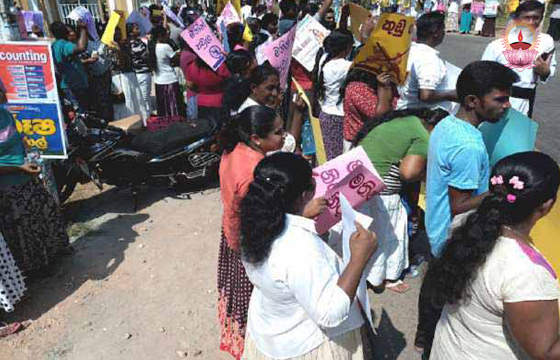
Sri Lankan religious leaders oppose cannabis cultivation
Sri Lankan religious leaders say they are saddened by the efforts of some groups to promote cannabis cultivation at a time when the government is taking strong measures to eradicate drugs from the country.
Ven. Ittapana Dhammalankara Thera, chief prelate of Kotte Sri Kalayani Samagri Dharma Maha Sangha of Siyam Maha Nikaya, said the government should take immediate action to stop all promotions related to cannabis.
“Regular drug raids should be further strengthened and act-ion should be taken to eradicate narcotics from the country. At the same time, the government should make every effort to strictly enforce laws and eradicate drugs including cannabis from the country,” he said.
Experts claim that the country can generate high revenue from the cultivation of cannabis. Recent research has shown that if drugs based on cannabis are manufactured and exported, it will be possible to earn more foreign exchange than is earned from all exports.
Sri Lanka has become a major transit point for traffickers as well as suffering from widespread drug addiction. Cannabis and heroin have become the top two narcotic scourges in the country. Concerns are growing about drug abuse among young people including children.
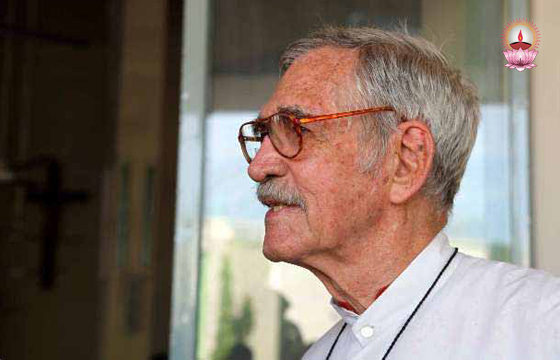
An unforgettable missionary who transformed Bangladesh
American Holy Cross missionary priest Richard William Timm (1923-2020) was a giant among men with a big heart burning with selfless love for humanity.
More than six decades of service in Bangladesh (1952-2016) speak volumes for him, and his death on Sept. 11 in the US brought to an end a golden era of extraordinary missionary life and works that touched the lives of millions of Bangladeshis.
He will be remembered as a pioneering missionary in a land where a small but strong Christi-an community has thrived thanks to great Western missionaries like him over the past five centuries.
Bangladesh can never forget this great icon as he was “an American by blood but a Bangladeshi by spirit.” He is an inseparable part of the history of Bangladesh and his demise saddened many people of other faiths thanks to great memories of his companionship and contributions.
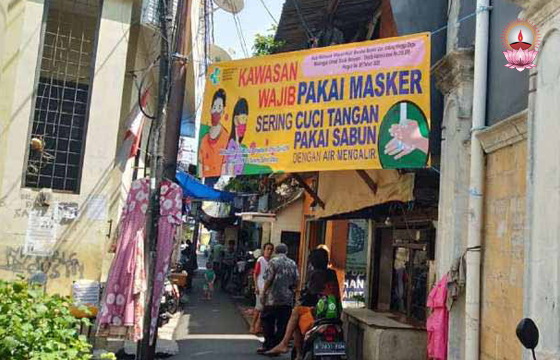
Covid-19 infects 30 Indonesian seminarians
At least 30 seminarians at a minor seminary in Indonesia’s West Kalimantan province have been infected with the coronavirus. Some are currently being treated at a local hospital, while others are self-quarantining.
India to tighten foreign funding, social workers upset
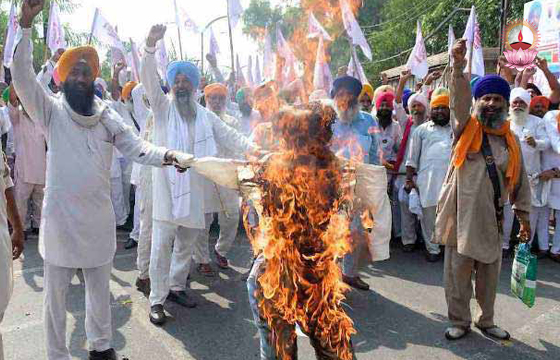
Prime Minister Narendra Modi’s government has introduced a bill in India’s parliament to tighten the rules of overseas funding in a move that could adversely affect thou-sands of social workers including Catholic organizations. The government led by the pro-Hindu Bharatiya Janata Party (BJP) on Sept. 20 proposed certain amendments to the Foreign Contribution (Regulation) Act (FRCA), which critics say aims to help the government tightly monitor organizations and silence criticism.
The amendment proposes to decrease an organization’s administrative expenses from foreign funding to 20% from 50%. It also proposes to link leaders of all organizations to their biometric identity cards called Aadhaar.
The proposal also wants to empower the government to stop the utilization of foreign funds by an organization by ordering a “summary enquiry.”
Opposition lawmakers and social workers see the move as a major step to crush dissent and give government unbridled powers to harass certain voluntary organizations in a country where religious minorities continue to complain of being sidelined.
The amendments are expected to sail through parliament because of the BJP’s majority in the house. But it aims to “crush dissent,” opposition Congress leader Adhir Ranjan Chowdhury said in the lower house of parliament.
His party colleagues and another opposition member belonging to Trinamool (Grassroots) Congress supported him.
“This is an example of big brother watching — that is, the central government keeping an eye on all those receiving foreign contributions. It is mainly directed at minority organizations or institutions,” said Saugata Roy of Trinamool Congress.
Indian nun’s missionary experience in Algeria
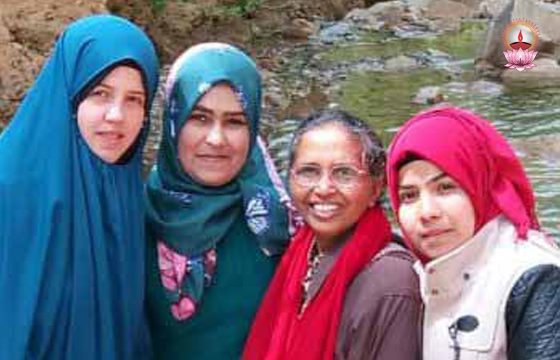
As a missionary, I had always expressed my willingness for the mission “Ad Extra” (towards the outside). I had almost given up the hope when on my 50th birthday the Lord gifted me the mission of Algeria, the largest Muslim country in North Africa, surrounded by the Mediterranean coast. Our God is a God of surprises and reveals Himself in a thousand ways to those open to His presence and action in the world.
On August 27, 2014, I arrived in Oran, one of the four dioceses in Algeria. Along with Sisters Serena De Stefani and Marta Arosio, we started a community in Mascara, a town some 390 km northwest of the national capital of Alger.
We are part of a centre called “El Amel” (the hope) run by an elderly French priest.
I am a nurse by profession and we have a small dispensary where the elderly and women prefer to frequent. This has helped me to develop relationships that gave me easy access to families.
Sr Lucy D’Mello MSII had the opportunity to assist Miloud, Meriam, Kaddur, Zuleika and many others in their sickness who now have gone to their heavenly abode. But my relationship with the family continues as a member. Many are very happy to invite us to participate in celebrations of marriage, new birth and anniversaries. We also visit them in painful moments of sickness or loss of a dear one in the family.
The people are hospitable, warm-hearted, and generous and the religious culture is very visible. Some of the expressions like ‘Inch-Allah’ (if God wants it), ‘Hamou-Allah’ (praise be to God) are frequently used by the majority of the people. The call for prayer five times a day helps me to raise my heart and mind to God, the Father of us all.

Church group joins protest against India’s new farm laws
Indian farmers are bracing for another major showdown with the federal government after accusing its new farm laws of ignoring their interests and promoting multinational firms.
A church-backed body has joined farmers’ unions in asking the government to withdraw two laws that parliament passed on Sept. 20.
The government, led by Prime Minister Narendra Modi’s pro-Hindu Bharatiya Janata Party (BJP), said the Farmers’ Produce Trade and Commerce (Promotion and Facilitation) Bill, 2020, and the Farmers (Empowerment and Protection) Agreement of Price Assurance and Farm Services Bill, 2020, are measures to reform the farm sector.
But “the new laws are a real threat to the farm sector and the farmers,” said Father Joseph Ottaplackal, chairman of the Indian Farmers Movement (INFAM), a church-backed body based in southern India’s Kerala State.
More than 70% of India’s 1.3 billion people directly or indirectly depend on farming for their sustenance. But some 80% of them – over 700 million – are marginal farmers with less than two hectares of land.
Indian Christians upset at MP’s remarks about missionary
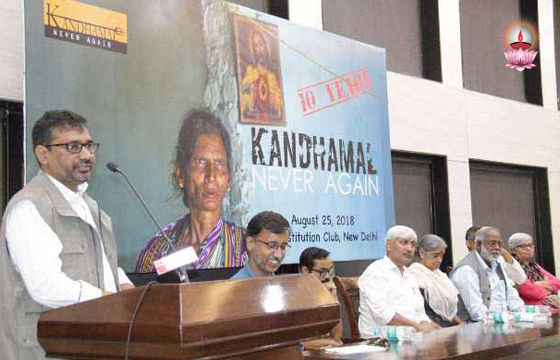
A Bharatiya Janata Party (BJP) leader has alleged that Australian missionary Graham Stuart Staines, who was murder-ed along with his two sons in Odisha in 1999, was involved in conversion activities among tribal people.
During his submission on the debate on the Foreign Contribution (Regulation) Amendment Bill, Satya Pal Singh told parliament that Staines’ organization, the Evangelist Missionary Society, was converting tribal people to Christianity.
“There was uproar over Graham Staines. What happened to him and his two children was wrong,” the BJP leader from the northern State of Uttar Pradesh said on Sept. 21.
“But agencies like the Central Bureau of Investigations, Odisha Crime Branch and the Justice D.P. Wadhwa Commission con-cluded that tribals were being converted there. It was the biggest reason that people turned against Staines.
Suspected Hindu fanatics burned Staines and his sons Philip, 9, and Timothy, 7, inside their jeep on Jan. 23, 1999, in Odisha State’s Keonjhar district.
However, Singh’s remarks have saddened Christian leaders and communities in India.