Pope Francis attacks Hitler-style populists

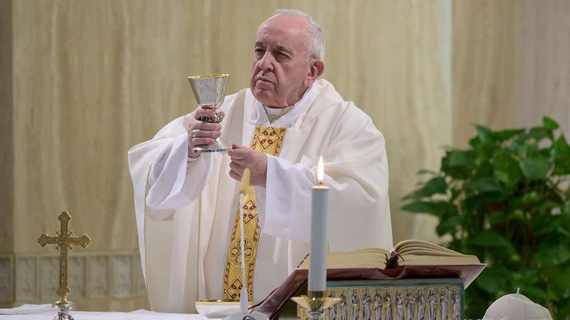
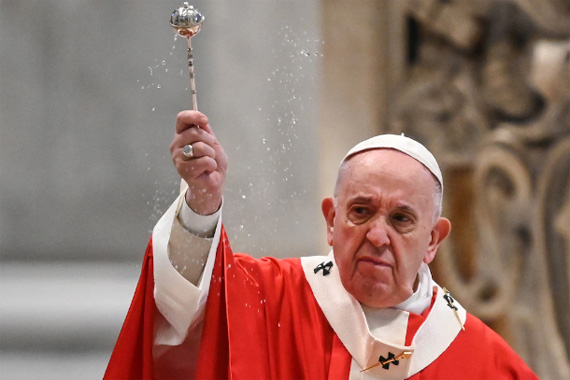
Pope Francis has accused some European leaders of embracing Hitler-style populism as the world tackles the Covid-19 pandemic. The 83-year-old bishop of Rome made the controversial comments in an interview with UK-based Catholic weekly The Tablet.

Speaking as Christians around the world prepare to celebrate Easter, the pope said: “At this time in Europe when we are beginning to hear populist speeches and witness political decisions of this selective kind, it’s all too easy to remember Hitler’s speeches in 1933, which were not so different from some of the speeches of a few European politicians now.”

He added: “This crisis is affecting us all, rich and poor alike, and putting a spotlight on hypocrisy. I am worried by the hypocrisy of certain political personalities who speak of facing up to the crisis, of the problem of hunger in the world, but who in the meantime manufacture weapons. This is a time to be converted from this kind of functional hypocrisy. It’s a time for integrity. Either we are coherent with our beliefs or we lose everything.”

The coronavirus crisis forces us to choose between life and love of money, says pope

We face a fundamental choice as we seek to resolve the coronavirus crisis, Pope Francis said during his morning Mass Monday.

Commenting on the day’s Gospel reading (Mt 28:8-15), which describes the risen Christ’s appearance to Mary Magdalene and Mary of Clopas, the pope said April 13: “The Gospel proposes a choice that also applies today: the hope of Jesus’ resurrection and nostalgia for the tomb.”

“Thus, in finding solutions to this pandemic, the choice will be between life, the resurrection of the people, and the god of money.”

“If you choose money, you choose the way of hunger, slavery, wars, arms factories, uneducated children… there is the tomb. Lord — it is the prayer of the pope — help us to choose the good of the people, without ever falling into the tomb of mammon,” he said, according to a transcription of his homily by Vatican News.

He began the Mass by praying that researchers and political leaders would make the correct choices for those they serve.

He said: “Let us pray today for the rulers, the scientists, the politicians, who have begun to study the way out, the post-pandemic, this ‘after’ that has already begun: that they find the right way, always in favour of the people.”

Virus reveals elderly as victims of a ‘throw away culture,’ Vatican official says

With the elderly representing the largest demographic cohort of lives claimed by the coronavirus, the Vatican’s top official on life issues has warned against selective care practices that prioritize young patients.

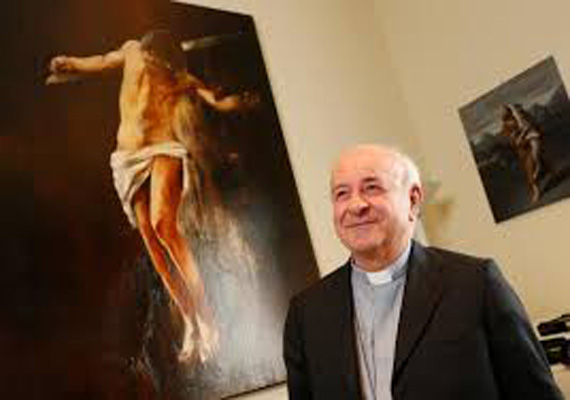
Archbishop Vincenzo Paglia, President of the Pontifical Academy for Life, in an interview with Crux noted that with many hospitals facing shortages of essential equipment such as ventilators at times give preference to patients with better perceived odds of survival, which generally disadvantages the elderly.

“This is the ‘throwaway culture’ in action, forcefully condemned by Pope Francis. [It’s] ‘justified’ by the lack of medical instruments, in turn due to healthcare policy choices that cut costs,” Paglia said, calling the decision to base healthcare and educational funding on cost-saving measures “wrong and misleading.”

He also noted this is happening at the same time courts in Italy, which still leads the world in deaths due to the virus, are debating a possible liberalization of the country’s euthanasia law.

Euthanasia itself is not permitted in Italian law, but in 2017 lawmakers passed a bill allowing adults, together with their doctors, to determine their own end-of-life care, including the terms under which they are able to refuse treatment. The law also allows citizens to write living wills and to refuse medical treatment, artificial nutrition and hydration.

In September 2019, courts ruled it is not always a crime to assist someone in “intolerable pain” to kill themselves. The case involved music producer FabianoAntoniani, who became tetraplegic and blind after a 2014 car accident and three years later was driven by a member of Italy’s Radical Party to Switzerland, where he underwent assisted suicide.

“It is delusional to place age as the only and decisive criterion for care, for salvation or condemnation, which, obviously, relegates the elderly to being too many. Can the weak and elderly be ‘discarded?’

The lack of medical instruments forces choices and do younger people and those with greater hope of recovery receive assistance first? This is the “throwaway culture” in action, forcefully condemned by Pope Francis. It’s “justified” by the lack of medical instruments, in turn due to healthcare policy choices that cut costs.

Vatican registers huge growth, engagement online for Holy Week, Easter

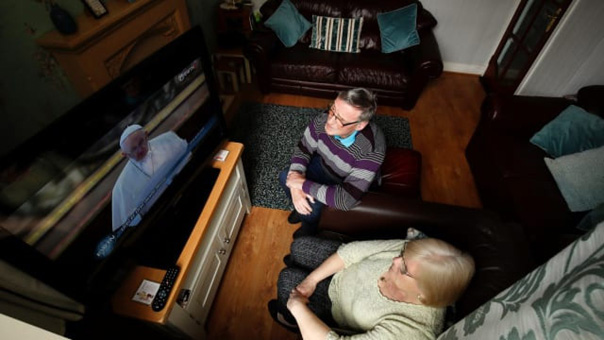
Holy Week and Easter events broadcast and shared by Vatican media reached millions of people around the world, attracting new viewers, followers and fans inspired by Pope Francis’ words and gestures.

“We have been struck by the many emails we have received, comments and posts on our social media from people, even agnostics and nonbelievers, who say they have been moved by the words and gestures of the Holy Father during this very difficult period,” Alessandro Gisotti, vice-editorial director of Vatican media, told Catholic News Service by email April 14.

Huge spikes in online visitors, views, follows and comments on their numerous platforms showed that “many people, not just the Catholic faithful, were able to follow and ‘encounter’ the Holy Father and, through him, the Word of God thanks to this technology and especially to streaming services and social media,” he said in a response to a request for information about online engagement during Holy Week and Easter.

Gisotti told CNS that Vatican media outlets tried to put into practice that “creativity of love that the pope asks of us in order to overcome the isolation caused by the pandemic.”

Their Vatican News site, which offers video, radio, podcasts, images, news and audio services in more than 30 languages, saw its number of visitors and page views quadruple from the same liturgical period last year.

Nearly 5.5 million users registered more than 14.5 million views on the vaticannews.va website between April 5 and April 13 versus Holy Week last year, which saw 1.5 million users and some 3.5 million page views.

Vatican News livestreamed all the major events on its YouTube channels with live commentary in six languages, plus, for the first time, a channel featuring a sign-language interpreter.

Easter events broadcast on YouTube, Gisotti said, had more than 2.1 million views.

The social media accounts for Vatican News and Pope Francis also saw huge growth, he said.

Over Holy Week the @Pontifex Twitter accounts surpassed 50 million followers, while the @FranciscusInstagram accounts exceeded 7 million followers.

The Vatican News Instagram account gained 27,000 new followers over Holy Week, bringing them to more than 436,000 followers. Vatican News tweets, over its different Twitter accounts in six languages, had 61 million views and received 31,000 mentions.

Georgetown panel: COVID-19 crisis shows need for solidarity, community

Addressing the world two weeks ago at the height of the global pandemic, Pope Francis paid tribute to the “forgotten people” – the grocery clerks, service industry workers, cleaners, and caregivers that are frequently overlooked yet are now keeping the world functioning.

Earlier this week, a virtual Georgetown University discussion examined how those individuals – and the tens of millions of people experiencing economic devastation from the pandemic – might best be supported by both the Church and the country in the pandemic’s aftermath.

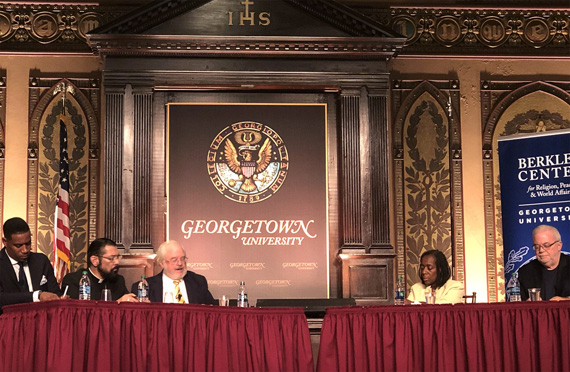
The panel, “Life and Dignity, Justice and Solidarity: Moral Principles for Responding to the COVID-19 Economic Crisis,” was convened on Monday by the university’s Initiative for Catholic Social Thought and Public Life and brought together a mix of policy experts, academics, and a community activist, with the aim of charting a path forward.

E.J. Dionne, who teaches at Georgetown and is a columnist for the Washington Post, kicked off the discussion by noting that while the government is rightfully calling for physical social distancing, he said that now, more than ever, is the time for social connection in order to ensure strong societal bonds to both get through the pandemic and to be united in the eventual rebuilding that will need to occur.

Similarly, New York Times columnist David Brooks high-lighted the Catholic principle of solidarity as “an active virtue” that demands the participation of every single individual member of society. While Brooks is not a Catholic, he said that Catholic social teaching is the “most coherent philosophy that opposes a philosophy of rampant individualism” and should be relied on especially now.

Müller pays tribute to Dietrich Bonhoeffer

Bonhoeffer was a “role model of true humanity in the spirit of Jesus Christ”  and a “martyr of the whole of Christianity,” the former Prefect of the Congregation for the Doctrine of the Faith, Cardinal Gerhard Müller, told KNA on the 75th anniversary of Bonhoeffer’s death.

The German Lutheran Pastor Dietrich Bonhoeffer was hanged in the Flossenbürg concentration camp for his staunch resistance to Nazi dictatorship on 9 April 1945 just three weeks before the Nazi regime collapsed.

Bonhoeffer had played an important ecumenical role during the “anti-Christian persecution” of the Church under National Socialism, Müller recalled, when Catholic and Protestant lay believers and priests had got together to bear witness to the truth and to defend human dignity.

Bonhoeffer had also left an important message for Europe, the cardinal said. He had protested against “inhuman ideologies, national egoism, imperialist plans and the undermining of the judicial system”, Müller recalled.

It had taken a long time before both the Church and society had recognised Bonhoeffer as a Christian martyr. For years after the Second World War society had preferred to “neutralise” him solely as a political victim of the NS-regime.

Pakistan prime minister criticized for Easter message

Pakistan Prime Minister Imran Khan is facing a barrage of criticism after urging Christians to stay at home and maintain social distancing during Easter.

“Wishing all our Christian citizens a happy Easter. Please stay safe and keep your families safe during the Covid-19 pandemic by praying and celebrating at home; and by observing the national safety protocols,” said the PM in his Easter message.

While some praised the prime minister for wishing the country’s minority community well, others were quick to point out Khan’s silence on Muslim worshipers defying the coronavirus lockdown.

Several video clips have emerged in recent days showing angry mobs beating and chasing male and female police officers during Friday congregations.

The Khan administration is particularly accused of a slow response to contain the spread of the novel coronavirus which has killed more than 114,000 people globally.

According to experts, the federal government wasted a lot of precious time in declaring a ban on daily mosque prayers and Friday congregations.

As a result, more than 700 members of a prominent Muslim missionary group who congregated in Lahore from March 10-12 have tested positive, according to government data. The group is being blamed by some for the local transmission of the virus.

On the other hand, Catholics and other minority groups shut down churches even before the national lockdown was declared.

Pandemic may speed up change in the Church

The coronavirus pandemic is changing just about everything.

That is clearest in the people who sicken, those who die, those whose lives are upended, those whose livelihood has disappeared. These are some of the direct effects of the disease.

There are many other effects not directly related to the illness that are manifesting themselves in the context of the pandemic. One major one is the proliferation of anti-scientific “theories” of the “truth” behind the scourge.

So, some people convinced that spread of the virus is aided, if not caused, by telecommunications equipment have burned internet transmission towers in the UK. An archbishop in Sri Lanka without presenting any evidence has advanced the “theory” that the virus was created by researchers.

Conspiracy theorists are working overtime to find any unreason at all that in their minds refutes what research and expertise have repeatedly demonstrated.

Other trends that had already been moving through societies at various speeds have accelerated while those societies are preoccupied. Racist and anti-democratic movements in societies and governments have advanced their objectives in Europe, the United States and elsewhere.

The Catholic Church, too, is undergoing a great change under pressure from the present situation. Some of that change was already underway but may now accelerate. It remains to be seen where it leads.

For decades, the decline in the number of priests has been obvious to us all. The answer until now has been for leaders in the Vatican, where there is a surplus of priests but a shortage of laity, to call for more prayer and sacrifice.

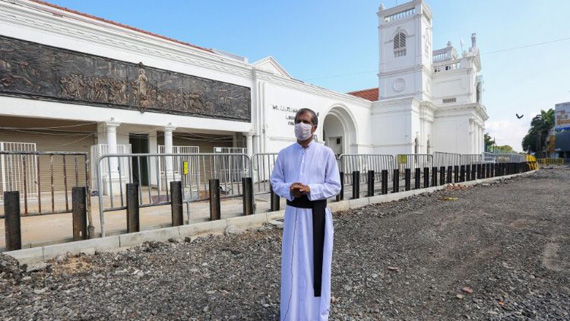
Sri Lankan cardinal: Catholics have forgiven 2019 Easter

Sri Lankan Catholics have forgiven the 2019 Easter suicide attackers who brought terror to the island nation a year ago, said the cardinal of Colombo.

“Not only did Catholics die, but the bombs killed Buddhists, Hindus and Muslims,” said Cardinal Malcolm Ranjith as he celebrated Easter Mass April 12.

“It is human nature to hurt people through anger, but we have given up that human nature and chosen the life of the resurrection of the Lord. Resurrection is the complete rejection of selfishness,” the cardinal said. His remarks were reported by ucanews.com.

“We have taught them that lesson, not hating anyone in any way. This is what civilization means and that is the Resurrection.”

Nine suicide bombers affiliated with a local Islamist extremist group blasted three churches and three luxury hotels on April 21, 2019, killing at least 279 people, including 37 foreign nationals, and injuring about 500. They carried out coordinated bomb attacks at St Sebastian Church in Negombo, St Anthony Shrine in Colombo and the evangelical Zion Church in Batticaloa.

St Sebastian Church and St Anthony Shrine were consecrated and reopened to the public, but Zion Church is still being renovated by the military.

After the bombings, the general public and religious leaders blamed politicians and government officials for failing to prevent the attacks.

Jesuits’ apostolic works based on unity in diversity

In recent years the Society of Jesus has been questioning how to serve the Lord and the Church in the social, political and economic context that the world has been experiencing during Francis’ pontificate. The starting point of our discernment, which has involved all Jesuit communities and all our apostolic works, is the “unity in diversity” of our cultures, languages and traditions.  At present the society is made up of about 15,600 Jesuits scattered across some 110 countries around the world, with a greater density that has moved away from Europe and is now in a belt stretching across Latin America, Africa and Asia.