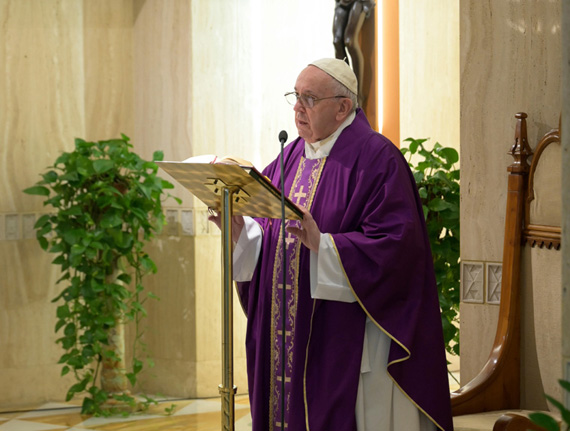
If you can’t go to confession, take your sorrow directly to God, pope says

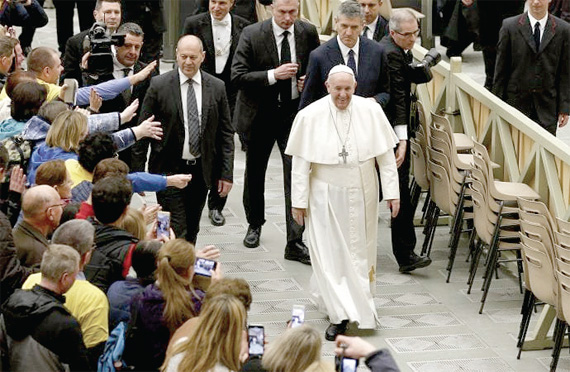
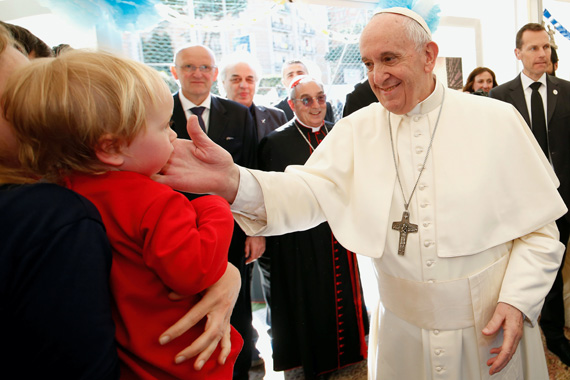
People who cannot get to confession because of the coronavirus lockdown or another serious reason can go to God directly, be specific about their sins, request pardon and experience God’s loving forgiveness, Pope Francis said.

“This is the right time, the opportune moment. An act of contrition done well, and our souls will become white like the snow,” the pope said March 20 during his livestreamed morning Mass.

Pope Francis began the Mass by praying again for doctors, especially in northern Italy, where the COVID-19 pandemic still is infecting thousands and leading to the deaths of hundreds of people each day.

The Italian health ministry announced late March 19 that the number of deaths in Italy had reached 3,407, surpassing by 277 the number of people who had died in China because of the virus.

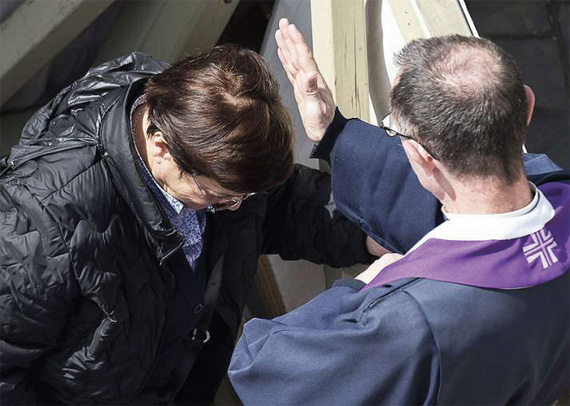
Italy began a nationwide lockdown March 10 in an attempt to slow the spread of the coronavirus. Churches are open for private prayer and priests can hear confessions if they are wearing a mask and gloves and stay more than 3 feet away from the penitent. But people are being encouraged not to leave their homes at all.

The first reading at Mass March 20 was from Hosea, and it encourages people to return to the Lord with all their hearts, recognizing their sins and letting God forgive them, the pope said in his homily.

“Return to your father who is waiting for you,” the pope said. “The God of tenderness will heal us; he will heal us of the many, many wounds of life and the many ugly things we have done. Each of us has our own!”

God welcomes every repentant sinner with open arms, he said. “It’s like going home.”

Lent is a special time “to let God wash us, purify us, to let God embrace us,” the pope said, and the best place for that is the confessional.

“But many people today would tell me, ‘Father, where can I find a priest, a confessor, because I can’t leave the house? And I want to make peace with the Lord, I want him to embrace me, I want the Father’s embrace.’”

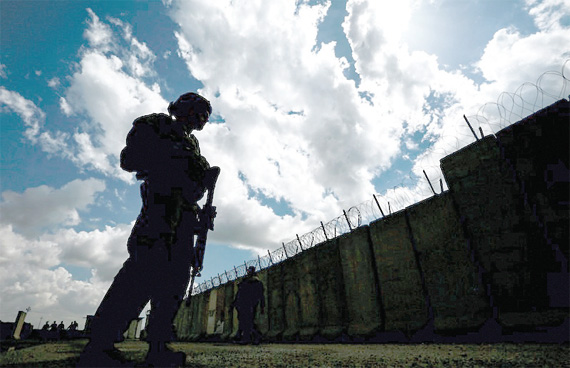
Christians ‘afraid to return’ to northern Iraq

Although Islamic State has been defeated in northern Iraq, the “Islamist mindset” that persists in the region has made Christian refugees from the region “afraid to return,” according to one of Iraq’s most senior Catholic Bishops.

Chaldean Catholic Archbishop Najeeb Michaeel Moussa of Mosul and Akra told Catholic charity Aid to the Church in Need that although Christians in Iraq remain active and hopeful about the future, the ancient Christian presence in the region, already much diminished by years of war and persecution, is threatened by a resurgence of Islamic extremism.

Archbishop Moussa explain-ed that among Christians, the greatest fear, and one which prevents Christians from returning to their former homes in Mosul, “is that of seeing the renewed growth of Islamic fundamentalism.”

Before the US-led invasion of Iraq in 2003, around 1.4 mill-ion Christians lived in the country. At present, fewer than 250,000 remain: a drop of 80% in less than two decades. Under the Islamic state, Christians were often offered a choice between conversion to Islam and death; at best, they were expected to pay a special levy to ISIS in return for their lives. In Mosul, Arch-bishop Moussa’s diocese, of the roughly 15,000 Christian residents of the region prior to ISIS’s rule over the region, none remained by the time of the area’s liberation in 2017. Although Mosul is one of the largest cities in Iraq, few Christians have so far returned there.

Dominican priest, microbiologist sees hope for possible coronavirus treatment

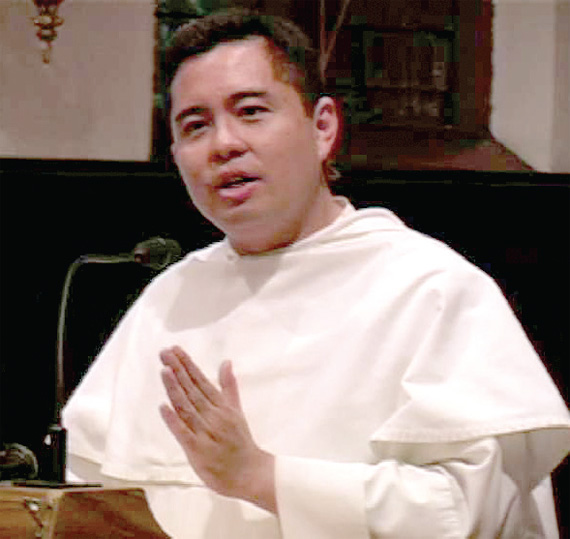
In a recent blog post Fr Nicanor Austriaco, O.P., S.T.D, Ph.D., said he sees reason to hope that the drug hydroxy-chloroquine could be used to treat the corona virus, or COVID-19. Austriaco is a professor of biology and theology at Providence College in Providence, Rhode Island. He is currently on lockdown in the Philippines with his mother during the coronavirus pandemic.

“As a molecular biologist, what is so exciting for me about this claim is that the clinical trial in France was pretty good, given the extreme circumstances,” Austriaco wrote.

“Yes, it was a small trial, but if you read the paper, it was rigorous for what it wanted to do, which is to be a pilot study. And it showed that HCQ significantly shortened the time for the patient to clear (the) virus from his or her system.”

Another independent study from a lab in China has shown that HCQ “can prevent viral reproduction in a test tube,” Austriaco added, which is said is hopeful from a microbiology perspective.

In an email to CNA, Fr Austriaco noted that both HCQ and a related drug, CQ, have been used in humans to treat malaria “all over the world, including here in the Philippines.”

“They have also been used to treat autoimmune diseases like lupus. So we know that they are safe for most people,” he said. However, he added, the prescription drugs “should only be taken under the supervision of a physician… because for some people, they can trigger harmful heart conditions.”

While the FDA has approved HCQ for human use for certain diseases, Austriaco noted that it has not yet approved HCQ for use in the treatment of COVID-19, except for in very limited circumstances.

Italian priest becomes doctor again to help with pandemic

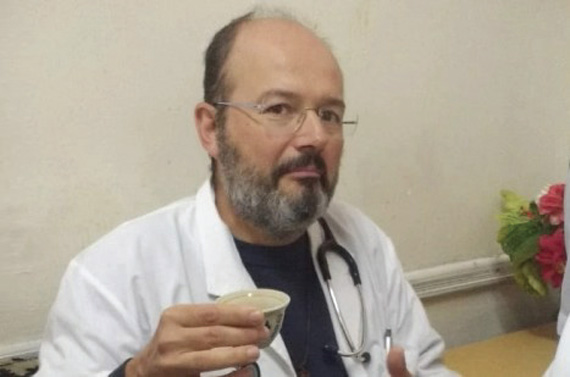
Fabio Stevenazzi, a diocesan priest in Italy, was a doctor before entering the seminary. Now he is donning his white coat once more to fight the coronavirus pandemic. Italy is facing a national crisis caused by a lack of hospital beds and health personnel. Now that the churches in Italy have been emptied by the Italian government’s emergency decrees in reaction to the COVID-19 pandemic, Stevenazzi, 48, has decided to return to medical practice in order to help those infected with COVID-19, according to a report by the website of the diocese of Milan.

New poll shows Catholics have more favourable opinion of Church than last year

While Catholics in the U.S. continue to grapple with fallout stemming from the clergy abuse scandals, new polling suggests that Catholics have a higher opinion of the Church than they did this time last year.

According to data from the Saint Leo University Polling Institute, the favourable opinion – those who responded strongly and somewhat favourably – was recorded at 73.5%, up from 69.3% in November 2019.

In addition, the new data shows a significant increase from April 2019, where U.S. Catholics only expressed a 57.1% level of favourability.

Along with the heightened favourability ratings among Catholics, overall the general favourable opinion of the Church among the public ticked slightly upward to 43.6%, compared to 42% in November. This marks another slight improvement from April 2019, when the favourable opinion was measured at 40.1%.

Meanwhile, seven years into papacy, Francis has suffered a dip from 56.6% in November 2019 to 52.2% in the latest round of polling among the general population. Since St Leo first began their polling, the numbers have ranged from 64.4% in August 2018 to 44.7% in October 2018, to a now midway point between the two. Among U.S. Catholics, however, the pope – who marked the seventh anniversary of his pontificate on March 13 – clocks in at 74.6%, down from 78.1% in November 2019.

Peruvian bishop rescinds permission for confession by phone

A Peruvian bishop has rescinded permission for priests of his diocese to hear confessions by telephone, just five days after authorizing them to do so.

Bishop Reinhold Nann of the Diocese of Caravell, Peru said March 15 that priests of his diocese could hear sacramental confessions by telephone, in light of the coronavirus pandemic, and obligatory social isolation in Peru. Nann added that no public Masses or religious services could take place in his diocese.

On Friday, however, the bishop announced that the possibility of confessions by telephone “is annulled” in light of Vatican guidance on the subject of confession issued earlier the same day.

That guidance called for “prudent measures to be adopted in the individual celebration of sacramental reconciliation, such as the celebration in a ventilated place outside the confessional, the adoption of a convenient distance, [and] the use of protective masks.” The guidance “did not make mention of confession on the telephone,” Nann said, which is why he had rescinded the possibility.

The mysterious disappearance of the Vicar of Christ

From the moment he was introduced to the world after his election, Pope Francis has emphasised his identity as “the bishop of Rome.”

The 2020 Annuario Pontificio, the official Vatican year book, has made the same emphasis typographically by listing other descriptions of the papal office as “historic titles”.

Like the 2019 edition, there is a page that says simply, “Francis, bishop of Rome.”

But unlike last year’s edition, the new year book does not precede the biography of “Jorge Mario Bergoglio” with the titles: “Vicar of Jesus Christ. Successor of the Prince of the Apostles. Supreme Pontiff of the Universal Church. Primate of Italy. Archbishop and Metropolitan of the Province of Rome. Sovereign of Vatican City State. Servant of the Servants of God.”

Matteo Bruni, director of the Vatican press office, told Catholic News Service that unlike in 2006 when Pope Benedict XVI had the title “Patriarch of the West” removed from the list, this time “there has been no suppression” of a title.

“The definition of ‘historic’ in relation to the titles attributed to the pope on one of the pages dedicated to him in the Annuario Pontificio of 2020 seems to me to indicate the bond with the history of the papacy,” Bruni said.

Salesian Family Has 32 Groups, 2,51,159 Members

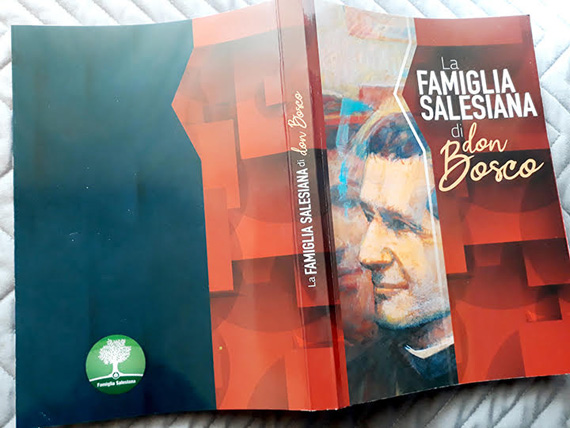
A 250 page book presenting the worldwide Salesian Family lists 32 groups with a total of 2,51,159 (two lakh fifty nine thousand one hundred fifty nine) members.

The book published in 6 languages (Italian, French, English, Polish, Portuguese and Spanish) with numerous photos is entitled: The Salesian Family of Don Bosco.

The third edition after the initial one in 1988 and the most recent in the year of 2000, the book presents the worldwide spiritual and apostolic family of St. John Bosco popularly known as Don Bosco.

The newly elected South Asia Regional Councilor Dr Biju Michael says, “The ‘Book of the Family,’ is long-awaited gift to the 28th General Chapter members.”

Covid 19 threat compelled General Chapter 28 of the Salesians of Don Bosco being held at Turin, northern Italy, to be closed on 14 March 2020 ahead of scheduled closure in April.

“This book will help the young people and our lay mission partners appreciate the vast movement of the Holy Spirit raised through Don Bosco and his Salesians over past 150 years,” adds Fr Biju Michael.

Presenting the book, the re-elected Rector Major of the Salesians Fr Angel Fernandes Artime said, “this ‘Book of the Family’ is ‘gratitude to God for the gift of Salesian Family with its charismatic energy for the Universal Church and it is a beautiful opportunity to thank the Spirit of God for having given us our Father Don Bosco because this Family was not born as the fruit of a single human project but of God’s initiative.”

Redeemer statue lights up with coronavirus-affected countries’ flags

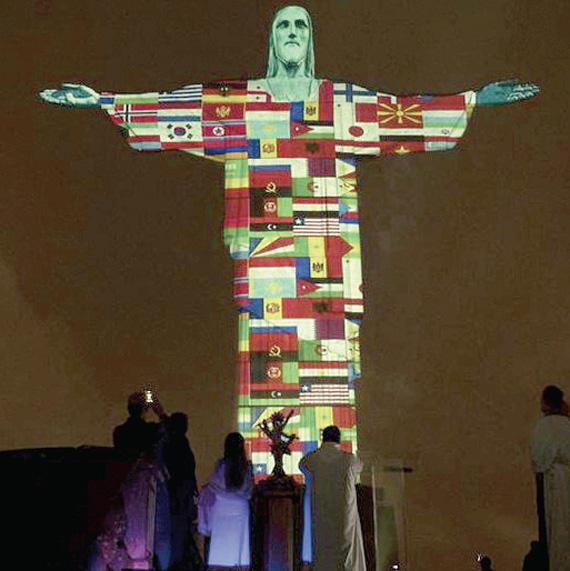
The iconic Christ the Redeemer statue in Brazil was lit up March 18 night with flags and messages of hope to the nations affected by the growing coronavirus pandemic.

The stunning light show atop Rio de Janeiro’s Corcovado mountain featured more than 150 flags, representing every country with confirmed COVID-19 cases, as well as the phrase “pray together” projected in multiple languages.

Sri Lankan cardinal seeks probe into cause of Covid-19

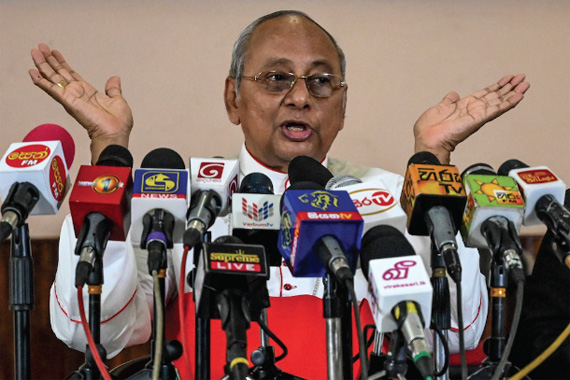
Cardinal Malcolm Ranjith has called for an international probe into the cause of the coronavirus pandemic.

Speaking in a televised Mass on March 15, the archbishop of Colombo said powerful countries cannot be allowed to play with the lives of the innocent public. He said that experimenting with nature had resulted in the coronavirus.

“We know that in several areas of the world researchers of all types for various reasons are engaging in research to destroy human life and nature. Some of these viruses are the products of aimless experiments,” said Cardinal Ranjith.

“This kind of research is done not by people in poor countries but in laboratories in rich countries. Producing such things is a very serious crime for mankind.

“I ask the Lord to reveal who made these poisonous seeds. The United Nations or international organizations must find out who is behind these incidents and punish them. Such research should be banned.”

The cardinal’s comments came as the Sri Lankan Church cancelled Masses and other services in all parishes because of a rapid rise of coronavirus cases in the country.

It announced on March 15 that it is cancelling all church services until the end of the month. The decision came in the middle of the Lenten season that features common gatherings such as the Way of the Cross, Lenten pilgrimages, group meditation, healing services and group prayer services.

In a press briefing, Cardinal Ranjith requested all political parties to join together to fight Covid-19 while asking people not to gather extra goods unnecessarily.

The number of infections in Sri Lanka has risen to 18. Most of the patients had arrived from Italy recently.