Pope Francis, does the appointment of Tagle at Propaganda Fide begin the race for the next conclave?

Pope Francis on December 8 appointed the 62-year-old Filipino Cardinal Luis Antonio Tagle as Prefect of the Congregation for the Evangelization of Peoples. The move is more than a major curial appointment: it seems to  open the way toward preparations for the papal succession.  Not by chance, the veteran Vatican watcher Sandro Magister immediately made a list of papabili, that is, of cardinals eligible to be the next Pope.

The transfer of Cardinal Tagle to Rome has been rumoured for a long time. Pope Francis never hid the fact he likes  the archbishop of Manila. However, Cardinal Tagle garnered consideration step by step. He was created cardinal in Benedict XVI’s last consistory. It was a particular consistory: Benedict XVI created only six new Cardinals, all of them non-Italian.

Cardinal Tagle already had good press at the time. He was a scholar of the so-called “Bologna School” — a group of scholars gathered in Bologna that wrote a comprehensive history of the Second Vatican Council. The Bologna scholars interpret the Second Vatican Council through the twin lenses of discontinuity and rupture. Benedict XVI, au contraire, always read the Second Vatican Council in continuity with the tradition of the Church. However, Benedict XVI was not biased by Cardinal Tagle’s participation in the works of the Bologna School. In 2015, Cardinal Tagle was elected president of Caritas Internationalis, the Holy See umbrella organization for some 160 Catholic relief service in the world. That position strengthened Cardinal Tagle’s international appeal. Cardinal Tagle has never been too vocal or overexposed, but he has always cultivated a public presence and persona.

Pope Francis called him to be president delegate of the 2015 Synod on the Family and among the participants of the 2018 Synod on Youth. During this latter, thanks to a video where he danced with young people, Cardinal Tagle got even more popular.

Pope Francis considers that the Roman Curia is less important than the local Churches. To Pope Francis, diocesan bishops are more important than the top officials of the Roman Curia.  Cardinal Tagle’s appointment, however, is the first of a series of new appointments that will revolutionize the Curia offices. All of these appointments will come along with the finalization of the much awaited Curia reform.

Cardinal Tagle will be at the helm of what draftsmen of the curial reform law, Praedicate Evangelium, say is to be the “first dicastery.” Cardinal Tagle will replace Cardinal Fernando Filoni. The Pope appointed Cardinal Filoni as Grand Master of the Equestrian Order of the Holy Sepulchre. This is a prestigious but mostly honorific position, that is usually given to retired or almost retired Cardinals.
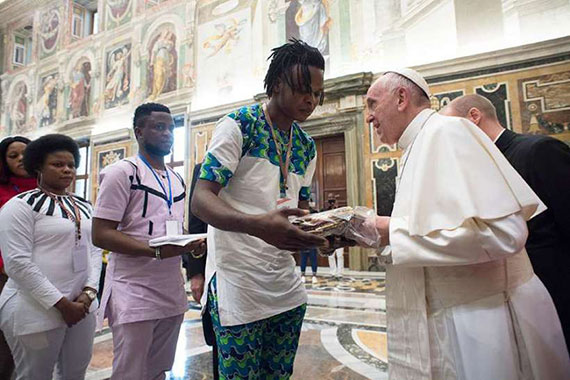
Women African judges meet at Vatican to tackle ‘plague’ of human trafficking

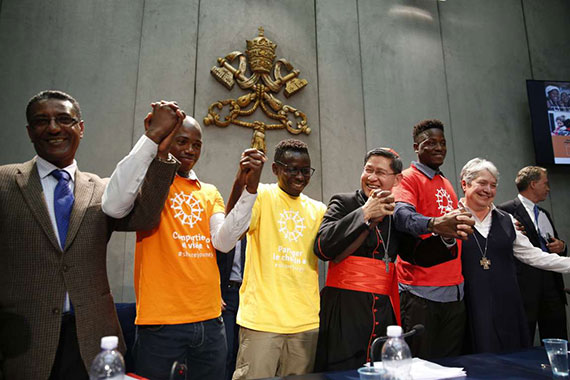
A group of around 50 women judges and prosecutors engaged in the fight against human trafficking and organized crime in Africa is meeting at the Vatican. Hosted by the Pontifical Academy for Sciences, the Dec. 12-13 meeting reprises a similar summit held in December 2018.

Pope Francis addressed the summit privately for around 10-15 minutes in the afternoon of Dec. 12. Judith Wanjala told CNA Pope Francis addressed the problem of human trafficking, “urging us to take positive steps to deal with this problem, which is affecting the entire world, so many countries.”

Wanjala, who has heard human trafficking cases as a judge in Kenya for more than 30 years, added that Pope Francis’ encouragement of the summit is for her a sign of his strong feelings against trafficking.

She said, she is participating in the gathering to share and to understand better what practices judges and prosecutors in other African countries are putting into place. One participating judge, who asked not to be identified, called human trafficking a “plague” in Africa.

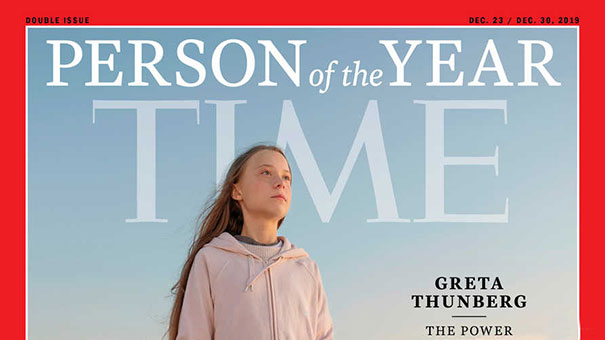
Greta Thunberg named Time magazine’s person of the year

Greta Thunberg, the teen activist from Sweden who has urged immediate action to address a global climate crisis, was named Time magazine’s person of the year for 2019. She is the youngest person to have ever received the accolade.

Thunberg, 16, was lauded by Time for starting an environmental campaign in August 2018 which became a global movement, initially skipping school and camping out in front of the Swedish parliament to demand action.

“In the 16 months since, she has addressed heads of state at the UN, met with the Pope, sparred with the president of the United States and inspired 4 million people to join the global climate strike on September 20, 2019, in what was the largest climate demonstration in human history,” the magazine said.

“Margaret Atwood compared her to Joan of Arc. After noticing a hundredfold increase in its usage, lexicographers at Collins Dictionary named Thunberg’s pioneering idea, climate strike, the word of the year,” Time said.

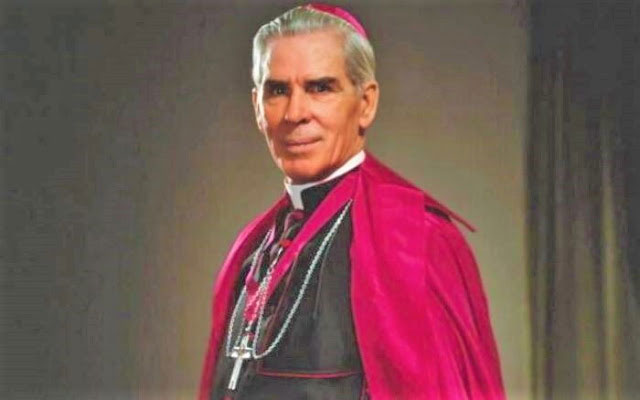
Fulton Sheen beatification postponed

The scheduled beatification of Ven. Servant of God Archbishop Fulton J. Sheen has been postponed after several U.S. bishops asked that the cause be given more time for examination. The Diocese of Peoria announced the delay on Dec. 3. Archbishop Sheen’s beatification was set to take place on Dec. 21. “With deep regret, Bishop Daniel Jenky, C.S.C, Bishop of Peoria, announces that he has been informed by the Holy See that the beatification of Fulton Sheen will be postponed,” said the press release from the diocese.

The fall of Notre Dame is a body blow to Paris and all it represents

It took little more than an hour. In that amount of time, the spire had fallen, most of the roof had given way, and that was that. Notre Dame — the literal and figurative heart of Paris, the point from which all distances in the city are measured and the seemingly eternal backdrop to life in the French capital — was essentially no more.

Granted, the facade was preserved, and the bell towers remain intact. But this is without question a story of loss on an otherwise perfect spring day.

To have lived in Paris in recent years is to be well acquainted with loss and even unspeakable tragedy. The killing of 12 people in the attack at the satirical newspaper Charlie Hebdo after a morning meeting in January 2015. The bombings and shootings that claimed 130 lives at the national stadium, the Bataclan concert hall and on random cafe terraces near the Canal Saint-Martin. The killings of two elderly Jewish women — one hurled from her apartment window. The omnipresence of armed guards at any site where crowds may gather.

But through all of these nightmares, there has been one constant, collective refrain. This was the comforting reality — or at least the comforting belief — that somehow, through it all, Paris was indestructible. The idea that Paris will always be Paris felt truer nowhere else than in front of Notre Dame.

In his remarks to a grieving nation close to midnight, President Emmanuel Macron called the cathedral a metaphor for France. “Notre Dame is our history, our literature, our imagination,” he said. “The place of all our great events, our epidemics, our wars, our liberations, the epicentre of our lives.”

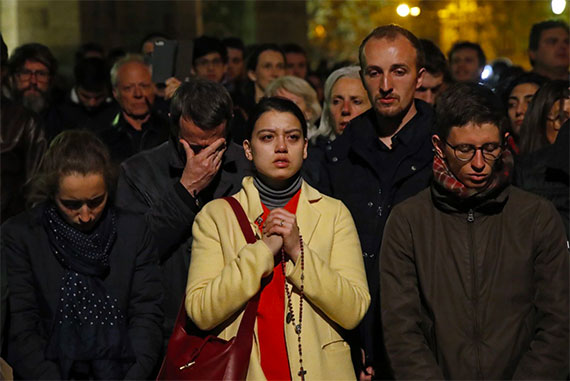
The quiet broke every so often — gasps when the spire finally tipped over and fell, the whistles of police officers pushing back the crowds. People did move away, but everyone walked backward, so as not to miss a single moment of a spectacle that was both spellbinding and terrifying.

Many were in silent tears; many others embraced strangers. But in general, thousands gathered because they realized they could do nothing else but catch a final glimpse of the place they had known and loved, a place that Macron immediately promised to rebuild but that can never quite be the same again. The fate of certain stained-glass windows — kaleidoscopes in the sunlight — remains unknown.