Pope asks Thai priests to strip Gospel’s ‘foreign garb’

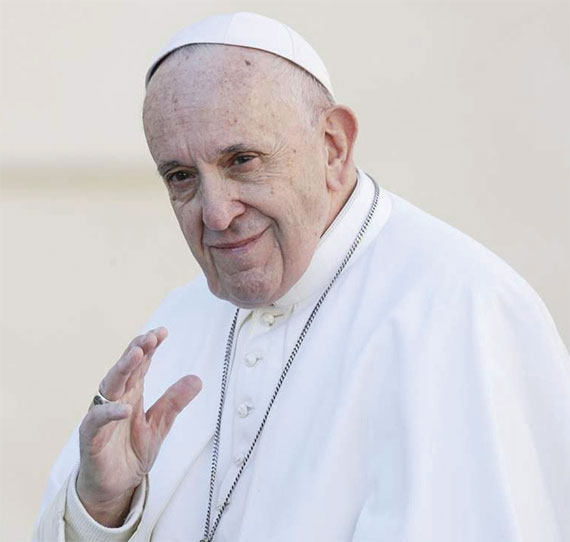
Pope Francis has asked Thai priests to give Christianity “a Thai face and flesh” on the third day of his visit to the kingdom.

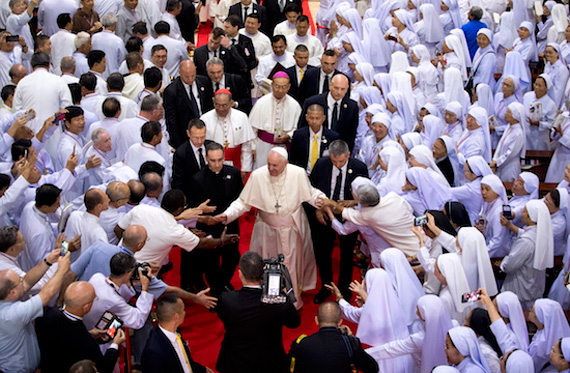
He was speaking during a meeting with priests, religious, seminarians and catechists at St Peter’s Parish of Wat Roman village in Tha Kham, Bangkok, on Nov. 22.

“As I prepared for this meeting, I read, with some pain, that for many people Christianity is a foreign faith, a religion for foreigners. This should spur us to find ways to talk about the faith ‘in dialect,’ like a mother who sings lullabies to her child,” the Pope said.

“With that same intimacy, let us give faith a Thai face and flesh, which involves much more than making translations. It is about letting the Gospel be stripped of fine but foreign garb; to let it ‘sing’ with the native music of this land and inspire the hearts of our brothers and sisters with the same beauty that set our own hearts on fire.”

The Pope recalled Pope Benedict XVI saying that the Church does not grow by proselytizing but by attraction.

“Proclaiming Christ means showing that to believe in and to follow him is not only something right and true but also something beautiful, capable of filling life with new splendor and profound joy, even in the midst of difficulties,” Pope Francis said.

“This means we are not afraid to look for new symbols and images, for that particular music which can help awaken in the Thai people the amazement that the Lord wants to give us. Let us not be afraid to continue inculturating the Gospel.

“We need to seek new ways of transmitting the word, ways that are capable of mobilizing and awakening a desire to know the Lord. Who is that man? Who are these people who follow a man who was crucified?”

Thousands of people lined the roads of the predominantly Catholic village of Wat Roman and filled the grounds of a church complex to greet Pope Francis.

Homemade signs included one that said, “You really know how to pope.” Another said, “Credo in PapamFranciscum” (I believe in Pope Francis).

Pope calls for an end to ‘tragic exodus’ of migrants

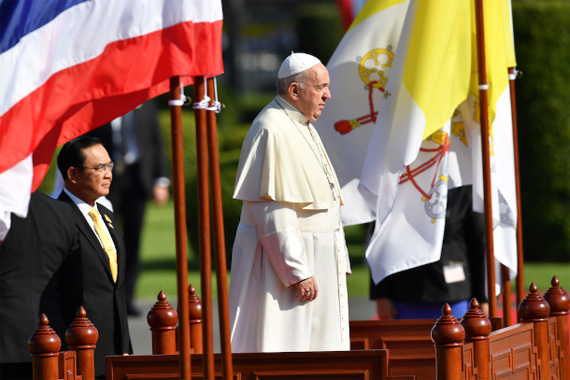
Pope Francis focused on Asia’s migration crisis on November 21 as he made his first public speech on his seven-day visit to Thailand and Japan.

After being given an official welcome at Government House in Bangkok and meeting Prime Minister Prayut Chan-o-cha, he addressed civil and religious leaders and members of the diplomatic corps.

The Pope called migration “one of the defining signs of our time” and “one of the principal moral issues facing our generation.”

He said he hopes “the international community will act with responsibility and foresight to resolve the issues that have led to this tragic exodus and will promote safe, orderly and regulated migration.”

“The crisis of migration cannot be ignored,” the Pope said. “Thailand itself, known for the welcome it has given to migrants and refugees, has experienced this crisis as a result of the tragic flight of refugees from nearby countries.”

According to the 2019 report of the UN working group on migration in Thailand, of the 69 million people living in Thailand, 4.9 million are non-Thais, an increase of 1.2 million in five years. The largest groups come from Cambodia, Laos, Myanmar and Vietnam.

Thailand has about 93,000 refugees living in nine camps. Most are ethnic minorities from Myanmar. Bangladesh is accommodating more than one million Rohingya Muslim refugees from Myanmar.

Pope Francis described Thailand as “the guardian of age-old spiritual and cultural traditions,” a multiethnic and diverse nation that has “long known the importance of building harmony and peaceful coexistence between its numerous ethnic groups.”

Human trafficking, especially of women and children for prostitution and for domestic service, is a major problem in Thailand, according to the UN Action for Cooperation Against Trafficking in Persons.

“Thailand is recognized as a key destination for human trafficking in the Mekong region in addition to being a source and transit country for forced labor and sex trafficking,” the UN said. The problem involves poor Thais as well as migrants.

Addressing Thai leaders, Pope Francis drew special attention to women and children “who are wounded, violated and exposed to every form of exploitation, enslavement, violence and abuse.”

“Our age is marked by a globalization that is all too often viewed in narrowly economic terms, tending to erase the distinguishing features that shape the beauty and soul of our peoples,” he said. “Yet the experience of a unity that respects and makes room for diversity serves as an inspiration and incentive for all those concerned about the kind of world we wish to leave to our children.”

In a meeting with Thailand’s Supreme Buddhist Patriarch, Pope Francis encourages peace

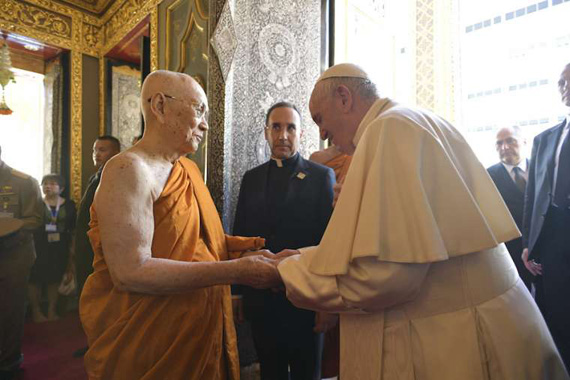
Catholics and Buddhists share should work together to advance the cause of mercy in the world, Pope Francis said on November 20 during a historic meeting with the Supreme Buddhist Patriarch of Thailand.

“Thanks to scholarly exchanges, which lead to greater mutual understanding, as well as the exercise of contemplation, mercy and discernment – common to both our traditions – we can grow and live together as good ‘neighbours,’” the Pope said on November 21. When Catholics and Buddhists “have the opportunity to appreciate and esteem one another in spite of our differences, we offer a word of hope to the world, which can encourage and support those who increasingly suffer the harmful effects of conflict.”

Pope Francis met with His Holiness Somdej Phra Maga Muneewong at the Wat Ratchabophit Sathit Maha Simaram Temple in Bangkok, during a six-day Asian trip to Thailand and Japan.

Archbishop Sheen will be beatified ON December 21 at Peoria’s cathedral

Archbishop Fulton J. Sheen will be beatified on Dec. 21, Bishop Daniel R. Jenky of Peoria announced late on Nov. 18. He said the Vatican had just notified him of the beatification and he was announcing the news “with great joy and thanksgiving.”

Plans for the beatification are already underway, the bishop said. The ceremony will be at 10 a.m. local time at the Cathedral of St Mary of the Immaculate Conception in Peoria.

“This is the same cathedral where (Archbishop) Sheen was ordained a priest 100 years ago on Sept. 20, 1919,” said a Peoria diocesan news release. “It seems entirely fitting that the beatification will take place at the end of this 100-year anniversary of his ordination to the priesthood.”

The cathedral also is the current resting place for the archbishop, who is entombed in a marble vault next to the altar where he was ordained.

The diocese planned to release more information about the beatification over the next few days. News about the beatification and the life of Sheen can be found at celebratesheen.com.

100 guns turned in at St Sabina buyback program in Chicago

A gun buyback program at St Sabina Church in Chicago produced at least 100 firearms. The Chicago Sun-Times reports that police traded gift cards for guns – $100 for handguns and rifles and $10 for BB guns, air rifles and replicas. Father Michael Pfleger’s church collects guns year-round. The last buyback day in April netted 400 guns.

Gayle Blake of Oak Park traded in her father’s old hunting rifle. She had it hidden from her children, but she says “it’s a big relief” to get rid of it. John Murry turned in a firearm. He says the program helps but more needs to be done. He wants to see more young people stepping up. More than 1,800 people have been shot in Chicago this year.

Religious freedom a ‘moral imperative,’ Pope tells leaders of major religions in Thailand

In a meeting with leaders of major religions in Thailand on Nov.22, Pope Francis stressed the importance of upholding human dignity and religious freedom.

“For our part, we are asked to embrace the moral imperative of upholding human dignity and respecting the rights of conscience and religious freedom,” he said on Nov. 22 at Chulalongkorn University in Bangkok.

Addressing religious leaders, he said “all of us are called not only to heed the voice of the poor in our midst: the disenfranchised, the downtrodden, the indigenous peoples and religious minorities, but also to be unafraid to create opportunities, as is already quietly occurring, to work hand in hand.”

“And to do so,” he added, “in a spirit of fraternal solidarity that can help end the many present-day forms of slavery, especially the scourge of human trafficking.”

Pope Francis met the 18 Christian, Buddhist, Muslim, Hindu, and Sikh leaders at Chulalongkorn University, which was founded in 1899 and is the oldest university in Thailand. It is considered highly prestigious, and is the university which members of the royal family and nobility have attended.

The university is named for King Chulalongkorn, who ended slavery in Thailand. In his address, Pope Francis recalled a significant moment from 122 years ago, when Pope Leo XIII met with King Chulalongkorn, also known as King Rama V, at the Vatican, the first time a non-Christian head of state was received in audience there.

“May the memory of that significant encounter, as well as that of his reign, whose virtues included the abolition of slavery, challenge us, in our own time, to pursue the path of dialogue and mutual understanding,” Francis said.

A world without nuclear weapons is possible, Pope says in Japan

Saying it is “perverse” to think the threat of nuclear weapons makes the world safer, Pope Francis urged a renewed commitment to disarmament and to the international treaties designed to limit or eliminate nuclear weapons.

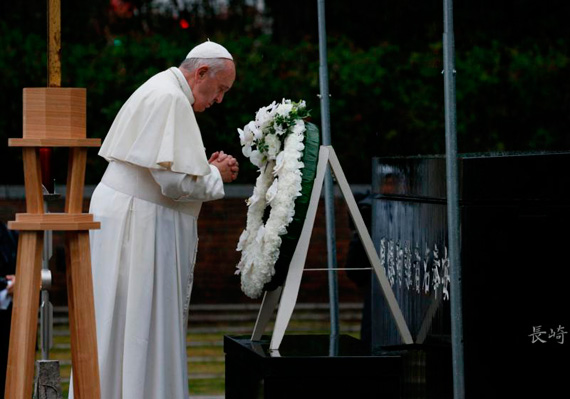
Pope Francis began his first full day in Japan Nov. 24 with a sombre visit in the pouring rain to Nagasaki’s Atomic Bomb Hypocentre Park, a memorial to the tens of thousands who died when the United States dropped a bomb on the city in 1945. In the evening, he visited the Peace Memorial in Hiroshima, honouring the tens of thousands killed by an atomic bomb there, too.

“The use of atomic energy for purposes of war is today, more than ever, a crime not only against the dignity of human beings but against any possible future for our common home,” Pope Francis told several hundred people gathered with him in Hiroshima.

“The use of atomic energy for purposes of war is immoral, just as the possessing of nuclear weapons is immoral, as I already said two years ago.” he said. “We will be judged on this.”

Pope to Thai bishops: Stand with the poor, the exploited

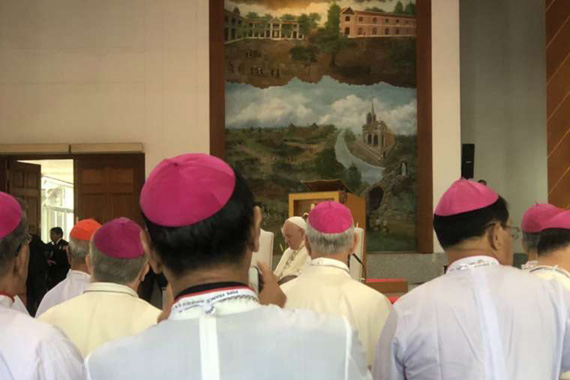
Pope Francis told bishops from Thailand and other countries in Asia on Nov. 22 to stand with and intercede for their people, especially those who are affected by economic inequality or who are victims of exploitation or trafficking.

“You have taken upon your-selves the concerns of your people: the scourge of drugs and human trafficking, the care of great numbers of migrants and refugees, poor working conditions and the exploitation experienced by many labourers, as well as economic and social inequality between rich and poor,” the Pope said in Bangkok on Nov. 22.

“In the midst of these tensions stands the pastor who struggles and intercedes with his people and for his people.”

Pope Francis met the bishops’ conference of Thailand and members of the Federation of Asian Bishops’ Conferences during a six-day visit to Thailand and Japan, where he flew on November 23.

He noted, in his speech, that the bishops of Asia “are living in the midst of a multicultural and multi-religious continent, endowed with great beauty and prosperity, but troubled at the same time by poverty and exploitation at various levels.”

Rapid technological advancement, though it can include increased possibility, can also create greater focus on consumerism and materialism, he stated.

Pope, Anglican archbishop affirm desire to visit South Sudan together

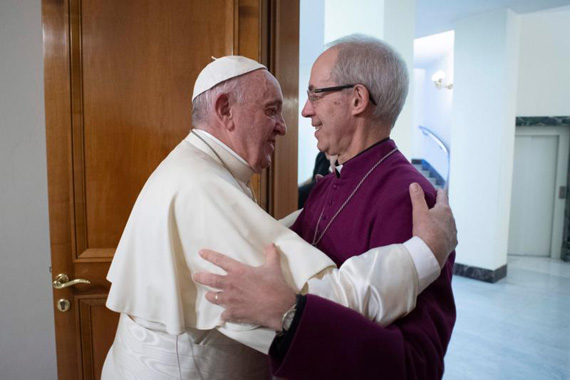
Pope Francis and Anglican Archbishop Justin Welby of Canterbury, spiritual leader of the Anglican Communion, said they would travel together to South Sudan if the country’s leaders fulfil their promise to form a transitional government by late February.

The Pope and Welby met at the Vatican on November 13 while the Anglican leader was in Rome to install a new director of the city’s Anglican Centre.

“During the friendly discussions, the condition of Christians in the world was mentioned, as well as certain situations of international crisis, particularly the sorrowful situation in South Sudan,” the Vatican press office said in a statement later.

“At the end of the meeting,” the statement continued, “the Holy Father and the archbishop of Canterbury agreed that if the political situation in the country permits the creation of a transitional government of national unity in the coming 100 days, according to the timing set by the recent agreement signed in Entebbe, in Uganda, it is their intention to visit South Sudan together.”

Pope plans to add ‘sin against ecology’ to catechism

Pope Francis says the Catholic Church is contemplating the introduction of “ecological sin” to the compendium of Church teaching.

“We have to introduce, we are thinking about it, in the catechism of the Catholic Church, the sin against ecology, the sin against our common home, be-cause it’s a duty,” he said while speaking to a group of lawyers on November 15.

The Pope’s words came just weeks after the conclusion of a bishops’ summit on the Amazon focused on the environmental threat to the region.

Pope Francis was addressing the 20th world congress of the International Association of Penal Law, held in Rome on November 13-16, under the scope of “Criminal Justice and Corporate Business.” He also said that the culture of waste, combined with other widespread phenomena in welfare societies, is showing the “serious tendency to degenerate into a culture of hatred.”

“It is no coincidence that in these times, emblems and actions typical of Nazism reappear, which, with its persecutions against Jews, gypsies and people of homosexual orientation, represents the negative model par excellence of a culture of waste and hatred,” the Pope said.