Theology in ‘dialogue with cultures’ renews humanity, Pope Francis says

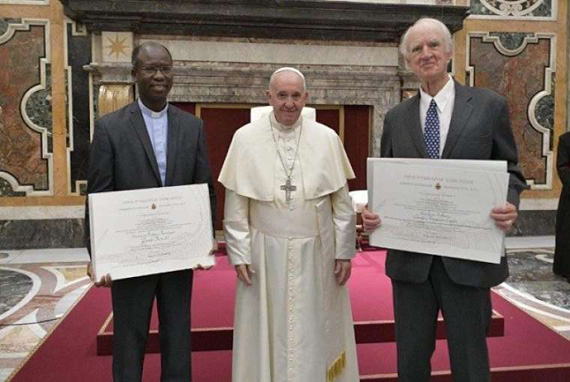
When theology and philosophy engage with cultures in creative ways, they become a powerful tool for renewing humanity with the Word of God, Pope Francis said Saturday, during the awarding of the Ratzinger Prize on 9th November 2019.

“This is true for all cultures: access to redemption for humanity in all of its dimensions should be sought with creativity and imagination,” the Pope said.

He quoted St Paul VI’s apostolic exhortation Evangelii Nuntiandi, which says, “Evangelizing means bringing the Good News into all the strata of humanity, and through its influence transforming humanity from within and making it new.”

“It is a duty for theology to be and remain in active dialogue with cultures, even as they change over time and evolve differently in various parts of the world,” he said. “It is a condition necessary for the vitality of Christian faith, for the Church’s mission of evangelization.”

“All the arts and disciplines,” Francis said, “thus cooperate in contributing to the full growth of the human person, which is to be found ultimately in the encounter with the living person of Jesus Christ, the incarnate Logos, the revelation of the God who is love.”

Pope Francis addressed members of the Joseph Ratzinger-Benedict XVI Foundation in the Vatican’s apostolic palace during the award ceremony for the 2019 edition of the prestigious Ratzinger Prize.

The Ratzinger Prize was begun in 2011 to recognize scholars whose work demonstrates a meaningful contribution to theology or philosophy in the spirit of Cardinal Joseph Ratzinger, the Bavarian theologian who became Benedict XVI.

The winners of the 2019 prize are Catholic intellectual Charles Taylor and Jesuit priest and theologian, Fr Paul Béré.

Béré is the first African to win the prestigious Ratzinger Prize. A lecturer at the Pontifical Biblical Institute, he received the prize for his work on the figure of the prophet Joshua.

Cameroon cardinal: Christians called to be ‘rebels against evil’

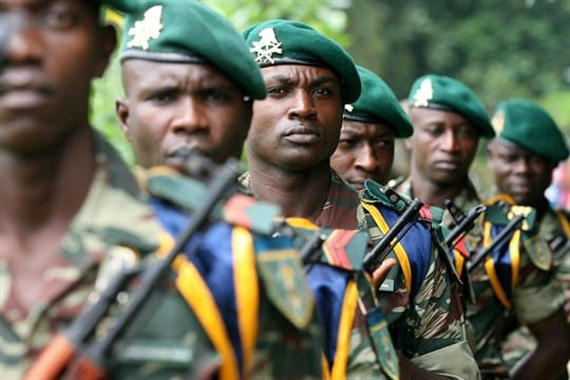
Every Christian is a “rebel against evil,” according to Cameroon’s lone cardinal.

Speaking during a program on Cameroonian state television, Cardinal Christian Tumi also called on Christians to become more involved in politics.

“Every Christian is a rebel against all that is not good-that is morally evil. A Christian is a rebel against lies,” Tumi said.

“Politics is part of the world and Christ has told us: Go into the whole world and proclaim the Gospel message. Wherever there is man acting; the Church has to be present,” he said.

“We are therefore called to evangelize the politicians and politics, because their activity also is preparing them for the Kingdom of God. There is no activity that is out of the region of the church,” Tumi continued.

The program brought together Christian leaders from different denominations to discuss relations between Church and State in the West African country, which is currently experiencing a number of crises, including a rebellion in the country’s two English-speaking provinces.

Music, art are a gateway to discover God’s greatness, Pope says

Liturgical musicians have the unique calling to interpret God’s will and love through song and praise, Pope Francis said.

“Every Christian, in fact, is an interpreter of the will of God in his or her own life, and by his or her life sings a joyful hymn of praise and thanksgiving to God,” the Pope said on Nov. 9 during a meeting with participants at a Vatican conference on interpreting sacred music.

The conference, titled “Church, Music, Interpreters: A Necessary Dialogue,” was sponsored by the Pontifical Council for Culture, the Pontifical Institute for Sacred Music and the Pontifical Athenaeum of St Anselm.

Reflecting on the conference theme, the Pope said most people think of interpreters as a kind of translator who conveys what “he or she has received in such a way that another person can understand it.”

Although good interpreters in the field of music essentially “translate” what a composer has written, they also should feel “great humility before a work of art that is not their property,” and to “bring out the beauty of the music.”

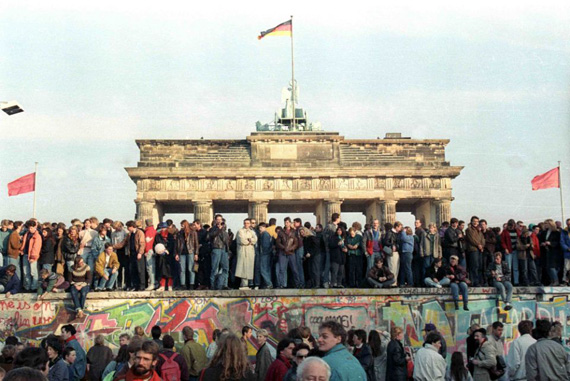
European bishops mark 30th anniversary of fall of Berlin Wall

Catholic bishops from the European Union marked 30 years since the breaching of the Berlin Wall with tributes to those who worked for peaceful change, as well as warnings against resurgent “ideologies behind the building of walls.”

“The fall of the Berlin Wall was one of the most important events in European history of the last decades, a moment full of emotion,” the Commission of the Bishops’ Conferences of the European Union, or COMECE, said in a Nov. 6 statement. “But not all the expectations that the fall of the wall brought forth have been fulfilled.”

The statement said the Berlin Wall had symbolized “the ideological division of Europe and the whole world,” adding that its breaching during mass protests on Nov. 9, 1989, had “opened the way for regaining freedom” after communist rule in Central and Eastern Europe.

“Having been separated by a concrete wall for more than 28 years, people — relatives, friends and neighbours — living in the same city were able to meet each other, celebrate and express their joy and hopes. From this moment the world looked different,” said the document, signed by representatives of 26 bishops’ conferences.

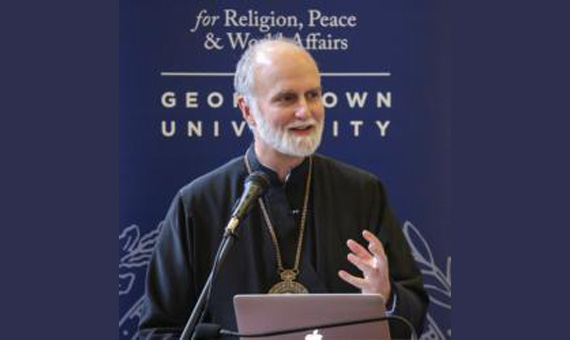
Ukrainian Catholic Church faces new struggles, archbishop says

Addressing an audience at Georgetown University on Oct. 25, the leader of the Ukrainian Catholic Church in the United States said the world news in Washington is as “Ukrainian as it ever has been.”

But although he made reference to the current political interest in Ukraine, he also said “no one in Washington would give (the country) the time of day had there not been a July phone conversation,” referring to President Donald Trump’s conversation, now under congressional investigation, with Volodymyr Zelenskiy, Ukraine’s president.

Majority of Hispanics in U.S. no longer Catholic, new study finds

A new study shows that the percentage of Catholics in the United States has fallen from nearly one-in-four to one-in-five, with the added news that Hispanics in America are no longer majority-Catholic.

The Pew Research Centre survey released Oct. 17 noted that in general, religious practice in the country has declined at a “rapid pace.”

Based on telephone surveys conducted in 2018-2019, Pew found that 65% of Americans now call themselves Christian, down 12% points from a decade ago; in addition, those having no religion – describing themselves as atheist, agnostic or “nothing in particular” – are now 26% of the population, up from 17% a decade ago.

Self-described Protestants went from 77 to 65% in that time period; Catholics went from 23% to 20%. Although Catholic leaders might feel some comfort knowing they aren’t experiencing the same sort of decline as Protestants, they must be worried by the large number of Hispanic Catholics leaving the Church.

In 2009, 57% of Hispanics called themselves Catholic; it was only 47% in 2019. Only a small percentage of that can be attributed to joining other churches or religions – the number of Hispanics identifying as Protestant only rose from 23 in 2009 to 26% in 2017 (although the 2019 data showed 24% the earlier survey is probably more thorough); and the number describing themselves as belonging to non-Christian religions rose from 1 percent to 3%. However, those describing themselves as atheist, agnostic or “nothing in particular” increased from 16 to 23%.

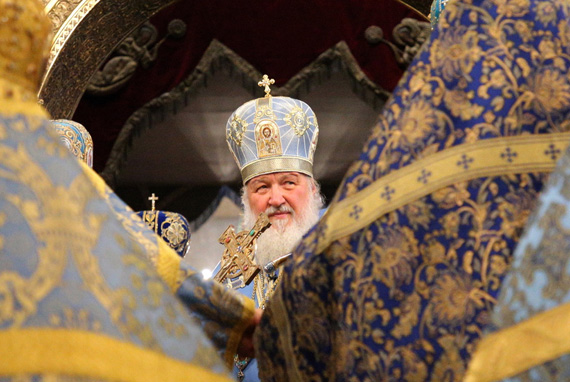
Patriarchs at war as Russian ‘cancels’ Alexandrian from prayers

The Patriarchate of Alexandria has become the latest to recognise Ukraine’s new independent Orthodox Church, prompting angry reactions from Russian leaders who bitterly opposed its establishment by the Ecumenical Patriarchate a year ago.

In a brief statement during a Cairo service, Patriarch Theodore II of Alexandria and All-Africa said the recognition had been conferred after “many prayers and consultations” among his senior clergy. Meanwhile, in a second message to his bishops, published by Greece’s Orthodox Romfea news agency, Theodore confirmed the move, adding that it had followed “mature reflection” and many personal talks, and been taken out of “concern for peace and the Orthodox Churches’ unity and wellbeing.”

However, the act of recognition was deplored as “deeply saddening” by Russia’s Moscow Patriarchate, which said its leader, Kirill I, had now deleted Theodore’s name from his church’s official prayer list. Mean-while, a foreign relations spokesman for Ukraine’s Moscow-linked Orthodox denomination also condemned the development, noting that Patriarch Theodore had previously called on his followers not to recognise the new church.

“Theodore II is well informed about everything currently happening in Ukraine – the excuse that he did not know the situation is not valid,” said Archpriest Nikolai Danilevych in a weekend statement. “Unfortunately, what has happened can only be explained by weakness leading to betrayal. This patriarch has obviously not been able to withstand pressure from the Constantinople Patriarchate, and from Greek and US policies.”

Russian Orthodox leaders cut all ties with the Ecumenical Patriarch, Bartholomew of Constantinople, after he issued a “tomos of autocephaly” formally establishing the new Ukrainian Church last January under its primate, Metropolitan Epiphanius of Kiev and All-Ukraine, and are campaigning against its acceptance by other Orthodox Churches.

However, the church was also formally recognised in late October by the Orthodox Church of Greece, despite opposition from several senior metropolitans. Preaching in Istanbul, Patriarch Bartholomew said he expected further pledges of recognition, adding that he had a “calm conscience,” despite the ensuing conflict, about helping establish the new church, which was “connected more with Western democracy than any eastern repressive regime.”

French bishops vote to compensate abuse victims with Church funds 

The bishops of France approved plans to offer financial compensation to victims of sexual abuse by clergy.

According to the Associated Press, any person recognized by their bishop as a victim will be eligible to receive money, and the Church in France will appeal for donations to cover the costs.

The French bishops also voted to allocate 5 million euros, or $5.5 million, to an independent commission examining Church sex abuse in France and to support prevention efforts, the AP reported.

The bishops made the decision at their biannual assembly in Lourdes. They plan to consider additional details of the plan, including compensation amounts for victims, at their next meeting in April 2020.

The AP reports that an independent commission examining sexual abuse in France announced at the assembly that 2,800 people have responded since June to a call for testimonies.

France last year extended the statute of limitations on sexual crimes against minors from 20 years to 30.

The continued revelations of sexual abuse and subsequent cover-up by some Church officials in France come alongside similar revelations in countries such as the United States, Ireland, Australia, Chile, Poland, Argentina and Germany.

‘Young Bergoglio’ and ‘Pope Francis’: Two Stamps for His 50th Anniversary

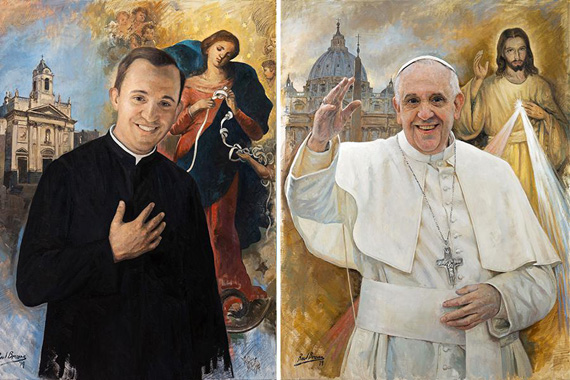
This coming December 13, Pope Francis will celebrate the 50th anniversary of his Ordination to the priesthood. Made the occasion, on Monday, November 4, 2019, the Vatican’s Philatelic and Numismatic Office issued two stamps, which reproduce two paintings made by Spanish paint-er Raul Berzosa. The first of the stamps, with the value of 1.10 euros, reproduces a portrait of “Young Jorge Bergoglio,” reported the Diocese of Malaga, Spain. “The joy of that December 13, 1969, eve of the Third Sunday of Advent (Gaudete Sunday or Sunday of Joy), when he was ordained priest,” explains the painter, commenting on the portrait.

Painted on the left side of the portrait is the Basilica of Saint Joseph of Flores, because Bergoglio, walking on a spring day, passed by the Church of the neighbourhood of Flores and went it to go to Confession. “It was there that he felt God was calling him” and “he left with the conviction to embrace the priesthood,” said the Malaga artist.

On the right, is one of Bergoglio’s “great devotions, which has accompanied him up to today, the ‘Virgin Undoer of Knots.’ He took <the image> to Buenos Aires after learning her title during one of his trips to Ger-many. Bluish colors predominate on the canvas in reference to Argentina,” explained Berzosa. The second stamp, with the value of 1.15 euros, has a printed image of “Pope Francis, representing him as Pontiff. Raul Berzosa pointed out that the painting “is dedicated to Mercy.”

Slum Jesus to be part of Rio de Janeiro’s Carnival in 2020

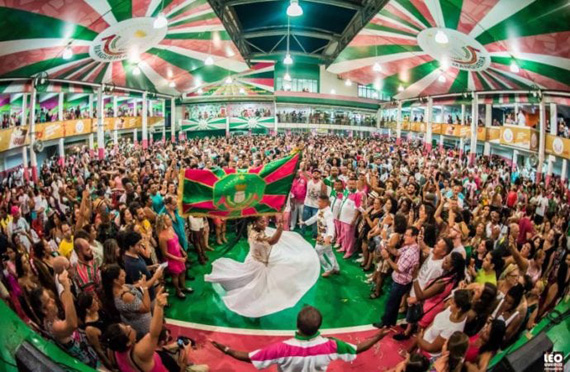
One of Brazil’s most traditional samba schools – the popular associations that organize annual Carnival parades in the country – announced that the theme of its 2020 performance would be the story of Jesus taken to a Rio de Janeiro slum.

Estacao Primeira de Mangueira also announced its performance song, which alludes to the increasing police brutality and to the violence suffered by minorities in Brazil.

Written by the composers Manu da Cuica and Luiz Carlos Maximo, the song talks about a boy in a favela, or slum. He has a “black face, indigenous blood and the body of a woman” and is the son of an “unemployed carpenter” and of “Mary of Sorrows Brazil.”

The narrator of the song said the boy, who ages as the song progresses, struggles against oppression and can be met “where love finds no barriers.” In another part, the song says “Favela, get the vision/ There’s no future without sharing/ And no Messiah with a gun in his hand,” a possible allusion to President Jair Bolsonaro’s promises of loosening gun control legislation and of reducing punishment for police who kill suspected criminals. Bolsonaro’s middle name is Messias.

Another possible reference to Bolsonaro is the title of Mangueira’s parade theme, “The truth will set you free,” which was – with a slight difference in the Portuguese wording – one of Bolsonaro’s campaign slogans in 2018. Bolsonaro, a self-described Catholic, was elected with a strong support of evangelical Christians, and his wife – he’s in his third marriage – is a member of an evangelical denomination.

Father Antonio Manzatto, a theology professor at the Pontifical Catholic University of Sao Paulo, said Mangueira’s parade is somehow inspired by the tradition of Latin American liberation theology, a movement particularly influential in Brazil during the 1970s and 1980s; it emphasizes the church’s preferential option for the poor.

“Now that we have a far-right government with signs of obscurantism and persecution of dissidents, Mangueira is bringing us a parade that is somehow related to the period when liberation theology emerged,” he said.