Iraqi archbishop reflects on Christian community five years after ISIS takeover

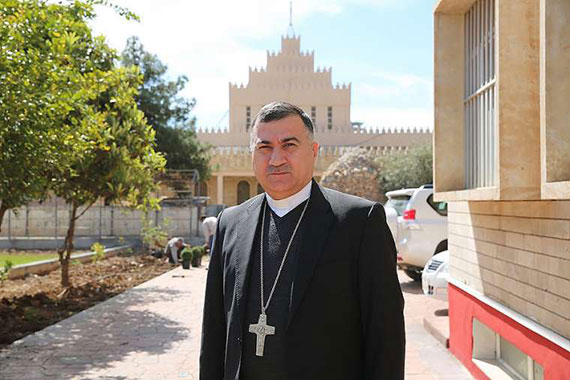
Five years on from the conquering of Christian communities in Iraq by the so-called Islamic State, Christians in the country remain at the “point of extinction,” Chaldean Archbishop Bashar Warda of Erbil said.

“The ISIS attack led to the displacement of more than 125,000 Christians from historical homelands and rendered us, in a single night, without shelter and refuge, without work or properties, without churches and monasteries, without the ability to participate in any of the normal things of life that give dignity; family visits, celebration of weddings and births, the sharing of sorrows,” Warda told papal charity Aid to the Church in Need.

“This was an exceptional situation, but it’s not an isolated one. It was part of the recurring cycle of violence in the Middle East over more than 1,400 years,” he said.

ISIS captured the Christian communities of the Nineveh plains on August 6, 2014. Christians were not able to return to the area until the fall of 2016, when Iraqi forces and their allies recaptured the area. To date, about 40,000 Christians have returned; many have emigrated.

Christianity has been present in the Nineveh plain in Iraq – between Mosul and Iraqi Kurdistan – since the first century. However, since the ousting of former Iraqi leader Saddam Hussein, Christians have been fleeing the region.

In Warda’s eyes, the imposition of sharia led to the decline of that Golden Age: “A style of scholastic dialogue had developed, and this could only occur, because a succession of caliphs tolerated minorities. As toleration ended, so did the culture and wealth which flowed from it.”

Warda said Muslim leaders throughout the centuries have decided “according to their own judgement and whim” whether non-Muslims will be tolerated, and if so, to what degree.

“Argue as you will, but extinction is coming, and then what will anyone say?” he continued.

Pope consoles priests rattled by sins of few

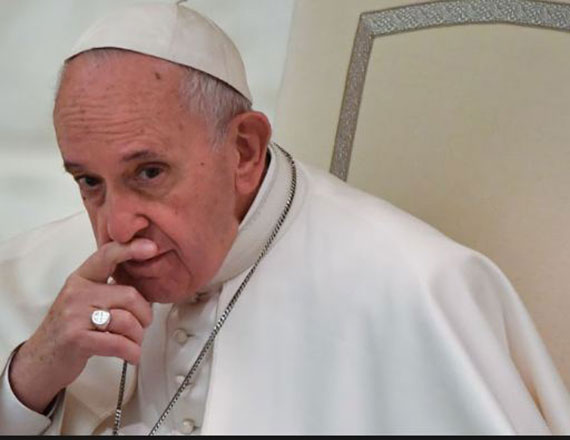
Pope Francis has written a letter to the more than 400,000 Catholic priests worldwide encouraging them during the tribulations from the sexual abuse crisis. The letter is meant to give priests, many of whom feel disheartened because of the horrendous crimes of abuse committed by a small percentage of their fellow priests, hope in these times of tribulation when they are so often blamed or treated with suspicion, distrust, contempt or ridicule.

This year, he speaks directly to all priests because he is well aware and deeply concerned that in many countries, including the United States, Australia, Ireland, the United Kingdom, Germany and Chile, the morale of priests has suffered greatly because of the abuse scandal.

“I want to say a word to each of you who, often without fanfare and at personal cost, amid weariness, infirmity and sorrow, carry out your mission of service to God and to your people,” he says.

He tells them that “despite the hardships of the journey, you are writing the finest pages of the priestly life.”

War of the Word: top scholars battle over Bible translations

An academic war of words has broken out among leading Catholic scholars over the Revi-sed New Jerusalem (RNJB) translation of the Bible. The world-renowned historian, Professor Eamon Duffy, of Magdalene College, Cambridge, criticised the RNJB as guilty of “flaccid” waffle and “casual inaccuracy” after another senior academic proposed it should be used for a revised lectionary.

Parts of the RNJB were released last year but it was published in full last month by Darton Longman and Todd.

According to Neil Xavier O’Donoghue, lecturer in systematic theology at St Patrick’s College, Maynooth, Ireland, writing in The Tablet, many feel that the current Jerusalem Bible (JB) Lectionary, based on a translation of the Bible originally published in 1966, “is no longer fit for purpose.” He says that on many levels the translation still reads smoothly and for most Catholics in the countries that use this lectionary, this is the version of Scripture, the text they have grown up hearing read in church, at school and at home, and “which resonates in their spiritual lives.”

But he adds that  the JB was produced quite hurriedly in the years after the Second Vatican Council and says the translation contains “quite a number of imprecisions,” compounded by a tendency on the part of many of the original team of translators to base their work on the 1956 French La Bible de Jérusalem rather than on the original Hebrew and Greek of the Bible.

Dom Henry Wansbrough, translator of the RNJB and of its 1985 predecessor the NJB, him-self wrote in The Tablet last October how the present translations approved for liturgical use in England and Wales – the Revised Standard Version (RSV) (Catholic Edition) and The Jerusalem Bible, the one adopted by most parishes, “both now show their age.”

Knights of Columbus donated over $185 million to charity in 2018

Ahead of its annual convention, the Knights of Columbus announced on August 1 that it donated more than $185 million to charity in 2018.

“The men who choose to become Knights of Columbus are generous, and their impact is immense. While we are known mainly for our local efforts, our reach is global,” said Carl Anderson, Supreme Knight of the Knights of Columbus.

The Knights of Columbus is a fraternal and charitable organization with over 1.9 million members and more than 16,000 councils worldwide.

It was founded by Fr Michael McGivney in 1882 to provide relief and assistance to members, their families, and widows of members, as well as opportunities for fraternity and service for Catholic members. The “four pillars” of the Knights are charity, unity, fraternity, and patriotism.

According to the Knights, the $185 million in charitable giving came from direct fundraising, the efforts of local Knights councils, and its insurance operations; the Knights offer insurance and annuities products to members.

The group also says its members gave over 76 million hours of hands-on service in 2018, worth over $1.9 billion according to a valuation of volunteer work by the Independent Sector.

More than 16,000 Knights councils in nine countries were responsible for the volunteer work and for raising money for charitable causes, which included relief for persecuted Christians, disaster aid, support for crisis pregnancy centres and pro-life initiatives, the Archdiocese of the Military Services, U.S.A., and the Knights’ annual pilgrimage to Lourdes for wounded military veterans.

Pope Francis: Ordination of married men ‘absolutely not’ main theme of Amazon synod

The upcoming Synod of Bishops on the Amazon is an “urgent” gathering, not of scientists and politicians, but for the church whose main focus in discussions will be evangelization, Pope Francis said in a new interview.

However, the importance of the Amazon region’s biodiversity and current threats it faces also will be addressed because “together with the oceans, (the Amazon) contributes decisively to the survival of the planet. Much of the oxygen we breathe comes from there. That’s why deforestation means killing humanity,” he said.

The Pope also talked about the dangers of surging nationalism and isolationist sentiments, saying, “I am worried because you hear speeches that resemble those by Hitler in 1934. ‘Us first, We… We…’” Such thinking, he said, “is frightening.”

The Pope’s comments came in an interview posted on August 9 by “Vatican Insider,” the online news supplement to the Italian newspaper La Stampa.

Asked about the dangers of “sovereignism” or nationalism, the Pope said it represented an attitude of “isolation” and closure.

“A country must be sovereign, but not closed” inside itself, he said.

National sovereignty, he said, “must be defended, but relations with other countries, with the European community, must also be protected and promoted.”

“Sovereignism,” on the other hand, he continued, is something that goes “too far” and “always ends badly — it leads to war.”

When asked why he convened a Synod on the Amazon, Pope Francis said, “It is the ‘child’ of ‘Laudato si.’ Those who have not read it will never understand the Synod on the Amazon. ‘Laudato Si’ is not a green encyclical, it is a social encyclical, which is based on a ‘green’ reality, the safeguarding of creation.”

Among the environmental issues the Pope is concerned about, the one that “has shocked me the most,” he said, is the way resources are increasingly being consumed faster than they can be regenerated. Pope Francis was asked whether the possibility of ordaining older, married men to minister in remote areas would be one of the main topics of discussion. The Pope replied, “Absolutely not. It is simply one number” in the working document.

Citing El Paso shooting, US bishops condemn divisive, hateful rhetoric

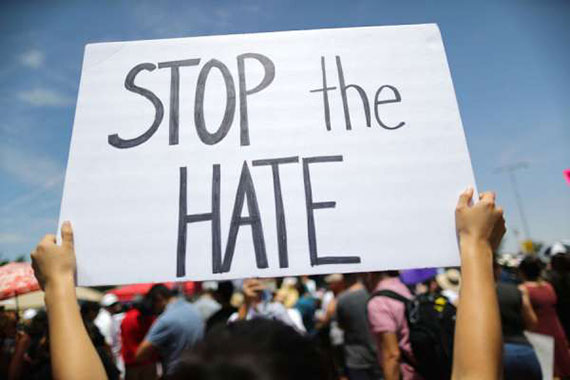
Leaders of the U.S. bishops’ conference on issues of immigration and racism denounced xenophobic and dehumanizing language in the United States, warning that it fosters discrimination and hatred.

“The tragic loss of life of 22 people were in El Paso demonstrates that hate-filled rhetoric and ideas can become the motivation for some to commit acts of violence,” the bishops said.

“The anti-immigrant, anti-refugee, anti-Muslim, and anti-Semitic sentiments that have been publicly proclaimed in our society in recent years have incited hatred in our communities.”

The statement was issued on August 8 by Bishop Joe Vásquez of Austin, head of the U.S. bishops’ migration committee; Bishop Frank Dewane of Venice, Florida, chair of the domestic social development committee; and Bishop Shelton Fabre of Houma-Thibodaux, head of the ad hoc committee against racism.

“Donald Trump has created plenty of space for hate,” said presidential hopeful Senator Elizabeth Warren. “He is a racist. He has made one racist remark after another. He has put in place racist policies. And we’ve seen the consequences of it.”

Senator Bernie Sanders, who is also running for president, tweeted at Trump after the shooting, “Your language creates a climate which emboldens violent extremists.”

Nigerian bishops ask officials to review church licenses to marry couples

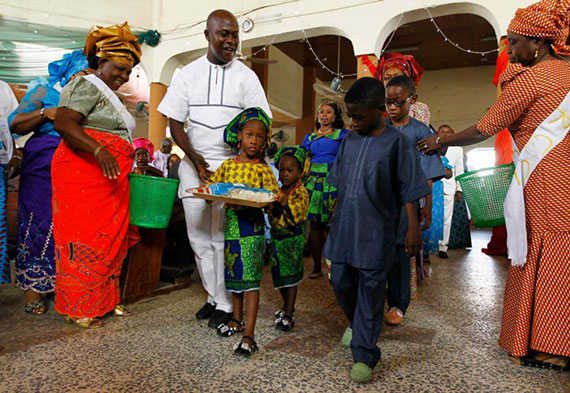
Six Catholic bishops appealed to the Nigerian government to review its stand on a directive that houses of worship must obtain an annual license before performing marriages and issuing marriage certificates to newly wedded couples.

Archbishop Gabriel Abegunrin of Ibadan and Bishops Felix Ajakaye of Ekiti, Emmanuel Badejo of Oyo, Jude Arogundade of Ondo, John Oyejola of Osogbo, and Paul Olawoore of Ilorin made the appeal in a statement released at the end of their provincial meeting on August 6 in Ado Ekiti.

The bishops urged the government to review the Ministry of the Interior directive to all places of worship. “Presently, only about 4,689 licensed places of worship in Nigeria have updated their records with the Ministry of Interior of which only 314 have renewed their licenses to conduct statutory marriages,” she said.

“Many people, including Catholic Priests, have fallen victims to this tragically insecure environment,” the provincial bishops said. They attributed criminal activity to inconsistency in the prosecution of crimes. They said the government and law enforcement authorities had given “lip service” to their commitment to protect life and property.

France sees rise in conversion therapies to ‘cure’ homosexuality

It was a coming-out story that turned into a nightmare. The film “Boy Erased,” released on March 27 in France, is based on the true story of the teenage son of a Baptist pastor from Arkansas. When he revealed his sexuality to his parents, they reacted by enrolling him in a “masculinisation” programme to “heal” him of his homosexuality. He found himself in group therapy in a detention centre where he felt he was “trapped in hell.” He did not emerge “cured.”

In the United States, it is estimated that 700,000 young people have been sent to this type of rehabilitation centre. But it might come as a surprise to learn that they also exist in Europe – particularly in France.

In France, these “sexual reorientations” are practiced by some Christian evangelical groups inspired by the American model and by some Muslim preachers. Young people undergo “internships” that combine prayers, readings, exorcism sessions and sometimes even complete isolation. “We had the case of a teenage Jehovah’s Witness whose homosexuality had been publicly disclosed in the community. His parents had then seized his phone and his computer, and he was forbidden from interacting with the outside world,” says Lesage.

At Le Refuge, it is estimated that 3.5%  of LGBT calls are reactions to conversion therapies. This amounts to three calls every month.

“There was a distinctive change of attitude at the time of ‘La Manif pour tous’ (a collective formed in 2012 to protest against the legalisation of same-sex marriage), it was as if homophobic speech was suddenly liberated and it caused much abuse,” says Lesage. “Some churches at the time went so far as to organise prayer sessions to prevent the law from passing.” Anthony Favier, president of the Christian LGBT association David & Jonathan, agrees. He says that the phenomenon has grown with the explosion of the evangelical movement in France in recent years. “It is a modern movement in form but very conservative in substance,” says Favier. “And there is no interpretation of religious texts.”

French conversion therapies currently exist in a legal limbo. The practice of sexually redirecting or ‘curing’ homosexuals is legal but there have been European directives to change this. France may be dragging its feet, but things are progressing in the rest of Europe. A year ago, the European Parliament adopted a text calling on member states to ban conversion therapies. So far, only Malta and some autonomous regions of Spain have passed laws. But several countries are actively working on the issue, including Germany, Poland and the United Kingdom, who last year launched a major governmental initiative to ban the practice.

Anti-Christian carnage in Nigeria could be global security nightmare

Nigeria is not the Middle East – Christians aren’t a tiny minority, they’re at least half of Africa’s most populous nation of 200 million, and their patience can’t be expected to be infinite. If Christians in Nigeria were ever to decide to take the fight to the enemy, the resulting violence could make the Christian/Muslim carnage in the nearby Central Africa Republic, which left thousands dead and produced almost a million refugees and displaced persons, seem a mere spat. A victim of the violence named Dalyop Davou Jugu had much the same sense.

The Fulani-driven violence is often described as not “religious” or “sectarian,” because it also involves a decades-old land use conflict between herders and farmers. However, Sister Monica Chikwe of the Hospitaler Sisters of Mercy recently told me during a Rome conference on anti-Christian persecution that it’s tough to tell Nigerian Christians this isn’t a religious conflict since what they see are Fulani fighters clad entirely in black, chanting “Allahu Akhbar!” and screaming “Death to Christians!”