Amid tensions in China, Vatican tells clergy to follow their conscience

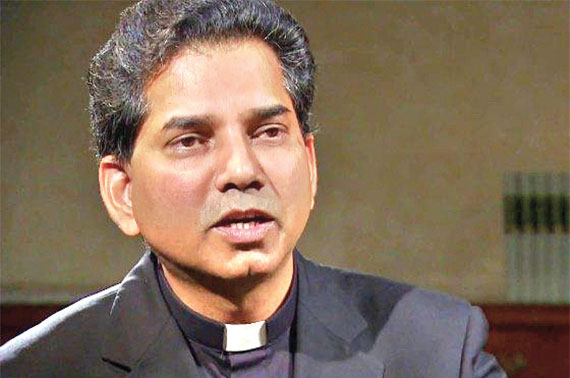
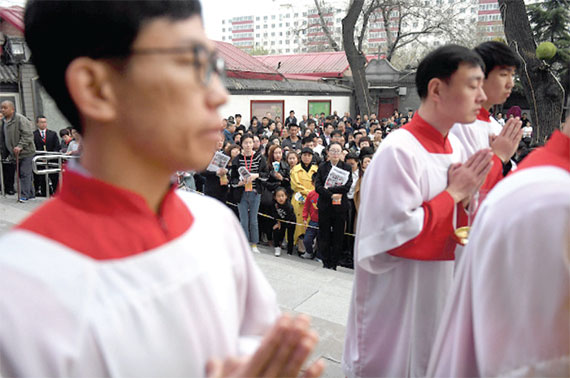
The Vatican has told bishops and priests in China that they must follow their own consciences in deciding whether to register with the government, and it urged Catholics in the country not to judge them for the choices they make.

The problem, the Vatican said, is that registration almost always requires the bishop or priest to accept “the principle of independence, autonomy and self-administration of the Church in China,” which could be read as a denial of one’s bonds with the Pope and the universal Church.

Releasing the “pastoral guidelines of the Holy See concerning the civil registration of clergy in China” on June 28, the Vatican acknowledged that acceptance of the independence of the Church in China comes despite “the commitment assumed by the Chinese authorities,” in an agreement with the Vatican in September, to respect Catholic doctrine. Deciding whether to register with the government, which is the only way to be able to minister openly, is a choice that is “far from simple,” the guidelines said.

“All those involved — the Holy See, bishops, priests, religious men and women and the lay faithful — are called to discern the will of God with patience and humility on this part of the journey of the Church in China, marked, as it is, by much hope but also by enduring difficulties.”

The guidelines assured Chinese clergy that the Vatican “continues to dialogue with the Chinese authorities” to find “a formula that, while allowing for registration, would respect not only Chinese laws but also Catholic doctrine.”

In the meantime, however, the guidelines said, “if a bishop or a priest decides to register civilly, but the text of the declaration required for the registration does not appear respectful of the Catholic faith, he will specify in writing, upon signing, that he acts without failing in his duty to remain faithful to the principles of Catholic doctrine.”

Meeting with Mother Teresa leads to Bhutan’s Jesuit

When deliberating over whether or not to become a priest, Kinley Tshering – an extremely rare Catholic convert in his native Bhutan – asked God for a sign.

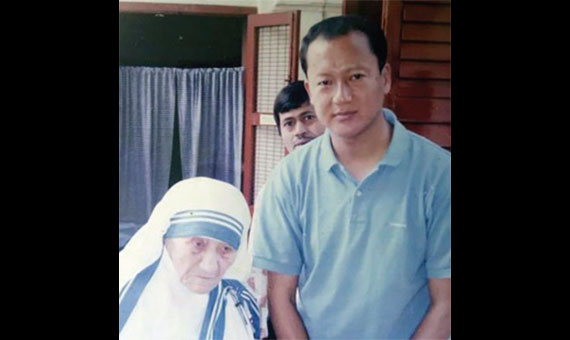
The sign came on an ensuing airplane flight when he discovered he was sitting next to Mother Teresa (now St Teresa of Calcutta). He soon joined the Jesuit Order and in 1995 became the first Catholic priest born in Bhutan – a landlocked South Asian country, surrounded by India and China, with a total population of about 800,000, some three-fourths of whom are Buddhists; most of the remaining one-fourth are Hindus, and Christians account for less than 1% of the population.

As a devout Buddhist family, Tshering’s parents actually took him as an infant to a monastery and dedicated him as a Buddhist monk. And yet he proceeded to receive a Catholic education. He tells how, as a small child in the early 1960s, “there weren’t many good schools in Bhutan.” So his family sent him to Catholic boarding schools in Darjeeling, India.

He proceeded to work in the business industry. But something about his conventional way of life left him unsatisfied and he continued to deliberate about becoming a priest.

For a long time, he had been praying to God to give him a sign to let him know that he should enter the priestly vocation.

Sri Lankan appointed secretary of Vatican’s dialogue body

Pope Francis has appointed a Sri Lankan as the secretary of the Vatican’s Pontifical Council for Interreligious Dialogue (PCID).

Monsignor Indunil Janakaratne Kodithuwakku Kankanamalage, currently the under-secretary of the council, is a priest of the Diocese of Badulla, Sri Lanka.

Monsignor Indunil was born in 1966 of a Buddhist mother who converted on marrying a Catholic. Two years after his priestly ordination on December 16, 2000, he was sent to Rome where he obtained a doctorate in missiology from the Pontifical Urban University. The university later hired him as a professor at its Faculty of Missiology.

On June 12, 2012. Pope Benedict XVI appointed him undersecretary of the Pontifical Council for Interreligious Dialogue.

Monsignor Indunil succeeds previous secretary, Spanish Bish-op Miguel Ángel Ayuso Guixot, whom Pope Francis on May 25 appointed the president of the Pontifical Council for Interreligious Dialogue, following the death of Cardinal Jean-Louis Tauran on July 5, 2018.

The Pontifical Council for Interreligious Dialogue was established by Paul VI on Pentecost Sunday 1964, with the aim of promoting dialogue with persons of other religions, in line with the spirit of the Second Vatican Council, especially its declaration, “Nostra Aetate.”

Thai police seize 51 Pakistani Christian asylum seekers

Thai authorities in Bangkok have arrested 51 Pakistani Christian asylum seekers in an incident that has reignited fears among the city’s Christian refugees of another immigration crack-down on illegal immigrants.

According to eyewitnesses, immigration authorities arriving in two police vans pulled up outside a low-rent apartment building in Bearing Soi 7 in eastern Bangkok where several Pakistani Christian families had been hiding out after having overstayed their tourist visas to Thailand.

Likely acting on a tip off from a disgruntled local, immigration police knocked on selected doors around 7 a.m. on July 8. When the fearful residents failed to respond, officers battered the doors down with hammers.

They then proceeded to round up entire families and take them to Bangkok’s notorious Immigration Detention Centre where inmates languish, often indefinitely, in squalid and overcrowded cells.

“They took everyone — men, women, old people, young children,” a Pakistani Christian asylum seeker who was privy to the incident via a phone connection told ucanews.com. “They even took sick old people who can’t walk anymore.”

When several Christian asylum seekers seemed reluctant to leave the apartments, immigration officers allegedly manhandled them, including mothers in front of their crying children.

“The officers roughed up some people, even women,” a Pakistani Christian told ucanews.com. “They took some of my friends. I’m very concerned about them.”

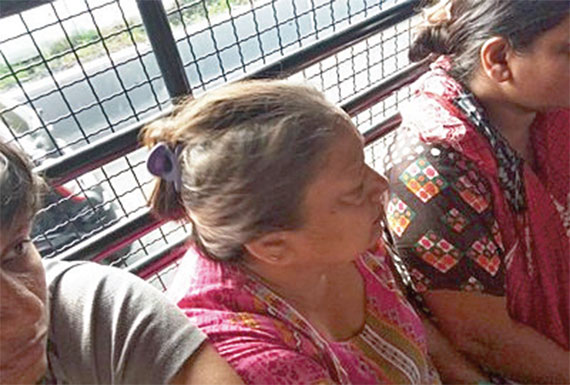
As evidence of the incident, Pakistani Christians showed off images, taken with mobile phones, of plywood doors bashed in and numerous Pakistani refugees, including a distraught elderly woman, being taken away in police vans.

Case filed against diocese for “illegal quarrying”

Some lay people have approached the Kerala High Court against “illegal quarrying” on the land of two parishes under Thamarassery diocese. The Catholic Laymen’s Association also wants the court to act against the state government for its failure to check the diocese’s bishop and vicars of Little Flower Church, Pushpagiri, and St George Church, Chundathumpoyil, both near Koodaranji in Kozhikode district.

Chinese Christians warned not to speak about persecution

As the Chinese government continues to suppress religious freedom, Christianity is facing the forcible removal of crosses and demolition of churches across the vast nation.

However, threatened by the authorities and fearing retaliation, some Catholic Church members dare not disclose what is happening to the outside world, causing a blackout of all news on the subject.

The communist regime began to severely suppress the Church in Henan province last year and since then the persecution has spread to the neighboring region of Hebei.

Church sources in the latter say they have been threatened by authorities and dare not reveal the true facts to the outside world.

The crosses of some churches in Hebei’s Handan Diocese were forcibly removed in May and since then all news about the demolition of churches has been blocked by authorities.

A local Catholic, who identified himself only as John, told ucanews.com that authorities had forbidden church members from discussing the incidents, warning they could expect to face reprisals.

He explained that the retaliation might include the demolition of more crosses and churches, even the detention of clerics. Such acts of retaliation had scared some pastors into silence, he added.