Bishop’s body exhumed on court order

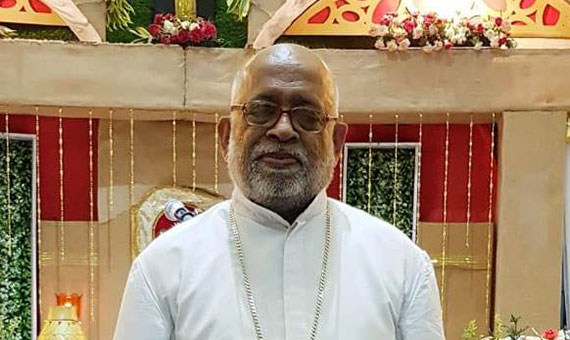
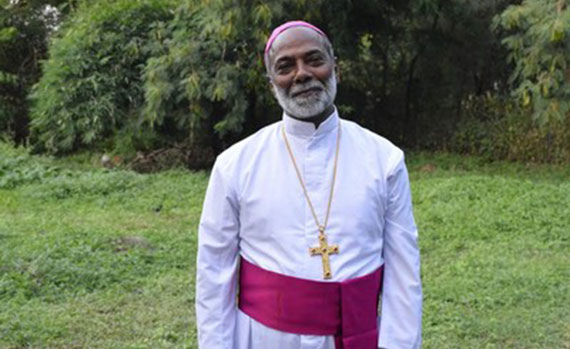
The body of Bishop Thomas Thennatt of Gwalior was on June 10 exhumed following a complaint from a Catholic woman who suspected foul play in his accidental death seven months ago.

“The police team took the body for medical examination and brought it back to the graveyard where it will be buried again,” Father Maria Stephen, the public relation officer of the Catholic Church in Madhya Pradesh, told Matters India.

“The body will be buried only after getting permission from the government authori-ties,” he added.

At the time of filing the report, the Church officials were waiting for permission from the government authorities for burial.

On May 11, Judicial Magistrate First Class Nidhi Neelesh Shrivastava, Pohari, district Shivpuri directed the police to investigate the circumstances that led to the prelate’ death and submit its report within a month.

The court order came following Dolly Theresa, a laywoman, approached the court saying she suspected foul play in the bishop’s death.

The woman alleged the diocesan authorities have restrained her from receiving Holy Communion from all churches in the diocese after she filed the petition.

“I had complained to the nuncio and the archbishop of Bhopal about the restriction imposed on me from the diocese, but to no avail,” she told Matters India.

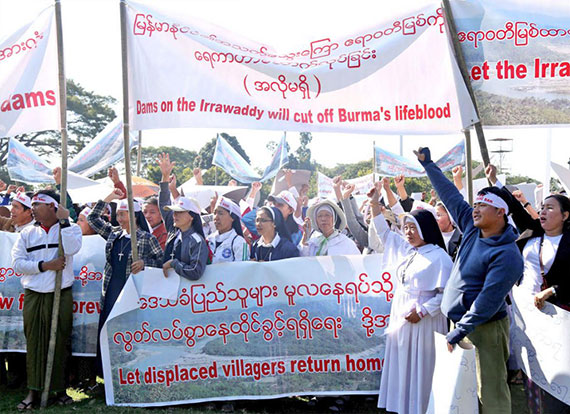
Myanmar Bishops demand shut down of Myitsone dam

In a rare move the Catholic bishops of India’s neighbour Myanmar have jointly demanded the complete shutdown of the China-backed Myitsone Dam on Irrawaddy river.

Charles Cardinal Maung Bo of Yangon and 18 bishops from 16 dioceses of Myanmar signed the statement after a biannual meeting held in Yangon.

In a statement released on 8 June 2019, they affirmed their constant effort to “engage in constructive dialogue with the government and all the stakeholders, firmly holding the belief that peace is possible and peace is the only way to effective nation building.”

The bishops pleaded for all dam stakeholders “to review the Myitsone Dam project in Kachin State and stop it permanently” for the sake of the country’s people.

“The River Irrawaddy runs through the heart of our nation nourishing millions of our people, flora and fauna with water for livelihood and life,” the statement said.

They also stressed people’s sentiments stating, “To the people of Myanmar, the history of River Irrawaddy is intertwined with our joys and our sorrows.”

The bishops feared the resumption of the mega dam would further displace thousands of people.

The bishops further claim that “Scientists have identified serious fault lines below the rivers’ course and building a dam might expose the lines to greater pressure and consequent mega disasters.”

They fear, “The promised economic benefits that are thought to come from the dam are no match for the social and ecological disturbances that will certainly come.”

The US$ 3.8 billion dam project on the Irrawaddy, Myanmar’s premier waterway, was being built to provide hydro-electricity that would be used almost exclusively in neighbouring China.

Indian nun receives honorary doctorate for her work with UN

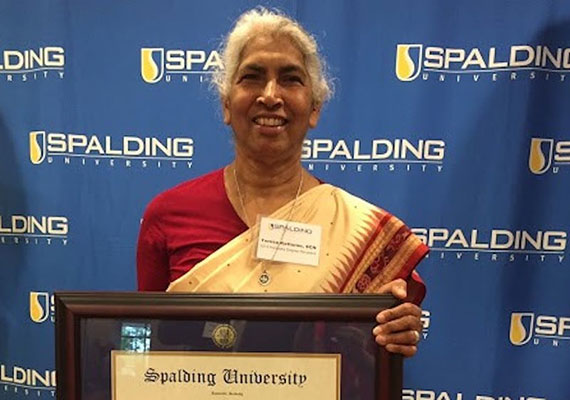
Spalding University, USA, has conferred an honorary doctorate on Indian nun, Sister Teresa Kotturan of Nazareth,  at the United Nations  for the Sisters of Charity Federation, on June 3.

Sister Teresa, a member of the Sisters of Charity of Nazareth, Kentucky, serves as the main representative for the Sisters of Charity Federation NGO at the UN.

In this role, Sister Teresa’s primary objective is to take to the global stage of the UN, the concerns of the 3,400 members of the Charity Federation and all those with whom and to whom they minister in 28 countries.

Agra archdiocesan priest appointed Gwalior bishop

Pope Francis on May 31 appointed Father Joseph Thykkattil of the Arch-diocese of Agra as the bishop of Gwalior in Madhya Pradesh.

Father Thykattil is currently the parish priest of St Peter’s Church in Rajasthan State’s Bharatpur.

This was announced at noon in Rome, corresponding to 3:30 pm in India, according to a press release from the Catholic Bishops’ Conference of India headquarters in New Delhi.

Modi visits blast-hit church during Lanka trip

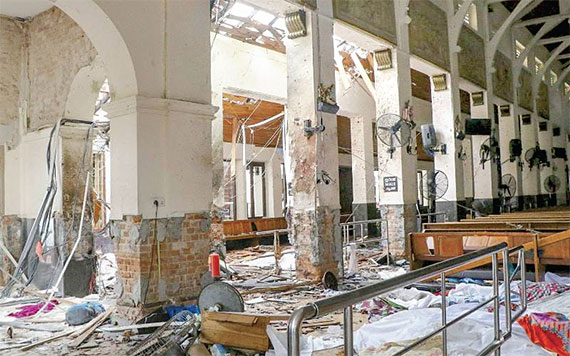
Indian Prime Minister Narendra Modi plans visited St Anthony’s Church, venue of the first bomb blast site in Colombo, during his official visit to the island nation on June 9. The Indian premier’s Sri Lanka visit was announced by Sri Lankan President Maithripala Sirisena on May 31, a day after he attended Modi’s swearing-in ceremony in New Delhi.

Modi will go to Sri Lanka after completing a trip to the Maldives, the Sri Lankan president told reporters.

“Prime Minister Modi’s visit is very important to us. We are neighbours and friends… We are eagerly awaiting his arrival,” Sirisena told a news conference on May 31 after his meeting with the Indian premier at Hyderabad House.

Sirisena also said that his country is eagerly waiting to welcome the Indian leader.

Earlier, India’s Ministry of External Affairs said in a statement that Modi warmly thanked Sirisena for his gesture of attending the ceremony and for his good wishes. “He conveyed his government’s continued commitment to further foster friendly bilateral ties with Sri Lanka,” it added.

Modi’s Sri Lanka visit would highlight that for India “neighborhood first policy” is paramount.

Sirisena also said that the visit will further strengthen bilateral ties between the two countries, particularly in areas of trade and commerce. India is currently cooperating with Colombo in the investigations being carried out on the Easter Sunday terrorist attack bombers and ISIS presence. New Delhi has also sent a team from its National Investigation Agency to Colombo to further assist them with the investigations and their findings.

Modi is expected to visit Maldives on June 7-8 which will be his first bilateral visit after becoming the Prime Minister for a second term. However there is no official statement regarding the matter.

Tight control for Chinese underground bishop’s funeral

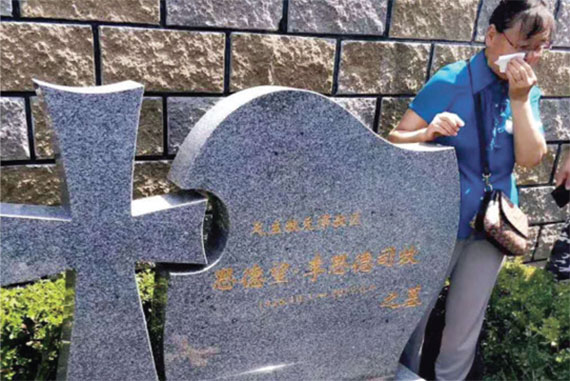
The funeral of a Chinese underground bishop was held under strict government control and underground priests were only allowed to attend part of it.

Bishop Stephen Li Side of Tianjin died at the age of 92 on June 8 after suffering a stroke in mid-May and being admitted to a hospital in Ji County.

Underground Coadjutor Bishop Shi Hongzhen, who will eventually succeed Bishop Li, was not allowed to attend his funeral on June 10. A source said Bishop Shi had been under 24-hour surveillance by local authorities who had restricted his movement.

State-sanctioned Tianjin Catholic Patriotic Association was put in charge of the funeral. When underground priests asked officials to allow Bishop Shi to hold the ceremony, the request was rejected because Bishop Li and Bishop Shi were not recognized by the government.

However, underground priests were allowed to organize a requiem Mass held by senior underground priest Father Yang Wanyuan at a funeral home, but laypeople and the taking of photographs were banned.

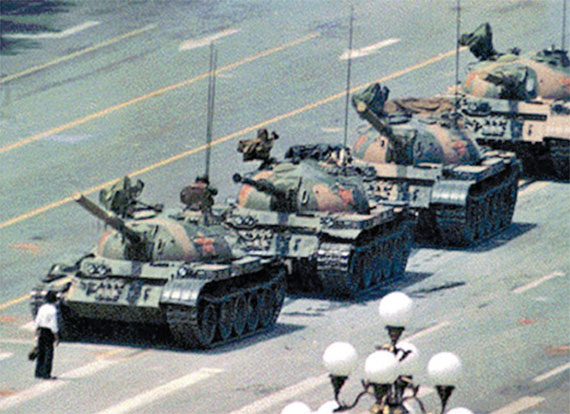
Tiananmen massacre 30 years on: Modern China remains Orwellian

Thirty years ago, China’s Communist Party regime revealed, yet again, its true character when it turned its guns on the people and sent in its tanks to crush peaceful pro-democracy protests in Tiananmen Square.

The People’s Liberation Army turned out to be neither on the side of the people nor for liberation as it slaughtered thou-sands who were simply seeking freedom. “We didn’t commit any crimes,” says Bob Fu, an exiled dissident and president of China Aid, who had joined the protests but left the square three days before the massacre. “We were just holding a peaceful protest.”

Three decades later, China, under President Xi Jinping, is undergoing the worst crackdown on human rights since the Tiananmen massacre. Hopes that China would gradually liberalize politically as it opened up economically have been dashed.

And the crackdown is on every form of freedom, from expression to religious belief, and in every corner of China’s territory, from Xinjiang to Hong Kong, and has taken on an unprecedented extraterritorial aggression, resulting in critics abroad being harassed, intimidated, threatened and, in the worst cases, kidnapped.

Furthermore, the Chinese regime has done everything possible to bury the truth of what happened in Tiananmen Square on June 4, 1989.

Christian couple to appeal death sentence in Pakistan

A Pakistani high court is to hear the appeal of a Christian couple who have been on death row since 2014 for insulting the Prophet Muhammad, their lawyers confirmed.

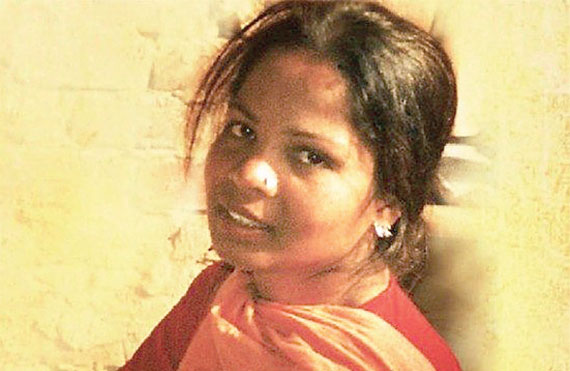
Lawyer Saiful Malook, who successfully defended Catholic Woman Asia Bibi and had her blasphemy conviction overturned in the Supreme Court, will also contest the charges against the couple in Lahore High Court.

Disabled Shafqat Emmanuel and his wife Shagufta Kausar were arrested in 2013 and sentenced to hang in Toba Tek Singh town of Punjab province in addition to a fine of 200,000 rupees (US $ 2,000) after being accused of sending text messages insulting the prophet. Sentencing went ahead despite it transpiring that a SIM card presented as evidence by police was bogus.

The case was filed by Mohammed Hussain, a prayer leader in Gojra who alleged that the couple had sent religiously offensive text messages to him and other Muslims.

The couple pleaded their innocence, maintaining they were illiterate and could not write the text messages that were written in English. They also said that the SIM card used to send the alleged messages was bought using Kausar’s stolen identity card.

Sri Lanka readies laws to curb hate speech, false news

Sri Lanka’s government will introduce laws to curb hate speech and false news that threaten ethnic reconciliation and national security, in the aftermath of Easter bombings that killed more than 250 people.

According to a government statement, the Cabinet decided to amend the penal code to include the penalty of five years in prison and $5,670 fine for those found guilty of distributing false news.

The ministers, at their weekly meeting on June 4, also decided to take legal action against hate speech. A penalty will be announced later, after Parliament approves amendments to the penal code.

Tensions have been running high in the Buddhist-majority Indian Ocean island nation since seven suicide bombers struck two Catholic and one Protestant church and three luxury hotels on April 21.

The Islamic State group claimed responsibility for the attacks, which were carried out by a local radicalized Muslim group known as National Thowheed Jammath.

In the wake of the attacks, dozens of shops and homes belonging to minority Muslims have been burned. Muslims have been harassed in public places and subjected to hate comments.

Mob attacks on the community have killed at least one. Police have arrested several dozen suspects, whose court cases are pending.

Lankan priests want officials prosecuted for Easter massacre

Catholic priests have filed a petition with the Supreme Court of Sri Lanka targeting the government for failing to act on warnings that could potentially have prevented the Easter Sunday bombings by Islamic extremists.

The priests have accused 13 public officials, including Prime Minister Ranil Wickremesinghe, of dereliction of duty and violating fundamental human rights, including Catholics’ right to freely practice their religion.

A local group of radicals affiliated with the so-called Islamic State (IS) bombed three churches and three luxury hotels on April 21, killing 253 people and injuring more than 500.