Catholic bishops welcome Ethiopia’s first woman president

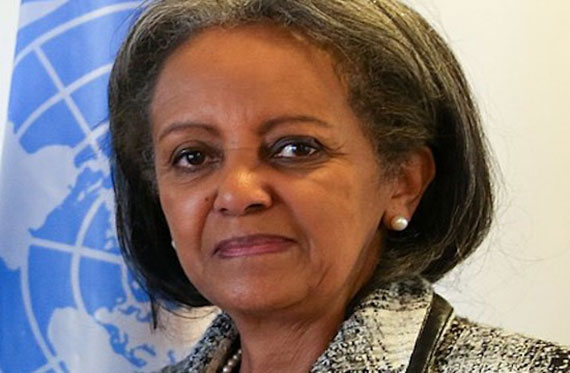
Catholic bishops in Ethiopia’s have welcomed the election of the nation’s first female president, Sahle-Work Zewde, and said they were pleased that women are getting their rightful place in the country.

The Catholic Church in Ethiopia is optimistic that Zewde’s election will inspire women and girls to reach their full potential as influential actors in society, Vatican News reported.

Zewde, 68, had earlier served as Ethiopia’s representative to the United Nations, and as director-general of the U.N. offices in Nairobi met Pope Francis in 2015. “The Ethiopian Catholic Church believes that President Sahle-Work Zewde, who has years of impressive diplomatic experience, will further strengthen the leading role Ethiopia is playing in the region and further enhance the soft power of the country at an international level,” according to a statement from the Ethiopian Catholic Secretariat.

People unable to give are slaves to possessions, pope says

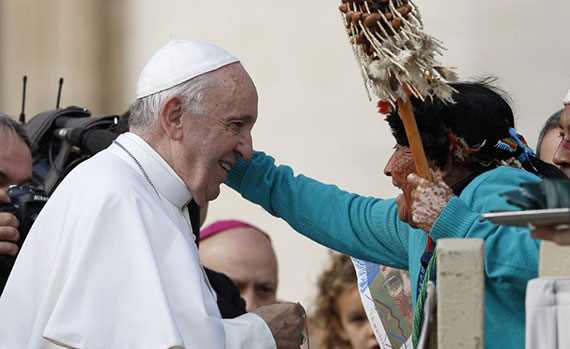
Life is for loving, not amazing possessions, Pope Francis said. In fact, the true meaning and purpose of wealth is to use it to lovingly serve others and promote human dignity, he said on Nov. 7 during his weekly general audience. The world is rich enough in resources to provide for the basic needs of everybody, the Pope said.

“And yet, many people live in scandalous poverty and resources – used without discernment – keep deteriorating. But there is just one world! There is one humanity.”

“The riches of the world today are in the hands of a minority, of the few, and poverty – indeed, extreme poverty, and suffering – are for the many,” he told those gathered in St Peter’s Square.

The Pope continued his series of talks on the Ten Commandments, focusing on the command; “You shall not steal,” which reflects respect for other people’s property.

However, he said, Christians should also read the commandment in the light of faith and the church’s social doctrine, which emphasizes the understanding that the goods of creation are destined for the whole human race.

The Catechism of the Catholic Church teaches that the “primordial” universal destination of goods does not detract from people’s right to private property, he said.

However, the need to promote the common good also requires understanding and properly using private property.

“No one is the absolute master over resources,” he said, which reflects the “positive and wider meaning of the commandment, ‘Do not steal.’

“Owners are really administrators or stewards of goods, which are not to be regarded “as exclusive to himself but common to others also, in the sense that they can benefit others as well as himself,” the Pope said, citing the catechism.

OCEANIA/SOLOMON ISLANDS – Historic event for the diocese of Auki

Msgr Peter Houhou is the first native Solomon Islander to be appointed as Bishop in the Solomon Islands. As Agenzia Fides learns, the diocese of Auki, Malaita province, has in fact been the protagonist of a historical event: in the Cathedral of St Augustine the ordination of the first Catholic Bishop of the nation was celebrated in recent days. An important step forward for the local church.

The celebration was presided over by Abp Kurian Mathew Vayalunkal, Apostolic Nuncio of Papua New Guinea and Solomon Islands and concelebrated by Abp Christopher M. Cardone OP, of the Archdiocese of Honiara and Abp Douglas Young SVD, of the Archdiocese of Mount Hagen, in Papua New Guinea.

“The Holy Mother Church entrusts you with three important responsibilities: teaching, sanctifying and governing the people of God,” said Archbishop Vayalunkal, addressing the new Bishop during the homily. The Apostolic Nuncio also thanked Msgr Houhou’s family of origin and the whole local community “for the precious gift of this son” and invited everyone to “pray and support Bishop Houhou”.

Pope honours late clergy with parable of 10 bridesmaids

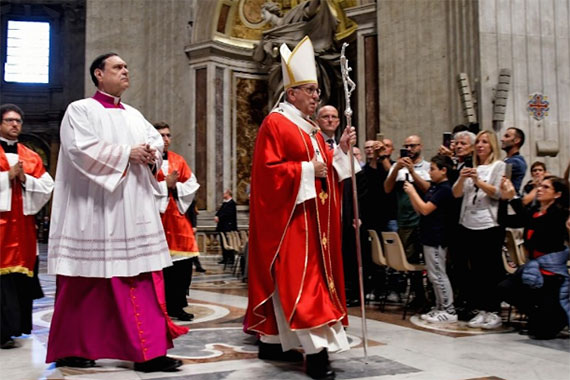
Pope Francis arrives to celebrate a Mass for late cardinals and bishops at St Peter’s Basilica in the Vatican on Nov. 3.

For every Christian, but especially for those called to ministry, God’s gift of life is a call to serve others, Pope Francis said at a memorial Mass for bishops and cardinals who have died in the past year.

“The meaning of life is found in our response to God’s offer of love. And that response is made up of true love, self-giving and service,” the Pope said on Nov. 3 during Mass at the Altar of the Chair in St Peter’s Basilica.

The memorial Mass is an annual fixture on the Pope’s calendar for November, the month the church dedicates to remembering the dead.

The Vatican said that over the last 12 months some 154 bishops and nine cardinals, including U.S. Cardinal Bernard F. Law, have passed away.

“As we pray for the cardinals and bishops who have passed away in this last year,” the Pope said in his homily, “let us beg the intercession of all those who lived unassuming lives, content to prepare daily to meet the Lord.” For the gospel reading, he chose the parable of the 10 bridesmaids and their oil lamps from Matthew 25.

Ugandan archbishop asks government to collect taxes for Church

The Catholic archbishop of Kampala has requested the Ugandan government to deduct 10 percent from the salary of all Catholic government workers and forward the funds to the Church

The issue of tithing, namely the financial contribution of a tenth of the income of a member of the faithful, is often debated in African churches.

Archbishop Cyprien Kisito Lwanga of Kampala has now requested the Ugandan government to deduct 10 percent from the salary of all Catholic government workers and forward the funds to the Church as a means of ensuring its financial autonomy.

Jesuit youth movement marks 12 years in Bangladesh

Magis Bangla, the Bangladeshi chapter of an international Catholic youth movement sponsored by the Society of Jesus (Jesuits), is marking its 12th anniversary in the country.

The Nov. 8-10 celebrations at Jesuit-run Novojyoti Niketan (Home of New Light) in Gazipur district near capital Dhaka include a gathering of more than 150 current and former members of the movement, meditation, formation sessions and cultural programs. “Go for the Greater” is the theme of the celebrations.

Over the years, Magis Bangla has aimed to transform and transmit Christian values and spirituality with cultural and intellectual foundations for Bangladeshi Catholic youth, said Father Pradeep Perez, the movement’s coordinator.

“Our aim is to embody and present Christian life and living in an alternative and extraordinary way, which breaks away from traditional classroom formation but is close to our daily living of life. Our formation is based on the teachings of Jesus with an emphasis on knowledge and culture,” Father Perez told ucanews.com.

Year-long Magis programs including youth camps, a carol and photography competition, musical drama on the life of Jesus, and celebrations of national and cultural festivals encompass the true spirit of Christian values, he said.

“Magis wants young people to have a better life, a life in fullness, for the greater glory of God,” Father Perez added.

Magis Bangla members say the movement has changed their lives for the better.

“I have made some great friends since I joined the movement more than four years ago. Magis has taught me essential values including equal respect for everyone including women,” photographer Amit Leonard, told.

Manila welcomes impunity index ranking on press freedom

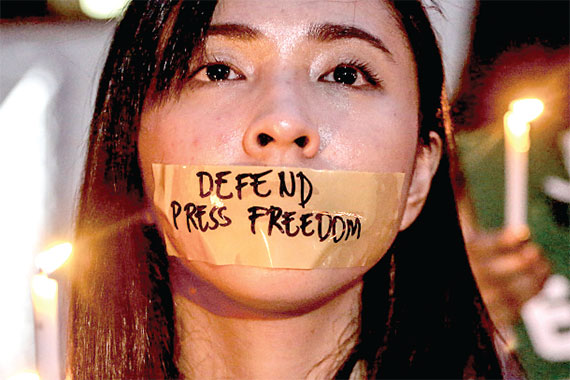
The Philippines welcomed what officials described was the country’s “improved ranking in this year’s Global Impunity Index on press freedom based on a report by the New York-based Committee to Protect Journalists (CPJ). The Global Impunity Index report, which was released in time for the observance of International Day to End Impunity for Crimes against Journalists on Nov. 2, calculates the number of unsolved murders of journalists as a percentage of each country’s population.

The Philippines ranked fifth this year on an index topped by Somalia followed by Syria, Iraq and South Sudan. It remains ahead of Afghanistan in sixth spot, followed by Mexico, Colombia, Pakistan, Brazil, Russia, Bangladesh, Nigeria and India. Joel Sy Egco, head of the government’s Presidential Task Force on Media Security welcomed the Philippines’ “improved status,” saying that it was “an interesting development.”

“We note with optimism that the Philippines, while remaining at its 2017 ranking as fifth, was noted to have improved its status,” said Egco. From 2011 to 2014, the Philippines ranked third on the list before improving to fourth in 2015 and 2016. Last year, the country moved into fifth place.

The CPJ report noted that at least 324 journalists have been killed worldwide in the past decade with 85 percent of the cases remaining unsolved.

“The fact that impunity continues to thrive in many of these countries year after year is a disturbing sign of how deeply rooted the problem is,” according to Elisabeth Witchel, author of the report and CPJ’s consultant for the Global Campaign Against Impunity.

The report noted the ratings got worse in Syria, Mexico, Brazil and India but improved in the Philippines, Somalia, Iraq, South Sudan, Pakistan, Russia and Nigeria.

Sri Lankan Church urges nation to resolve political crisis peacefully

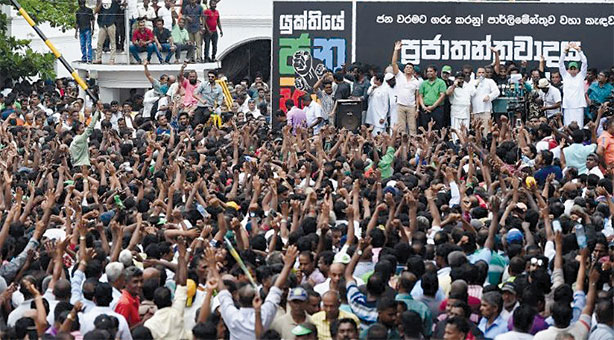
The Catholic bishops of Sri Lanka are calling on the nation’s government, political parties and the people to resolve the political and constitutional crisis peace-fully, keeping in mind the good of the people. The political turmoil engulfed Sri Lanka after Sri Lankan President Maithripala Sirisena sacked Prime Minister Ranil Wickremesinghe and swore in ex-president Mahinda Rajapaksa to replace him.

Wickremesinghe said his sacking was illegal and he maintained that he was still prime minister, leading to a standoff between his party and labour unions loyal to Sirisena.

The following day, Sirisena suspended Parliament until November 6, in an apparent move to give Rajapaksa time to muster enough support to survive any no-confidence vote.

“Everyone should keep in mind that, if there is instability in the country, it is the people who suffer,” said a statement signed by Bishop Winston S. Fernando of Badulla, the President of the Catholic Bishops’ Conference of Sri Lanka. “We sincerely appeal to all political parties to put aside their interests and respect the Constitution of the Republic of Sri Lanka to resolve the ongoing conflict,” Bishop Fernando wrote in the statement which he forwarded to the Vatican’s Fides news agency.

Two Chinese priests placed in detention

Two priests of the under-ground Catholic Church in China have been detained by authorities in Hebei Province, a source told.

The priests from Xuanhua Diocese are Father Su Guipeng and Father Zhao He.

The source said Father Zhao, who serves in the Dongcheng Catholic Church, was taken away by the personnel of the United Front Work Department of Yan-gyuan County on Oct. 24.

Seven unidentified people who went to the church said that they would take the priest to talk to local government officials, but the priest had not returned.

The source said that the priest had been placed in detention at a hotel. His mobile phone had been confiscated and he was under constant guard.

The priest was reportedly asked to study newly revised regulations on religious practice and to recognize the state-controlled Chinese Catholic Patriotic Association (CCPA).

The government officials were said to have warned that the Catholic Church in China was required to be autonomous from the Vatican. This was not withstanding a provisional Vatican-Beijing agreement signed two months ago, covering sensitive issues such as the appointment of new bishops in China.

Zen presents letter to pope warning him on China

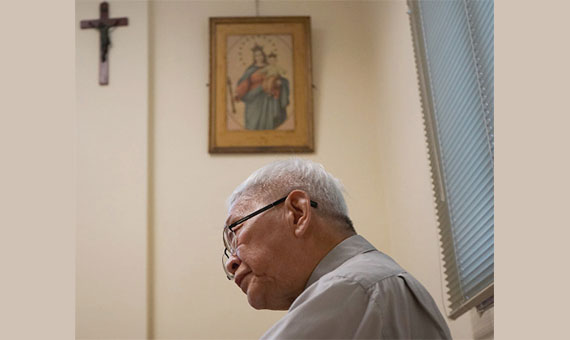
The Hong Kong emeritus bishop on Nov. 8 told ucanews. com that underground clerics have cried to him since the Vatican-China deal on the appointment of bishops.

“They said officials have forced them to become open, to join the Chinese Catholic Patri-otic Association and to obtain a priest’s certificate with the reason that the Pope has signed the Sino-Vatican provisional agreement,” said Cardinal Zen.

He said some parts of the agreement had not been made public, meaning that brothers and sisters of the underground church did not know what they should do. “Some priests have escaped, and some have disappeared because they do not know what to do and are annoyed. The agreement is undisclosed, and they do not know if what officials say is true or not,” he said.

Cardinal Zen said the China Church was facing new persecution and the Holy See was helping the Chinese Communist Party suppress the underground community.

He flew to Rome from Oct. 29 to Nov. 1 to hand his letter to the Pope. “I want to talk to the Pope again and hope he will consider again, but this may be the last time,” he said.

In his letter he described how the underground church had seen money confiscated, with clergy having relatives disturbed by the authorities, going to jail or even losing their lives for the faith.

“But the Holy See does not support them and regards them as trouble, referring to them causing trouble and not supporting unity. This is what makes them most painful,” said Cardinal Zen.

The letter also stated that the Chinese Church did not have the freedom to elect bishops.

“The pope has said that members of the Chinese Church should be the prophets and sometimes criticize the government. I feel very surprised that he does not understand the situation of the Chinese Church,” Cardinal Zen said.

On Sept. 26, four days after the provisional agreement was signed, the pope wrote a message to Chinese Catholics and the universal church explaining the reasons for signing the agreement: to promote the proclamation of the Gospel, and to establish unity in the Catholic community in China.

In addition, after his pastoral visit to Lithuania, Latvia and Estonia from Sept. 2-25, the pope told the media on his flight home that people should “pay tribute to those who suffered for faith,” especially in those three countries brutally trampled by the Nazis and the Communist Party.

Cardinal Zen told ucanews.com that the pope’s words made him feel that “he does not seem to know that their history is also the history of the Chinese Church and the current situation.” He suspects the pope was deceived by people around him who did not tell him the real situation faced by the Chinese church.

Cardinal Zen criticized the Vatican secretary of state, Cardinal Pietro Parolin, who negotiated with the Chinese government.