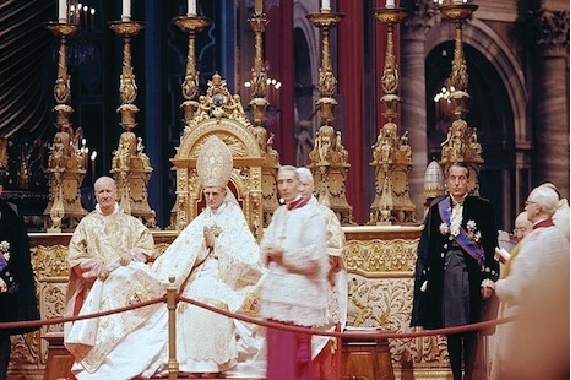
IS THE CANONIZATION OF PAUL VI A DESIRE TO REVIVE A MESSAGE?

With the Holy See shortly set to announce the canonization of Pope Paul VI, this two-part series  explores the phenomenon of recent popes being canonized.

Some popes who have made their mark on history, like Leo XIII, the pope of Rerumnovarum, Benedict XV, the pope of the Great War, or Pius XI, who denounced totalitarianism, are not the subject of any beatification process. There is indeed a slightly different situation with the popes of the Second Vatican Council and the post-Council. By the end of this, the canonization of John XXIII had been sought by the Council Fathers, who even wanted to do this by acclamation.

John Paul II, of course, had been the subject of a “popular canonization,” from the moment his death — recall the slogan “Santo subito.”

As for Paul VI, he would still have been keen to canonize John XXIII, who initiated the Council, and not the one who was its “great helmsman,” to use Pope Francis’ term.

And even if the canonization of these three popes occurred in quick succession, a long process was involved in each case before they were declared saints.

The decision whether to canonize a pope is always a question of ecclesial policy, related to the current pontificate.

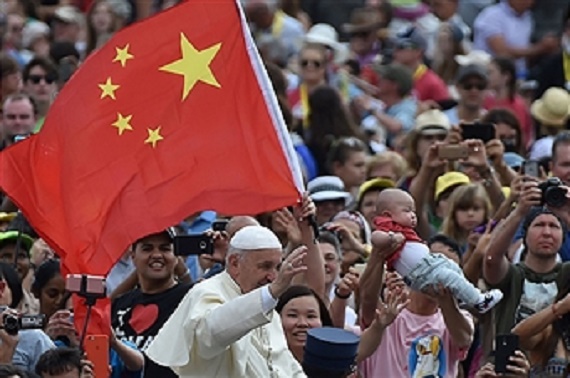
In the current case, I believe that the canonization of Paul VI marks, on the part of Pope Francis, a desire to revive a message, which is always based on a certain reading of the pontificate.

Of course, we canonize a person, not a pontificate. And all the popes that we are talking about here were also remarkable personalities. But it is still difficult to separate the two. As such, it can be said that the canonization of a pope is probably not quite comparable to that of a simple Christian.

EGYPT: BEFORE MY FATHER DIED, HE GAVE ME THE CHURCH KEYS

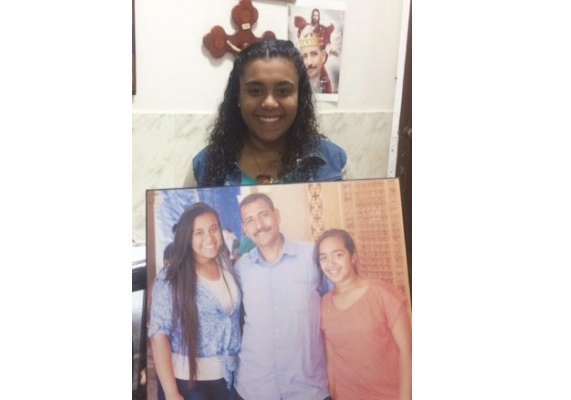
A 13-year-old Christian, who held her dying father in her arms moments after a Cairo suicide bomb attack by Daesh (ISIS), has spoken about her heartbreaking experience.

Marian Nabil Habib told Aid to the Church in Need about the “martyrdom” of her father, Nabil Habib, who was among 29 people killed by Daesh extremists in the capital on 11 December 2016.

Mr Habib, who was 48, was working as a security guard at St Peter and St Paul’s Coptic Church, also known as El- Botroseya Church, where bombing took place. Describing her last moments with her father.

The 15-year-old teenager recalled feeling panic and confusion immediately after the explosion, Miss Habib said: “I rushed outside and found people running in all directions, screaming hysterically. There was a scene of complete destruction, but I still I did not know what had happened. I asked about my father but nobody knew where he was. I continued looking for him, then, at the entrance of the church, I found my father lying on the ground and bleeding heavily from his head.” “I have joined the church choir, which gives me inner peace, because it is one of the things that bring me closer to God.”

CARD.MARX SAYS PRIESTS CAN BLESS GAY COUPLES

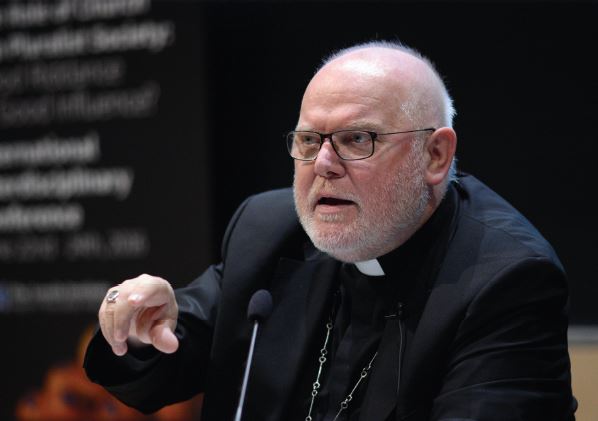
The president of the German bishops’ conference has said there is scope for priests to bless same-sex couples in individual cases, but it is not possible to make a general rule governing the practice.

In the “Interview of the Week” on Bavarian radio (Bayrischer Rundfunk BR) on 2 February, Cardinal Reinhard Marx said that new circumstances and new insights posed challenges the Church must rise to. “We cannot simply change the situation in which people live nor the world in which we live. We can deplore them but what help is that?” What we can do, and what the Pope is encouraging us to do, is change the way we treat people, he said. “We must take their relationships, their hopes but also their failures and the breakdowns they have experienced, more seriously.”

He continued: “There are things that it is not possible to regulate.” However, the fact that a general ruling was not possible did not mean one could do nothing. How a priest accompanied a homosexual couple pastorally and liturgically must be left to the individual priest, he said.

BISHOP LAMENTS AMERICAN CATHOLICS’ LACK OF ‘MORAL CONSCIOUSNESS’ ON RACE

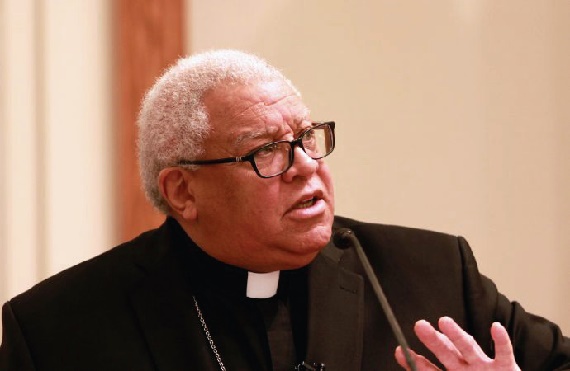
American Catholics have “shown a lack of moral consciousness on the issue of race,” Bishop George Murry told attendees at the 2018 Catholic Social Ministry Gathering. While he believes America has made progress on the issue of race relations, he said that “recent events in our country have questioned exactly how far we’ve come.” Speaking on February 4 to more than 500 Catholic social activists who are gathered in the nation’s capital for a four-day conference and advocacy sessions on Capitol Hill, Murry chronicled the development of the Church’s position on slavery, noting that previously the Church considered there to be “just and unjust forms of slavery.”

THE ROW SHAKING THE POLISH CHURCH

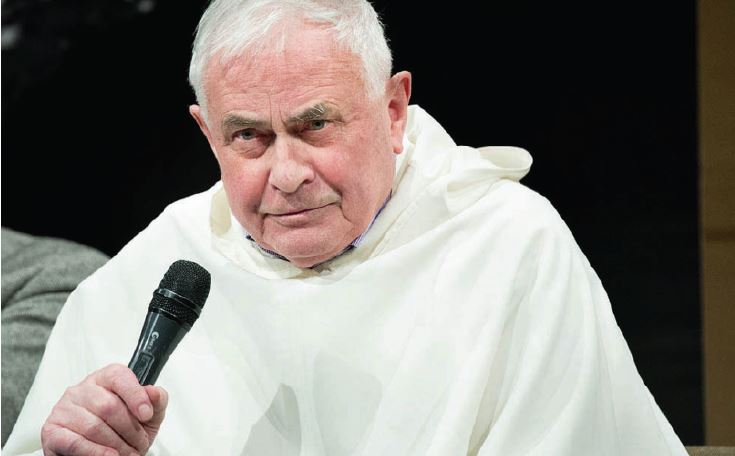
When an eminent Polish Dominican wrote a scathing attack on his country’s government and Church in month of January, it brought to a head long simmering frustrations.

The occasion for Fr Ludwik Wisniewski’s on slaught, in the weekly Tygodnik Powszechny, was the publication of new data confirming a decline in Mass attendance in this staunchly Catholic country. But it gained a political edge by coinciding with criticisms of the Church’s ties with Poland’s centre-right government, which faces European Union sanctions over a controversial reform programme.

The critique by the 81-yearold priest, dramatically titled Oskarzam (I accuse), was significant because it appeared in a respected Catholic publication and was written by a much-decorated veteran of the Church’s communist era struggle for human rights.

“Before our eyes, Christianity is dying in Poland while our bishops are sadly silent,” Fr Wisniewski wrote. “You can now spit on people, deride and trample on them, groundlessly accusing them of wickedness, even crimes while invoking the Gospel, decking yourself out as a defender of Christian values and making pilgrimages to Jasna Góra [Poland’s most famous Marian shrine].”

HONG KONG CATHOLICS TO THE BISHOPS OF THE WORLD: STOP THE POSSIBLE AGREEMENT BETWEEN CHINA AND THE HOLY SEE

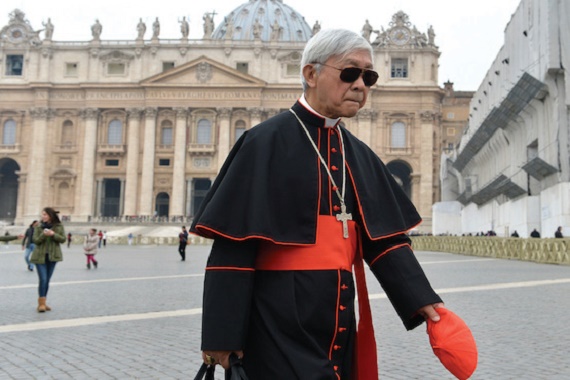
“An irreversible and regrettable mistake”: this is how a group of Catholic personalities in Hong Kong and in the world defines the possible agreement between China and the Holy See on bishops’ nominations, reported by some media as “imminent.” In an open letter addressed to the bishops of the world they ask them to ask the Holy See to stop the agreement and to re-set it with precise guarantees on the pontiff’s freedom to appoint bishops and with guarantees of true religious freedom for Christians and society. Among the signatories are academics, lawyers, human
rights activists.

The text of the petition said: “Christ governs her through Peter and the other apostles, who are present in their successors, the Pope and the college of bishops” (Catechism, 869). All bishops must therefore be appointed by the Successor of Peter — the Holy Father, the Pope. And they must be men of moral principles and wisdom. The government must play no role in the selection process…. Yet, the seven illicit “bishops” were not appointed by the Pope, and their moral integrity is questionable. They do not have the trust of the faithful, and have never repented publicly. If they were to be recognized as legitimate, the faithful in Greater China would be plunged into confusion and pain, and schism would be created in the Church in China.”

“ In addition, the Communist Party has a long history of breaking promises. We are worried that the agreement would not only fail to guarantee the limited freedom desired by the Church, but also damage the Church’s holiness, catholicity, and apostolicity, and deal a blow to the Church’s moral power.” The signatories ask “Please rethink the current agreement, and stop making irreversible and regrettable mistake.”

LOURDES RECOGNISES ITS 70TH MIRACLE AFTER FRENCH NUN INEXPLICABLY HEALED

The Marian sanctuary at Lourdes has recognised the sudden healing of a French Franciscan nun as the 70th confirmed miracle after she overcame decades of disability following a pilgrimage there.

Sister Bernadette Moriau, 78, developed nerve damage at the base of her spine in the late 1960s, underwent four operations but gradually became an invalid by 1988. She had to take regular doses of morphine and wear a leg brace to restrain a deforming foot. A doctor suggested a pilgrimage to Lourdes in 2008 and she went without great expectations. “I prayed for the sick, but I didn’t ask for healing — it never occurred to me,” she said in a video distributed by her diocese of Beauvais, north of Paris.

Back at her convent a few days later, she felt called by a voice to get up and walk unaided, which she did. She said her surprised doctors found no trace of her ailment afterwards.

Before her case went to the International Medical Committee of Lourdes, she underwent batteries of tests and examinations, which were studied by committees of the Lourdes Medical Bureau in 2009, 2013 and 2016. 2017 was a bumper year for the Shrine of Fátima with 9.4 million pilgrims visiting, many of them present at the celebrations for the Centenary of the Apparitions presided over by Pope Frances.

CHINESE BISHOP CONFIRMS VATICAN SACKED HIM IN BEIJING

Sacked Chinese Bishop Peter Zhuang Jianjian, who is at the centre of the latest storm around the Holy See’s controversial talks with China’s communist government, has broken his silence on being called in to Beijing by Vatican diplomats.

The confirmation of the Vatican’s role in replacing two bishops originally appointed Rome, with two bishops who were appointed by the Communist Party controlled Catholic Patriotic Association including one who has been excommunicated by Rome has continued to rock China’s so-called under-ground Catholic Church.

“But these acts, in fact, are scarifying the underground community for the benefit of half the China Church, which is the open community, not the whole,” said a researcher who does not want to offend the Vatican.

GermanTrappists who went Old Rite close monastery for lack of novices

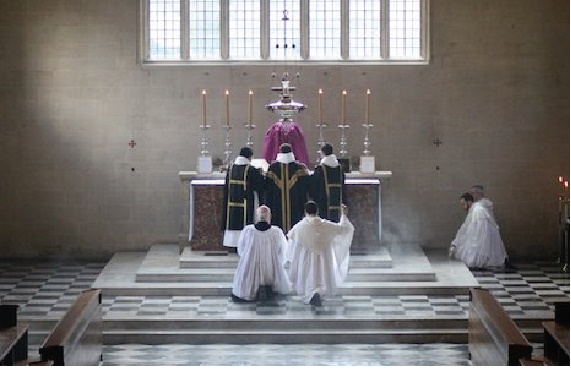
Germany’s only Trappist monastery — which attempted to revert to the gruelling, pre-Vatican II monastic schedule and worshipped exclusively in the Tridentine Rite — is to be closed by the end of the year.

The Vatican congregation that deals with religious orders said Mariawald Abbey, located in Westphalia near the today’s border with Belgium, had dwindled to just ten monks. With an average age of 84, the congregation said the monks could no longer look after themselves.

Mariawald was founded in the 15th century and, like other Benedictine orders of strict observance, had adapted to the monastic reforms implemented in the wake of the Second Vatican Council (1962-65).

WHY ARE YOUNG NIGERIANS ABANDONING THE CHURCH FOR PENTECOSTALISM?

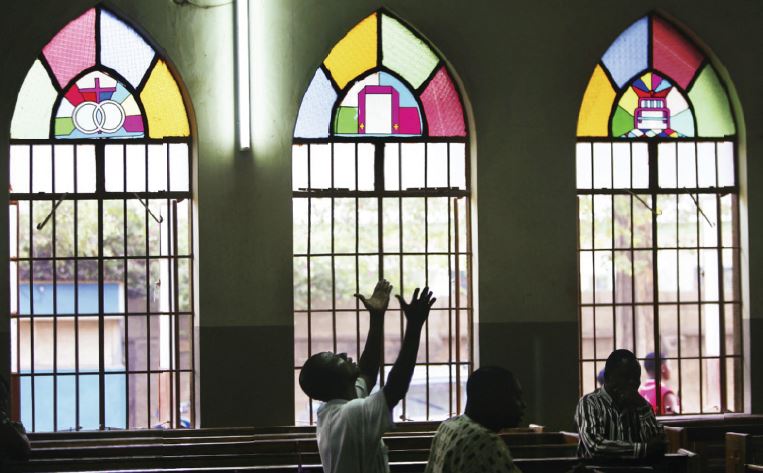
Susan Onyedika was born 22 years ago into a Catholic family in Lagos, Nigeria’s bustling commercial city. When she was a child, she took part in the Block Rosary Crusade (where an image of the Virgin Mary visits family homes), as well as catechism classes in her parish. But as she matured into a teenager she started having doubts about the faith she had practised from childhood. In her secondary school, she met Pentecostal Christians and began to compare their beliefs with those of Catholics.

“I needed more spiritually,” she tells me. “I needed to understand the Scriptures. They [the Catholic Church] don’t break down the Bible for you. They don’t pray the way most Pentecostals pray.

“I also had issues with praying through Mary because I feel that you can reach God directly, you can talk to him directly. You don’t have to go through someone to intercede for you.”

Susan joined her secondary school fellowship without telling her parents or siblings. “They didn’t know I joined the Pentecostals,” she remembers. “They were not aware. Just my close friends were.”

With 186 million people, Nigeria is Africa’s most populous country. The population is evenly distributed between Christians in the south and Muslims in the north. Of the roughly 80 million Christians, around 20 million are nominally Catholic. But many of the baptised are leaving the Church in their teens and twenties for Pentecostal denominations.

Throughout the 20th century, the Catholic, Anglican and Methodist churches were dominant. But as the century came to an end, there was an explosion of Pentecostal and Evangelical churches, such as the Redeemed Christian Church of God, Living Faith Church Worldwide, Deeper Christian Life Ministry and Christ Embassy.