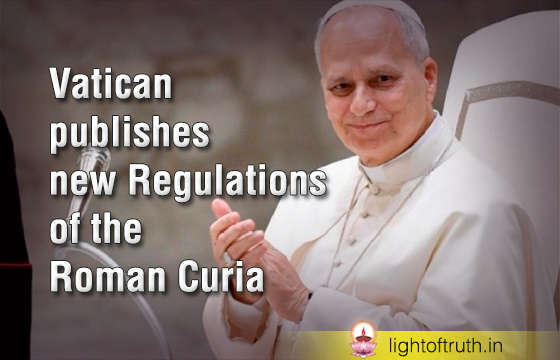
The new General Regulation and Personnel Regulation of the Roman Curia, promulgated by Pope Leo XIV and set to take effect on 1 January 2026, signal a significant recalibration of how the Church intends to govern itself from within. Wrapped in the language of pastoral service and missionary identity, the two documents amount to a blueprint for a more accountable, transparent, and professionally structured central administration.
Although presented as provisional — ad experimentum, for a five-year period — the reforms are, in substance, anything but experimental. They reflect a clear continuity with the major constitutional overhaul initiated by Pope Francis in 2022 through Praedicate Evangelium, a text that reconfigured the architecture of the Curia but left its internal operating rules to be rewritten by a future pontificate. Leo XIV, elected on 8 May as the late Francis’ successor, has now taken up that unfinished work.
The new General Regulation applies to every organism forming the Curia: the Secretariat of State, the dicasteries, the tribunals, and the economic bodies entrusted with the Vatican’s finances. It creates a more coordinated administrative culture, beginning with something as banal — yet long overdue — as shared timetables. A minimum 36-hour work week is now mandated for all Curial institutions, coupled with regular meetings convened by the Secretary of State to harmonize their activities. It is a small but symbolic gesture toward a Curia that is meant to function as a single service body rather than a cluster of autonomous fiefdoms.
Where the regulations take a sharper tone is in matters of personnel. In a city-state often accused of opaque hiring practices and internal loyalties, the new rules impose strict barriers against nepotism. No office may employ close relatives of current staff, and recruitment is restricted to candidates whose professional competence is matched by a lived commitment to the Catholic faith, sound moral character, and — explicitly — a clean criminal record. These criteria apply to all staff, including the increasing number of lay men and women who now hold technical and administrative posts.
Leadership appointments, from prefects of dicasteries to their secretaries, remain the prerogative of the Pope, but the regulations codify a five-year term for such roles, reinforcing the reform-era principle that no Curial office is held indefinitely. Lay employees, meanwhile, will enter on probationary contracts lasting at least one year and no more than two, another step intended to professionalize a workforce historically shaped more by ecclesiastical custom than by modern personnel practices.
Transparent governance — a hallmark of Francis’ pontificate — receives particular emphasis. Every senior official must submit a biennial declaration confirming that he or she holds no assets in offshore financial centres and no stakes in companies that contradict Catholic social teaching. The omission of such declarations, or the submission of false ones, is now classified as a serious disciplinary offense.