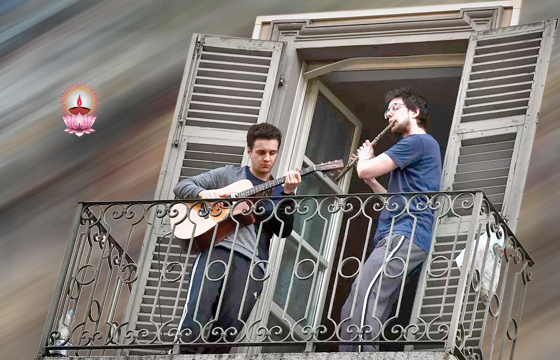
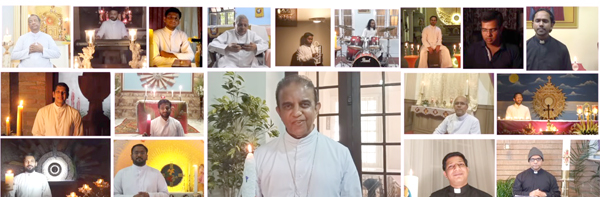
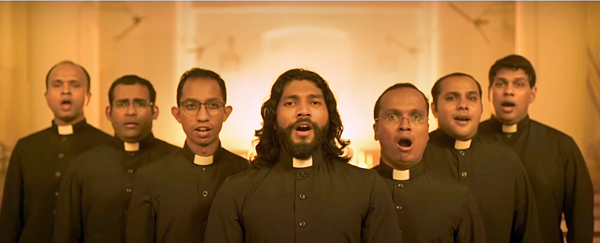
We love music and dance, and our home reflects it, even if there is a battle between our preferences. There’s something about a song that lifts our spirits in difficult seasons. We’ve seen clips of Italians standing on their balconies, belting out folk songs and operas—and no doubt we’ve seen a few parodies, too! And also, we have seen many priest’s band, nun’s dance and many domestic performances these lockdown days. Undoubtedly those were mind uplifting emotions indeed.
Sociologist Randall Collins argues that humans are seekers of something he calls “emotional energy,” which he defines as a “feeling of confidence, courage to take action, [and] boldness in taking initiative.” Gaining more emotional energy, according to Collins, is the goal of social interaction. Researchers James Wellman Jr., Katie E. Corcoran, and Kate Stockly-Meyerdirk argue that what Collins calls “emotional energy” may “primarily represent oxytocin,” a chemical associated with well-being. When “oxytocin levels rise, stress levels decrease and the person experiences feelings of love, calmness, trust, and motivation to interact socially.” There are a few human activities that provoke a rise in oxytocin levels, but most of them involve physical touch, something societies around the world are in short supply of during the COVID-19 crisis.
 So what do we do without physical touch and social interaction? We sing. According to the same trio of researchers, studies show that “after a group singing session, oxytocin increased significantly for singers.” Singing makes us feel better. Science, as it turns out, agrees.
So would the ancient Hebrews. In their songbook, the Psalms, they lift up praise and petitions, laments and sorrow, and calls for God’s attention and action. But they were not simply singing to feel better, as an act of ritual catharsis. In prayer and in song, they lifted their souls to God, their covenant God—the sole sovereign over creation who had bound himself to them in love. We learn from the ancient Hebrews that the power of singing is not simply in the song but in who you are singing to.
Centuries after the Psalms were penned, two traveling teachers were arrested, beaten, and thrown in prison. They were the first generation of followers of Jesus the Messiah, convinced that he was the Son of God, indeed, that he was Israel’s God who had come to rule as king. Crucified by the Romans, he had been raised up and made to be the Lord of the whole world. Chains in a Roman prison in Philippi could not quell the surge of their hope. And so it was that Paul and Silas, at midnight when the hour was dark and the outlook was bleak, began to sing. Christians sing like it’s morning even while it’s midnight in the world.
Singing became a signature of the early Christian communities. Several decades after Paul’s death, a regional governor named Pliny wrote to Emperor Trajan that Christians would gather on a particular day of the week and sing hymns to Christ as to a God. In weekly worship and in dark prison cells, when hearts are buoyant and when hope seems lost, Christians sing.
Christians don’t sing simply because we’re happy; we sing because we are people of hope. In the face of fear, in the shadow of death, in the midst of suffering and pain, we stand tall. We are shaken but not moved, pressed but not crushed, down but never out. Christians are those who believe that because Jesus was raised from the dead, the worst day will not be the last day. So we sing. And we welcome you to sing along.