- Augustine Pamplany CST
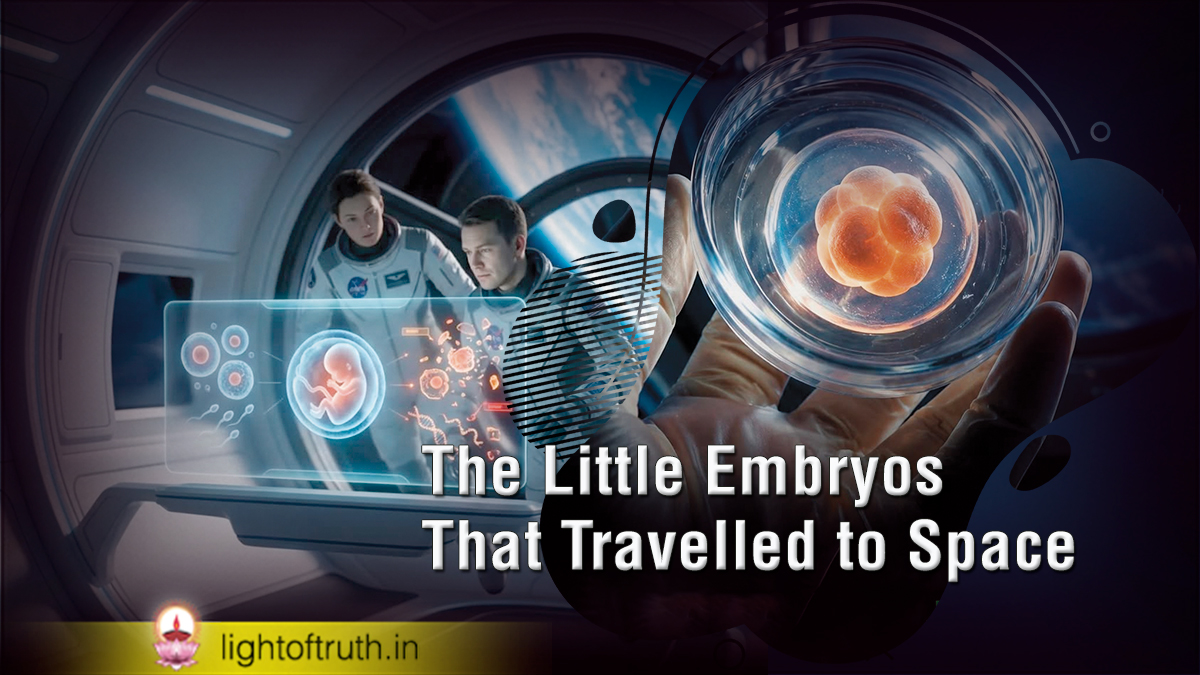
Scientists in China recently carried out a very unusual experiment in space. They sent tiny “artificial embryos” made from human stem cells to the Chinese space station called Tiangong. These were not real babies or embryos that could grow into humans, but special laboratory-made models used to study how early human life reacts in space.
The embryos stayed in space for five days. During that time, scientists observed how they developed in zero gravity. The experiment was successful in the sense that the embryos survived and continued developing during those days. Afterward, the samples were frozen and will later be studied carefully and compared with similar samples kept on Earth. Scientists hope this will help them understand whether human life could one day survive on the Moon or Mars.

Science teaches us to explore bravely, but also to remain humble, wise, and respectful toward every form of life.

This experiment sounds exciting, but it also raises important questions. Even though these were artificial embryos, Church teaches that that anything connected with human life should be treated with great respect and care. Life is sacred and should never become just another laboratory experiment.
At the same time, the experiment fills many people with wonder. If life can survive beyond Earth, perhaps the universe is more alive than we once imagined. The stars and planets may hold many mysteries waiting to be discovered. This could remind us that God’s plans for life are much bigger than our small world.
Science teaches us to explore bravely, but also to remain humble, wise, and respectful toward every form of life.