- Vincent Kundukulam
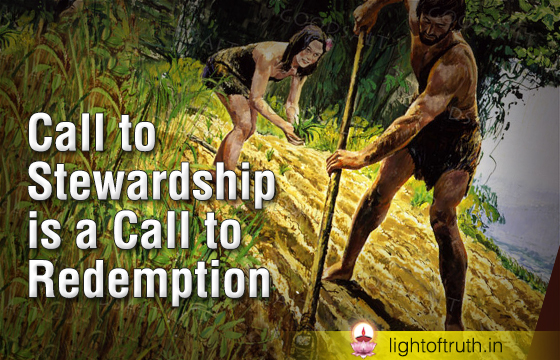
Christian theologians use the term steward in order to define human responsibility towards nature. The concept of stewardship has different meanings in Bible. In the story of Joseph, steward is resented as the one who keeps in charge of the store (Gen. 43-44). Another meaning given to steward is that of a manager or guardian as we see it in the parable of laborers sent to the vineyard at different hours (Mt 20, 8). A third signification is that of superintendent like in the parable of dishonest manager (Lk 16, 2-3). In all those texts, the steward is portrayed as a person, who cannot act on his own but works as an accountable representative of the owner. If steward is a guardian, then as God’s steward on earth, humans have the vocation to be the caretakers of universe. It is human responsibility to ensure that all created beings preserve their integrity in creation and that their existence is conserved for the right use of future generations.
While humans serve the mother earth, they participate in the redemptive work of Christ. How? It can be grasped only if we look at God’s continuing creative act in the light of process theology. To the process-theologians, the world and everything in it are in a process. When God placed man as the custodian of universe, He was opening up a multitude of potentials before mankind. God wanted that mankind takes the world ahead towards its fulfillment. Man, by virtue of his capacity for self-constitution, is called to actualize one out of the wide range of possibilities offered to him/her by God. In this process, God is not fully absent. He acts from within. In fact, the process of evolution is taking place within the life of God.
While God continues the creative activity through evolutionary process, He simultaneously accomplishes his salvific mission too because, as far as God is concerned, creation and redemption are two sides of the same salvific plan. It is like the human parents who, while taking the decision to have a child, also take the decision to protect him/her till the end of their life. God’s intention behind both creation and redemption is to recapitulate everything in Christ. This is what we read in Ephesians 1, 9-10: “He made known to us the mystery of his will according to his good pleasure, which he purposed in Christ, to be put into effect when the times reach their fulfillment – to bring unity to all things in heaven and on earth under Christ”.
Many Church Fathers have also affirmed the unity between creation and redemption. Irenaeus of Lyons, while attacking the dualism of Gnostics, established in Adversus Haeresus that God the creator and God the Redeemer are one. In creation God had in mind the redemption in Christ. To Clement of Alexandria, creation is a timeless act which bring all things together. Origen speaks of creation as the divine pedagogical act of guiding things back to an original unity in God. Creation is an act of going out from God in order to find the original unity.
When God invites us to act like God’s agent on earth, He wants us to see the present as the decisive moment of God’s salvific plan and ensure justice and peace to all beings. To respect, protect and develop natural resources and non-human beings is, in fact the different modes of continuing the redemptive work of Christ. Creation of new heaven and earth is not an act that would take place elsewhere at the end of times; it begins here and now.
- kundu1962@gmail.com