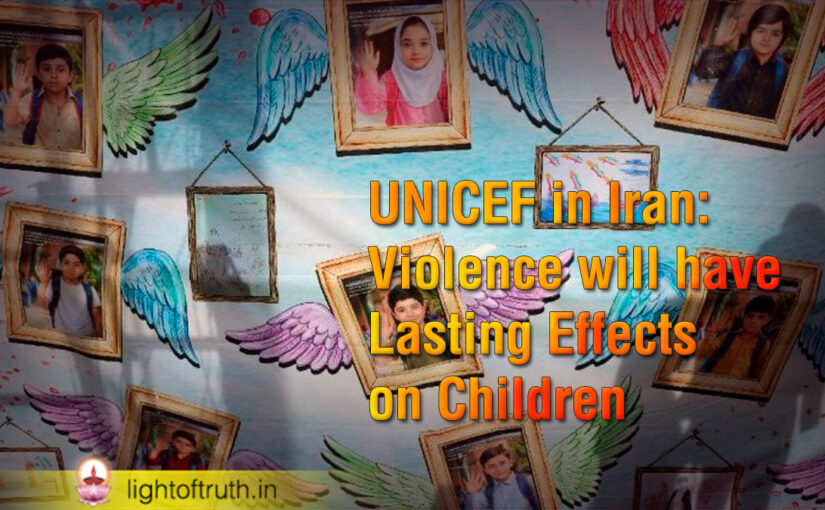
As the U.S.-Israeli ceasefire appears to hold in Iran, UNICEF outlines the ongoing danger and impact this war has and will continue to have on children as they “bear the brunt of the conflict.”
In the wake of the two-week cessation of attacks agreement between Israel, the U.S., and Iran, UNICEF is ramping up its aid to help the tens of thousands of children impacted by the conflict. Since the war started, more than 1,100 children have been reported injured or killed in the violence—including 200 killed in Iran, 91 in Lebanon, 4 in Israel, and 1 in Kuwait.
As UNICEF, the UN organization explains, in a statement, how important bringing “hope to Iranian children and families who have endured immense suffering.” “Even as the skies fall silent again and the attacks come to an end, the impact of the violence on children will have lasting consequences and must not be underestimated,” the UNICEF statement reads.
Every single child who lost their life is remembered by the United Nations Children’s Fund, which expresses deep sorrow for everyone affected—”children who should have felt safe in their homes, their communities, and their classrooms, learning, growing, and dreaming.” UNICEF also shares that they keep the families, communities, and everyone whose lives have been forever changed in their thoughts.
From the start of the conflict, UNICEF has maintained its active mission in Iran, working together with its partners, offering aid to children and families in need of physical and mental health services and psychosocial support.
The organization has deployed pre-positioned medical supplies, mobile health units, primary healthcare tents, and emergency health kits with the goal of regaining access to essential services for communities impacted by the conflict. It also continues to provide vaccines and psychosocial support to children and local groups.
UNICEF reports that children are ‘bearing the brunt of the conflict’ now and going forward. Their lives which were meant to be safe and free have changed into living under constant fear and uncertainty. Access to basic needs is limited. The Iranian Ministry of Health and the Iranian Red Crescent Society (IRCS) report that with 442 health facilities damaged around the country, about 10 million people—including 2.2 million children—have been prevented from receiving essential care.
Leave a Reply