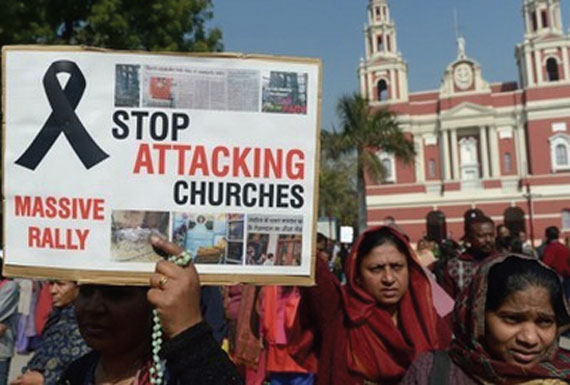
In the campaign for the southern Indian State of Karnataka’s May 12 election, religion was once more at the centre of the battle between the Hindu-nationalist Bharatiya Janata Party (BJP), which controls the federal government, and its long-term rival, the Indian National Congress. The two, along with local secular party Janata Dal (Secular) were fighting for the votes of a substantial Muslim minority of about 13% in a poll that underscores the religious versus secular battle lines that have now been drawn in the world’s largest democracy. The poll was more than just a test to determine which side had a superior on-the-ground organization. Rather, it was a test of how well the Hindu nationalist card, melded with promises of economic improvements, would fare in the heartland of India’s information technology sector.
Such episodes have claimed at least 25 lives since 2010, with 21 of the victims being Muslims, according to a recent report by the IndiaSpend website.