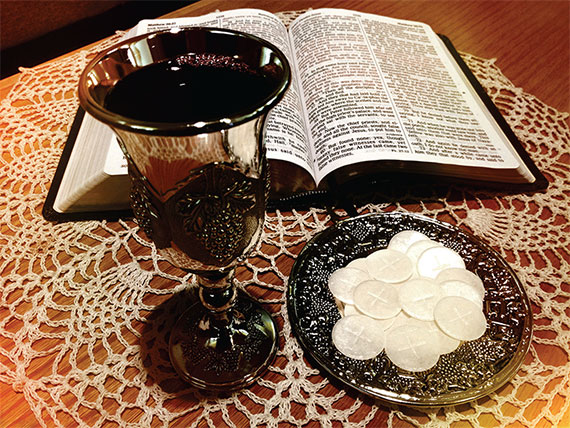
While the Roman Catholic world digests a Vatican letter confirming the church’s prohi-bition on gluten-free wafers, Protestant churches continue to place orders for a Eucharist that won’t bother the gluten-intolerant. Gluten or no gluten — the difference is theological. Protes-tant churches generally do not subscribe to the doctrine of transubstantiation, which holds that during the Communion service, the bread and wine turn into the actual body and blood of Jesus.
The Catholic Church, which affirms transubstantiation, wants to hew as closely as possible to the elements of the first-ever Communion — the bread and wine that Christians believe Jesus ate and drank during the Last Supper.
But Protestants consider Communion a symbolic act, and generally give themselves more leeway on the elements.
Wine can be grape juice. Bread does not necessarily have to be made out of wheat.
The Vatican letter released on July 8 reaffirmed that Communion wafers must contain at least some gluten. But the rule is not new, just a restating of an earlier teaching.
“ … bread made from another substance, even if it is grain, or if it is mixed with another substance different from wheat to such an extent that it would not commonly be considered wheat bread, does not constitute valid matter for confecting the Sacrifice and the Eucharistic Sacrament,” the letter reads.
And it makes clear: “Hosts that are completely gluten-free are invalid matter for the celebration of the Eucharist.”
Low-gluten wafers, however, are deemed acceptable by the church.
Those who suffer from celiac disease — about 1 in 100 people worldwide, according to the Celiac Disease Foundation — must stay away from gluten to avoid painful symptoms and serious health consequences.