Blog

  • ‘For every person baptized, the U.S. Church loses six Catholics’

    ‘For every person baptized, the U.S. Church loses six Catholics’

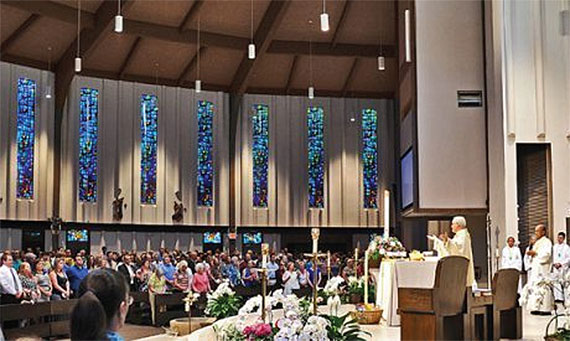
    He may be at the helm of one of the most dynamic Roman Catholic parishes in Florida, with the 3,000 families present each weekend at one of the seven masses at Saint Peter’s Church in Deland, but Father Thomas Connery is still worried.

    “We have many retirees in Florida, so the churches are full but take them away and it’s a catastrophe,” says Father Connery. “We’re not managing to reach the young generations.”

    “For every person baptized, the American church loses six Catholics,” he laments. “We don’t dare talk about it among priests, doubtless because we do not know what to do, but it is past time to break this taboo.

    “Imagine a company facing such a problem. It would immediately launch an emergency plan! What about us?”

    U.S. bishops do not yet have an emergency plan, but they have organized a unique gathering. For the first time in a hundred years, priests, laymen, monks, nuns and other heads of services and movements from all over the United States have come together at a meeting in Orlando, Florida from 1 to 4 July.

    Their purpose is to reflect on how to be the best “missionary disciples,” in the words of Pope Francis in his Evangelii Gaudium.

    Catholics represent the largest denomin-ation in the United States, with 77.4 million believers (22% of the total population), but fewer people have actually been attending church. The number of people taking the sacraments, except baptism, is also dropping.

    From 2013 to 2016, the number of children who had their first communion decreased by 50,000 or 7%. Catholic schools registered a loss of 250,000 students over the same period.

    If the Roman Catholic Church is losing ground in the United States, this also has to do with the rampant secularization of U.S. society in general. Americans who define themselves as not belonging to any religion, the “nones,” make up close to 25% of the population, up from 6% in 1991.

  • Joaquín Navarro-Valls has died

    Joaquín Navarro-Valls has died

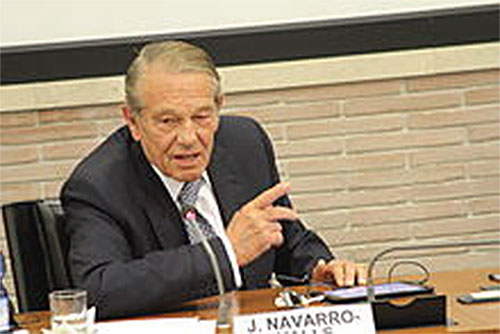
    The former Director of the Press Office of the Holy See, Joaquín Navarro-Valls,  on  5 July 2017, after a battle with pancreatic cancer. He was 80 years old. Navarro trained as a medical doctor with a specialization in psychiatry, as well as in journalism, moving to Rome in the early 1970’s, becoming a foreign correspondent and eventually being elected president of the foreign press association in the city.

  • How Facebook is like church, according to founder Mark Zuckerberg

    How Facebook is like church, according to founder Mark Zuckerberg

    Its members gather to comfort and encourage one another. They check in on the sick and struggling. They wish each other a happy birthday. Founder and CEO Mark Zuckerberg said in Chicago at the first Facebook Communities Summit that the two are similar in the way they create community and bring people together.

    “As I’ve travelled around and learned about different places, one theme is clear: Every great community has great leaders,” he said. “Think about it. A church doesn’t just come together. It has a pastor who cares for the well-being of their congregation, makes sure they have food and shelter. A Little League team has a coach who motivates the kids and helps them hit better. Leaders set the culture, inspire us, give us a safety net and look out for us.”

  • Cameroon’s bishops insist Bishop Balla was murder victim, not suicide

    The Catholic bishops of Cameroon insist that Bishop Jean-Marie Benoit Balla of Bafia was “brutally assassinated,” rejected the conclusions of an autopsy that found “no trace of violence.”

    At a July 7 press conference, Archbishop Samuel Kleda of Doula, the president of the nation’s episcopal conference, rejected the results of the autopsy that had been performed by German doctors. Government officials had stressed that the autopsy was performed independ-ently under international super-vision. The bishops’ rejection of the results points to the deep level of suspicion between the Catholic hierarchy and the government leadership. Some observers questioned whether the bishops feared that the government had provided another body for the autopsy. At his July 7 press conference, Archbishop Kleda decli-ned to give a direct answer to the question of whether the bishops had received Bishop Balla’s body for burial.

    While investigation of Bishop Balla’s death continues, government officials now suggest that it was a suicide.

  • Embezzlement charges against two former officials of Vatican-run hospital

    The Vatican has indicted two former officials of the Bambino Gesu Hospital on embezzlement charges. The indictment is the first brought by Vatican prosecutors under new rules designed to promote transparency and accountability in Vatican financial transactions. The Vatican has been under pressure from European banking authorities to prosecute violations of these rules.

    Giuseppe Profiti and Massimo Spina—who were the president and treasurer, respectively, of the Bambino Gesu Foundation— were summoned to appear before a Vatican tribunal for a July 18 hearing on the charges. Although the summons was issued on June 16, the indictment was announced on July 13. The two former officials of the foundation connected with the Vatican-owned Bambino Gesu Hospital are charged with improperly spending more than €400,000 in foundation funds on the renovation of an apartment owned by Cardinal Tarcisio Bertone. In the past, Profiti has said that the expenses were justified because the cardinal’s apartment was used for the foundation’s fundraising events.

  • Indian minister criticized for demonizing Goan Catholics

    A federal minister in India has come under fire for indirectly accusing Catholics and environ-mentalists in Goa for blocking development in the former Portuguese colony which they say harms the environment and local culture. Road Transport, High-ways and Shipping Minister, Nitin Gadkari, said that “a microscopic minority” has been blocking major projects worth more than US$150 million in the name of protecting the environ-ment.

    The projects include plans to widen main roads, expand ports and to develop water transport via the state’s two major rivers — Mandovi and Zurari.

    “There is opposition among a few groups,” the minister told an annual meeting of the Goa Chamber of Commerce and Industry.

  • Conflict with ISIS ally is not a religious conflict, Philippine bishops insist

    The Philippine bishops said that the conflict with Maute, an ISIS-affiliated group, is not a conflict with Islam. In May, Maute attacked the city of Marawi, setting fire to Christian buildings and taking hostages at the cathedral. “We believe that the war in Marawi is not religious,” the bishops said in a July 10 statement. “We have heard and read truly stunning stories of how Muslims have protected and helped Christians to escape from almost certain death.” The bishops added: Even now Christians are assisting thousands of Muslims who have fled from Marawi for safety. These are indisputable signs that there is no religious war … As Catholic religious leaders we condemn in the strongest terms possible, as did Islamic religious scholars in Mindanao, the violent extremist Maute group in Marawi. Its leaders and members have pledged allegiance to ISIS. They have contradicted the fundamental tenets of Islam by abducting and hostaging, maiming and killing the innocent.

  • Netherlands: hundreds euthanized without patient’s request

    New statistics on the use of physician-assisted suicide in the Netherlands show that hundreds of patients were given lethal drugs without a request from the patients. The figures for 2015—the most recent statistics available—show 431 cases in which the patient’s life was ended without an explicit request.

    The figures also show that 1,693 cases of assisted suicide—more than 20% of the total for 2015—were not formally reported.

    The figures provide strong support for arguments that the law governing assisted-suicide in the Netherlands is not rigorously enforced.

  • CMC sisters give shelter to Kochi Metro trans employees

    CMC sisters give shelter to Kochi Metro trans employees

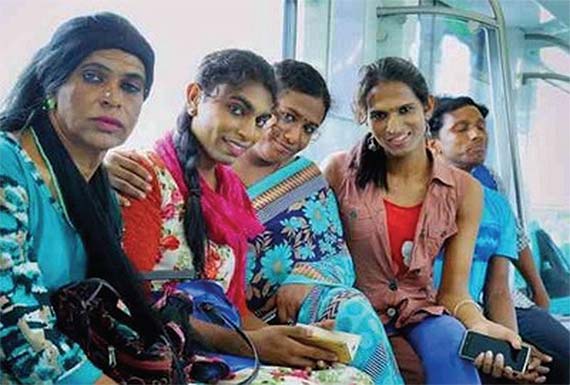
    The nuns of the Provincial House of the Congregation of the Mother of Carmel (CMC) providing accomodation to the transgenders employed by Kochi Metro who were facing homelessness.

    In one of the first major initiatives to employ transgen-ders, the Kochi Metro Rail Ltd (KMRL) hired 23 trans employees through a Kerala government poverty eradication programme aimed at women called Kudumbasree. However, no one was willing to provide the transgenders accommo-dation, and many of them were forced to skip work.

    The KMRL has now been able to solve the problem, with the commitment from the CMC nuns. Sister Pavithra of CMC confirmed to Catch that the Congregation will provide “shelter to the transgenders working in KMRL.”

    The nuns got the letter from Kochi Metro and are yet to figure the logistics. “They haven’t yet told us the number of people who want to reside. May be 12-13,” she said.

  • Christians, Sikhs protest Modi at the White House

    Christians, Sikhs protest Modi at the White House

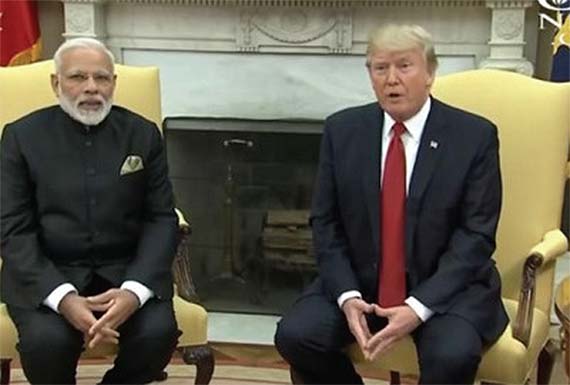
    Protestors waved flags and chanted as Indian Prime Minister Narendra Modi arrived at the White House on June 26 for a meeting with President Donald Trump.

    “We’re here basically to raise awareness of the human rights violations that are happening with India,” Jatinder Grewal, director of Sikhs for Justice told CBN News.

    The protestors alleged that under Modi’s rule, conditions for Sikhs, Christians and other religious minorities have grown difficult.

    “When Modi came into power in 2014 he promised the Christians and other minorities that he would allow freedom of religion, he lied,” declared Pastor Rob Rotola, who also protested outside the White House.

    “The only people that have favored status in India is not all people; it’s the Hindu nationalist,” he said. “It’s the far extremist party that tends to violence. And as these groups have ramped up the violence, the police state and the government looks the other way, and is allowing it to happen.”

    “I am here to speak for the Indian church,” said Bishop John Lutembeka, a missionary in India, “the Indians who are being persecuted by Prime Minister Modi, by a group of radical Hindus.”