Blog

  • Protecting Minors Commission President presents safeguarding report to Pope

    Protecting Minors Commission President presents safeguarding report to Pope

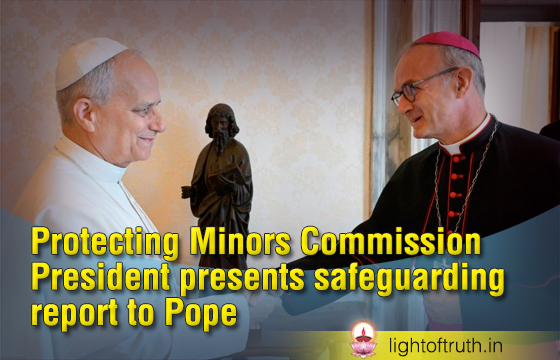
    Pope Leo XIV received the President of the Pontifical Commission for the Protection of Minors XIV, Archbishop Thibault Verny, Archbishop of Chambéry, in the Vatican on September 12. The encounter marks the first official meeting between the President of the Commission and the Holy Father, following Archbishop Verny’s appointment on July 15.

    The Commission’s Secretary, Bishop Luis Manuel Alí Herrera, accompanied the Commission President. The audience was requested by Archbishop Verny in order to personally express his gratitude to the Holy Father for the trust placed in him through the appointment, and to present the Second Annual Report on Policies and Procedures for Protection in the Church.

    This report, established at the initiative of Pope Francis in 2022, aims to assess the safeguarding capacities of local Churches, offering practical recommendations based on the concrete experiences of various ecclesial regions.

    During the meeting, the Commission President underscored, the Commission’s commitment to continuing the mission entrusted to it by Pope Francis through Praedicate Evangelium, in the development of safeguarding policies, the drafting of the annual report, and support for local Churches through the Memorare Initiative.

    “With humility and hope,” Archbishop Verny reaffirmed, “the Commission continues the mission entrusted to us, advancing the Holy Father’s vision of rooting throughout the Church a culture of prevention that tolerates no form of abuse: neither of power or authority, nor of conscience or spirituality, nor of sexual abuse.” 
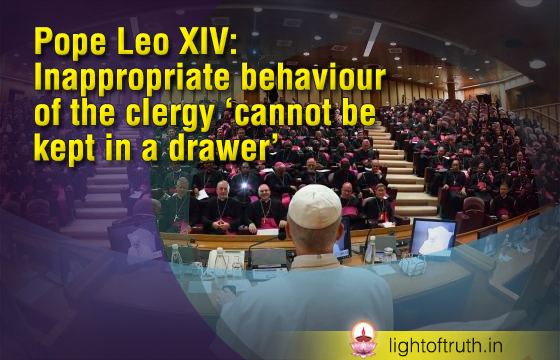
  • Pope Leo XIV: Inappropriate behaviour of the clergy ‘cannot be kept in a drawer’

    Pope Leo XIV: Inappropriate behaviour of the clergy ‘cannot be kept in a drawer’

    In a meeting with bishops appointed in the last year, Pope Leo XIV exhorted them to address issues related to inappropriate behaviour on the part of the clergy: “They can’t be put away in a drawer.” At the end of his Sept. 11 morning address to the prelates participating in the formation course organized by the Holy See, the Holy Father engaged them in a fraternal dialogue, giving them the opportunity to convey their concerns and worries. The pontiff offered an overview of the challenges and issues bishops face at the beginning of a new ministry, such as fear, a sense of unworthiness, and the different expectations each had for their lives before being called.

    As the Vatican noted in a statement released Sept. 12, the Holy Father also offered the bishops some valuable advice: “Remain close to the Lord, set aside time for prayer, and continue to live out unconditional trust in the Holy Spirit, the origin of one’s vocation.” He also exhorted them to be persevering disciples “who do not allow themselves to be frightened by the first difficulty; pastors close to the people and to priests, merciful and firm, even when it is a matter of making a judgment; capable of listening and dialogue, not just preaching sermons.”

    Before answering questions, Pope Leo XIV encouraged the bishops to promptly address issues related to inappropriate behaviour on the part of the clergy: “They cannot be put away in a drawer; they must be addressed with a sense of mercy and true justice toward the victims and the accused.” The pontiff thanked the new bishops for accepting the ministry: “I pray for you; the Church appreciates your ‘yes’; you are not alone; together we bear the burden and together we proclaim the Gospel of Jesus Christ.”

  • International Literacy Day: It is the foundation for the digital world

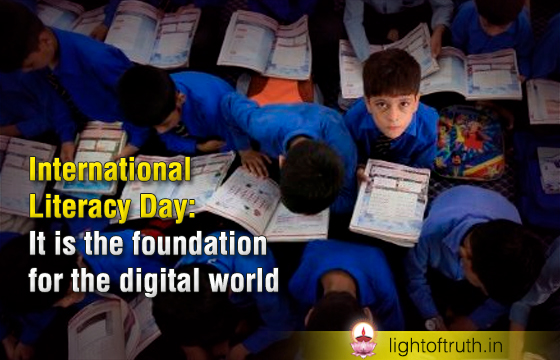
    International Literacy Day: It is the foundation for the digital world

    As 8 September marks International Literacy Day, UNESCO releases data and information showcasing that being literate enables people to think critically and navigate the “information-rich society and economy in a safe, effective and responsible manner.”

    8 September marks International Literacy Day (ILD). Started in 1967, the day serves as a reminder to world leaders, policy-makers, and the public of the “critical importance of literacy for creating more literate, just, peaceful, and sustainable society.” As a fundamental right for everyone, literacy is a gateway that enables people to enjoy other human rights, more freedoms, and global citizenship.

    This year’s theme is “Promoting literacy in the digital era”, which is focused on keeping literacy as a crucial part of the technological landscape. UNESCO releases a fact sheet for the 2025 Literacy Day, highlighting that the importance of literacy reaches beyond traditional paper-based writing and reading. Rather, “it now serves as a foundation for digital skills, safe and critical engagement with digital texts and tools, and an inclusive digital transition.”

    Between 2015 and 2024, literacy rates among adults (people aged 15+) rose slightly from 86% to 88%. Central and Southern Asia are the two regions with the fastest progress, where adult literacy grew from 72% to 77%. Sub-Saharan Africa also saw an increase from 65% to 69%.

    In 2024, the global youth (people aged 15-24) reached 93% — which showed a growth in basic education. Yet, UNESCO reports that progress “remains inadequate and uneven” as 739 million adults still lacked basic literacy skills in 2024.

    A census taken from 2015-2024 reveals more than half of the world’s illiterate adults – 441 million people – is found in just 10 countries around the world. UNESCO argues the consistent gaps in literacy rates limit the opportunities and “reinforce social and economic inequalities, especially for women, older adults and marginalized people.”

    In this technologically-driven world, literacy remains an essential part of life. It gives everyone a chance to fully participate in the digital world. More than giving people access to the internet, being literate enables users to think critically and navigate the “information-rich society and economy in a safe, effective and responsible manner.”

  • Cardinal Pizzaballa Says Violence in Gaza Is the Result of Hateful Language

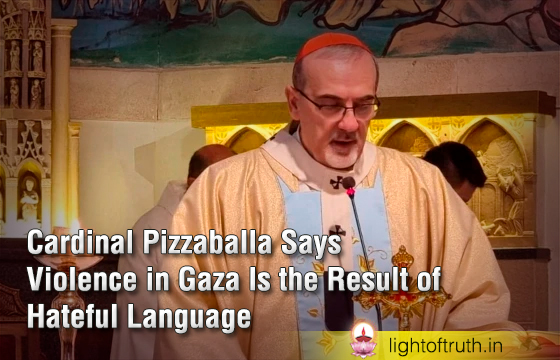
    Cardinal Pizzaballa Says Violence in Gaza Is the Result of Hateful Language

    The Latin patriarch of Jerusalem, Cardinal Pierbattista Pizzaballa, said violence in the Gaza Strip is the result of years of dehumanizing rhetoric and called for the replacement of hateful language with speech that opens horizons and new paths. Cardinal Pizzaballa issued this call in a video message released during the Venice Film Festival, where the Silver Lion prize was awarded to Tunisian director Kaouther Ben Hania’s film “The Voice of Hind Rajab,” which recounts the last moments of a 5-year-old girl killed in 2024 in Gaza.

    “You’ve already heard the news, so there’s no need to delve into the dramatic daily story of what we’re experiencing. The images are also very significant; unfortunately, they speak of destruction, of death, of so much pain. One of the problems we’re experiencing is precisely this: We’re so overwhelmed by pain that there seems to be no room for the pain of others,” he said.

    Cardinal Pizzaballa added that “we are also experiencing a climate of deep hatred, increasingly entrenched within both populations, Israeli and Palestinian, that seems to have no end.”

    He said this hatred is demonstrated not only in violence but “also in language … I believe that the violence we are witnessing is also the result of years of violent and dehumanizing language.”

    Cardinal Pizzaballa explained that if others are dehumanized through language, “creating a culture, a way of thinking, the transition to actual physical violence is only a matter of time, and unfortunately, we are witnessing it.”

    “This war must end as soon as possible. We know it makes no sense to continue it. It’s time to stop … But we know that the end of the war we long for, despite what the news reports say, will not be the end of the conflict, it will not mark the end of the hostility, of the pain this hostility will cause,” he noted.

    The patriarch therefore encouraged believers and all those involved in culture to “work hard” to create “a different narrative.” “We have left the narrative to the radicals, to the extremists on both sides,” he said. “Instead, we must have the courage of a different language, one that opens horizons, that opens new paths,” he encouraged. “This is what I hope for, and I believe it is possible … we need your help.”

  • Vatican Establishes Feast Days of St. Carlo Acutis and St. Pier Giorgio Frassati

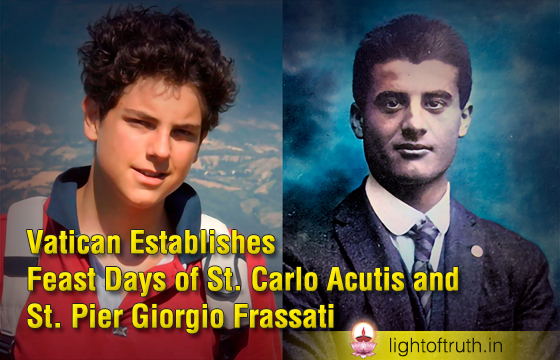
    Vatican Establishes Feast Days of St. Carlo Acutis and St. Pier Giorgio Frassati

    The Catholic Church will commemorate the liturgical memorial of St. Carlo Acutis on Oct. 12 and of St. Pier Giorgio Frassati on July 4. The two young men were canonized Sept. 7 by Pope Leo XIV in St. Peter’s Square at the Vatican.

    In the case of St. Carlo Acutis, the Italian teenager who died in 2006 and was beatified in Assisi in October 2020, his feast day was set for Oct. 12, coinciding with the anniversary of his death from fulminant leukemia at the age of 15.

    The decree of the then-Congregation — now Dicastery — for Divine Worship and the Discipline of the Sacraments, promulgated after the beatification, set the date for the calendars of the dioceses of Assisi and Milan in addition to authorizing its celebration in other communities that requested it.

    Pier Giorgio Frassati, a young man from Turin who died in 1925 and was beatified by Pope John Paul II in 1990, will be commemorated every year on July 4, also coinciding with the day of his death. His memorial Mass is celebrated especially in Italy and in youth communities that consider him a patron and spiritual role model.

    Both saints, commemorated on the date they passed into eternal life, have become role models of faith and commitment for young people. Acutis is known for his witness of faith in the digital world and his love for the Eucharist, and Frassati was described by St. John Paul II as a “man of the Beatitudes.” Their intense spiritual life and commitment to charitable works continue to inspire new generations of Catholics around the world.

  • ‘My St Francis’: posthumous book by Pope Francis to be released in Italy

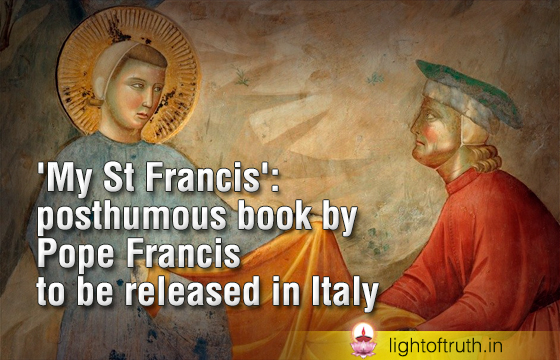
    ‘My St Francis’: posthumous book by Pope Francis to be released in Italy

    “Il mio San Francesco”, a posthumous book by Pope Francis and put together by Cardinal Marcello Semeraro, was presented on 10 September in Assisi, within an event entitled “The Courtyard of Francis.” It will be available in Italian bookstores from 18 September. Presenting the work, Cardinal Semeraro, Prefect of the Dicastery for the Causes of Saints, recalled his close collaboration with the late Pope, who appointed him Prefect of that Dicastery and Secretary of the Council of Cardinals in 2020.

    The book, which presents a fraternal conversation that took place between Pope Francis and Cardinal Semeraro in late 2024, includes a letter from Pope Leo XIV and a preface by Cardinal Pietro Parolin.

    In the text, Pope Francis reflects deeply on his personal relationship with St Francis of Assisi, the saint who inspired his name and much of his magisterium, especially on creation, peace, and fraternity.

    It provides ample space for the late Pope’s reflections and understanding of poverty, his thoughts on family, pain, and death, and his concern for the “wounds” of the Church.

    Speaking about prayer, Francis says: “When I think of the prayer of St Francis, I think of his tears, his cries. For him, prayer had a deeply affective dimension… His relationship with Jesus was not an idea or theory, but a bond of passion and love… I too, at times feel the fatigue of many, of being faithful to prayer when there is so much to do. I have learned to treasure even short moments, small spaces… Ordinary life becomes special if we let it be illuminated by the light that comes from prayer.”

  • Pope Leo XIV: Caring for Creation is our vocation

    Pope Leo XIV: Caring for Creation is our vocation

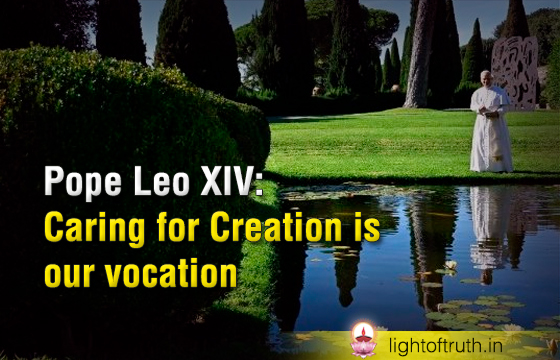
    Pope Leo XIV on September 5 inaugurated the Laudato si’ Village (Borgo Laudato sì) at Castel Gandolfo, describing it as a “seed of hope” and a tangible model for ecological conversion. The project, first envisioned by Pope Francis, brings together spirituality, education, history, nature, art, and sustainable innovation as a living witness of the Church’s commitment to care for creation and for the most vulnerable.

    In his reflection on St. Matthew’s Gospel, the Holy Father said each human person has the great responsibility and privilege of respecting the “Creator’s plan.” “Jesus emphasizes the special place reserved, in the creative act, for the human being: the most beautiful creature, made in the image and likeness of God,” Leo said in his short homily.

    “The care of creation, therefore, represents a true vocation for every human being, a commitment to be carried out within creation itself, without ever forgetting that we are creatures among creatures, not creators,” he added. Speaking about his predecessor Pope Francis — who initiated the project and the liturgy for the Mass for the Care of Creation — Leo said the village is a “seed of hope” for those committed to fostering humanity’s “ecological conversion” through education and catechesis.

    “It is important, as my predecessor wrote, to ‘recover a serene harmony with creation, to reflect on our lifestyle and our ideals, to contemplate the Creator, who lives among us and in all that surrounds us,’” Leo said, quoting Francis’ 2015 encyclical letter.

  • Nun who promotes traditional Indian medicine

    Nun who promotes traditional Indian medicine

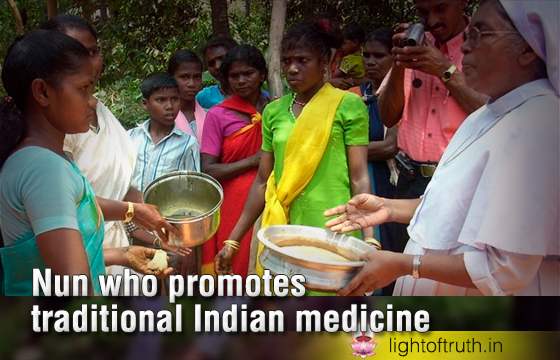
    Sister Innocent Joseph Ayyankanal, a member of the Missionary Sisters of Mary Immaculate, has spent over 40 years promoting Ayurveda (traditional Indian medicine) and other forms of traditional medicine among rural and tribal communities in the Nilgiris district of Tamil Nadu and the Wayanad district of neighbouring Kerala. Ayyankanal has conducted more than 2,000 awareness classes across India in association with the Catholic Health Association of India to promote Ayurveda in rural India. She also trained nuns, priests and other health care workers, who now promote these remedies in their areas. Born into a family of vaidyas (traditional healers), she has combined her knowledge of herbal medicine with her vocation as a nun. Ayyankanal continues her mission even at 78, helping people in need and collaborating with organizations such as Shalom TV to promote traditional medicine. She now resides at the Maryknoll Convent in Kunnalady in the Nilgiris district of Tamil Nadu, where she began her health care journey among tribal people in 1975.

  • Cow vigilantes assault leaves two catholic brothers shattered

    Cow vigilantes assault leaves two catholic brothers shattered

    The cows they raised were meant to be a lifeline, not a death sentence. For Johan Soren, 66, and his brother Philip Soren, 55, the sale of their two bulls and two calves—for a desperate price of 40,000 rupees — was the only way to fund the urgent medical care for Johan’s ailing wife.

    But that small, necessary transaction turned into a nightmare on August 19. As the two Catholic tribal farmers walked their animals along Malipada Road, they were ambushed by a mob of nearly 16 men, who identified themselves as “Gau Rakshaks” (cow vigilantes). Their cries of protest that the animals were their own, legally sold to a trader were ignored. The mob allegedly beat the brothers, leaving them bleeding and barely conscious on the roadside.

    “We told them we were selling our own cattle to save my wife’s life,” a relative recounted later. “They just laughed and said we were smugglers.” These days, the brothers lie in a hospital bed. Johan has been diagnosed with multiple fractured ribs, an injury that makes every breath a struggle. Philip’s hand is broken, shattering his ability to work their small plot of land. The fight for justice has been as brutal as the assault itself. Local police initially refused to register a formal complaint, allegedly questioning the victims’ legal right to their own cattle. It took the intervention of the Superintendent of Police on August 23 to finally force the registration of an FIR.

  • National conclave stresses Church’s role in anti-trafficking crusade

    National conclave stresses Church’s role in anti-trafficking crusade

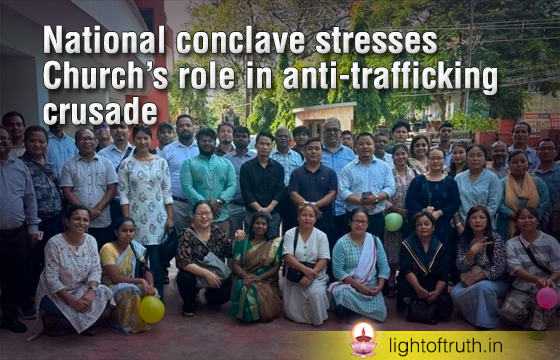
    Groups working to end human trafficking in northeastern India have forged a network among Churches in the region to tackle the social menace. “When the Church stands together in faith and action, we can transform migration from a story of vulnerability into a journey of hope,” asserted Rohit Bhalla, national convener of the People Uniting to Stop Human Trafficking (PUSH) at a national conclave held at Guwahati, Assam. Northeastern India, he pointed out, is rich in faith and culture, but remains vulnerable as a source region for unsafe migration and trafficking.

    Besides PUSH, the August 26-27 event at Don Bosco Inspiration, Kharguli, was attended by a network of civil society organizations, Churches, and anti-trafficking crusaders. As many as 65 delegates from 12 Churches and Christian organizations attended the program. They spent the two days in prayer, worship, and strategic dialogue to promote sustainable solutions.

    The Commission for Migrants under the Conference of Catholic Bishops of India, Jesuit Refugee Service, and the Don Bosco network highlighted the Church’s shared mission to safeguard migrants and uphold the dignity of work.

    While Bhalla emphasized faith communities’ role in combating trafficking, Aashima Samuel shared legal and social protection frameworks; K.A. Jayakumar highlighted development and policy perspectives; Salesian Fathers Joe Prabhu and George Mathew explored skill-building and livelihood opportunities; and Jayakumar, a retired Indian Administrative Service officer, provided governance insights. The conclave underscored the power of ecumenical collaboration in protecting vulnerable communities, strengthening livelihoods, and advancing God’s Kingdom through justice and solidarity.