Blog

  • Immigration is a ‘Gospel issue’ before a ‘political issue,’ U.S. bishop says

    Immigration is a ‘Gospel issue’ before a ‘political issue,’ U.S. bishop says

    Bishop Mark Seitz of El Paso, Texas, said immigration is a “Gospel issue” before it is a “political issue” in the United States.  In an exclusive interview with EWTN News reporter Valentina Di Donato, Seitz said the Church has a responsibility to reaffirm Catholic social teaching regarding the preferential option for the poor. “It’s always the role of the bishop to speak the Gospel, to reflect on that Gospel and its implications for our daily lives,” the prelate told EWTN News. 

    “We have a task to form people based on that teaching of love and mercy and compassion that applies not just in exceptional cases, not just to certain people, but in a special way to the poor and the vulnerable, and that includes immigrants,” he said. 

    Speaking about the “inalienable rights” every person is endowed with by God, the bishop said the rights of immigrants should not only be a concern of the Church but should also be “respected in law.” “While we are not politicians — it’s not our task to develop rules and laws — we are responsible to help form consciences and bring people back to the basic underlying principles, which, by the way, are principles upon which our country was built,” he said.

    According to the bishop, U.S. asylum law is not being respected “right now,” as several migrant families living in the El Paso Diocese, located near the U.S.-Mexico border, no longer feel protected and fear deportation. “We should practice that [respect for] human dignity when we are dealing with a person who simply fled here because they had no other option,” he told EWTN News.

  • Altar wine for Mass in Kenya now required to bear Catholic bishops’ ‘coat of arms’

    Altar wine for Mass in Kenya now required to bear Catholic bishops’ ‘coat of arms’

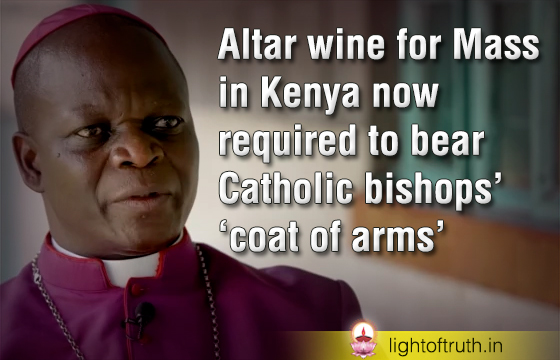
    Wine for Mass in Kenya must now bear the “coat of arms” of the country’s bishops, the chairman of the Kenya Conference of Catholic Bishops (KCCB) announced Oct. 4.  Speaking at the 2025 National Prayer Day at the Subukia National Marian Shrine in Kenya’s Nakuru Diocese on the feast of St. Francis, KCCB chairman Archbishop Maurice Muhatia Makumba announced that bottles containing the altar wine must bear the coat of arms of the bishops, as well as an official signature, to certify their authenticity. 

    The Catholic faithful have welcomed the news as many believe the wine previously used “had lost its sanctity due to its widespread use outside the Church,” according to a BBC report. 

    The wine formerly used is reportedly widely sold in liquor stores, bars, and supermarkets. After exploring options, the bishops in Kenya chose a South African vintage for the newly approved Mass wine. “Vigilance on the quality and standards of the wine and hosts used in the Mass is given to the Catholic bishops of the country. This is reviewed from time to time,” the archbishop added. The new wine was officially introduced to worshippers during the National Prayer Day. Muhatia has directed that local Catholic communities and Catholic institutions abide by the directives and sourcing for the new altar wine.“It is important that you acquaint yourself with your diocese and know what has been established as the outlets for this wine because different dioceses have different ways of distributing this wine,” he said at the National Prayer Day. “Some dioceses allow only specific persons to buy this wine for Mass; others allow everybody. Depending on your diocese, please be aware of the regulations.”

  • Man desecrates altar of St. Peter’s Basilica

    Man desecrates altar of St. Peter’s Basilica

    A man urinated on the Altar of Confession of St. Peter’s Basilica on Oct. 10 before being taken away by security officers in the famous basilica, according to news reports. The man climbed the altar and “urinated under the stunned gaze of hundreds of tourists,” according to the newspaper Corriere della Sera’s Rome edition. Video of the desecration was widely shared on social media.

    Il Tempo reported that the man “was promptly reached by plainclothes police officers present in the basilica” and was escorted out of the church.

    The latter newspaper claimed Pope Leo XIV was “shocked to learn of the news,” though the Holy See Press Office had not released a statement about the incident as of Oct. 11.

    This is not the first time this year that a vandal has attacked the altar from which the pope says Mass.In February, a man desecrated the altar by climbing on top of it and throwing six candelabras that were on the altar to the ground. In June 2023, meanwhile, a Polish man approached the high altar as the basilica was about to close, undressed, and climbed onto the altar. Photos posted online showed the words “Save children of Ukraine” written in marker on his back. The Vatican performed a penitential rite after that act of desecration.

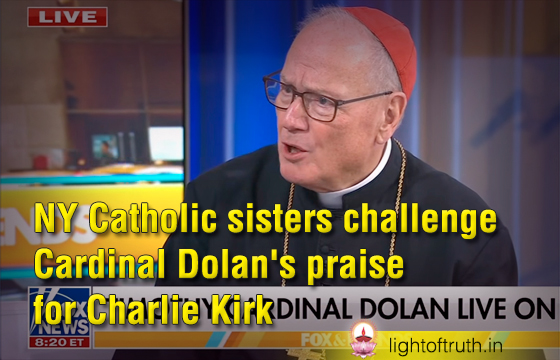
  • NY Catholic sisters challenge Cardinal Dolan’s praise for Charlie Kirk

    NY Catholic sisters challenge Cardinal Dolan’s praise for Charlie Kirk

    A group of Catholic sisters criticized Archbishop of New York Timothy Dolan for his recent
    comments about the late conservative activist Charlie Kirk, suggesting the cardinal is
    “confusing the true witness of the Gospel” by likening Kirk to a biblical saint. On Wednesday
    (Sept. 24), Sisters of Charity of New York issued a statement in response to remarks Dolan
    made earlier this month during an appearance on “Fox & Friends.” While discussing Kirk’s
    killing, Dolan cast the work of the activist, an evangelical Christian, in religious terms.
    “The more I learned about (Kirk), I thought, this guy is a modern-day Saint Paul,”
    Dolan said. “He was a missionary. He’s an evangelist. He’s a hero. He’s one, I think, who
    knew what Jesus meant when He said, ‘The truth will set you free.’”

    Dolan joins many conservatives who have publicly compared Kirk to Christian saints and
    martyrs after he was shot and killed while speaking at a college campus in Utah earlier this
    month. The Sisters of Charity of New York condemned the comparison, noting Kirk’s history
    of inflammatory rhetoric — which includes criticism of Catholicism itself — and arguing that
    conflating him with biblical heroes could lead Catholics astray.

    “What Cardinal Dolan may not have known is that many of Mr. Kirk’s words were marked
    by racist, homophobic, transphobic, and anti-immigrant rhetoric, by violent pro-gun
    advocacy, and by the promotion of Christian nationalism,” the sisters’ statement read. “These
    prejudicial words do not reflect the qualities of a saint. To compare Mr. Kirk to St. Paul risks
    confusing the true witness of the Gospel and giving undue sanction to words and actions that
    hurt the very people Jesus calls us to love.”

    In contrast to Kirk, who supported hardline immigration policies during his life, the Sisters of
    Charity noted their own history of working with immigrants who arrive in the United States
    “with nothing but hope,” adding, “they deserve true examples of discipleship, not false
    prophets.”

    “In this moment, we reaffirm our mission: to walk with all people who are poor and
    marginalized, to welcome immigrants and refugees, to defend the dignity of LGBTQ+
    persons, and to labour for peace in a world saturated with violence,” the statement read.
    “These are the marks of authentic discipleship. These are the qualities of saints.”
    The statement was signed by the group’s leadership, which includes Sisters Donna Dodge,
    Margaret O’Brien, Mary McCormick, Mary Ann Daly, Sheila Brosnan and Margaret Egan.

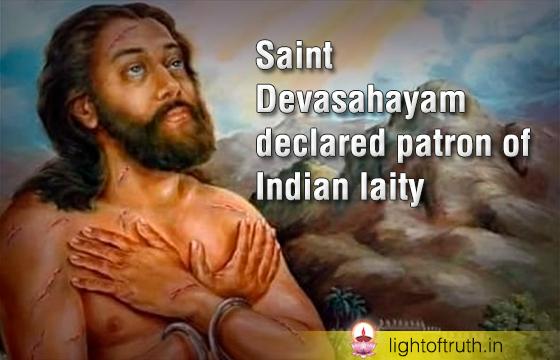
  • Saint Devasahayam declared patron of Indian laity

    Saint Devasahayam declared patron of Indian laity

    Pope Leo XIV has confirmed Lazarus Devasahayam, an 18th century Indian saint, as the patron of the laity in the country, the Latin bishops’ conference announced on September 20. The July 16 confirmation came through the Dicastery for Divine Worship and the Discipline of the Sacraments. It follows a petition submitted by the Conference of Catholic Bishops of India (CCBI), the national body of the Latin rite prelates in the country.

    The official proclamation of the patronage will take place on October 15 during Mass at St. Mary’s Cathedral, Varanasi. The event will coincide with the annual national meeting of the diocesan and regional secretaries of the CCBI Laity Commission, gathering representatives from dioceses across India, the conference stated.

    Saint Lazarus Devasahayam (1712–1752) was a Hindu convert to Christianity and the first layman and martyr from India to be canonized by the Catholic Church. Born Neelakanda Pillai in Nattalam, Tamil Nadu, he served as a court official in the Kingdom of Travancore. Drawn to the Christian faith, he converted in 1745 and was baptized as Lazarus (Devasahayam in Tamil, meaning “God is my help”). His conversion led to persecution, imprisonment, and torture for refusing to renounce his faith. He was executed in 1752.

    He was beatified on December 2, 2012, at Nagercoil, Tamil Nadu, in a ceremony presided over by Salesian Cardinal Angelo Amato, prefect of the Congregation for the Causes of Saints, on behalf of Pope Benedict XVI. Pope Francis canonized him on May 15, 2022, at St. Peter’s Basilica, Vatican City, proclaiming him a model of courage, faith, and commitment to justice. The Catholic Church has no single patron for the entire laity. It has recognized different saints as patrons of various aspects and groups within the laity, such as Saint Josemaría Escrivá (1902-1975) for laypeople living a holy life in the world and Blessed Pier Giorgio Frassati (1901-1925) as a patron for young adults.

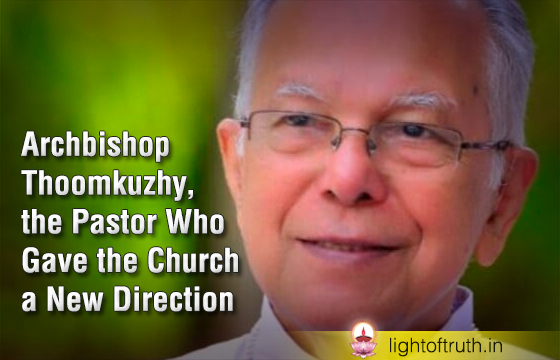
  • Archbishop Thoomkuzhy, the Pastor Who Gave the Church a New Direction

    Archbishop Thoomkuzhy, the Pastor Who Gave the Church a New Direction

    Emeritus Archbishop Jacob Thoomkuzhy of Trichur, former vice president of the Catholic Bishops’ Conference of India, founder of the Society of Khristudasis (Handmaids of Christ) congregation and founder chairman of Jeevan TV, has died. The death occurred at 2:50 pm on September 17 at Trichur. He would have turned 95 on December 13 this year.

    The Major Archdiocese of Ernakulam-Angamaly paid tribute to the late Archbishop Mar Jacob Thoomkuzhy, remembering him as a great pastor who, through his distinctive leadership, imparted the simplicity of Christ and a new sense of direction to the Church and society, aligning with the needs of the times.

    Throughout his priestly life spanning over half a century and his pastoral service across three dioceses, Archbishop Thoomkuzhy was dedicated to spreading the Gospel and clearly manifesting the witness of Christ to many. By harmonizing his profound life experiences with a loving lifestyle, he made the Church’s services more meaningful and welcoming. Mar Thoomkuzhy’s ministry was set apart by his vision that the Church’s mission should be grounded in real-life experiences, human-centred, and open to timely renewal, says a press release published by the Major Archdiocese of Ernakulam-Angamaly.

    His leadership style in the dioceses of Mananthavady and Thamarassery, and Thrissur Archdiocese not only inspired the Church but also contributed to the moral and social development of the community. Mar Thoomkuzhy’s influence extended beyond the dioceses where he served; he made interventions that gave the entire Kerala Church a new sense of direction. Always close to the Archdiocese of Ernakulam-Angamaly in both his methods and thoughts, Archbishop Thoomkuzhy courageously embraced the prophetic role of taking a firm stand, consistently serving as a good shepherd to God’s people. His passing is an immense loss to the Church, particularly to the Ernakulam-Angamaly Archdiocese. The unique qualities he demonstrated in his life of service will serve as an inspiration for the present and future of the Church.

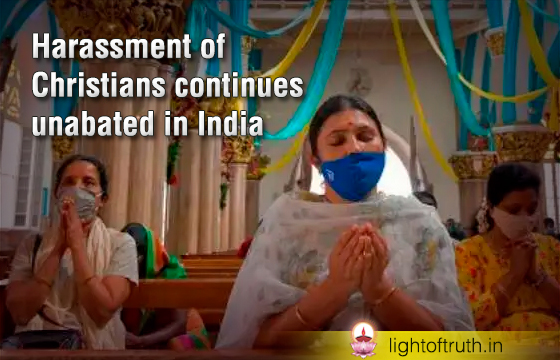
  • Harassment of Christians continues unabated in India

    Harassment of Christians continues unabated in India

    The violence and harassment against Christians persist unabated in India, with at least two cases of harassment and police arrests over the weekend. A Catholic nun and a group of girls were detained in Jharkhand on suspicion of conversion on Sept. 19, while police in Uttar Pradesh arrested 14 Christians for allegedly violating the state’s strict anti-conversion law and the national criminal code.

    In the Jharkhand incident, a Catholic nun, two staff members of a non-government organization, and 19 girls were detained at a railway station in Jamshedpur, eastern India. Church sources say police action followed allegations made by some right-wing Hindu groups, as the girls were traveling to attend a training program, and the nuns came to the railway station to welcome them.

    Father Birendra Tete, director of Catholic Charities in the Jamshedpur diocese, told that the girls, aged 13-19, arrived for a focused event on adolescent health and skill development scheduled for Sept. 20-21. The police checked the girls’ documents, including consent papers from their parents and national identity cards, but seven of them did not have these papers, and some Hindu activists began to make noise. Diocesan chancellor Father Sushil Dungdung stated that Hindu hardliners, who are working to turn India into a Hindu theocratic country, often make false accusations to harass Christians and portray them negatively. About 1.4 million of Jharkhand’s estimated 33 million people are Christians, mostly tribal communities.

  • National Jubilee for Migrants to Be Celebrated in November, in Velankanni

    National Jubilee for Migrants to Be Celebrated in November, in Velankanni

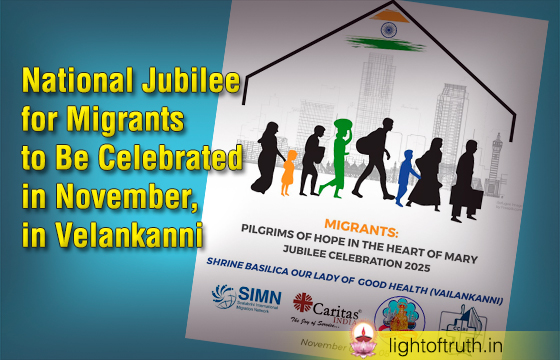
    The Commission for Migrants of the Conference of Catholic Bishops of India (CCBI) will be hosting the National Jubilee for Migrants celebration at Our Lady of Good Health Basilica, Velankanni, from November 6 to 8, 2025. The event, themed “Migrants, Missionaries of Hope in the Heart of Mary”, aims to honour and celebrate the resilience, faith, and contributions of migrants across India. Cardinal Michael Czerny, Prefect of the Dicastery for Promoting Integral Human Development, will inaugurate the celebration. The CCBI Commission for Migrants, the Scalabrini Congregation, and Caritas India are jointly organising the Jubilee celebration. Over 300 migrants, as well as members of the Commission and several religious congregations, have already confirmed their participation, highlighting the scale and significance of the event. In a press statement, Fr. Jaison Vadassery, Executive Secretary of the CCBI Commission for Migrants, emphasised that the celebration will be a moment of grace, renewal, and communion. He encouraged participants from all across the country to gather in faith and hope at the feet of the Blessed Mother to celebrate the missionary spirit of migrants in the life of the Church.

  • Supreme Court Stays Madras High Court Ruling on SC Status After Christian Marriage

    Supreme Court Stays Madras High Court Ruling on SC Status After Christian Marriage

    The Supreme Court stayed the Madras High Court’s decision that marriage under the Indian Christian Marriage Act, 1872, constitutes automatic conversion to Christianity and leads to loss of Scheduled Caste (SC) status. A bench comprising Justices Vikram Nath and Prashant Kumar Mishra issued the stay order notice in response to a petition filed by Theroor Town Panchayat Chairman V. Amudharani, challenging the High Court ruling.

    The controversy arose after the Madras High Court, in a verdict delivered by Justice L. Victoria Gowri, held that Amudharani, who married a Christian man in 2005 at St. Antony’s Church in Kulasekaramputhoor, ceased to retain her SC status under constitutional provisions. The High Court noted that voluntary submission to Christian marriage rites, including publication of banns, automatically changes a person’s socio-legal identity, irrespective of whether he or she has received formal baptism or not. This led the court to conclude that Amudharani now fell under the Backward Classes category and was ineligible to continue serving in the SC-reserved post of chairman of the panchayat.

    The legal dispute began when petitioner V. Iyyappan challenged Amudharani’s eligibility for the post, arguing that her original status as a member of the Hindu Pallan community (SC) was nullified by her Christian marriage. The High Court emphasised that the Indian Christian Marriage Act does not allow civil interfaith marriages, and marrying under the Act effectively identifies both spouses as Christians for legal purposes. Citing the Constitution (Scheduled Castes) Order, 1950, and relevant precedents, the court directed concerned authorities to disqualify Amudharani from the post of chairman of the Theroor town panchayat and take necessary action against her under Section 50(1)(ddd) of the Tamil Nadu District Municipalities Act, 1920. The Supreme Court’s intervention now puts the High Court ruling on hold, pending further hearings on the matter. The next hearing date is expected to be scheduled after the responses to the apex court’s notice are filed.

  • Indian Jesuits dump fossil fuels to mitigate climate change impacts

    Indian Jesuits dump fossil fuels to mitigate climate change impacts

    Jesuits in the four provinces of India’s western region are leading a quiet revolution by aiming to become energy self-sufficient using only sunlight, setting an example for others to follow for sustainable, clean energy to protect the environment. About 60 institutions “have achieved zero electricity bills for quite some time and demonstrated that it is a viable project to save the only home we have — the fragile Earth,” says Father Frazer Mascarenhas, coordinator of the Ecology Platform of Jesuit West Zone Provinces in India. One of them is Vinayalaya, a Jesuit-run training centre, in western Mumbai (formerly Bombay). The centre has completely switched to solar power to generate renewable energy. The project aims to install solar panels in all 110 Jesuit residences, schools, and institutions in the four Jesuit provinces of the Western Zone — Bombay (Mumbai), Goa, Gujarat, and Pune — that together have 1,340 Jesuit priests and brothers.