Blog

  • Campus deaths reveal Church’s unfinished work in India

    Campus deaths reveal Church’s unfinished work in India

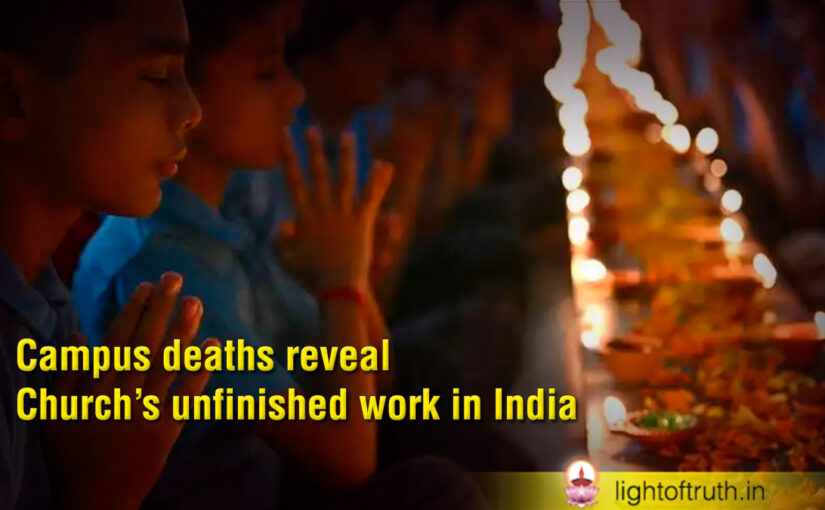
    The regulations aimed to promote inclusion by requiring equity committees with representation from Scheduled Castes, Scheduled Tribes, Other Backward Classes, persons with disabilities, and women. While intended to improve institutional accountability, critics raised concerns that committees chaired by vice chancellors may struggle to challenge existing power structures. Church leaders have emphasized that caste discrimination remains a serious issue, even within Christian educational institutions. They recalled past demands for justice after student deaths linked to discrimination and stressed that denying rights to Dalit Christians is both discriminatory and unconstitutional. Religious leaders also urged the Church to speak more strongly when efforts to address inequality are portrayed as divisive.

    Legal experts have offered differing views. Some political voices welcomed the Supreme Court’s stay, arguing it could reduce tensions, while others pointed to constitutional protections against discrimination and stressed the need to confront social inequalities openly. Studies show that caste-based exclusion continues across religious boundaries, affecting educational outcomes and contributing to higher dropout rates among marginalized students. Dalit Christians, in particular, face challenges as conversion often leads to loss of certain affirmative action benefits while social prejudice persists.

    Church statements in the past have declared casteism a sin, but observers say implementation has been uneven. Some institutions have introduced independent anti-discrimination mechanisms and curriculum reforms, showing possible paths forward. Leaders say meaningful change requires stronger policies, independent oversight, and continued advocacy for marginalized communities.

  • CBCI Elects New Office Bearers and Committee Heads at 2026 General Body Meeting

    CBCI Elects New Office Bearers and Committee Heads at 2026 General Body Meeting

    The Catholic Bishops’ Conference of India (CBCI) has elected new office bearers and committee heads to lead its various commissions and institutions as the 2026 General Body Meeting concluded.

    The week-long assembly, held from February 4 to 10 at St. John’s National Academy of Health Sciences, brought together bishops from across the country to reflect on pastoral priorities and the Church’s engagement with contemporary society. Key discussions focused on social welfare, education, healthcare, pastoral ministry, and coordinated responses to emerging challenges facing both the Church and the nation.

    During the proceedings, Archbishop Anil Couto of Delhi was elected secretary general. Several bishops were also appointed to head important CBCI offices and institutions to ensure coordinated leadership across different sectors.

    Bishop Vincent Paulos was elected chairman of the Office for Labour and Migrants, while Bishop Joseph Kallaranghat will head Dialogue and the Desk for Ecumenism. Bishop Johannes Gorantla, OCD, was chosen to lead the Office for Clergy, Religious and NVSC, and Archbishop Elias Gonsalves will chair Education and Culture. Archbishop Thomas Netto will oversee Healthcare, and Bishop Jaya Rao Polimera will head the Office for Scheduled Castes and Backward Classes.

    Additional appointments include Bishop Telesphore Bilung, SVD, for Tribal Affairs; Bishop Vijay Kumar Rayalara, PIME, for Social Communications and NISCORT; Archbishop Raphy Manjaly for Doctrine; Bishop Ivan Pereira for Environment and Climate Change; Archbishop Peter Machado for Justice, Peace and Development; and Archbishop Linus Neli for Caritas India. The meeting concluded with a renewed commitment to unity, service and collaborative pastoral mission.

  • CCBI Trains Women Religious in Financial Administration in Goa

    CCBI Trains Women Religious in Financial Administration in Goa

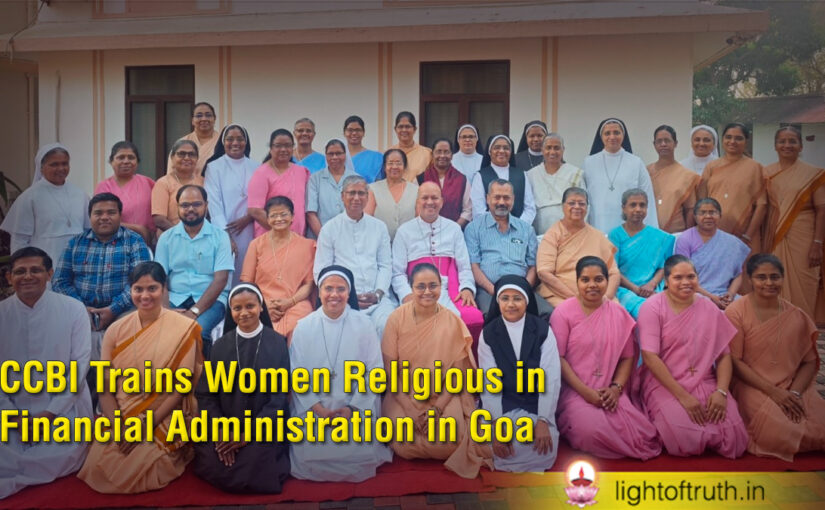
    Thirty-five women religious from 11 congregations are taking part in a five-day Financial Management Training Programme in Goa aimed at strengthening responsible financial administration within Church institutions. The programme, organised by the CCBI Extension Secretariat at Shanti Sadan, runs from February 10 to 14 and focuses on promoting transparency, accountability, and effective stewardship of resources. The training began with a Eucharistic celebration presided over by Auxiliary Bishop Simião Purificacão Fernandes of Goa. In his homily, he encouraged participants to remain “PURE” in their service, describing it as Purity of intention, Understanding the purpose of resources, Responsibility with compassion, and Evangelical witness through integrity. Church leaders present highlighted that good financial administration helps build trust and credibility within religious communities and their ministries.

    The programme has been designed especially for provincials and provincial financial administrators. Sessions are being led by chartered accountants who provide practical guidance on financial planning, compliance, ethical management, and transparent reporting. Organisers said the aim is to equip women religious with skills that support sound governance and responsible decision-making in Church institutions. In addition to academic sessions, participants will take part in a pilgrimage to important sacred sites in Goa, including the Basilica of Bom Jesus and the Sé Cathedral, allowing time for spiritual reflection alongside training. Shanti Sadan regularly conducts specialised courses for Church administrators, including programmes in diocesan management and finance. These initiatives seek to strengthen leadership capacity and promote accountability across Church structures while encouraging faithful stewardship of resources in service of the wider community.

  • Sr. Vineeta CSJ Appointed National Secretary of CRI for 2026–2030

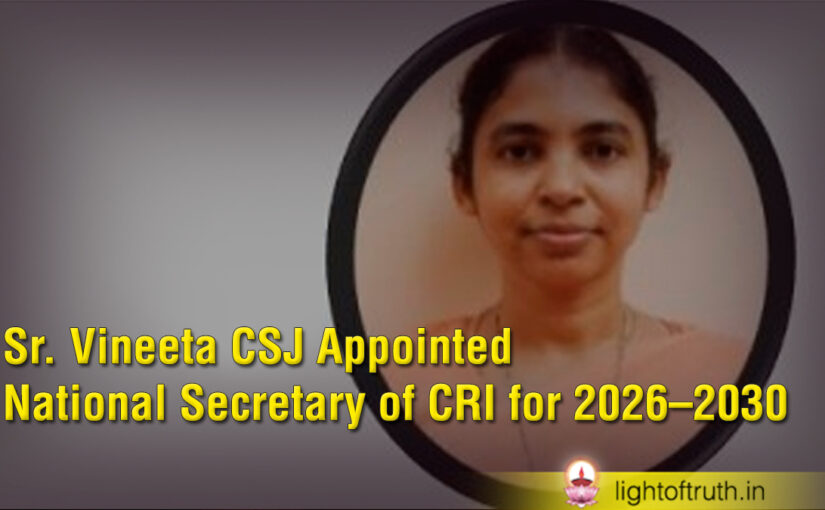
    Sr. Vineeta CSJ Appointed National Secretary of CRI for 2026–2030

    The Conference of Religious India (CRI) has appointed Sr. Vineeta CSJ as its National Secretary for the 2026–2030 term. The announcement was made by Fr. Saju Chackalackal CMI, National President of CRI. A member of the Congregation of the Sisters of Saint Joseph of Chambéry, Tamnaya Province, Bhopal, Sr. Vineeta made her Final Profession on June 28, 2009. She brings to her new national responsibility a rich blend of academic excellence, administrative experience, and pastoral commitment, reflecting years of dedicated service within religious life and the wider Church.

    Currently serving as Secretary of the Kerala Conference of Major Superiors (KCMS), she has actively fostered coordination among religious congregations. Her regional experience is expected to strengthen CRI’s national initiatives and inter-congregational collaboration during her tenure.

  • Church leaders mourn deaths in coal mine blast in India’s Meghalaya

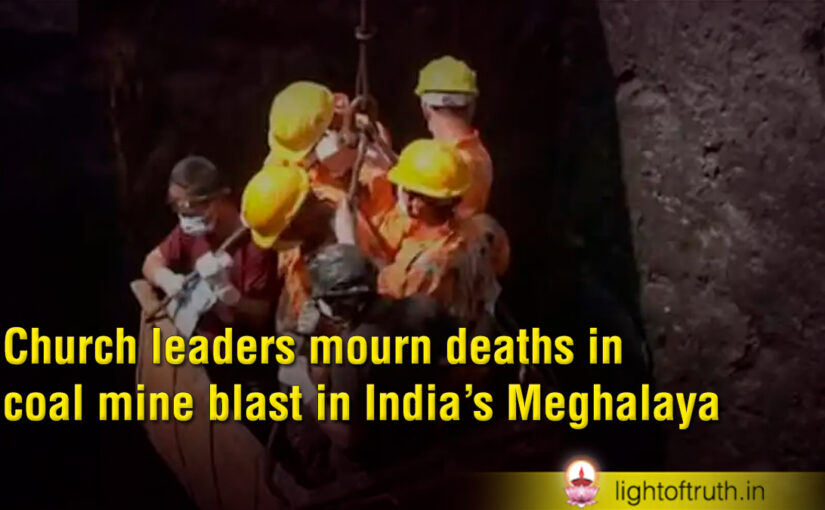
    Church leaders mourn deaths in coal mine blast in India’s Meghalaya

    Church leaders have expressed deep sorrow following a deadly coal mine explosion that killed at least 31 people in Meghalaya, a Christian-majority state in northeast India. According to the Meghalaya State Disaster Management Authority, the accident also left 10 people injured. Most of the victims were migrant workers from neighbouring Assam and Nepal. Archbishop Victor Lyngdoh of Shillong offered condolences to the families who lost loved ones, describing the tragedy as heart-breaking. He also called on authorities to take stronger action to prevent similar disasters and to curb illegal mining activities that continue to endanger lives.

    The explosion occurred on Feb. 5 in a coal mine located in the remote Mynsyngat–Thangsko area of East Jaintia Hills district. Reports indicate that a dynamite blast inside the mine caused the accident. A large rescue operation involving multiple agencies was carried out, but access to information remained limited due to the area’s remote location. Church officials said they are still unsure whether Christians were among the victims. Meanwhile, state authorities have begun action against illegal mining operations following the tragedy. Two mine owners have been arrested, and officials seized more than 6,900 metric tonnes of illegally mined coal during raids.

    Meghalaya Chief Minister Conrad Sangma has ordered a judicial inquiry and announced compensation of 200,000 rupees for families of the deceased. The Meghalaya High Court has also taken notice of the issue and sought explanations from local officials regarding the continued presence of illegal mining despite a ban imposed by the National Green Tribunal in 2014.

    The incident has renewed concerns about hazardous rat-hole mining, which remains widespread despite legal restrictions. Church leaders and activists have renewed calls for stronger action against caste discrimination in educational institutions following debates over University Grants Commission (UGC) equity regulations and a recent Supreme Court stay on their implementation.

  • Indian tribal people decry lack of presidential response to land plea

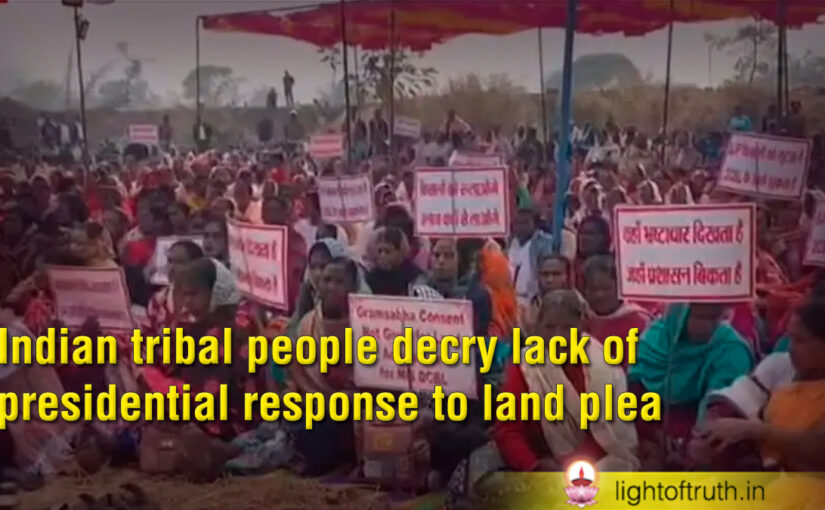
    Indian tribal people decry lack of presidential response to land plea

    Tribal communities in India’s eastern Odisha state, including many Christians, have expressed disappointment after President Droupadi Murmu did not respond to their appeal seeking protection of ancestral lands from industrial acquisition. Local tribal leaders said they felt particularly hurt as Murmu herself belongs to a tribal community from Odisha. Despite the lack of response, community representatives affirmed that their struggle to safeguard tribal land rights would continue until justice is achieved. The concerns centre on a proposed expansion of limestone quarry operations by Dalmia Cement Bharat Ltd. near Rajgangpur in Sundargarh district. Tribal groups claim the company plans to acquire additional land affecting hundreds of families, adding to previously sanctioned areas. Protests against the project included a major highway blockade in January that halted work at the site for several hours. Community organizations allege that the acquisition process has moved forward without the informed consent of the Gram Sabha, or village assembly, which is legally required under India’s constitutional safeguards for designated tribal regions. The area falls under the Fifth Schedule, which provides special protections for tribal lands and mandates consultation with local councils before external development projects proceed. Church representatives supporting the tribal cause say such projects risk displacing vulnerable communities who depend on traditional farming for their livelihood. Residents also fear losing cultural identity tied to ancestral lands. Tribal leaders maintain that despite existing legal protections, industrial expansion continues to threaten their land rights and long-term economic security.

  • Delhi High Court Questions Delay in Appointments to National Commission for Minorities

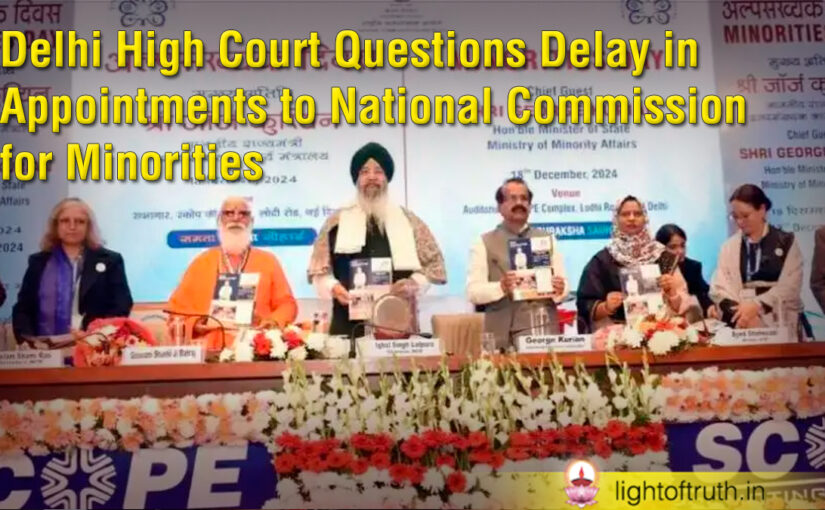
    Delhi High Court Questions Delay in Appointments to National Commission for Minorities

    The Delhi High Court has expressed concern over delays in appointing new members to the National Commission for Minorities (NCM), noting that the statutory body has remained largely non-functional since late 2024 due to prolonged vacancies.

    A bench comprising Chief Justice D.K. Upadhyaya and Justice Tejas Karia described a status report filed by the Ministry of Minority Affairs as “bald and vague,” stating that it lacked clarity on when the appointment process began and the stages completed so far. The court directed the government to submit a fresh affidavit outlining concrete steps taken and a clear timeline for filling the vacant posts.

    The observations came during a hearing of a public interest litigation that alleged the government had failed to appoint a chairperson, vice-chairperson, and five members to the commission, effectively paralysing its functioning. Established under the National Commission for Minorities Act, 1992, the NCM serves as a quasi-judicial body tasked with safeguarding the rights and interests of minority communities.

    Several positions became vacant after members completed their terms in November 2024, while the chairperson’s tenure ended in April 2025. The commission traditionally includes representatives from six notified minority communities — Muslims, Christians, Sikhs, Buddhists, Parsis, and Jains. The High Court had earlier raised concerns over the delays, highlighting the importance of maintaining functional institutional mechanisms for minority welfare and protection.

  • Salesians Conclude Centenary Celebrations in Kolkata with Focus on Youth Empowerment

    Salesians Conclude Centenary Celebrations in Kolkata with Focus on Youth Empowerment

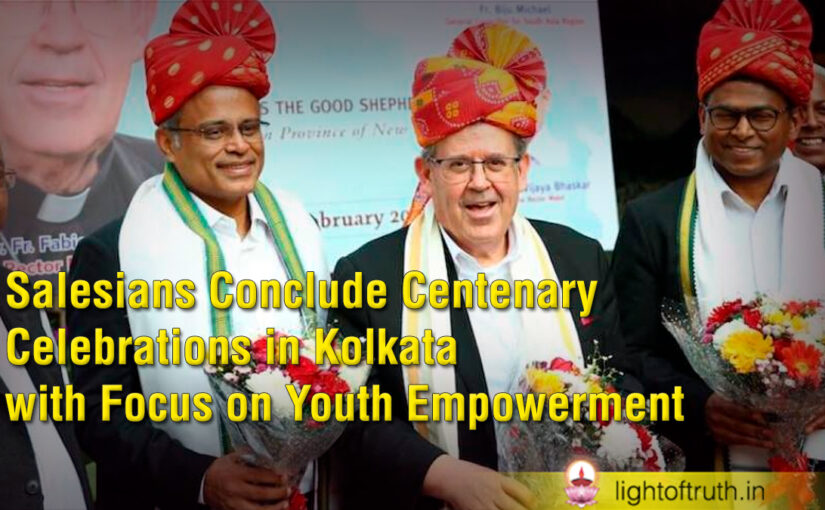
    The three-year-long centenary celebrations of the Salesian Province of Kolkata concluded with a grand finale highlighting renewed commitment to youth education and empowerment. More than 2,000 participants attended the event at Don Bosco Park Circus, including leaders from 12 Salesian provinces in India and Sri Lanka, along with major superiors of religious congregations collaborating in youth ministry.

    Salesian Rector Major Father Fabio Attard, addressing the gathering, described the celebrations as a tribute to young people and the transformative role of education. He emphasised that poverty and unemployment are global challenges that can be addressed through the “arms of education and empowerment,” reaffirming the Salesian mission among vulnerable youth.

    Reflecting on the congregation’s history, he recalled that Saint John Bosco had envisioned a mission extending to India as early as 1886. The Salesians arrived in India in 1906, and the Kolkata province, the first in the country, was established in 1926 after taking charge of the Catholic Orphan Press and Cathedral parish.

    The centenary celebrations began on May 27, 2023, with a jubilee Mass at the Marian Shrine in Bandel presided over by Archbishop Thomas D’Souza of Calcutta. Outgoing provincial Father Joseph Pauria noted that the rector major’s presence inspired renewed enthusiasm for youth ministry. New provincial Father Sunil Karketta highlighted the importance of technical education in empowering young people.

  • Kerala Archdiocese Donates School for Displaced Families in Manipur

    Kerala Archdiocese Donates School for Displaced Families in Manipur

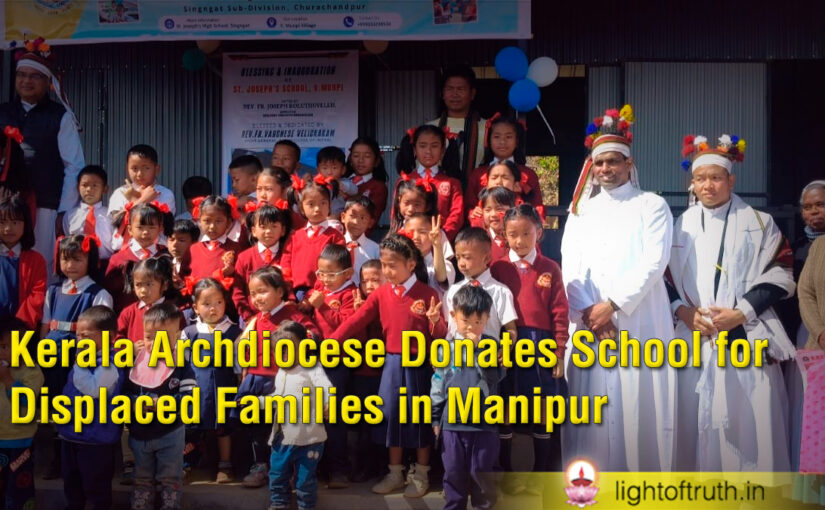
    A newly constructed school was inaugurated on February 7 at the Catholic resettlement centre for internally displaced persons (IDPs) at V. Munpi in Manipur, bringing renewed hope to families rebuilding their lives after recent ethnic violence.

    The school was made possible through the contribution of the social service department of the Archdiocese of Ernakulam-Angamly. The building was blessed by Fr. Varghese Vellickakam, vicar general of the Archdiocese of Imphal. Fr. Joseph Koluthuvellil, executive director and secretary of Welfare Services Ernakulam attended the inauguration.

    Though modest in structure, the facility represents a significant step forward for the displaced community. The resettlement centre includes 76 houses constructed with the support of the Archdiocese of Imphal and Catholic donors. Fr. Mung, parish priest of St. Thomas Parish, Singngat, religious sisters, and members of the resettled families were also present.

    During a felicitation programme, Fr. Mung highlighted the challenges faced by families adjusting to a new environment, noting that many lack prior experience in farming or business. He emphasised education as essential for rebuilding lives with dignity and stability.

    Fr. Varghese underscored the importance of gratitude and self-reliance, recalling the project’s beginnings and acknowledging divine providence. Fr. Joseph expressed joy at supporting the people of Manipur, describing the school as an investment in the children’s future and assuring continued assistance, including educational opportunities in Kerala. The new school stands as a symbol of solidarity, resilience and hope for the displaced community.

  • Vatican Radio celebrates 95 years with new jingle

    Vatican Radio celebrates 95 years with new jingle

    Marking the 95th anniversary of its founding, on February 12, 2026, Vatican Radio – Vatican News is renewing and relaunching one of the most recognizable elements of its identity: its jingle, the audio logo that has always accompanied the listeners of the Popes’ Radio.

    This project has been conceived to celebrate this historic milestone with a sign that merges tradition and contemporaneity.

    The new jingle has been entrusted to Maestro Marcello Filotei of the Musical Programs editorial team, led by Maestro Pierluigi Morelli. It will accompany listeners throughout the entire day of February 12, before becoming a permanent feature of regular programming.

    The new audio logos are the natural modern evolution of the historic orchestration of Christus Vincit created by Maestro Alberico Vitalini—based on a theme by Czech composer Jan Kunc—a distinctive and recognizable element of the Radio’s identity right from the beginning.

    The original Christus Vincit theme has been reworked in a modern key, maintaining a direct link with tradition while at the same time offering a new sonic guise in line with contemporary culture and sensibilities.

    The Prefect of the Dicastery for Communication, Paolo Ruffini, stated that, “Vatican Radio has always cultivated, even in its jingle, a special relationship with music that defines its identity.”

    “Music,” he said, “speaks to us of that dynamic harmony, never identical to itself, which we all seek in our lives. It generates resonances that become dialogue, dialogue that becomes communion, and memory that becomes life. Celebrating today the 95 years of our radio by revisiting the network’s jingles has precisely this meaning for us: to condense, in the few seconds of an audio logo, a history in which identity and communion merge, grow together, and make us feel at home.”