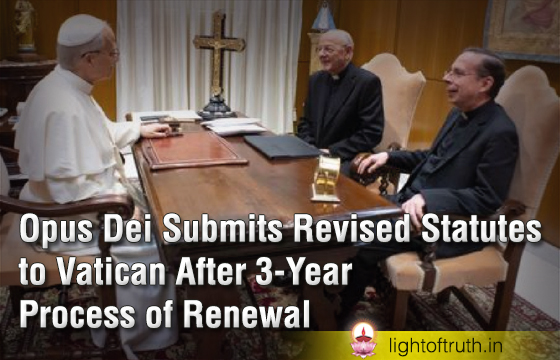
On June 11, 2025, Monsignor Fernando Ocáriz, Prelate of Opus Dei, marked a significant in the institution’s history. In a message to members of the prelature, he confirmed that a new proposal of statutes has been formally submitted to the Holy See, concluding a lengthy process initiated after Pope Francis issued the motu proprio «Ad charisma tuendum» in 2022. The development is more than procedural. It represents the culmination of three years of discernment, consultation, and adaptation—an exercise in ecclesial fidelity that has unfolded against the backdrop of both papal transition and internal evolution. The Vatican’s 2022 directive called for a clearer legal alignment of personal prelatures like Opus Dei with the broader canonical structure of the Church. This entailed re-examining how the prelature understands its own identity, governance, and mission in light of the Church’s ongoing emphasis on synodality and pastoral transparency.
For decades, Opus Dei’s canonical configuration as a personal prelature—granted by St. John Paul II in 1982—has stood as a unique model of clerical and lay collaboration. The current revision aims not to undo that framework, but to refine it under the evolving legal and pastoral priorities of the universal Church.
The Vatican will now examine the proposed statutes, a process that could take several months. In the meantime, Opus Dei continues its ordinary work of formation, spiritual direction, and evangelization across the world. But internally, the act of submitting the revised statutes signals a symbolic closure of one chapter and the cautious opening of another—an era of clarified identity, deeper communion, and renewed purpose under the guidance of the Holy See.

From a Railway Platform to the Altar: Abandoned Child Becomes a Priest
Twenty-eight years ago, a frightened five-year-old boy was found alone at Shoranur railway station. He had no memory of his parents or a family to