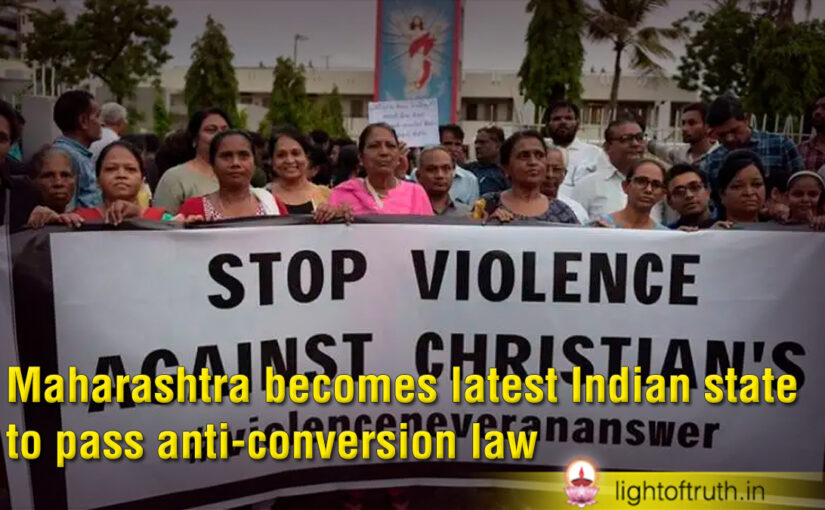
The Maharashtra Legislative Assembly on March 16 passed the Freedom of Religion Bill 2026, despite opposition from Christian groups and some political parties. The bill will become law after approval by the Legislative Council and the state governor.
The move makes Maharashtra the latest state to introduce a law regulating religious conversions. The ruling Bharatiya Janata Party government supported the bill, saying it aims to prevent conversions through force, fraud, coercion, or inducement.
The law proposes strict punishments. It includes up to seven years in jail and a fine of 100,000 rupees for illegal conversions linked to marriage. The penalty is higher if the case involves women, minors, or people from tribal or Dalit communities. Repeat offenders can face up to 10 years in prison.
Christian leaders and activists have raised concerns about the bill. They fear it could be misused to target minorities and restrict religious freedom. Some have also said the law may create fear among interfaith couples, as complaints can be filed easily.
Another concern is the requirement for people to give advance notice before converting. Critics say this may violate personal freedom and privacy. They also warn that vague terms like “inducement” could affect charitable activities such as education and healthcare services.
Legal experts have pointed out that making such offences non-bailable may lead to misuse in sensitive situations.
Church groups and civil society organizations have urged the government to reconsider the provisions and ensure that the law does not harm religious harmony or individual rights.
Leave a Reply