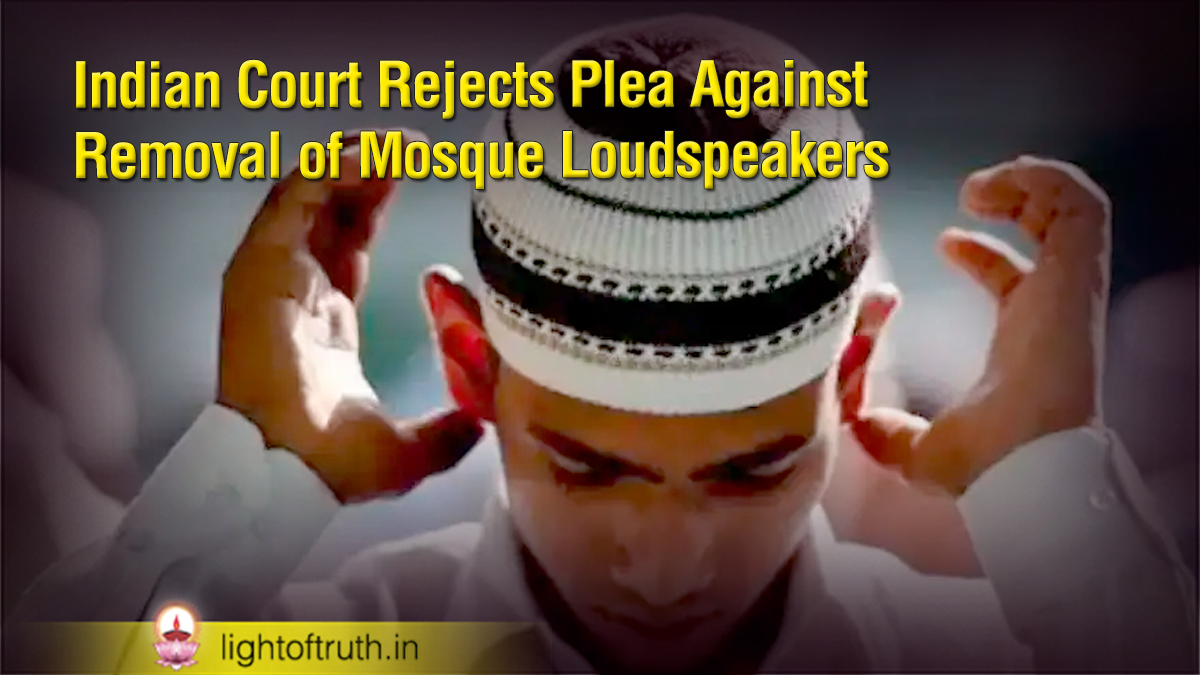
An Indian court has rejected a petition challenging the removal of loudspeakers from mosques, allowing authorities to continue enforcing restrictions on the use of loudspeakers at religious places. The case is part of a wider debate in India about religious freedom, public noise and the rights of different communities.
Authorities had taken action against loudspeakers being used at religious institutions as part of efforts to control noise levels. Reports said that thousands of loudspeakers had been removed from different religious places, including mosques.
The petition challenged the removal of loudspeakers from mosques and sought legal protection for their continued use. The court, however, declined to interfere with the authorities’ action.
The issue has generated discussion because loudspeakers are used by different religious communities for prayers, announcements and other religious activities. At the same time, excessive noise can affect people living near places of worship, particularly during early morning and late-night hours.
The court’s decision highlights the principle that religious practices are subject to reasonable regulation when they affect public order, health or the rights of other citizens. The ruling does not prevent people from practicing their religion; rather, it supports regulations concerning the use of sound-amplifying equipment.
The controversy also raises the question of whether rules should be applied equally to all religious institutions. A consistent approach is important if regulations are to be accepted as fair by different communities.
The judgment comes amid continuing efforts by authorities to enforce noise regulations at places of worship and other public locations. The case demonstrates the challenge of balancing religious freedom with the right of citizens to live without excessive noise. It also underlines the importance of applying public regulations fairly and consistently, regardless of the religious community involved.