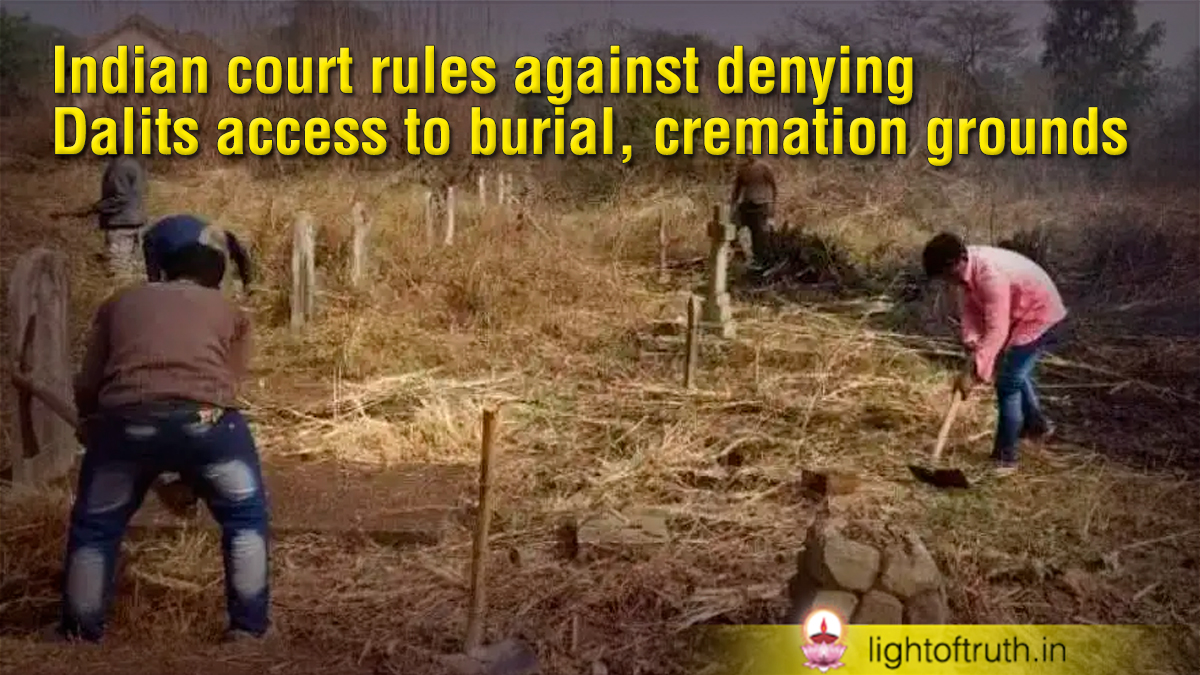
The Madras High Court has ruled that denying marginalized communities access to public burial or cremation grounds amounts to practicing untouchability and can invite criminal action.
In its February 11 order, made public on February 23, the court stated that preventing Dalits and other socially disadvantaged groups from using common burial spaces is “not just discriminatory” but a violation of the constitutional ban on untouchability. India outlawed the practice in 1950, making it a punishable offense, though reports indicate it continues in subtle forms in some rural areas.
The order was issued by Justice V. Lakshminarayanan while hearing three petitions related to a land dispute in Karumandisellipalayam village in Erode district. While official records classified the land as a bullock cart track, evidence showed parts of it had been used as a burial ground for more than 70 years. The inquiry also confirmed that several graves had been levelled in 2025.
The court directed district authorities to demarcate and fence the burial ground, prevent encroachments, expedite its reclassification, and take action against those responsible for disturbing graves. Church leaders and Dalit activists welcomed the ruling, calling it historic and a ray of hope for marginalized communities, including Dalit Christians. According to government data, more than 200 million Indians belong to historically disadvantaged groups, underscoring the continuing relevance of the judgment.