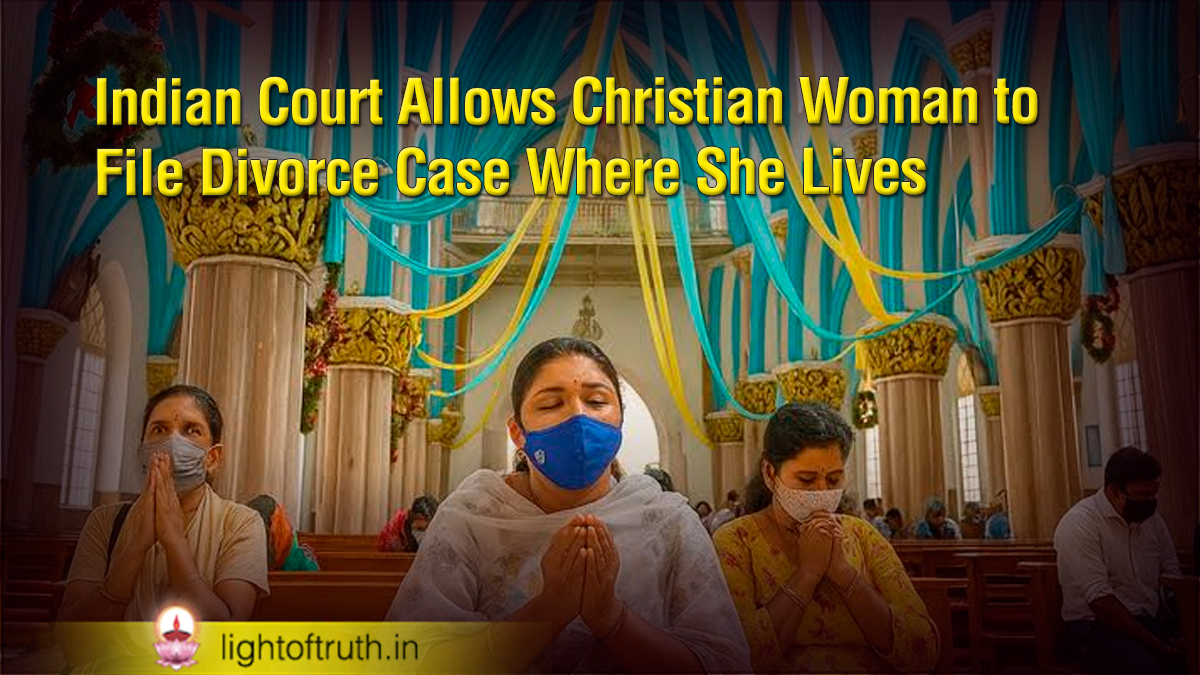
An Indian court has ruled that a Christian woman can file a divorce petition in the place where she currently lives, giving greater access to justice for Christian women seeking to end a marriage. The decision addresses restrictions created by an old colonial-era law that had made divorce proceedings more difficult for some Christian women.
Under the earlier legal arrangement, Christian women were required to approach a court connected with the place where their marriage was solemnized or where they had lived with their husband. This could create serious difficulties, especially for women who had moved to another city or state after separation.
The court’s ruling recognizes the practical difficulties faced by women who may no longer live near the place where their marriage took place. Allowing them to approach a court where they currently reside can make legal proceedings more accessible.
The issue is particularly important in cases involving separation, domestic difficulties and financial hardship. Travelling long distances to another court can increase the emotional and financial burden on a person already facing problems within a marriage.
The decision also highlights the need to interpret older laws in a way that takes present-day realities into account. Laws governing marriage and divorce must provide meaningful access to justice rather than create unnecessary barriers.
The ruling is significant for Christian women because it can make the legal process more convenient and accessible. It does not change the basic legal requirements for obtaining a divorce, but it changes where such proceedings can be initiated.
The decision has been welcomed as a step toward removing an outdated procedural barrier. It also draws attention to the broader need to ensure that women, regardless of their religious background, have reasonable and practical access to courts when seeking legal remedies. For Christian women facing marital breakdown, the ruling could reduce one important obstacle in approaching the justice system.