- Benny Nalkara,CMI
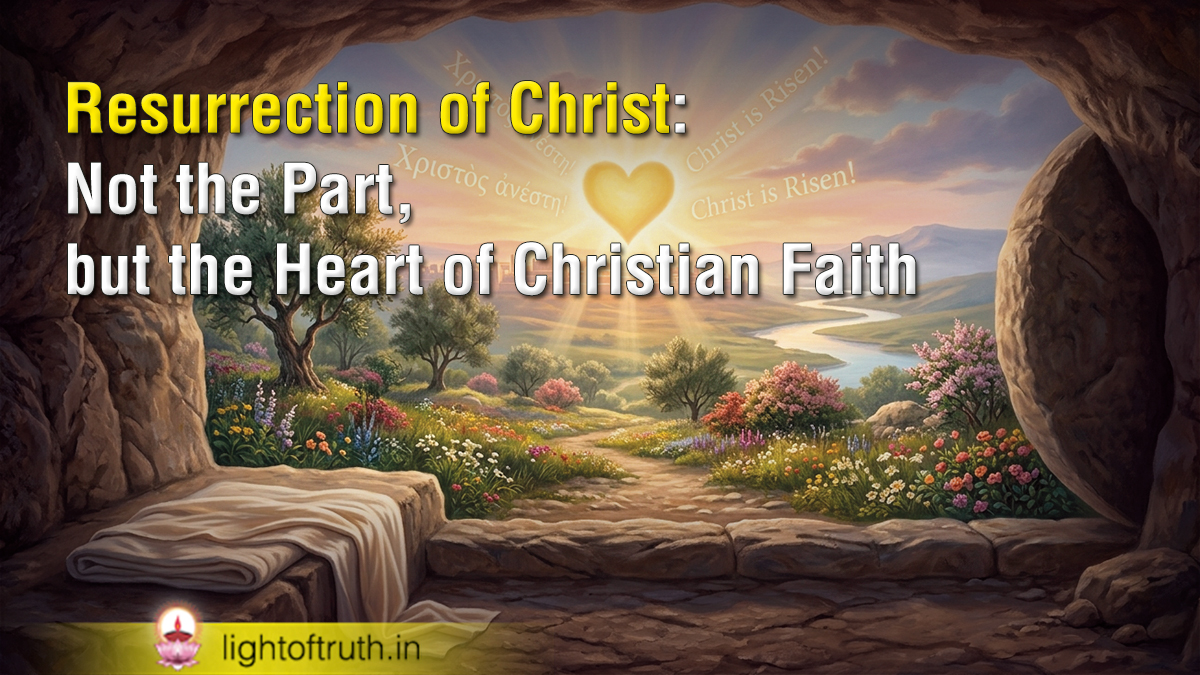
The statement of Paul the Apostle in First Epistle to the Corinthians 15:14—“and if Christ has not been raised, then our proclamation has been in vain and your faith has been in vain”—is one of the most decisive affirmations in all Christian theology. It places the resurrection of Christ at the very heart of faith, not as an optional belief, but as its foundation and meaning.
The chapter 15 of 1 Corinthians is all about the response of Paul to the questions on the Resurrection. 15:1-2 gives an introduction about the treatise on the resurrection. 15:3-8+9-11: speaks about the kerygma (proclamation) about the resurrection and its importance. The significance of death, burial, resurrection, appearance of Jesus Christ are stressed in 15:12-34: The close relationship between the resurrection of Christ and the resurrection of those who believe in him is vividly descripted.
The passage 15:12-34 is to be seen in the light of the profound experience of Paul in the Acts of the Apostles 17:22–31, where Paul the Apostle addresses the Athenians. His preaching reaches its climax in the proclamation of the resurrection of Jesus. However, the Greek audience, shaped by philosophical traditions that resisted the idea of bodily resurrection, largely rejected his message. Some mocked, others dismissed him politely, saying they would hear him again, and only a few believed (Acts 17:32–34). While the Jewish Pharisaic tradition was open to the idea of resurrection, the Greeks found it difficult to accept due to their worldview. This led Paul to assert strongly in First Epistle to the Corinthians 15:14 that without the resurrection, both preaching and faith are meaningless.
For Paul, the core of the Christian message—the kerygma—consists of Christ’s death, burial, resurrection, and appearances (1 Cor 15:3–8). Theologically, the resurrection is not merely a consequence of Jesus’ death; rather, Jesus died in order to rise, giving a new and positive meaning to death. Death, though a biological reality, is transformed into a passage to life. Faith in the resurrection affirms the goodness of material creation and points toward its ultimate fulfilment. The human body, animated by the divine spirit, reaches its highest destiny in this transformation. Christ’s resurrection is thus a foretaste and guarantee of our own future resurrection.

“If Christ has not been raised, then our proclamation has been in vain and your faith has been in vain… without the resurrection, Christianity is empty; with the resurrection, everything—proclamation, faith, hope, and life—becomes full of meaning.”

Paul proclaimed a historical and saving event: that Jesus, who was crucified, has risen from the dead. This proclamation (kerygma) is the core of the Gospel. If Christ has not been raised, then the entire apostolic preaching collapses into emptiness. The courage of the apostles, their sacrifices, and even their martyrdom would lose their purpose if the resurrection were not real. For Paul, the Christian faith is not simply belief in ideas or values; it is trust in a living person—the risen Christ. If Christ remains in the grave, then faith is reduced to illusion. It would mean that sin is not truly conquered, death is still the final word, and humanity remains without ultimate hope. Faith would then be nothing more than a human construction, unable to save or transform.
Paul’s statement also reveals a deeper theological insight: the resurrection is what validates the cross. Without the resurrection, the death of Jesus could be seen as a tragic failure. But because He is risen, the cross becomes the means of salvation, victory over sin, and the revelation of God’s love. The resurrection confirms that Jesus is truly Lord and that His mission is fulfilled. Furthermore, this truth gives meaning to human life and destiny. If Christ is raised, then death is not the end but a passage to new life. Suffering is not meaningless but can lead to glory. Human existence is not confined to decay but is destined for transformation. The resurrection opens the future and gives direction to history.
Finally, Paul’s words are not only doctrinal but existential. They challenge every believer: Is our faith rooted in the living Christ, or is it merely external practice? Are we witnesses of the resurrection in our lives, or are we holding on to an empty form of religion? Thus, Paul’s declaration draws a clear line: without the resurrection, Christianity is empty; with the resurrection, everything—proclamation, faith, hope, and life—becomes full of meaning. The entire Christian life stands or falls with this one truth: Christ is risen, and therefore faith is real, hope is alive, and love is victorious.
Paul’s assertion in 1 Corinthians 15:14 points to the transformative power of the Resurrection, suggesting that it’s not just an event to be acknowledged, but one that should actively change our lives. It reflects the ultimate victory over death and sin, offering us new life and hope. The resurrection is not a part of faith placed alongside other beliefs; it is the heart that gives life to all. The resurrection is the source of Christian joy, the foundation of its mission, and the promise of its destiny.