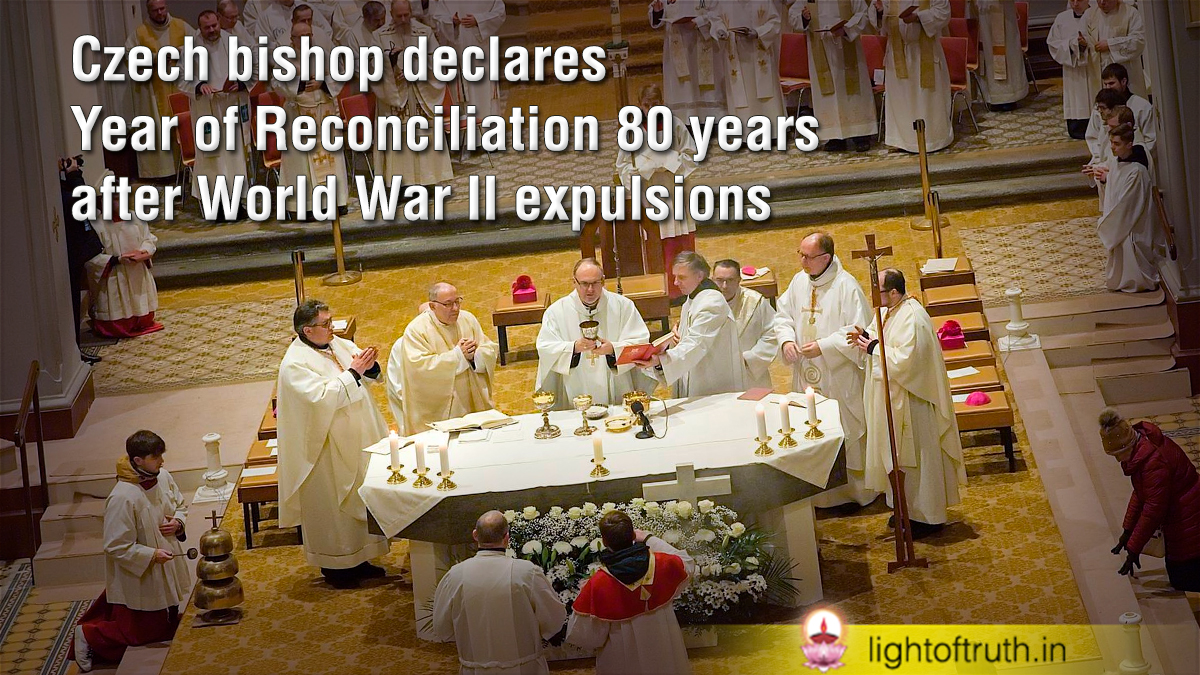
Eighty years after the expulsion of ethnic Germans from Czechoslovakia, a Czech bishop has declared a local Year of Reconciliation to address wounds that remain from World War II and its aftermath. Bishop Stanislav Přibyl of Litoměřice announced the initiative in a pastoral letter dated Dec. 31, 2025, following the end of the Jubilee of Hope on Jan. 6. The year marks two anniversaries on Jan. 13: the 1866 healing of Magdalena Kade and the 1946 founding of Ackermann-Gemeinde, a Catholic reconciliation group established by expelled Germans.
“The end of World War II brought not just joy and relief but also reckoning with people and the past,” Přibyl wrote in his letter. The war’s aftermath caused displacement and resettlement of populations across Central Europe, leaving lasting scars on the region.
After Nazi Germany annexed the Sudetenland in 1938 and established the Protectorate of Bohemia and Moravia, the majority-German region became part of the Reich. Following Germany’s defeat, Czechoslovakia expelled approximately 3 million ethnic Germans between 1945 and 1946, primarily from the Sudetenland region that now forms part of the Diocese of Litoměřice.
The bishop acknowledged that the question of whether the expulsions were justified remains a matter for historical debate. However, the displacement remains visible in demolished houses without owners and in churches that are abandoned or slowly being rebuilt.
The bishop emphasized that collective guilt, anger, and desire for revenge accompanied the displacement, along with “the sudden acquisition of property without work and closer ties to the place.” Some departing Germans were robbed, raped, or humiliated, a few committed suicide, and there were several massacres, Přibyl wrote.
Following a meeting of the diocese’s priests’ council in November, Přibyl declared the local jubilee of forgiveness and reconciliation. Monthly gatherings will take place in locations where the deportation was particularly cruel, including Terezín (Theresienstadt), which hosted a Nazi transit camp during World War II. The events will include Christian-Jewish prayer services and Masses of reconciliation. The bishop hopes for “an ecumenical and interfaith spirit” at these gatherings, welcoming Christians, Jews, and Heimatsleute — Germans with deep historical ties to the region.