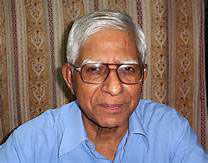
Kurien Kunnumpuram SJ
(Papal Seminary, Pune)
You have completed 45 years in the Papal Seminary. As a teacher and a formator, how satisfied are you?
I am happy about the time I spent here.
What makes you feel happy?
A large number of students have profited from my presence and my work. The other day, two priests, one from Udaipur and another from Palai visited me here, and one of them said, “Father, when I was leaving the seminary you told me: Do not to use priesthood for making money, you have enough money at home; make a difference to the people with whom you work. I have followed that advice.” I really feel happy on such occasions.
Over the years, do you think the concept of priesthood or the way priestly life is lived in India has changed?
Yes, it has changed.
What change you have noticed?
In earlier times, the approach of priests was more cultic. Priests and the Eucharist went hand in hand. Some years ago, I was the animator of the deacons. They are here from June to October. I interviewed each one of them. I asked them what kind of a priest they wanted to be. One of them said he wants to become people’s priest. I asked him what he meant by that. He said he would get interested in the problems and needs of the people. There I see a difference. Whether he practised what he said, I can definitely say: the perceptions and convictions of the new generation about priesthood have changed.
However, over the years the quality of seminarians has gone down intellectually and even at the level of human qualities. Secondly, they come mostly from the lower middle-class and perhaps from poor families, and therefore there is a problem with the kind of values they bring with them. Thirdly, some 30% of them don’t seem to be interested in profiting by the formation they get here. It is a question of motivation. These are three things I have noticed over the years.
Clericalism also has become a problem. You hear Pope Francis speaking about it. How have you prepared these priests to give laymen their due within the Church?
We, the staff members, have communicated a message to the seminarians; we are not ambitious for power, we don’t boss over them, anybody can walk into any room to meet the formators and talk to them. So, by example we are trying to communicate that they should give to the people under their charge serious consideration. Secondly, at least in our classes we insist that a priest must be at the service of the people. There is no guarantee that they will practise it, but we do our part.
Don’t you think clericalism is also an issue in the Indian Church as a whole?
Yes and no. There are several priests, especially in mission territories, who will die for the people. They make no show of power and prestige. We also come across priests who establish themselves as masters of the house and the parish and boss over people. What bothers me is not clericalism, but money-mindedness. A large number of priests in India are making money and they end up becoming money-minded people. We need money, but making money should not be the main concern of a priest.
Why are the later generations becoming money-minded, unlike the older generations?
One reason for it could be that quite a number of our students today come from poor families and therefore they see priesthood as a means for climbing up the social ladder. Secondly, after some years in the priesthood, one asks: What did I gain? Sometimes people are ungrateful. Therefore, earning money and leading a comfortable life becomes their purpose inlife. This is how I analyse it, but we have not made a serious study of it.
I spoke about clericalism. Priests also have to relate to adult women, nuns and girls. How do you nurture and train them to have a mature relationship with them?
In the papal seminary we allow seminarians to deal freely with women. We have about 75 sisters studying in JDV every year. Some of them definitely profit by that, because they may never have dealt with women and Sisters before. Others become crazy. So, to some extent, we are succeeding, but it also makes overseeing a little difficult.
As a theologian and formator, do you think that in India nuns are taken seriously by the Church?
No, I don’t think so.
Why?
In my observation, priests want nuns to clean the church, take care of altar clothes and all that. Rarely do you find a priest who thinks of Sisters as partners in the ministry. We should discuss the ministry with the Sisters and allow them to contribute their ideas to its planning. This happens very rarely. Majority of the priests have a domineering attitude towards Sisters. Probably, we imbibe this attitude at home. Women are equal members of the human family. Some twenty years ago, Sr Rekha Chennattu, who made a study of all the sisters in Pune Diocese, and questioned about what in their opinion is the attitude of professors, theology students and others towards women. The Sisters responded that the professors were the most open and receptive, theology students were the least and sister colleagues were no much better. In the prevailing culture of India, we are generally against women and we don’t respect women.
All over Kerala and also in the rest of India there is a dearth of vocations to convents; why is that happening?
We have not made a study of it, but I have my own theories regarding it. If there is only a boy and a girl in the family, the boy may be allowed to become a priest but the girl won’t be allowed to become a nun, because parents do not feel nuns are happy in the convent. They will say that the boy can manage, but that the girl will suffer. We have not been able to communicate the right message to the people that a woman’s vocation to religious life is a very precious thing. They are collaborators in Christ’s mission. Many years ago we had in the Papal Seminary, Sisters running our kitchen; during the first six years there were Holy Cross Sisters and then for another six years the Fatima Sisters. Fr Carlos De Melo, one of the oldest members of our community, said that it was not fair. These women don’t become nuns in order to take care of priests. That intervention freed Sisters from Kitchen duty. I wonder how many people even now think that way. There are many bishops’ houses where Sisters work in the kitchen. Nuns are not meant for that. They have a vocation and a mission. This has not been highlighted, and therefore parents are not happy about sending their daughters to the convent.
Don’t you think there is more of pentecostalism or biblicism rather than serious studies going into sermons?
We have here a practice: Third year theologians preach in the chapel every Sunday. I have heard their sermons. They were of two kinds. Majority of them preach as if they have never done any theology. They come and give pious exhortations. The other half come and give textbook theology, which has not been assimilated. In other words, their intellectual formation has had no creative impact on them. So they come and preach as people who have studied the Bible, but have not understood its message. The fault is ours, not theirs.
You seem to be very negative about a seminary that is renowned for its intellectual calibre?
That is because we are a faculty that is interested in giving degrees, not so much in forming pastors. We are failing in forming intellectuals, because they are here to become priests. Therefore, this combination of academic studies and priestly formation is a failure, not only here, but in the Catholic Church as a whole.
You mean the two must be separated?
Yes, pastors need not be scholars and scholars need not be pastors. The new document on priestly formation speaks of five years of priestly training, and they call it a period of discipleship. What they should insist on is having disciples who have a pastoral mission. If we need to train them for that, you may not even need five years. People who understand others, who can communicate Christ’s message in a powerful way, who can conduct group meetings, who can dialogue with people, they can be trained without these degrees. Therefore, by trying to train an individual both to be scholar and pastor, we are failing in both. Ninety percent of our students don’t go for postgraduate studies, and therefore they are not going to become scholars. Years ago Fr George Soares Prabhu, one of India’s most original Bible Scholar, suggested that we have two streams in theology; pastoral stream with a very high degree of pastoral training and an academic stream. Probably it was a wise suggestion.
We are living in a capitalist consumer culture which is very much protestant, as Max Weber said. Don’t you think the protestant ideology and attitudes are slowly infiltrating the Catholic Church?
Yes and no. The phenomenon of Pope Francis intrigues me. He is totally for the poor and lives a simple life. A large section of the Catholic population, not all, is attracted to that. Therefore, in the Catholic Church we still have appreciation for something that is against protestant capitalism. This is a fact. On the other hand, globalization has made us judge all our undertakings in terms of profit and loss. There we are like protestants and capitalists. This is a sad thing, but it is happening.
There is a great amount of charismatic renewal happening all over the Church in India. The charismatic movement is a borrowed form of Pentecostalism. Don’t you think it represents a watering down of the Catholic identity?
Positively, charismatic movement has brought back emotions into religious life. A lot of people are reading the Bible. They are not helped to read it properly, but they are reading. Old ladies have got a Bible in their hand today. Negatively, in their entire preaching there is no real concern for justice. We made a survey of the Potta retreat centre. We found that there the entire focus is therapeutic. People will give up drinks, smoking etc, and we are satisfied with that.
Is it not same as Pentecostalism, which preaches the health-and-wealth gospel?
That is very true, but the saddest part of our study was that one of the leading preachers at a famous retreat centre, who was also its director, was a product of our Papal seminary. Despite the training he got here, he never touched on the topic of justice. There is no prophetic dimension with them. If you follow the gospel, you will be counter-cultural. That is not happening. Therefore, my reading of the situation is this: the charismatic movement has an immediate appeal, because people think their father has stopped drinking and smoking, family quarrels have gone and so on. In the long run, it is harmful. It is not even fully Christian. I expect this movement to die out within ten to fifteen years. We will have to teach people what true spirituality is, what the gospel centred way of life is, and then hope that the Church will recover its identity.