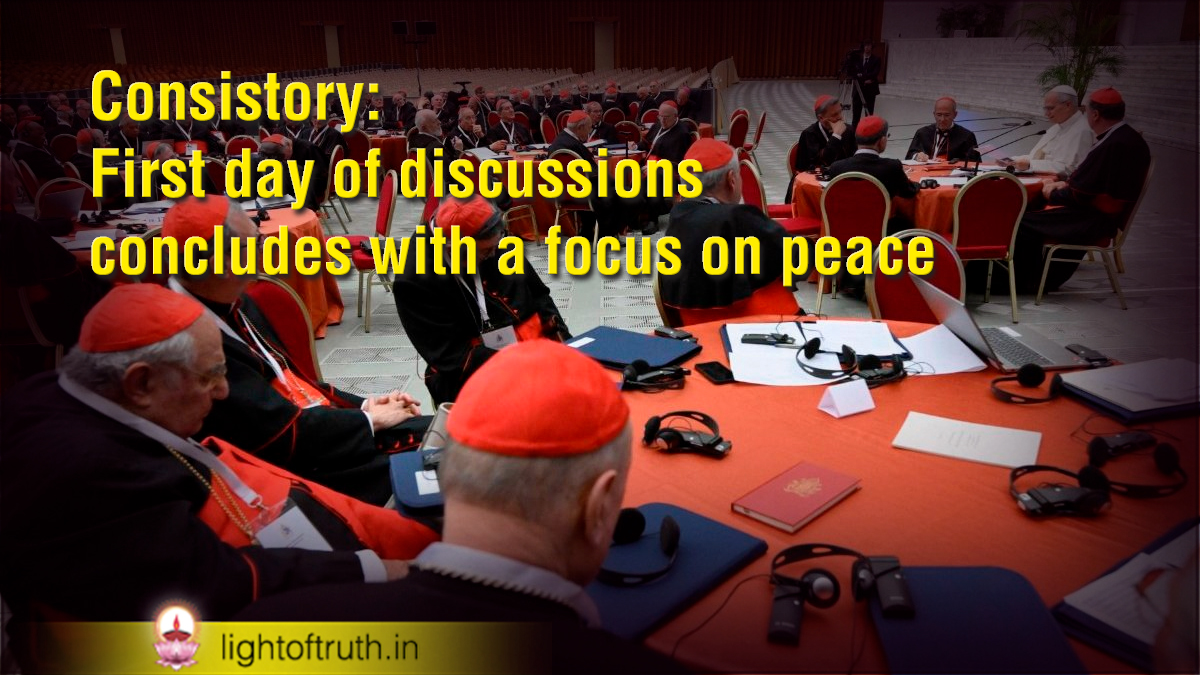
In the Paul VI Hall, the second session of the Extraordinary Consistory centred on peace, emphasizing the need to work toward building peace and a “civilization of love.” Many groups also emphasize the need to move beyond the logic of the “just war” doctrine and instead speak of the right to proportionate self-defence.
The afternoon session opened with prayers for the “painful situation in Venezuela” and for the many victims of the recent earthquake.
The session, entitled “The Culture of Power and the Civilization of Love,” was devoted to reflection on Chapter Five of the encyclical Magnifica Humanitas. Cardinal Víctor Manuel Fernández, Prefect of the Dicastery for the Doctrine of the Faith, delivered the introductory address. Pope Leo XIV attended the opening of the session and returned later for the plenary meeting.
The discussions then got underway. Eleven groups reported back to the assembly. All addressed the challenges of the present time, highlighting “the dehumanizing force of the culture of power, its universal reach, the temptation to conform to the logic of the powerful, and the normalization of war and polarization, which lower society’s tolerance for violence and encourage dangerously simplistic approaches to resolving conflicts.”
Against this backdrop, the participants stressed the responsibility to build peace and a civilization of love. They also emphasized the importance of offering a credible witness through a language centred on people: one of listening, forgiveness, reconciliation, restorative justice, and concrete gestures. Such a language, is capable of touching the hearts of those caught up in conflict, acknowledging the wounds caused by war, and fostering the search for unity within the Church.
It emphasised that the unity within the Church is essential to its credibility, as is dialogue with other faiths and religions. At a time when the globalization of indifference makes people increasingly insensitive to the suffering of others, every individual is called to take responsibility for building peace.
The discussion also addressed the role of political authority, calling for it to be freed from what was described as its toxic link with economic power. Other topics included the family, education, the difficulty of moving beyond the demand for immediate solutions, and the need for bold evangelization. Many participants stressed the need to move beyond the logic of just war, since the Gospel cannot be imposed by force, and instead to speak of the right to proportionate self-defence.
Deep gratitude was expressed to Pope Leo for the encyclical, for his condemnation of armed conflicts, and for his repeated appeals for peace. The cardinals also emphasized that the encyclical itself is a call to the College of Cardinals to assume responsibility for building peace.